 COPPER
Traditional food of Uzbekistan: 12 dishes to know
Uzbek food is the cooking of Silk Road oases: mutton and the fat of fat-tailed sheep, rice, wheat bread and noodles, carrots, onions and cumin, much of it cooked in a cast-iron kazan or a clay tandir oven. The most emblematic dishes are plov (osh), the hand-pulled noodle dish lagman, the tandir-baked pastry samsa and the round flatbread non, always served with green tea.
What Uzbek food is built on
Uzbekistan shares its culinary traditions with the rest of Central Asia, but it is a country of farmers as much as herders. Grain farming is widespread, which makes bread and noodles central to the cuisine. Mutton is the most popular meat, beef is common, and the fat from the tail of karakul sheep, qurdiuq, is a cooking fat in its own right. Horse meat is used too, mostly in sausages.
Two pieces of equipment shape the kitchen: the kazan, a heavy cast-iron cauldron for plov, soups and stews, and the tandir, a clay oven for bread and samsa. Cumin, coriander, black pepper and barberries are the usual seasonings.
Tea comes with every meal and is offered, green or black, to every guest as a gesture of hospitality. Potatoes arrived only with the Soviets. A festive meal ends with fruit or a compote of fresh or dried fruit, then nuts and halva with green tea. Plov, the dish at the centre of it all, has its own article: the national dish of Uzbekistan.
Plov and rice
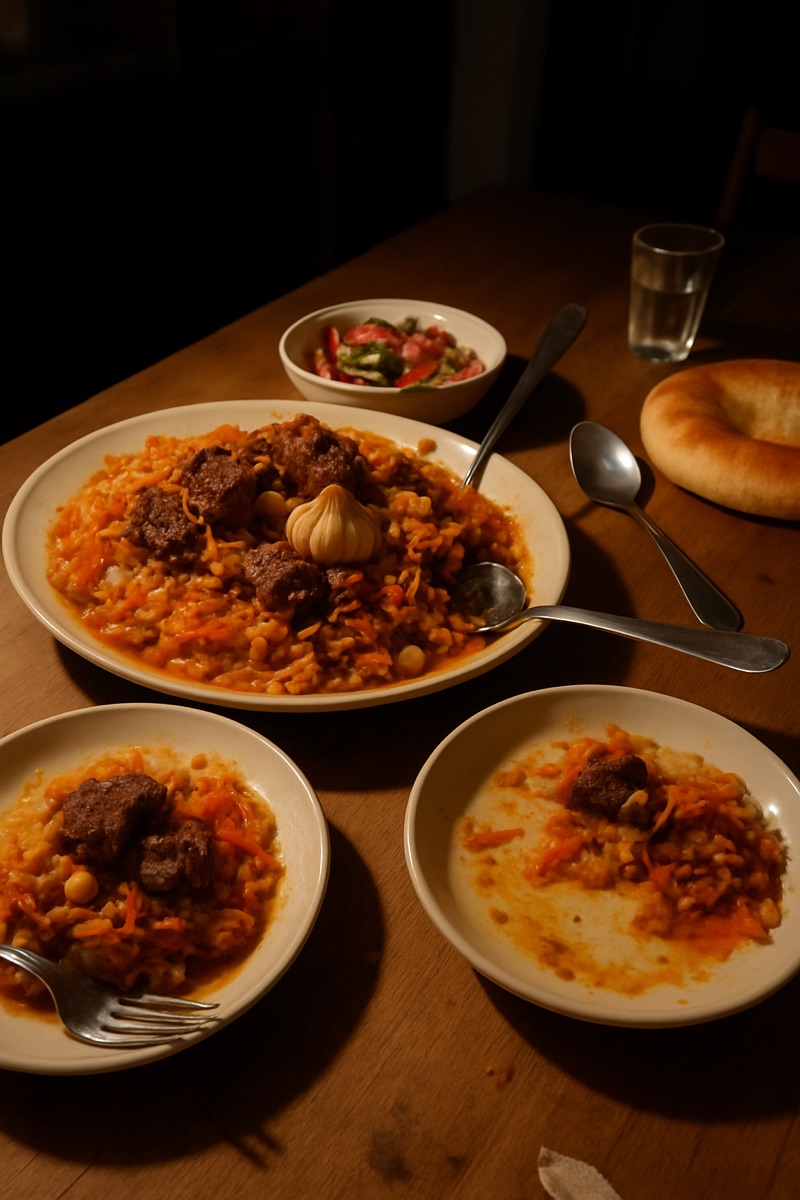
- Plov (osh) — Rice steamed in a kazan on top of a zirvak of lamb, onions and carrots cut into thick matchsticks, seasoned with cumin; chickpeas, raisins or barberries are added depending on the region. The rice is laid over the meat and never stirred in. For weddings and holidays it is cooked by an oshpaz, a master plov cook, sometimes for up to 1,000 people from one cauldron, and its culture has been on UNESCO's intangible heritage list since 2016. UNESCO describes plov served as hospitality, at weddings and New Year, to help people in need and to honour the dead; by tradition, the elders start eating first.
Noodles, soups and stews
- Lagman — Hand-pulled wheat noodles under a stew of beef or mutton with vegetables such as daikon, celery, pepper and tomato, seasoned with cumin. It can be served as a soup or as a main course, and the word itself refers to the pulling of the dough.
- Shurpa — A soup of large pieces of fatty meat, usually mutton, with fresh vegetables such as potatoes, carrots and onions. It is one of the dishes Uzbeks count among their national dishes, and the word is used for soup in general.
- Norin — Thin strips of boiled dough mixed with finely chopped boiled meat, usually lamb or horse meat. It is served as a main course or in broth.
- Dimlama — A slow stew of lamb or beef layered with potatoes, onions, carrots, cabbage, aubergines, tomatoes and peppers in a sealed pot, cooking in its own juices with no added water. It is usually made in spring and summer, when vegetables are plentiful.
Dumplings, pastries and grills
- Samsa — Pastries, often flaky, with three or four sides, filled with chopped meat, onion and tail fat, or with pumpkin, potato or greens. The filling goes in raw and cooks inside the dough, traditionally against the hot wall of a tandir.
- Manti — Large dumplings, also called qasqoni, filled with chopped meat and onion and cooked in a special multi-tiered steamer. They are served as an appetizer or as a main course.
- Chuchvara — Small meat dumplings, the Uzbek counterpart of pelmeni, boiled and served in a clear broth or topped with strained yogurt or sour cream.
- Kebabs (shashlik) — Cubes of marinated mutton or beef threaded onto skewers and grilled over hot coals, usually served as a main course. Green tea is the usual pairing.
Bread, spring food and tea
- Non — The round flatbread of Uzbekistan, with a thick rim and a flat centre stamped with a pattern using a tool called a chekich, baked in a tandir. Obi non is the everyday loaf; Samarkand is known for small thick shirma non, and Bukhara sprinkles its bread with sesame or nigella. Non is brought to the table decorated side up and torn by hand, and bread comes with its own rules of etiquette and hospitality. For matchmaking meetings, Andijan and Kashkadarya bake patir, a flaky bread enriched with cream and butter.
- Sumalak — A ritual spring dish made from sprouted wheat, cooked slowly for more than 10 hours until it becomes as thick as jam. It is made in spring and is considered good for digestion.
- Green tea (kok choy) — The national hot drink, served unsweetened in small bowls called piyola throughout the day and with every meal. Tashkent prefers black tea, and both are taken without milk or sugar. Chaikhanas, the teahouses, are an institution of Uzbek social life. In summer, ayran, a chilled yogurt drink, is popular, and chalop, chilled yogurt with dill, coriander and vegetables, sits halfway between a drink and a cold soup.
Regional styles
Each region of Uzbekistan claims its own version of the national dishes. Fergana, Samarkand, Bukhara, Khorezm and Tashkent each have a distinct plov: Fergana's is darker and more heavily fried, Tashkent's lighter, and in Bukhara and Khorezm some plovs boil the rice separately. Bread changes too, from the thick Samarkand non to the flaky wedding patir of Andijan and Kashkadarya. Bukharan Jews developed their own cuisine within the country, with dishes such as oshi sabo, rice, meat, vegetables and fruit slowly cooked overnight for the Shabbat lunch, and bakhsh, a green plov cooked with coriander, parsley and dill.
Uzbek food overlaps with its neighbours: the traditional food of Kazakhstan shares its plov, manti and lagman but is built on horse meat and dairy.
Cook Uzbek food at home
Plov, lagman and samsa have full recipes, with ingredients and steps, on our page about the food of Uzbekistan. For the neighbouring kitchens, from Almaty to Dushanbe, see our guide to Central Asian food.
The recipes
- Osh🇺🇿 Uzbekistan · 14 hours and 40 minutes
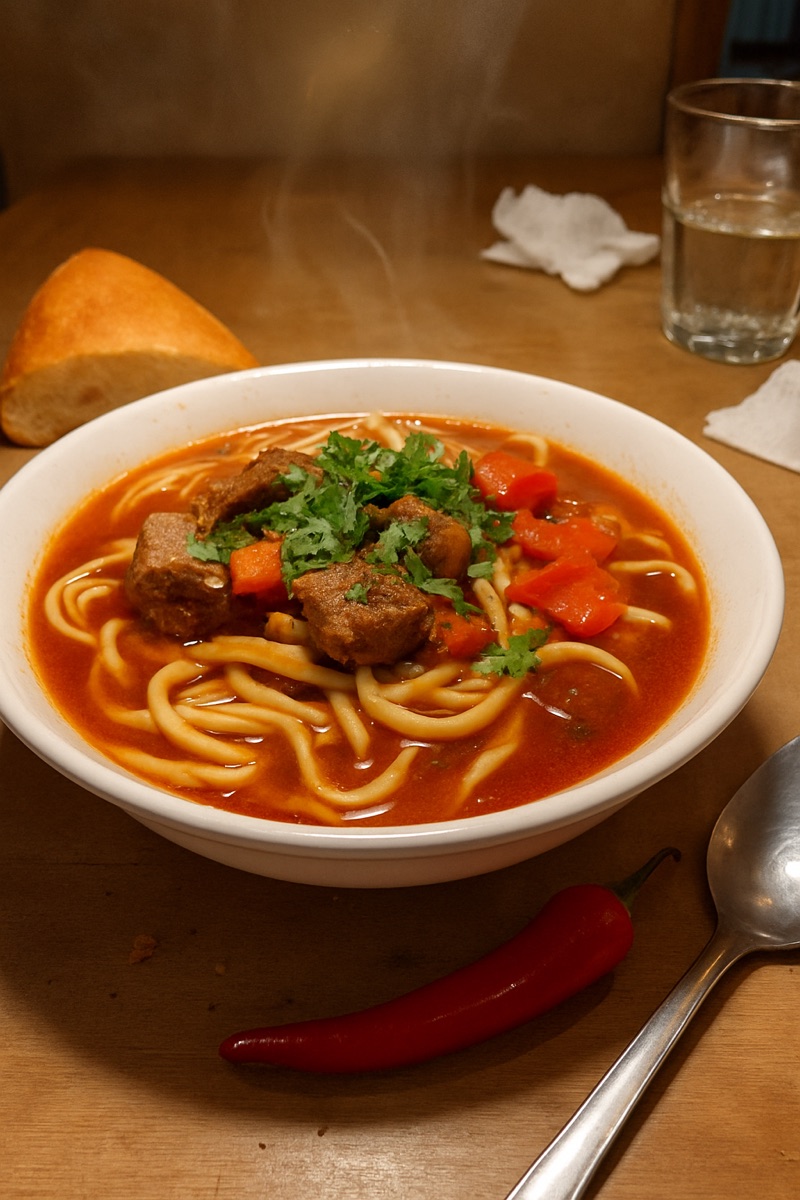 Lagman🇺🇿 Uzbekistan · 2 hours and 10 minutes
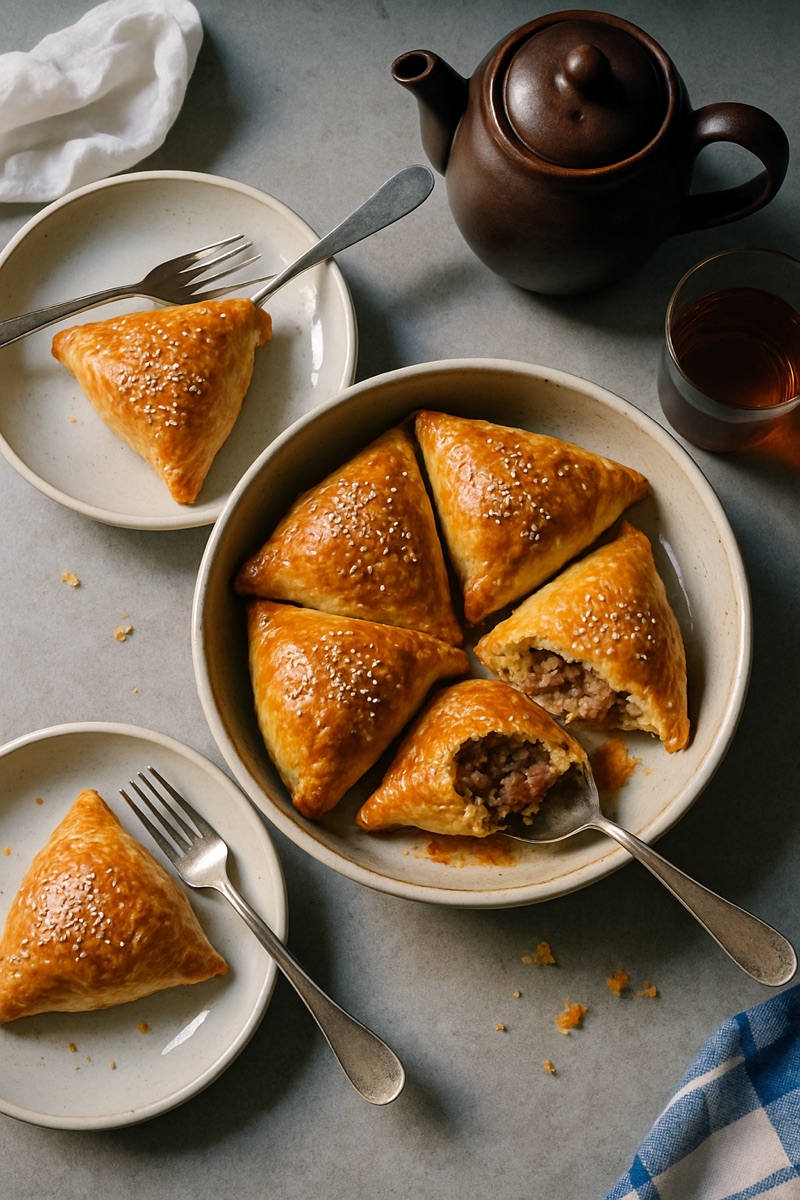 Samsa🇺🇿 Uzbekistan · 2 hours and 10 minutes
Questions people ask
What is the most popular food in Uzbekistan?
Plov (osh), rice steamed over lamb, onions and carrots in a kazan, is the national dish and the most popular food. Lagman, samsa, shurpa and manti are close behind, and every meal comes with non bread and tea.
What do people in Uzbekistan eat for breakfast?
Tea and non bread accompany every meal, breakfast included. At weddings, a special morning plov, nahor oshi, is served to large gatherings of guests between 6 and 9 am.
Is Uzbek food spicy?
Not usually. Uzbek dishes are seasoned with cumin, coriander, black pepper and fresh herbs rather than chilli; lagman is often served with chilli oil and vinegar on the side.
What is the difference between manti and chuchvara?
Manti are large dumplings cooked in a steamer; chuchvara are small dumplings boiled and served in broth or with yogurt or sour cream.
What do Uzbeks drink?
Green tea (kok choy) is the national drink, served unsweetened in small bowls; Tashkent prefers black tea. Ayran, a chilled yogurt drink, is popular in summer.
Keep reading
- What is the national dish of Uzbekistan?
- Traditional food of Afghanistan: 12 dishes to know
- Traditional food of Kazakhstan: 12 dishes to know
- Traditional food of Kyrgyzstan: 13 dishes to know
- Traditional food of Mongolia: 12 dishes to know
- Traditional food of Tajikistan: 12 dishes to know