 COPPER
Traditional food of Serbia: 13 dishes to know
Serbian food is rich in meat, dairy, bread and grains, seasoned simply with salt, black pepper and paprika, and shaped by Byzantine, Ottoman and Austro-Hungarian influences. Grilled minced meat, phyllo pies and soured dairy such as kajmak appear at almost every meal. The most emblematic dishes are pljeskavica, ćevapi, sarma and gibanica, with rakia as the national drink.
What Serbian food is built on
Serbian food grew out of pastoral life in the mountain highlands, where keeping animals was easier than growing vegetables. It is traditionally richer in meat, dairy and grains (corn, wheat and oats) than in fresh vegetable dishes, and since the Middle Ages it has relied on pigs, slaughtered every autumn in the *svinjokolj* to make ham, bacon, sausages and čvarci (pork cracklings) for the winter. Peppers arrived in the 1600s and became a staple; paprika is now a major export. Flavours are mild, and seasonal food matters: many dishes belong to a precise time of year.
There are three meals a day: a hearty breakfast, often of savoury pastry; lunch in the early afternoon, the most important meal, opened with a soup; and a light dinner. Bread is treated almost ritually, guests are welcomed with bread and salt, and traditional food is served in the *kafana*, a tavern adapted from the Ottoman coffee house. Serbia has no single official national dish; read why in our article on the national dish of Serbia.
Grilled meat and main dishes
Grilled meat (*roštilj*) is the main course in most restaurants, served as a mixed grill on large oval plates or as fast food. The town of Leskovac is the most famous for it.
- Pljeskavica — A wide, flat patty of spiced minced pork, beef and lamb, grilled and served on a plate or folded into lepinja flatbread with onion, kajmak and ajvar. Versions include the spicy Leskovac pljeskavica, the gurmanska filled with cheese and bacon, and the Hajduk pljeskavica with smoked bacon.
- Ćevapi — Small rolled fingers of minced pork or beef, served several at a time. Called ćevapčići in Serbia, they came to Belgrade from southern Serbia with migrants from Leskovac, and they are considered a national dish of both Serbia and Bosnia and Herzegovina.
- Karađorđeva šnicla — A rolled veal or pork steak stuffed with kajmak, breaded, fried and served with tartar sauce and a slice of lemon. The chef Milovan Mića Stojanović, later Tito's personal cook, created it in 1956 or 1957 at a Belgrade restaurant as a stand-in for chicken Kiev, and named it after the revolutionary leader Karađorđe.
- Sarma — Leaves of whole fermented sour cabbage rolled around minced pork, beef and rice, simmered for hours between smoked ribs and bacon and finished with a paprika roux. It is the first dish served at a slava, the family saint's day, and a meatless version is eaten in Lent and on Christmas Eve.
Beans, the everyday staple
- Pasulj — A bean soup-stew made with white or other dried beans, onion, carrot and usually smoked meat such as bacon, sausage or ham hock. It is a winter dish, especially around Christmas, served with bread and sour cream or ajvar.
- Prebranac — The baked version of the same dish: a casserole of beans cooked in the oven, thicker than pasulj. It is listed among the most popular Serbian dishes, and North Macedonia has a close relative called tavče gravče.
Pies, bread and breakfast
Pies made from thin sheets of phyllo are eaten for breakfast, dinner or as a snack, and they are named after their filling or their shape.
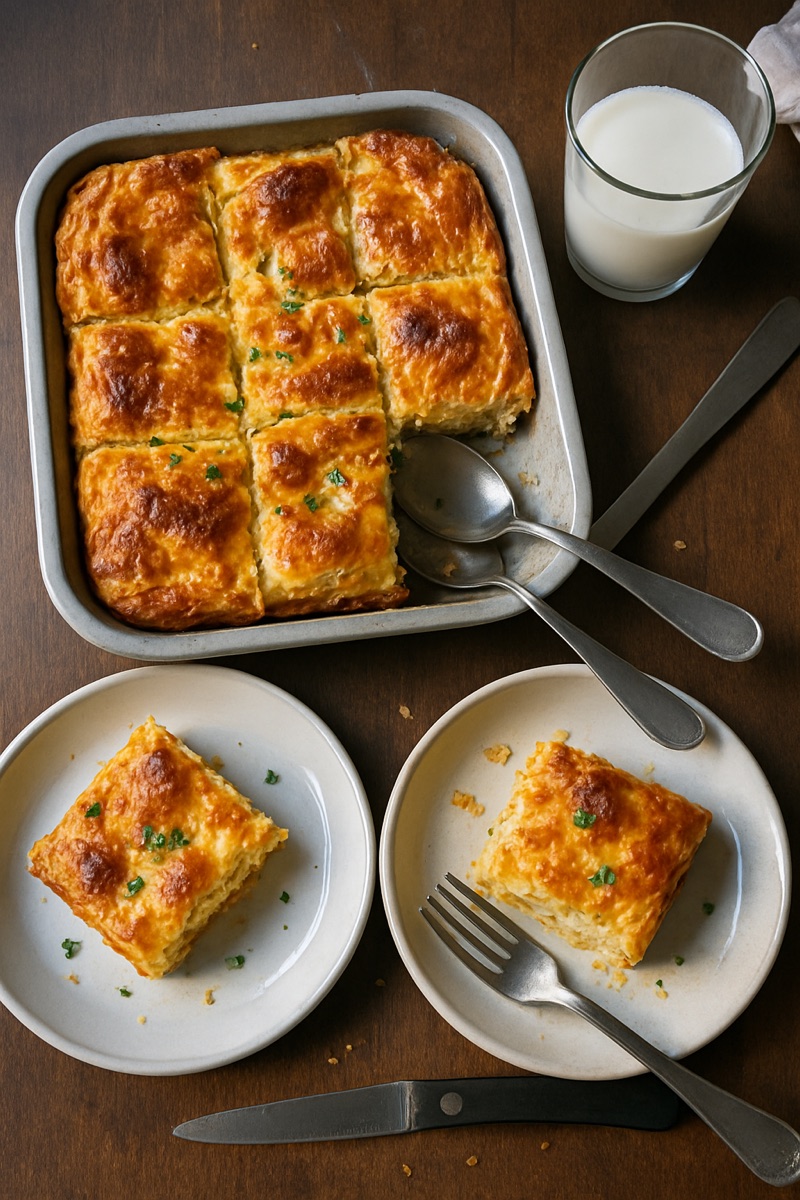
- Gibanica — A pie of phyllo sheets loosely crumpled and dipped in a mix of fresh cheese, eggs, yogurt, oil and sparkling water, then baked until golden and served warm with yogurt. The word appears in Vuk Stefanović Karadžić's Serbian Dictionary of 1818.
- Burek — A round pie of layered dough baked plain, with minced meat and onion, or with cheese, and usually eaten with a yogurt drink. The round burek is traced to the city of Niš, where a Turkish baker is said to have introduced it in 1498; Niš still hosts a burek festival, the Buregdžijada.
- Proja — A simple cornbread of cornmeal, oil, sparkling water, baking powder and salt, baked in a deep pan. It sustained Serbian soldiers during the First World War and remains an everyday breakfast with kajmak or sour cream. In 2025 CNN Travel named it one of the 50 best breads in the world.
- Komplet lepinja — The complete flatbread: a lepinja filled with kajmak and egg and soaked with the drippings of roast meat. It is a classic Serbian breakfast.
Relishes and dairy
- Ajvar — A relish of red peppers roasted whole, peeled by hand, minced and stewed for hours with sunflower oil, made by families together every autumn and stored in jars for the winter. It can be sweet, medium or very hot. Homemade Leskovac ajvar is registered with the World Intellectual Property Organization.
- Kajmak — A thick cream similar to clotted cream: milk is boiled slowly and simmered, then the cream is skimmed off and left to rest and mildly ferment. Almost always made at home, it is eaten at breakfast, spread inside pljeskavica and rolled into Karađorđeva šnicla. Kajmak from the Čačak area, west of the Great Morava river, has the best reputation.
- Urnebes — A spread of crushed white cheese, minced garlic and dried red pepper, served alongside grilled meat such as pljeskavica.
Regional cooking in Serbia
Vojvodina, in the north, shows its Austro-Hungarian past in noodles, dumplings, buns, pasta with cabbage (flekice s kupusom), boiled beef (rinflajš) and sausages such as Srem kulen. Šumadija, in the centre, is known for spit-roast pork, especially between Gornji Milanovac and Mrčajevci, while the best lamb is said to come from the Raška region and eastern Serbia. Paprika and heat are characteristic of the south, home of the Leskovac grill. Rakia, a family of fruit brandies, is the national drink.
Many dishes cross the borders: compare with the traditional food of Hungary for the north and the traditional food of Bulgaria for the south-east, or explore the wider Balkan kitchen.
Cook Serbian food at home
Pljeskavica, sarma and gibanica each have a full recipe with quantities and step-by-step methods in the Copper app. You will find all three on our page dedicated to Serbian recipes.
The recipes
- Gibanica🇷🇸 Serbia · 1 hour and 5 minutes
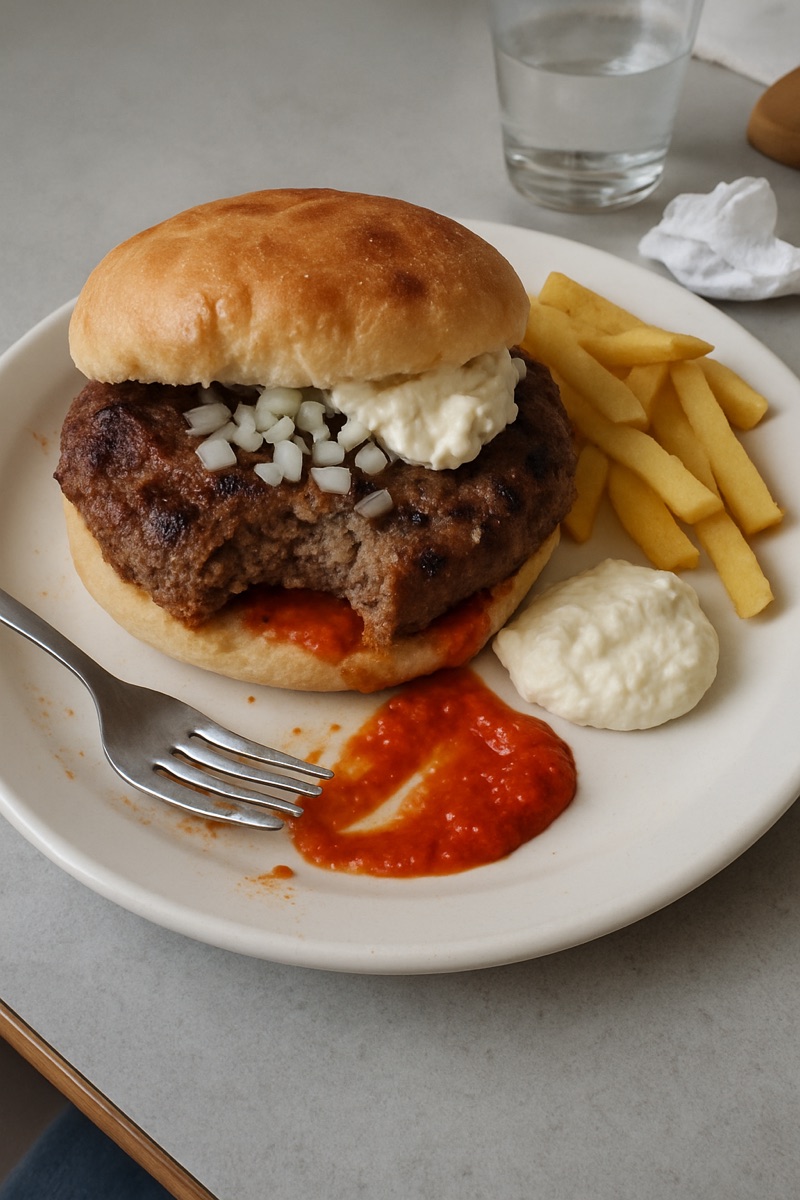 Pljeskavica🇷🇸 Serbia · 12 hours and 40 minutes
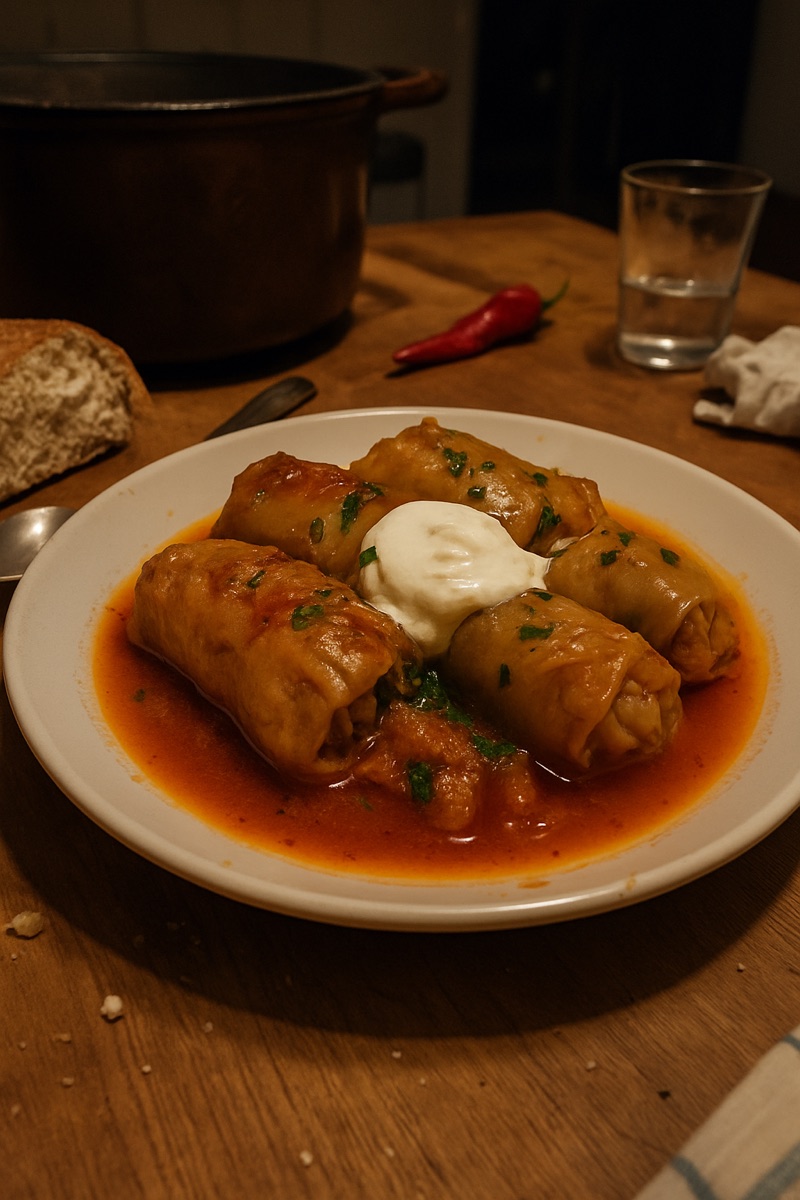 Sarma🇷🇸 Serbia · 5 hours
Questions people ask
What is the national dish of Serbia?
Serbia has no single official national dish. The most cited are pljeskavica and ćevapi, followed by sarma, gibanica, paprikaš, gulaš and Karađorđeva šnicla.
What do Serbians eat for breakfast?
Bread with butter, kajmak, cheese, eggs or cured meat, or savoury pastries such as burek and gibanica. Proja cornbread, kačamak (maize porridge) and komplet lepinja are other classics, usually with yogurt and a cup of domestic coffee.
Is Serbian food spicy?
Generally not: the usual seasonings are salt, black pepper and paprika. Heat is a feature of southern Serbia, with dishes such as the spicy Leskovac pljeskavica, mućkalica stew and hot ajvar.
What is kajmak?
A thick dairy cream skimmed from boiled milk, similar to clotted cream, eaten at breakfast and served with grilled meat. It is one of the most typical Serbian dairy products.
What do Serbians drink?
Rakia, a family of fruit brandies, is the national drink, often served with meze before a meal. Domestic coffee is drunk throughout the day, and yogurt drinks accompany pies such as burek.
Keep reading
- What is the national dish of Serbia?
- Traditional food of Albania: 13 dishes to know
- Traditional food of Bosnia and Herzegovina: 13 dishes to know
- Traditional food of Bulgaria: 13 dishes to know
- Traditional food of Croatia: 13 dishes to know
- Traditional food of Greece: 13 dishes to know