 COPPER
Traditional food of South Africa: 14 dishes to know
South African food is built on maize porridge (pap), beef and lamb cooked over a wood fire, and the spices brought by Cape Malay and Indian cooks. Meat is central, from the weekend braai to air-dried biltong. The most emblematic dishes are bobotie, boerewors with pap, bunny chow and biltong, with malva pudding for dessert.
What South African food is built on
South African cooking draws on every community that lives in the country. The Khoisan foraged wild plants and dried meat for later; Bantu-speaking farmers brought cattle and grain, first sorghum and millet, later maize. From the 17th century, Dutch and British settlers brought their own foodways, enslaved people brought by the Dutch East India Company from Java, Bengal and Malaysia shaped Cape Malay cooking, and Indian labourers who arrived in the 19th century brought curries to KwaZulu-Natal.
The result is a cuisine heavily based on meat, with a strong preference for beef. A typical meal in many households is a stiff maize porridge called pap with a stewed meat gravy, and on weekends many families hold a braai, cooking meat over an open fire. Sour milk, sorghum beer and rooibos, a caffeine-free herbal tea made from a native South African shrub, are the traditional drinks.
Cape Malay and Indian dishes
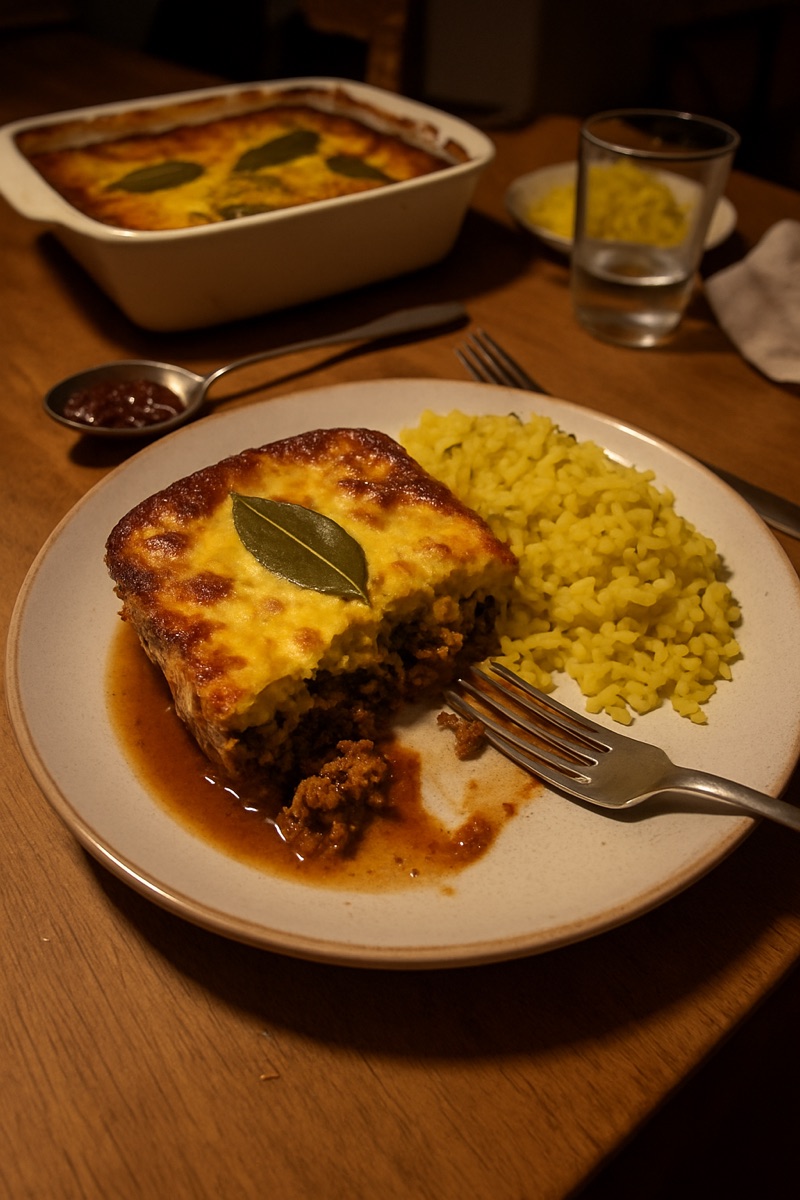
- Bobotie — Curried minced meat with raisins, bound with milk-soaked bread and baked under a savoury egg-and-milk topping, with bay leaves pushed into the top. A Cape Malay dish, it is often called the closest thing to a national dish because it is rarely found in other countries. It is served with yellow rice, chutney and sambal.
- Bunny chow — A quarter, half or full loaf of white bread hollowed out and filled with curry, created among Indian South Africans in Durban and generally dated to the 1940s. Mutton, chicken and bean curries are classic fillings, the original was vegetarian, and it is eaten with the fingers. In the townships, a quarter loaf filled with chips, polony, cheese and atchar is called a kota.
- Sosatie — Cubes of meat, usually lamb, marinated overnight with fried onion, chilli, garlic, curry leaves and tamarind, then threaded on skewers, often with dried apricots, and grilled. The name and the dish are of Cape Malay origin.
Braai, pap and stews
- Boerewors — A coiled farmer's sausage spiced with coriander, grilled whole over coals at a braai. By government regulation it must contain at least 90 percent meat or fat. It is eaten in a roll with tomato-and-onion relish or with pap, the pairing known as pap en vleis.
- Pap — Maize meal cooked into a stiff, fluffy porridge, the everyday staple of the country's African peoples. It is eaten with meat gravy, with morogo greens, or with amasi, thick fermented milk; when fermented for a few days it becomes sour ting. A crumbly version is called phuthu.
- Chakalaka — A spicy vegetable relish of tomatoes, onion, beans and chilli, said to have been created in the townships or gold mines around Johannesburg by Mozambican mineworkers. It is served at a braai and with pap, samp, bread or curries.
- Potjiekos — Meat, vegetables and starch slow-cooked outdoors in a three-legged cast-iron pot, the potjie, over wood or charcoal. It goes back to the Voortrekkers, who kept a stew of game simmering on the trek and added fresh meat each day.
- Umngqusho — Samp (broken dried maize kernels) cooked with sugar beans, the traditional staple of the Xhosa people, now eaten by many South African families. The Xhosa version, served with butter or fat, was said to be Nelson Mandela's favourite dish.
- Tomato bredie — A slow stew of lamb and tomato from the Afrikaans kitchen. Its Cape cousin, waterblommetjiebredie, is cooked with the flowers of the Cape pondweed.
Dried meat, breads and sweets
- Biltong — Strips of beef or game such as kudu or ostrich, cured with salt, vinegar and coriander and air-dried rather than cooked. It is South Africa's favourite snack, a habit traced to the Khoisan, who dried meat for later. Droëwors is the dried-sausage version.
- Vetkoek — Balls of yeast dough deep-fried until golden, the name meaning "fat cake" in Afrikaans; in Zulu and Xhosa they are amagwinya. They are split and filled with curried mince, or eaten with jam, and sold at taxi ranks and roadside stalls.
- Koeksister — Plaited strips of dough fried and plunged straight into ice-cold syrup, so the crust stays crunchy and the centre runs with syrup. The Cape Malay koesister is a spiced, egg-shaped dough ball rolled in coconut.
- Malva pudding — A spongy baked pudding made with apricot jam, soaked while hot with a sauce of butter, cream and sugar, and served warm with custard or ice cream. It is thought to be of Dutch or Cape Dutch origin.
- Melktert — Milk tart: a shortcrust case filled with a light custard of milk, flour, sugar and eggs, with more milk than a Portuguese custard tart, dusted with cinnamon. Rusks, twice-baked biscuits dunked in coffee, have been made in South Africa since the late 1690s.
Regional South Africa
The Western Cape is the home of Cape Malay cooking, with bobotie, sosaties, pickled fish and koesisters, and of the Huguenot wine tradition around Franschhoek. Durban and KwaZulu-Natal cook curries spiced with masala, hotter than the Cape Malay versions, and the bunny chow. The Eastern Cape, Xhosa country, cooks umngqusho and trotters with beans. In Limpopo, the Tsonga and Venda eat mopane worms, the caterpillars of an emperor moth, and the Afrikaans interior keeps the potjie, the braai and the rusk alive.
Cook South African food at home
Bobotie is the dish most often called the national dish of South Africa, with the braai as the other usual answer. Copper has full recipes for bobotie, boerewors on the braai and bunny chow, with ingredients and step-by-step methods, on our page about the food of South Africa, alongside other Southern African recipes.
Pap, biltong and boerewors cross every border in the region. Compare with the traditional food of Namibia and the traditional food of Botswana.
The recipes
- Bobotie🇿🇦 South Africa · 1 hour and 20 minutes
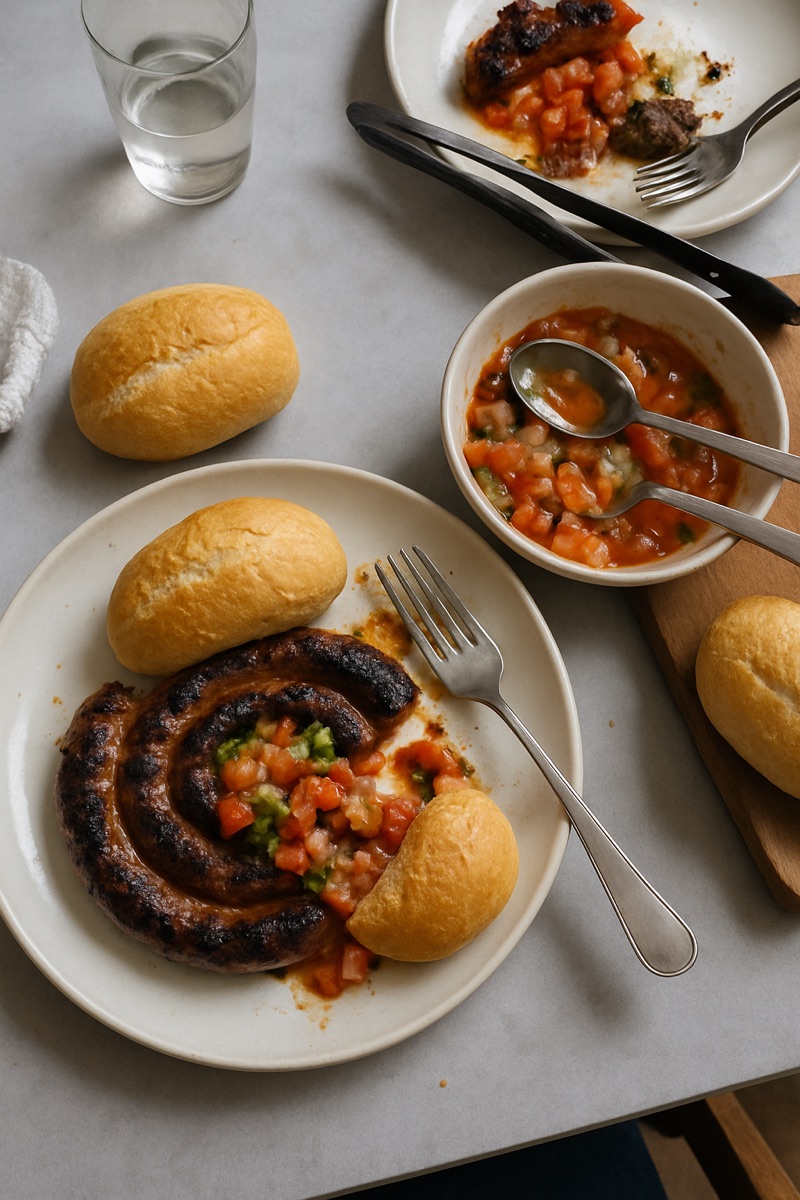 Boerewors braai🇿🇦 South Africa · 1 hour and 10 minutes
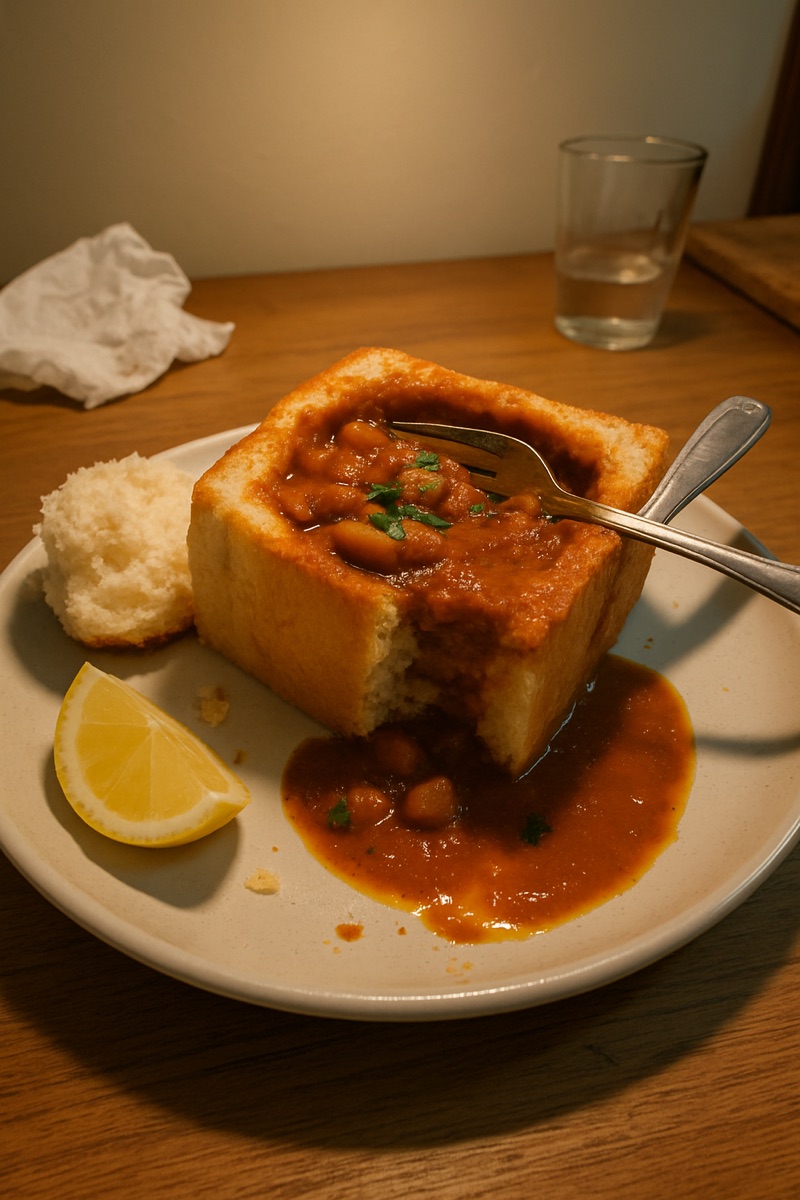 Bunny chow🇿🇦 South Africa · 2 hours
Questions people ask
What is the most popular food in South Africa?
Meat cooked on a braai, especially boerewors, eaten with pap, is the most widely shared meal. Bobotie, bunny chow and biltong are the other dishes most associated with the country.
What do South Africans eat for breakfast?
Common breakfasts include soft maize porridge, rusks dunked in coffee or tea, and pap with amasi, thick fermented milk, poured over it.
Is South African food spicy?
Some of it is. Durban curries made with masala are hot, and chakalaka is usually spicy. Cape Malay dishes such as bobotie are aromatic and slightly sweet rather than hot, and braai meat is simply seasoned.
What is pap en vleis?
Pap en vleis means porridge and meat: stiff maize-meal pap served with grilled meat, usually at a weekend braai.
What is a traditional South African dessert?
Malva pudding, a spongy apricot pudding soaked in a butter and cream sauce, melktert (milk tart) and koeksisters, plaited fried dough soaked in cold syrup.
Keep reading
- What is the national dish of South Africa?
- Traditional food of Angola: 13 dishes to know
- Traditional food of Botswana: 13 dishes to know
- Traditional food of Eswatini: 14 dishes to know
- Traditional food of Lesotho: 14 dishes to know
- Traditional food of Malawi: 10 dishes to know