 COPPER
Traditional food of Eswatini: 14 dishes to know
Swazi food is built on maize and sorghum, cooked into a whole family of porridges, with beans, groundnuts, pumpkin and its leaves, sour milk and meat, often goat or beef. Little is wasted: tripe, leaves and stalks all have their own dishes. The most emblematic are sishwala, incwancwa, umncushu and shisa nyama shared on a wooden platter.
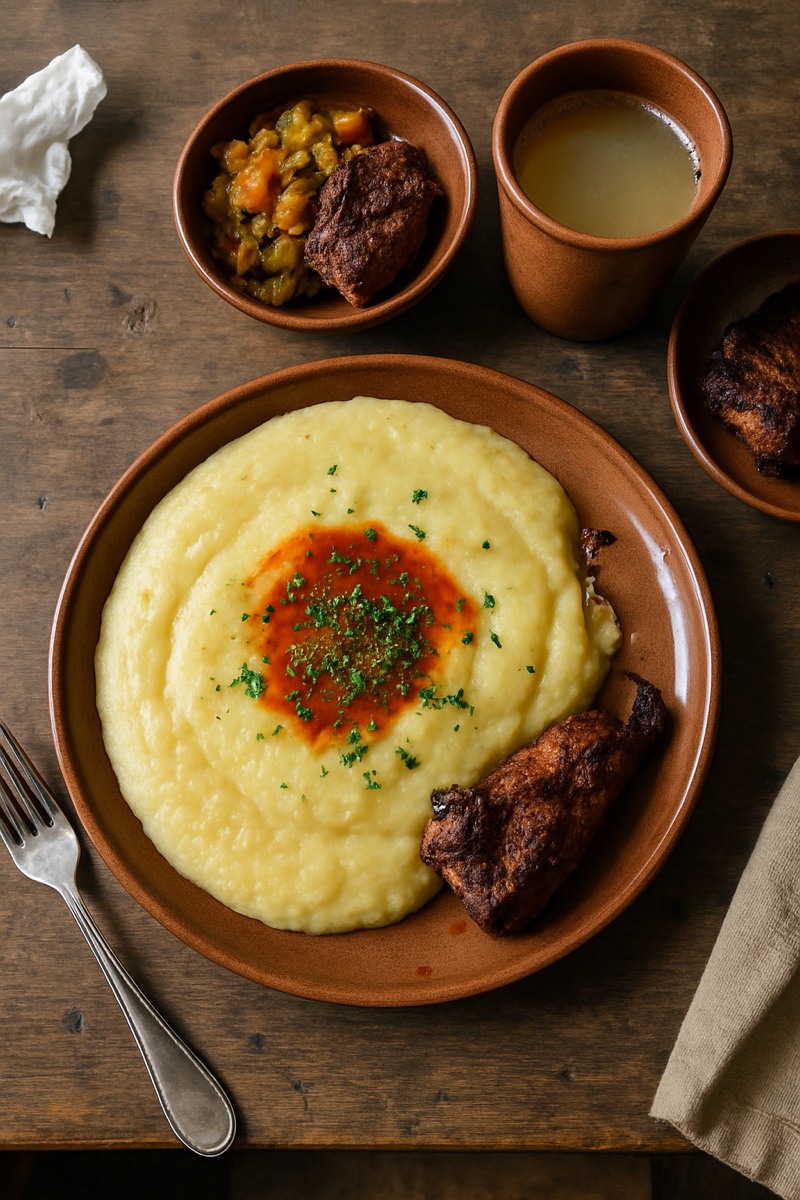
What Swazi food is built on
What people eat in Eswatini, called Swaziland until the king changed the country's name in 2018, depends largely on the season and the region. The staples are sorghum and maize, often served with goat meat. Farming centres on sugarcane, maize, rice and peanuts, and the country exports goat meat and beef. Many Swazis are subsistence farmers who add food bought at markets, and produce imported from coastal neighbours is part of the diet too.
Most of the population lives outside the towns, and even where South African chains have arrived, the food people prefer is still the traditional kind. Swazi cooks use every part of a plant or animal: pumpkin is eaten for its leaves and stalks as much as its flesh, and the tripe of a slaughtered cow is a dish in its own right.
Porridges: the heart of the Swazi table
Swazi cooking has a name for each way of cooking maize, sorghum and the things mixed into them.
- Sishwala — A very thick maize-meal porridge, often cooked with sugar beans, served with meat or vegetables. Diners roll small balls of it in their fingers to scoop up the stew. It is the dish most often named as national.
- Incwancwa — Sour porridge: a batter of maize meal and water left to ferment for two or three days, then cooked like ordinary porridge. The fermentation gives it its sharp taste.
- Lipalishi — Pap, the everyday maize porridge, made three ways: firm enough to pick up by hand for stews and gravy, dry and crumbly (liphutfu) for curries and sour milk, or soft for breakfast with sugar and butter.
- Sidvudvu — Pumpkin mashed into maize porridge, which makes it sweeter. It is eaten on its own or as a side.
- Umncushu — Samp (dehulled maize kernels pounded until broken) boiled with sugar or jugo beans, then mashed together with ground peanuts into something like a very thick mash. The crust stuck to the bottom of the pot, skhokho, is considered the best part.
- Siphuphe — Thick porridges made of mashed groundnuts (siphuphe setindlubu) or mashed beans (siphuphe semabhontjisi).
- Tinkhobe — Whole maize kernels, boiled. Ground maize mixed with sour milk is a separate dish, emasi etinkhobe temmbila.
Greens and meat
- Umbidvo wetintsanga — Pumpkin leaves and stalks, cleaned of their tiny spikes and hairs, cooked and mashed with ground peanuts into a creamy dish served as a main or a side. Very young leaves are eaten raw in salads.
- Ligusha — Young leaves and shoots of jute boiled on low heat and mashed as they cook, which gives a thick, slimy texture. Onion, tomato, okra or melon seeds are added, and it is eaten with pap or rice.
- Umncweba — Raw beef cured with salt and vinegar, then air-dried for days without heat: the Swazi name for the dried meat known elsewhere as biltong.
- Kwangekhatsi — The name means "insides": beef tripe from the cow's four stomachs, boiled with the intestines for several hours. It is served as a starter or a main, often with pap, and is said to cure hangovers.
- Shisa nyama — Grilled meat: chicken, beef, pork and sausage cooked over a flame and served with pap and salads. It is sold everywhere people gather, from restaurants and butcheries to bars and roadside stalls.
Sour milk and drinks
Two other drinks come from maize. Emahewu is a non-alcoholic drink made by fermenting thin porridge, now also sold in cartons. Umcombotsi is home-brewed beer of maize meal and sorghum malt, fermented four to five days; it is sour, thick and low in alcohol. In siSwati, alcohol in general is tjwala.
- Emasi — Raw milk left to ferment at room temperature in a clay pot until sour, with part of the whey drained off; draining more gives the thicker ingula. Most homes keep cattle or goats, so it is one of the most eaten foods in the country, with crumbly pap, maize bread, or ground sorghum as emasi emabele.
- Buganu — A strong alcoholic brew of marula fruit: the ripe fruit is peeled, mixed with water and left to ferment for about three days, often with sugar to speed it up. It is so popular that it has its own annual festival.
Sharing, markets and street food
Swazis traditionally eat together from a large oval wooden platter called an umcwembe. Before the meal, someone goes round with a jug of water and a basin so everyone can wash their hands. Loaded with shisa nyama, pap and salads, the umcwembe is served in upmarket restaurants and at roadside stalls alike, with a cold Sibebe, the local beer.
Outside the home, markets have stalls selling traditional Swazi meat stew and maize meal. In season, vendors roast maize cobs over fires at street corners or steam them in their husks. Imbasha, semi-dry maize kernels roasted with peanuts and salt water, is the most common snack. Women and children sell mealie bread on the roadside, wrapped in corn leaves and traditionally steamed rather than baked. "Chicken dust", flame-grilled chicken sold with pap and salad on dusty roadsides, is not a Swazi dish by origin but is now found in almost every town.
Cook Swazi food at home
Sishwala is the dish most often named as the national dish of Eswatini. Copper has full recipes for sishwala, incwancwa and umncweba, with ingredients and step-by-step methods, on our page about the food of Eswatini, alongside other Southern African recipes.
Maize porridge and grilled meat are shared with the neighbours: compare with the traditional food of South Africa and the traditional food of Mozambique.
The recipes
- Sishwala🇸🇿 Eswatini · 14 hours and 10 minutes
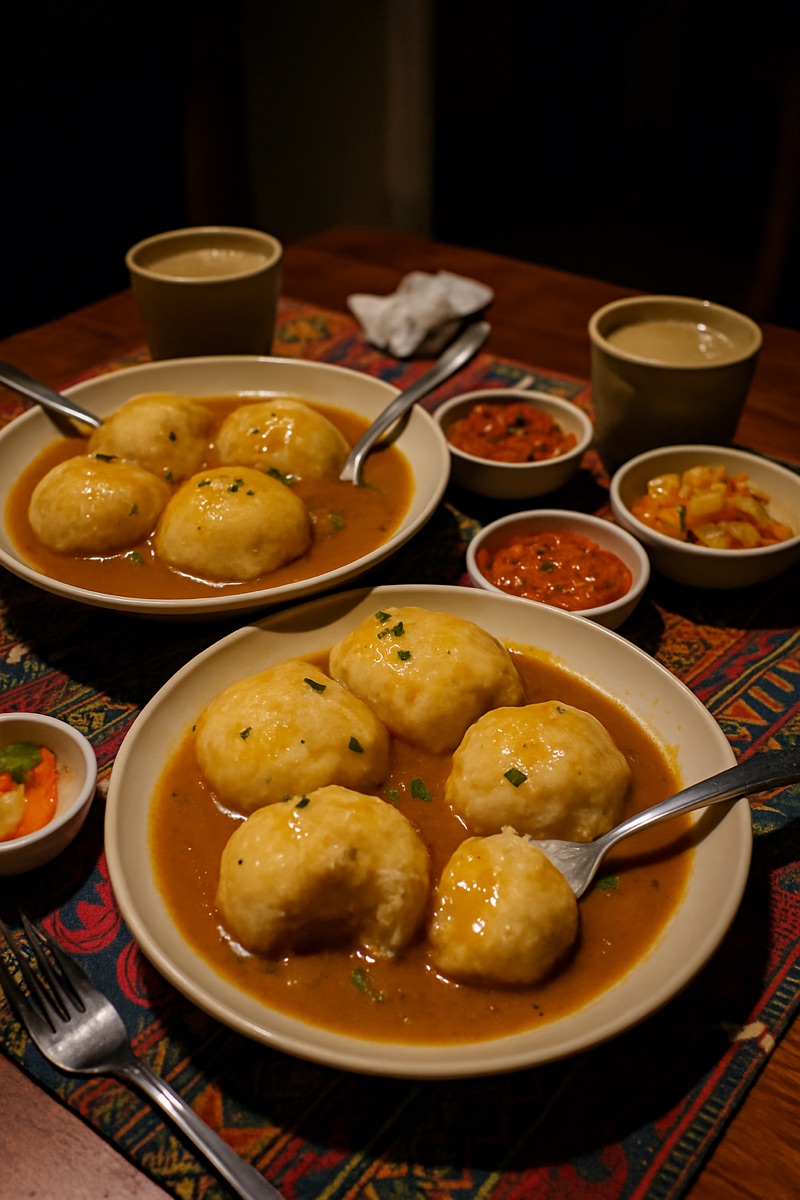 Incwancwa🇸🇿 Eswatini · 2 days and 1 hour
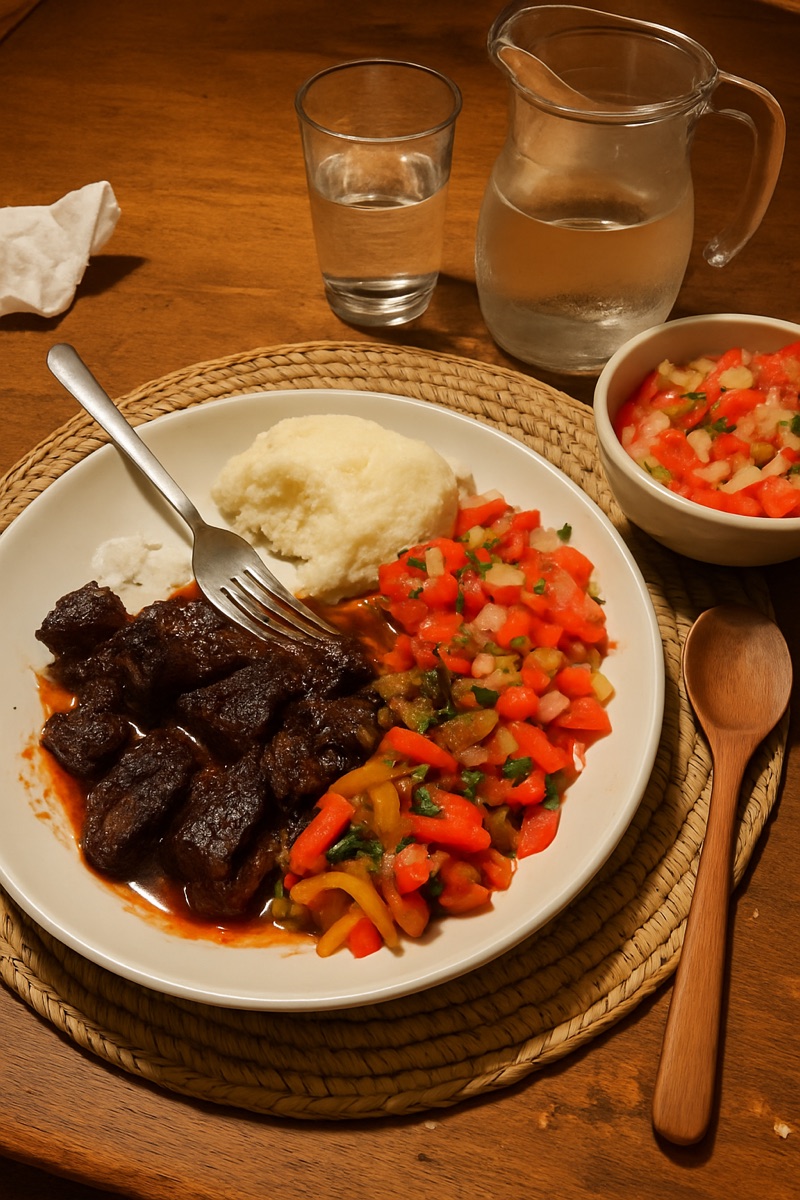 Umncweba🇸🇿 Eswatini · 6 days and 1 hour
Questions people ask
What is the most popular food in Eswatini?
Maize porridge in its many forms, above all sishwala and everyday pap, eaten with meat, beans or greens. Shisa nyama shared on an umcwembe platter is the classic meal out.
What do Swazis eat for breakfast?
Soft maize porridge with sugar and butter is a common breakfast, and in rural areas sweet potatoes are often eaten with tea in the morning. Fat cakes are also eaten at breakfast or as a snack.
Is Swazi food spicy?
Traditional Swazi dishes are not spicy: boiled meat is cooked with only salt and vegetables, and porridges are plain. Flavour comes from the stew, groundnuts, pumpkin or sour milk served with them.
What is emasi?
Emasi is fermented sour milk, made by leaving raw milk in a clay pot at room temperature and draining off part of the whey. It is eaten with crumbly pap, maize bread or ground sorghum, or drunk plain.
What do people drink in Eswatini?
Emahewu, a fermented maize drink without alcohol; umcombotsi, a home-brewed maize and sorghum beer; buganu, a marula brew; and the local beer, Sibebe.
Keep reading
- What is the national dish of Eswatini?
- Traditional food of Angola: 13 dishes to know
- Traditional food of Botswana: 13 dishes to know
- Traditional food of Lesotho: 14 dishes to know
- Traditional food of Malawi: 10 dishes to know
- Traditional food of Mozambique: 13 dishes to know