 COPPER
What is the national dish of Eswatini?
Eswatini has no official national dish. The one most often named is sishwala: a thick, stiff porridge of maize meal, often cooked together with sugar beans, eaten by hand with a meat or vegetable stew. Wikipedia's list of national dishes gives shisa nyama instead, but that means grilled meat, not one recipe, and the list cites no source for it.
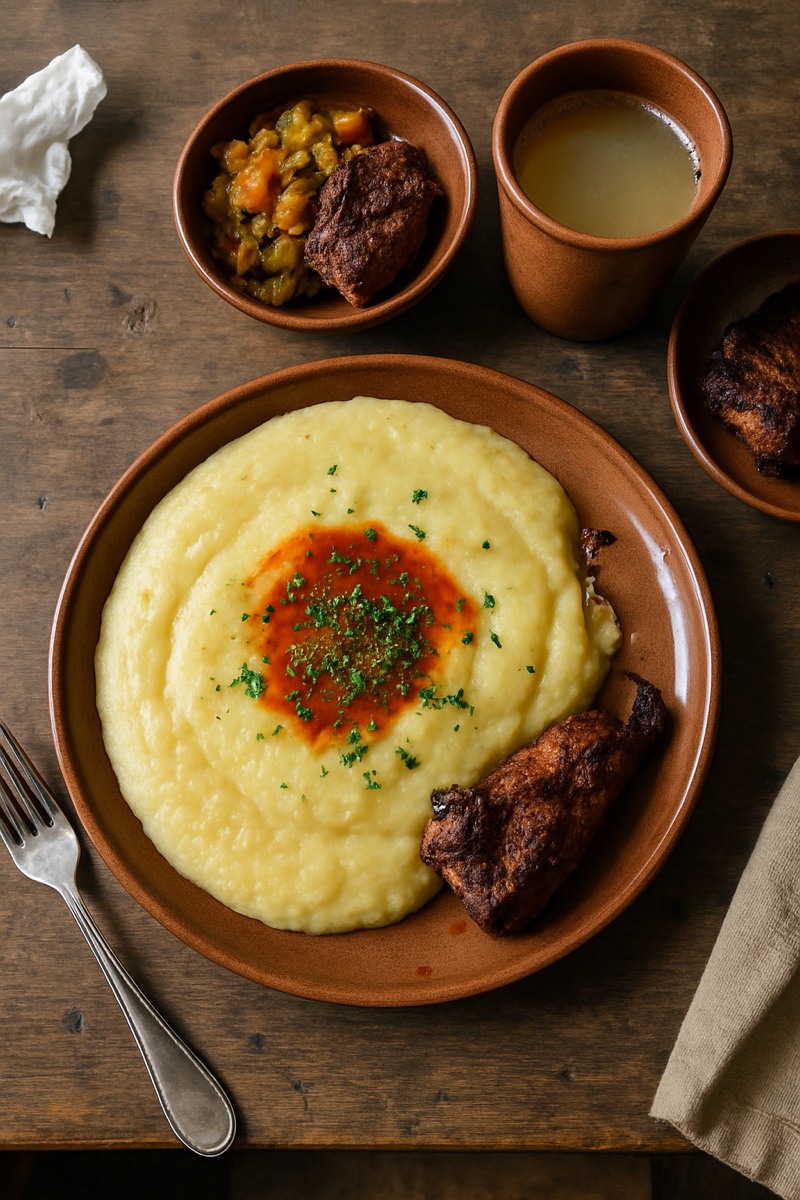
Sishwala or shisa nyama?
No law or decree in Eswatini names a national dish, and two answers circulate online:
- Sishwala. Listed first among the traditional foods of Eswatini on Wikipedia, and named as the national dish by the reference site National Dish. Maize is one of the country's two staple grains, with sorghum.
- Shisa nyama. The English Wikipedia list of national dishes gives this answer, with no source. It describes grilled meat, a way of eating rather than a single dish, and at Swazi gatherings it is served next to sishwala, not instead of it.
What is sishwala?
Sishwala is a maize-meal porridge cooked until it is very thick, much stiffer than breakfast porridge. It tastes plain on purpose: it is eaten with a meat or vegetable stew that gives it flavour.
The best-known version is cooked with dried sugar beans, speckled beans similar to borlotti, which add protein. Some families blend in pumpkin instead, which makes a sweeter dish with its own name, sidvudvu. Diners roll small balls of sishwala in their fingers and use them to scoop up the stew. Wikipedia lists it first among the traditional foods of Eswatini, described simply as a thick porridge normally served with meat or vegetables.
How sishwala is made
Our sishwala recipe follows the bean version. The beans take the longest, so plan for an overnight soak:
- Soak 250 g of dried sugar beans overnight, then simmer them with salt for 1 to 1.5 hours until tender.
- Drain, add about 1 litre of hot water and bring back to the boil.
- Rain in 500 g of maize meal a little at a time, stirring hard to prevent lumps.
- Cover and cook 25 to 30 minutes on low heat, pressing and stirring every few minutes, until the porridge pulls away from the pot.
- Serve hot, heaped beside the stew.
Sishwala at home and at celebrations
Sishwala is an everyday food first. Afro Gist Media presents it as a traditional Swazi breakfast, and the porridge is plain enough to go with whatever the day brings: beans, leafy greens, or meat when there is some.
It also has a place at big occasions. According to National Dish, at weddings, funerals and royal events large wooden trays are filled with sishwala and surrounded by grilled meat, relishes and emasi, fermented sour milk. That is where shisa nyama and sishwala meet: on the same tray.
Outside the home, local markets in Eswatini have food stalls selling traditional Swazi meat stew, maize meal and, in season, roasted corn on the cob.
A table built on maize and sorghum
What Swazis eat depends largely on the season and the region. Farming centres on sugarcane, maize, rice and peanuts, and Swazis also buy food at markets and import produce from coastal neighbours. Many Swazis are subsistence farmers, and maize and sorghum, often served with goat meat, are the staples. Sishwala is one of a whole family of porridges, each with its own name:
- Incwancwa: sour porridge of fermented cornmeal.
- Sidvudvu: pumpkin cooked with cornmeal.
- Siphuphe setindlubu: thick porridge of mashed groundnuts.
- Siphuphe semabhontjisi: thick porridge of mashed beans.
- Sitfubi: fresh milk cooked with cornmeal.
- Emasi emabele: ground sorghum mixed with sour milk.
- Tinkhobe: whole maize kernels, boiled.
- Umbidvo wetintsanga: pumpkin leaves cooked with ground nuts.
- Emahewu: a drink made from thin fermented porridge.
Other dishes to know from Eswatini
Incwancwa shows how much fermentation matters in Swazi cooking. A runny batter of maize meal and lukewarm water is left for a few days until it smells clearly sour, then poured into boiling water while stirring constantly and cooked 20 to 30 minutes. The fermentation cannot be skipped or rushed: without it, you just have plain maize porridge. It is eaten with meat, or with milk and sugar, like ting in Botswana.
Umncweba is raw beef cured with salt and vinegar, then air-dried, never cooked. The beef is cut with the grain into strips about 2.5 cm thick, dipped in vinegar, rubbed with salt, toasted coriander, black pepper and a little brown sugar, and left 12 to 24 hours. The strips then hang apart in cool, moving air for around five days. No heat is used: heat-dried meat would be jerky. It belongs to the same family as the biltong of South Africa.
You will find all three dishes, with ingredients and step-by-step methods, on our page about the food of Eswatini. For the neighbouring kitchens, see our guide to Southern African food.
The recipes
- Sishwala🇸🇿 Eswatini · 14 hours and 10 minutes
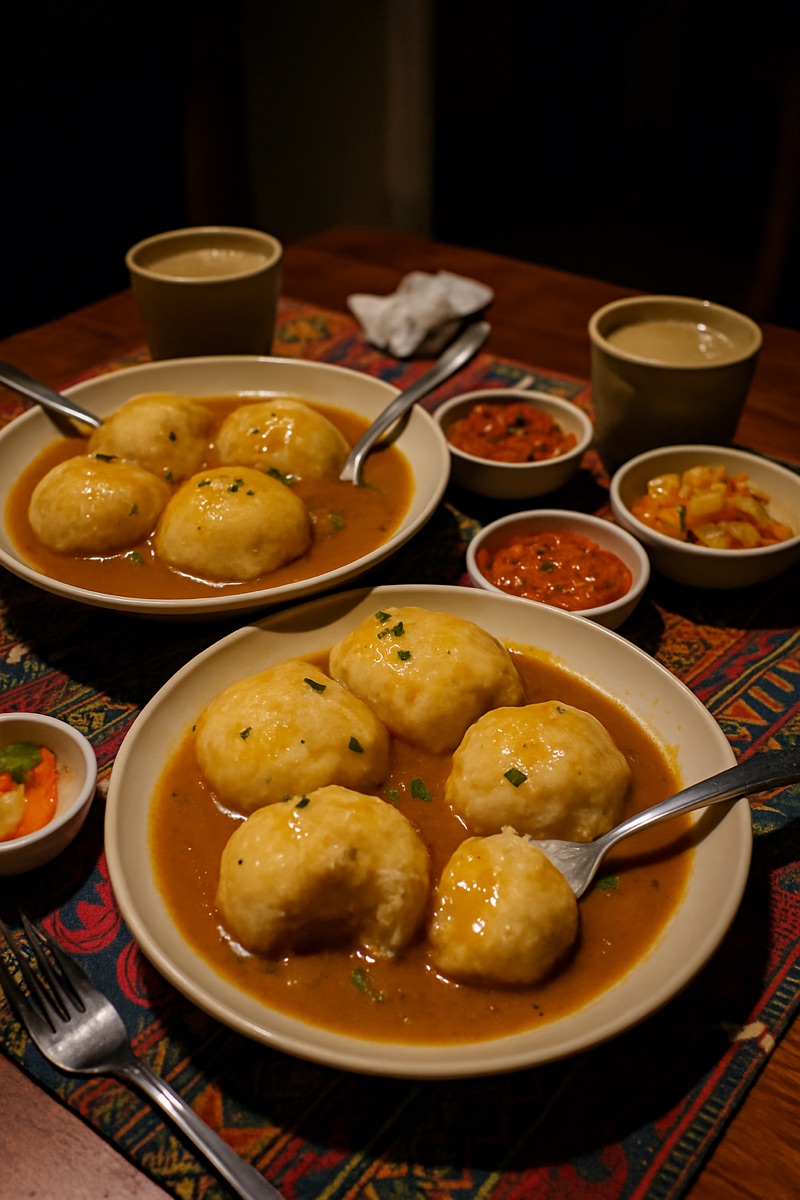 Incwancwa🇸🇿 Eswatini · 2 days and 1 hour
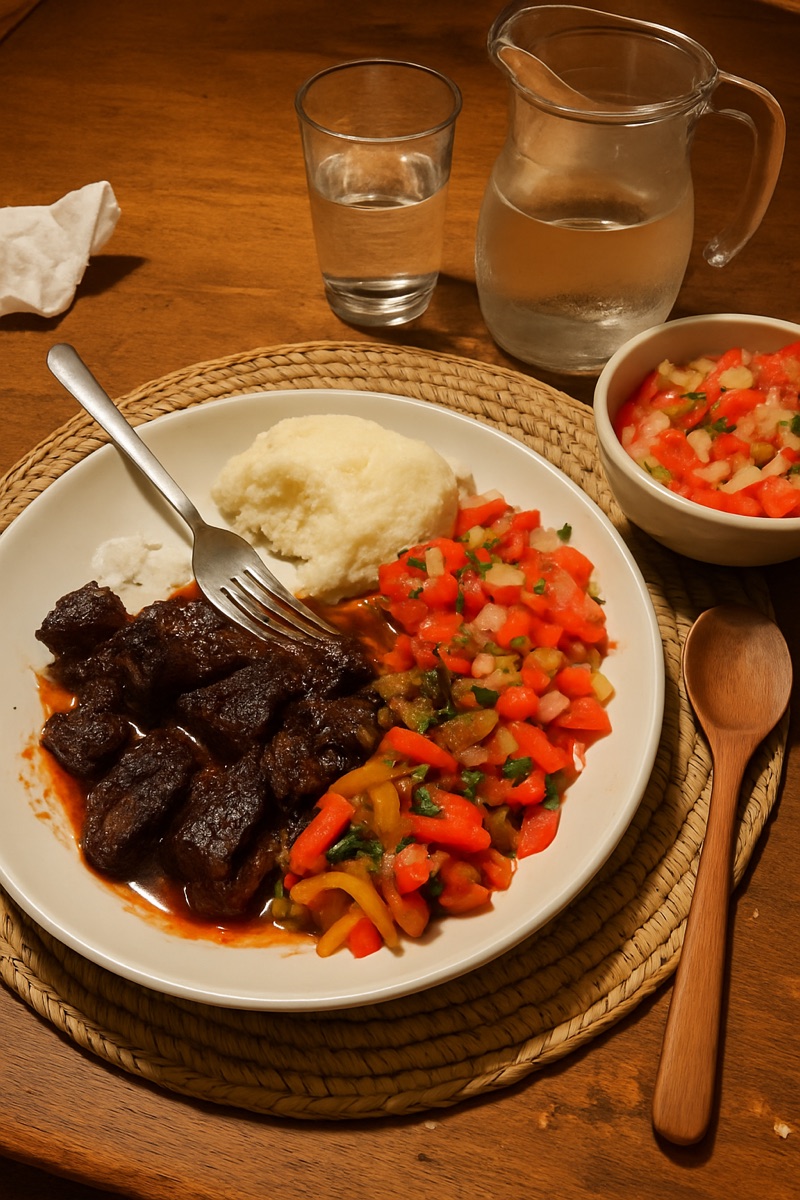 Umncweba🇸🇿 Eswatini · 6 days and 1 hour
Questions people ask
Does Eswatini have an official national dish?
No. No dish has official status, but sishwala, a stiff maize porridge, is the one most often named.
Is shisa nyama the national dish of Eswatini?
Wikipedia's list says so but cites no source. Shisa nyama means grilled meat, which Swazis eat with sishwala rather than in its place.
What is sishwala eaten with?
With a meat or vegetable stew. It is eaten by hand, rolled into small balls to scoop up the stew.
Is sishwala eaten for breakfast?
It can be: Afro Gist Media presents it as a traditional Swazi breakfast. It is also eaten with stews at main meals and at family celebrations.
What is umncweba?
Swazi dried raw meat, cured with salt and vinegar and air-dried without heat, similar to South African biltong.
Keep reading
- Traditional food of Eswatini: 14 dishes to know
- What is the national dish of Angola?
- What is the national dish of Botswana?
- What is the national dish of Lesotho?
- What is the national dish of Malawi?
- What is the national dish of Mozambique?