 COPPER
What is the national dish of Malawi?
Malawi has no officially declared national dish, but the dish most closely identified with the country is nsima: a stiff, smooth porridge of white maize flour and water, shaped into mounds and eaten by hand with relishes called ndiwo, such as beans, greens, meat or Lake Malawi fish. In 2017 UNESCO inscribed "Nsima, culinary tradition of Malawi" on its list of the Intangible Cultural Heritage of Humanity.
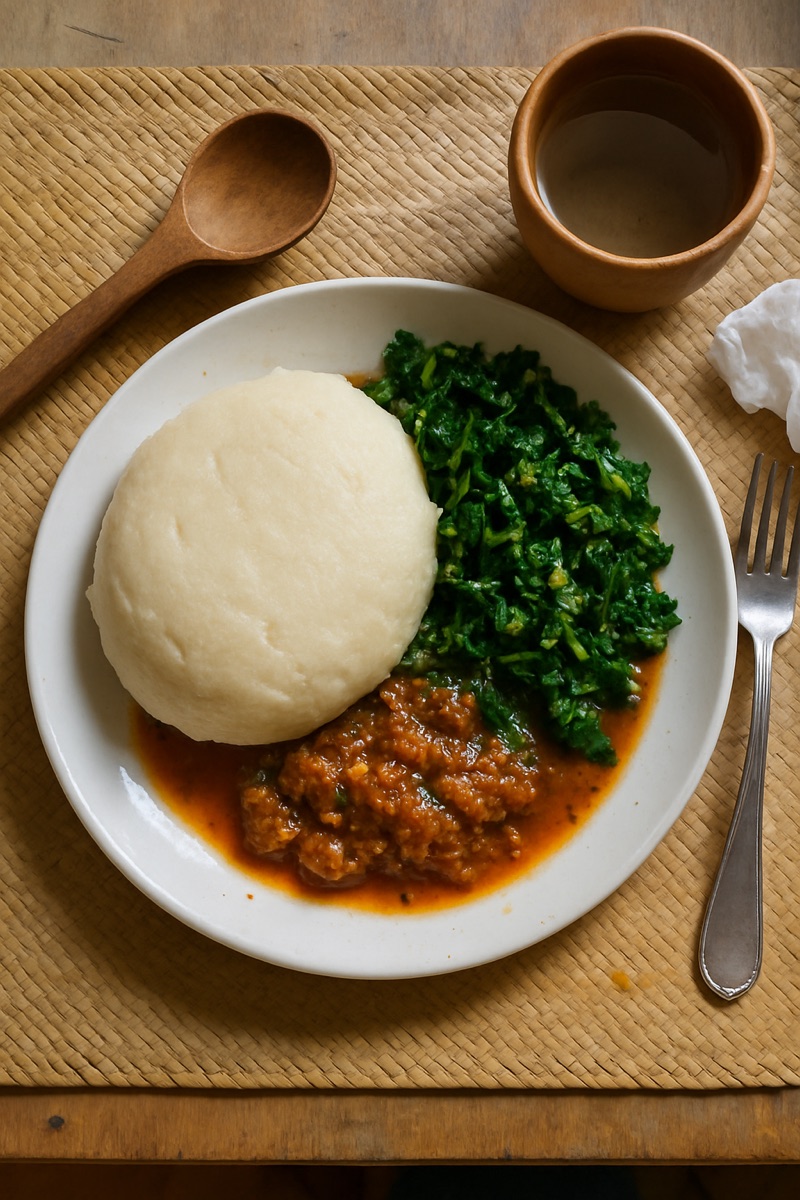
Why nsima is Malawi's national dish
Nsima is the staple food of Malawi, eaten at lunch and at dinner with side dishes of meat, beans and vegetables. Malawi has no law that names a national dish, but nsima has a stronger claim than most: in 2017, at Malawi's request, UNESCO added "Nsima, culinary tradition of Malawi" to its Representative List of the Intangible Cultural Heritage of Humanity.
The inscription covers more than a porridge. In UNESCO's words, nsima is both the name of the thick maize porridge and a compound name for the culinary and dietary tradition of Malawians, from pounding the maize into flour to choosing the accompanying food, preparing it and serving it. Most restaurants in Malawi have it on the menu.
What is nsima made of?
Only two things: white maize flour and water. No salt goes in, because the seasoning belongs to the relish. The same porridge is eaten across the region under other names, ugali in East Africa, sadza in Zimbabwe, nshima in Zambia, but in Malawi the usual name is nsima.
A related staple, kondowole, is made from cassava flour and water. It cannot be made in bulk because of its texture, so it is eaten less often than nsima.
How nsima is made
Nsima is built in two stages, and skipping the first one is the classic mistake. Our nsima recipe uses 1.2 litres of water for 300 g of flour:
- Phala: about a third of the flour is stirred into boiling water to make a thin porridge, left to bubble 5 to 10 minutes. Without it, the nsima tastes of raw flour and turns grainy.
- Thickening: the rest of the flour goes in a handful at a time, beaten hard with a wooden spoon after each addition.
- Beating: about 10 more minutes of folding over medium heat, until the mass pulls away from the pot and looks glossy.
- Shaping: portions are scooped with a spoon dipped in water and rolled into smooth mounds on the plate.
How nsima is eaten
Nsima is never eaten alone. It comes with relishes, ndiwo: beans, groundnuts, pumpkin leaves, bean leaves, amaranth, meat, poultry or fish. Diners gather around the table or on the floor and wash their hands first, often with water poured over them by a younger person or the host, because nsima is eaten with the bare right hand.
A small lump is rolled into a ball in the palm, pressed with the thumb to make a hollow, and used to scoop up the relish. UNESCO notes that certain customs at mealtimes regulate gluttony and promote cleanliness and cohesion, and that children learn early: girls to pound maize or sift flour, boys to hunt for the accompaniments.
Maize and everyday life in Malawi
Maize is not native to Africa. It arrived from the Americas with the Portuguese between the 16th and 17th centuries and gradually replaced sorghum and millet as the main cereal in most of the continent. In Malawi it became the base of the diet, alongside potatoes, sorghum, cattle and goats, with tea and lake fish as other features of the national table.
UNESCO describes the whole chain, growing, storing, processing and preparing the maize, as bound up with Malawians' way of life, and eating nsima as a family tradition that strengthens bonds. Because nsima is cheap and affordable for most of the population, price rises during maize shortages have occasionally contributed to economic and political instability.
Other dishes to know from Malawi
Lake Malawi supplies much of the protein on the plate. Chambo, a tilapia of the lake often compared to bream, is the most widely known fish; usipa, a small sardine-like fish, mpasa and kampango are the others. Chambo is scored, rubbed with lemon, salt and pepper, browned whole over charcoal or in oil, then simmered eight minutes in a tomato and onion gravy and served with nsima.
Katapa is a relish of cassava leaves pounded to a coarse paste, simmered 30 minutes, then cooked with ground peanuts and coconut milk. It is a close relative of the matapa of Mozambique.
You will find all three recipes on our page about the food of Malawi, and the neighbouring kitchens in our guide to Southern African food.
The recipes
- Nsima🇲🇼 Malawi · 30 minutes
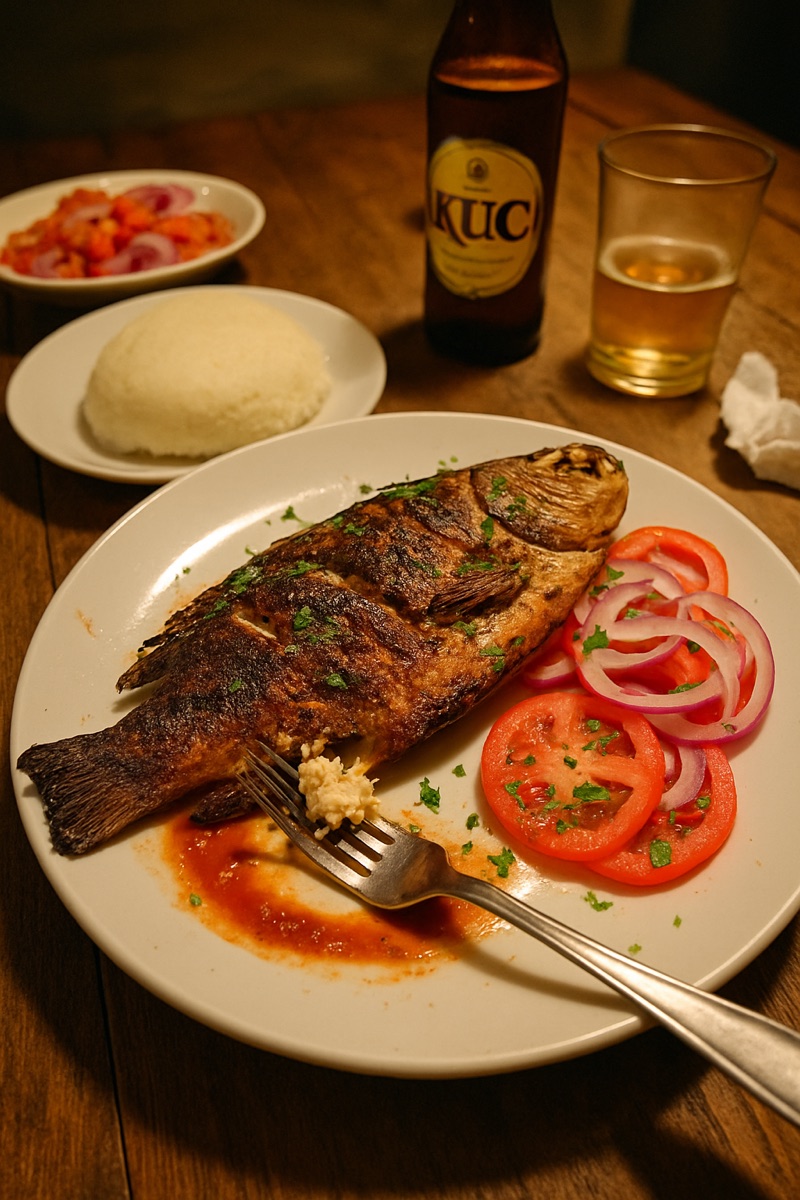 Chambo🇲🇼 Malawi · 1 hour and 15 minutes
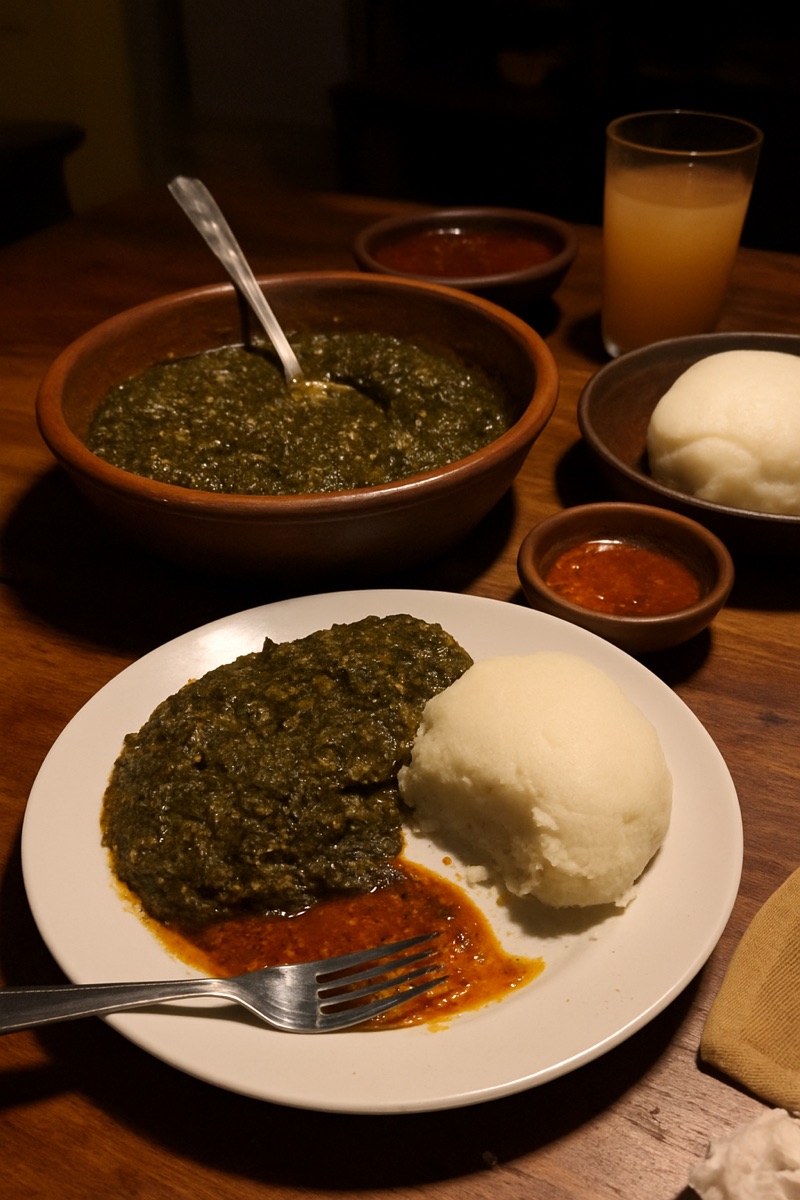 Katapa🇲🇼 Malawi · 1 hour and 15 minutes
Questions people ask
Is nsima the same as ugali?
Yes, it is the same kind of stiff maize porridge. It is called nsima in Malawi, nshima in Zambia, ugali in Kenya and Tanzania and sadza in Zimbabwe.
Is nsima recognised by UNESCO?
Yes. "Nsima, culinary tradition of Malawi" was inscribed on UNESCO's Representative List of the Intangible Cultural Heritage of Humanity in 2017.
What is ndiwo?
Ndiwo is the relish served with nsima: beans, vegetables such as pumpkin or bean leaves, meat, poultry or fish.
Do you put salt in nsima?
No. Nsima is made from maize flour and water only; the seasoning is in the relish.
What fish is eaten with nsima in Malawi?
Chambo, a tilapia from Lake Malawi, is the most widely known, along with usipa, mpasa and kampango.
Keep reading
- Traditional food of Malawi: 10 dishes to know
- What is the national dish of Angola?
- What is the national dish of Botswana?
- What is the national dish of Eswatini?
- What is the national dish of Lesotho?
- What is the national dish of Mozambique?