 COPPER
What is the national dish of Angola?
Angola has no officially declared national dish, but two are named again and again: muamba de galinha (also spelled moamba), chicken stewed in red palm oil with okra, garlic and chili, and funge, a stiff porridge of cassava or maize flour. They are usually eaten together, the funge pinched off by hand to scoop up the orange-red sauce.
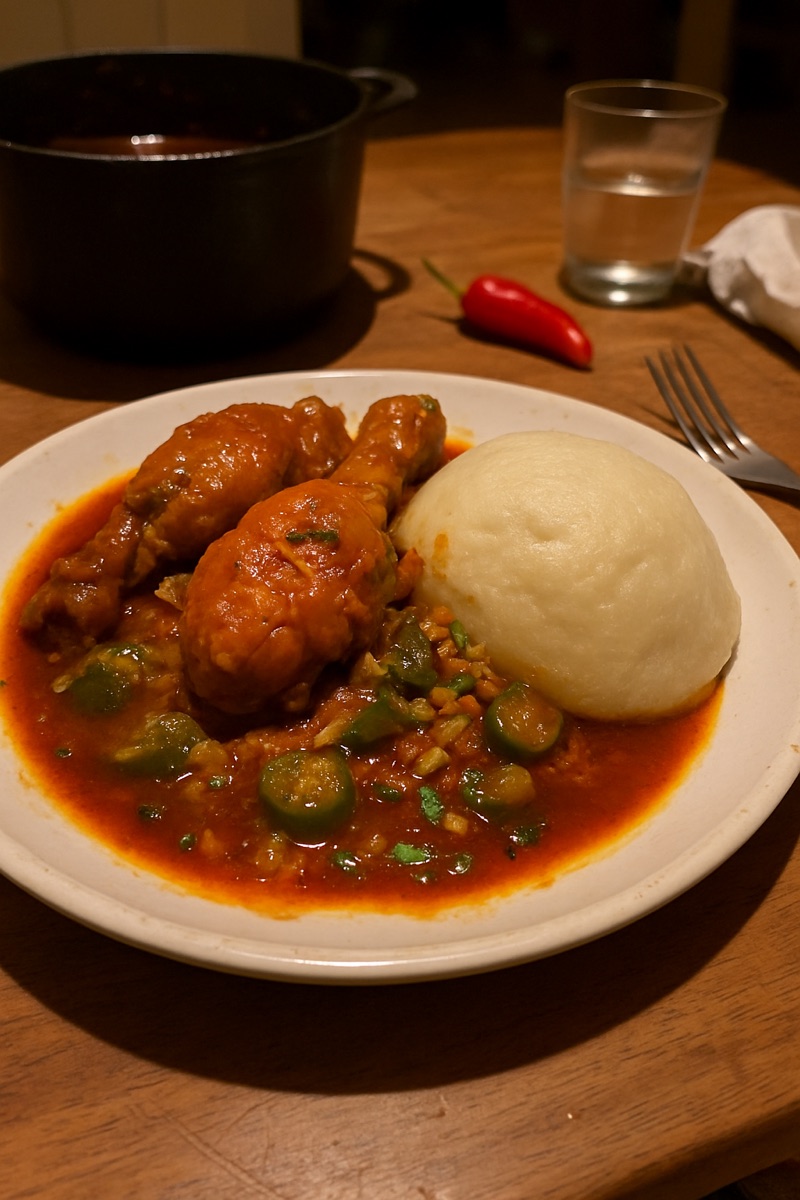
Muamba de galinha or funge: which one is it?
Sources do not agree on a single dish, and it is better to say so plainly. The English-language reference on Angolan cuisine states that both funge and moamba de galinha have been considered the national dish. The Portuguese-language encyclopedia goes further for funge, calling it the "prato nacional" and the most popular dish in Angola, while describing muamba as one of the most popular dishes in the country.
Abroad, muamba de galinha is the dish people mean. It is listed as a national dish of Angola alongside the two Congos, and the Angolan airline TAAG presents it as one of the most popular dishes in Luanda. In practice the question matters less at the table: muamba is almost always served with funge, so most Angolans would recognise the pair as one meal.
What is in muamba de galinha?
Muamba is a chicken stew whose colour and taste come from red palm oil. The spelling varies, muamba or moamba; in the Congo, moambe is the name of the palm butter the dish is cooked in. Our verified recipe uses:
- Chicken: about 1.5 kg, bone-in, cut into serving pieces.
- Red palm oil: 60 ml, heated until it runs fluid and smells nutty. Neither paprika nor a neutral oil can replace it.
- Okra and pumpkin: the two vegetables that thicken the sauce.
- Gindungo: the Angolan name for hot chili, with garlic, onion, tomato and lime in the marinade.
- Variant: moamba de ginguba swaps the palm oil base for ginguba, the Angolan word for peanut.
How muamba de galinha is made
The chicken is rubbed with garlic, chopped red chilies, lime juice, salt and pepper and left for an hour. It is browned in batches in the hot palm oil, then onions and about 400 g of tomatoes are cooked down in the same oil with the leftover marinade.
The chicken goes back in with water to barely cover and simmers for 20 to 25 minutes. Diced pumpkin follows for 10 to 15 minutes, until it starts to break down into the sauce. Okra goes in for the last 10 minutes only: long enough to thicken the stew, short enough to stay firm rather than slimy. Every step is in our muamba de galinha recipe.
What is funge?
Funge (also funje) is a swallow: flour whisked into boiling water until it turns into a smooth, stiff mass that is eaten with the fingers. A small ball is torn off and dipped into the stew.
Angola makes two kinds. In the south, funge is made from maize flour and comes out yellowish. In the north, funge de bombó is made from cassava and is greyish with streaks of brown. Both are served with a sauce, typically muamba or calulu, because funge alone has little taste. In poorer households it can be eaten at every meal. The same idea crosses the border into the Congo, where it is called mfundi, and the moambe chicken of the Democratic Republic of the Congo is a close cousin of the Angolan stew.
Where muamba de galinha comes from
Muamba belongs to a family of palm-sauce chicken stews eaten across Central Africa. Angola shares it with its northern neighbours: in the Republic of the Congo a version made with peanut butter is called muamba nsusu, nsusu meaning chicken in Kikongo, and in Gabon the same idea goes by poulet nyembwe.
The Angolan recipe adds its own markers: okra and pumpkin to thicken the sauce, gindungo for heat, and funge rather than rice on the side. Angolan emigration has carried it further, and moamba de galinha is a dish you can find in Angolan restaurants in Portugal.
Funge is just as rooted. It is eaten with fish, pork, chicken or beans, and in the Congo the same cassava swallow is also known as bidia, literally "food".
Other dishes to know from Angola
Calulu is the fish counterpart of muamba. Dried smoked fish is soaked twice in boiling water, then layered in a pot with fresh fish, okra and sweet potato leaves under red palm oil and cooked for 40 minutes without stirring. It is served with funge and beans cooked in palm oil, and the same dish is made in São Tomé and Príncipe.
For dessert, cocada amarela is a spoonable coconut custard turned yellow by egg yolks, a Portuguese convent habit; it is eaten in both Angola and Mozambique.
You will find all three recipes on our page about the food of Angola, and the neighbouring kitchens in our guide to Southern African food.
The recipes
- Muamba de galinha🇦🇴 Angola · 2 hours and 30 minutes
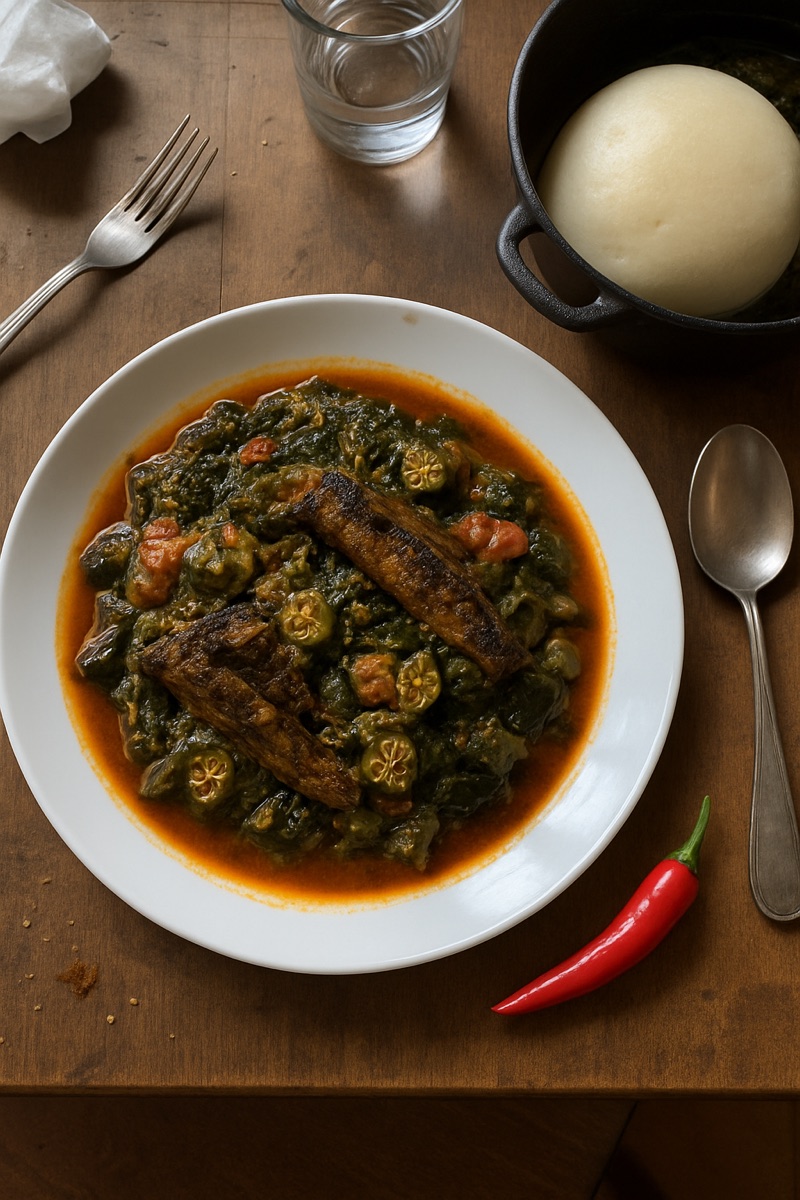 Calulu🇦🇴 Angola · 2 hours and 20 minutes
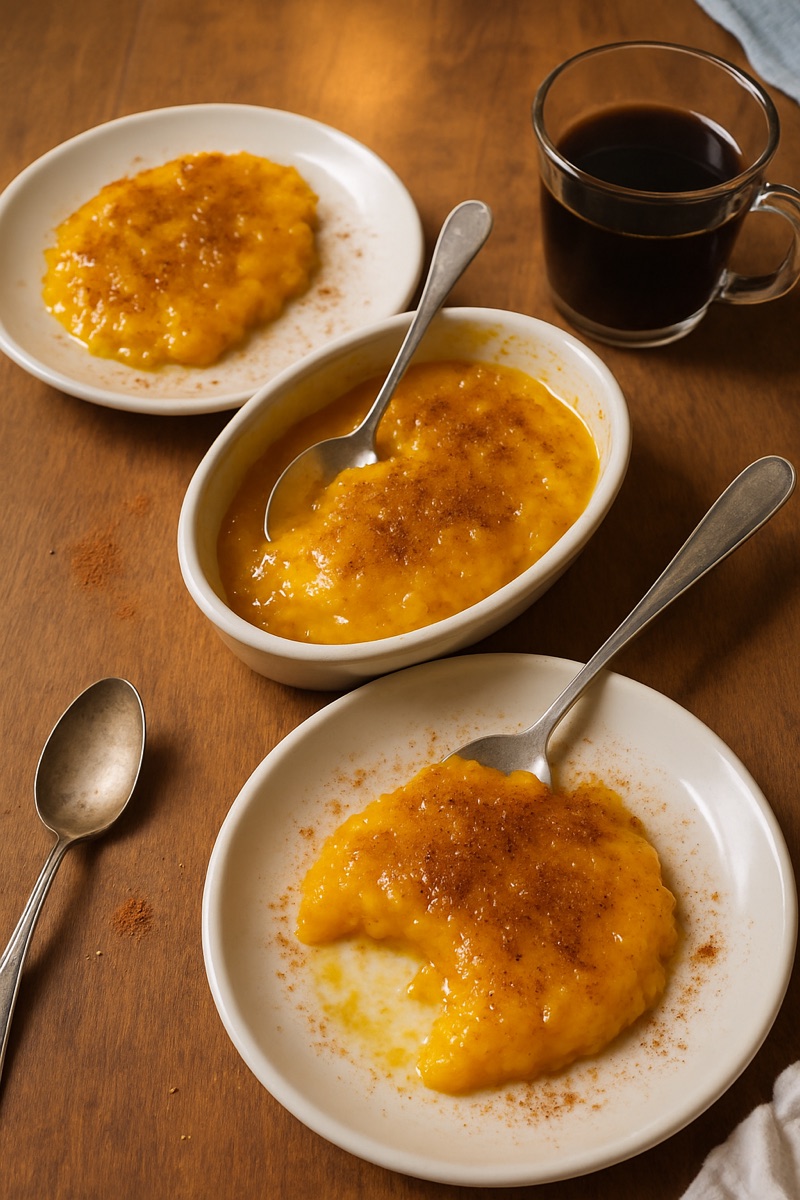 Cocada amarela🇦🇴 Angola · 50 minutes
Questions people ask
Is muamba de galinha the same as moambe chicken?
Yes, it is the same family of dish: chicken cooked in a palm-based sauce. It is called moambe in the Congo, nyembwe in Gabon and muamba or moamba de galinha in Angola.
What is funge made of?
Funge is flour stirred into boiling water until stiff. In southern Angola it is made with maize flour, in the north with cassava flour, where it is called funge de bombó.
What is served with muamba de galinha?
Funge is the usual partner, sometimes replaced by rice. The funge is pinched off by hand and used to scoop up the sauce.
Is muamba de galinha spicy?
It carries some heat from gindungo, the Angolan chili, used in the marinade, but the dominant flavour is red palm oil. The heat can be adjusted at the end of cooking.
How do you pronounce muamba de galinha?
Roughly MWAM-ba deh ga-LEE-nya, with the stress on the second syllable of galinha.
Keep reading
- Traditional food of Angola: 13 dishes to know
- What is the national dish of Botswana?
- What is the national dish of Eswatini?
- What is the national dish of Lesotho?
- What is the national dish of Malawi?
- What is the national dish of Mozambique?