 COPPER
What is the national dish of Botswana?
The national dish of Botswana is seswaa: tough, bone-in beef or goat meat boiled for hours with nothing but salt and water, then pounded with a wooden pestle until it falls into fine threads. It is served on pap (stiff maize porridge), samp or sorghum porridge, and is the dish of weddings, funerals and independence celebrations. No law makes it official, but it is the dish cited everywhere.
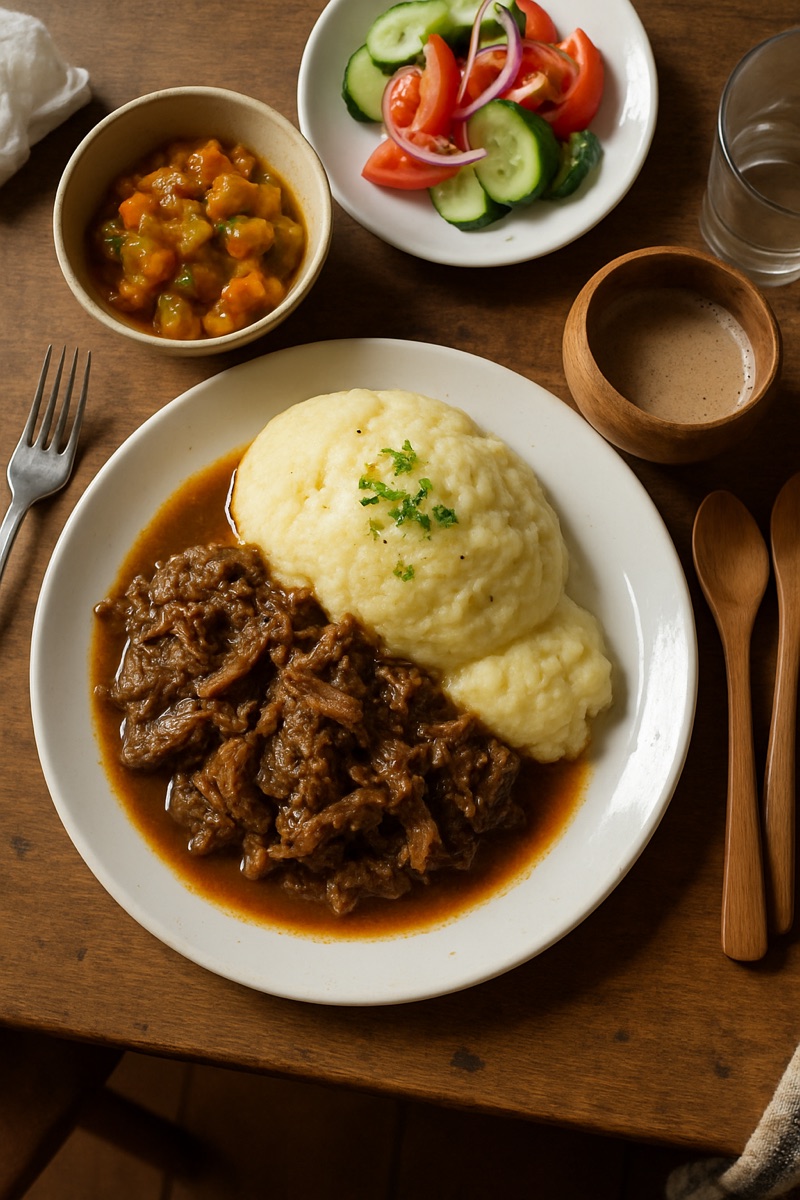
What is seswaa?
Seswaa is salted, pounded meat. It is called seswaa in the north of Botswana and loswao in the south and in western South Africa; tshotlho is another name. It is made from beef or goat, using tough cuts such as legs, neck and back, and sometimes the whole animal.
The dish is not an everyday stew. It is the meat of ceremonies: funerals, weddings and national events such as independence celebrations. Travel and food writers describe it as Botswana's national dish, and it is the dish the reference list of national dishes gives for the country. We found no law or official decision behind that title, so we call it what it is: the dish cited everywhere.
Why seswaa uses only salt
The defining rule of seswaa is restraint. The seasoning is salt, with water and, in some versions, a little cooking oil. No onion, no garlic, no stock cube, no bay leaf.
The flavour comes from the cut. Tough, bone-in pieces such as chuck, shank or neck are the point; a lean roasting joint is the wrong choice. Seswaa simmers for about three hours, long enough for the meat to fall off the bone, and only a few centimetres of the cooking liquid are kept for the pounding.
How seswaa is made
Traditionally, seswaa is cooked in a three-legged iron pot over a fire, and it is usually prepared by men. Our seswaa recipe follows the same steps on a stove:
- Cut 1.5 kg of bone-in beef chuck, shank or neck into fist-sized pieces.
- Boil with about 1.5 litres of water and 2 teaspoons of salt, skim, then simmer covered for about 3 hours, until the meat falls off the bone.
- Lift out the bones and gristle, leaving 2 to 3 cm of cooking liquid in the pot.
- Pound the meat in that liquid with a clean wooden pestle for 10 to 15 minutes, until it breaks into fine fibres rather than chunks.
- Dry off a few minutes uncovered if needed: seswaa should hold its shape on the spoon.
What is served with seswaa?
Seswaa is almost always served on a starch. The usual choices are:
- Pap: stiff maize porridge. Our pap recipe is the Botswana version, maize meal poured gradually into salted boiling water and stirred about 20 minutes.
- Bogobe: a porridge of sorghum, maize or millet flour stirred into boiling water and cooked slowly; sorghum and maize are Botswana's main crops.
- Setampa: samp, coarsely ground corn.
- Morogo: spinach-like greens often served alongside.
Pap, bogobe and ting: the starches of Botswana
The porridge under the seswaa changes with the household and the occasion. Bogobe can be made with sorghum, maize or millet. When the sorghum or maize is left to ferment for a few days before cooking, the sour porridge is called ting, and it is eaten with meat, or with milk and sugar. Another version, bogobe jwa lerotse, adds sour milk and a cooking melon called lerotse.
Bread flour is a later arrival, imported for some years, but several bread recipes have become part of the national food: dumplings (matlebelekwane or madombi) boiled with meat, flat cakes (diphaphatha) cooked on hot coals, and fat cakes (magwinya) fried in hot oil.
Other dishes to know from Botswana
Botswana raises a large amount of beef, and it is the most popular meat, followed by goat. Beyond seswaa, the cooking includes serobe, goat, sheep or cow offal cooked until soft, magwinya (fat cakes), and mopane worms, the caterpillar of the moth Gonimbrasia belina, cooked in hot ashes, boiled, or dried and fried. Milk is fermented into madila, a sour milk eaten on its own or stirred into porridge.
Chicken has its own etiquette. Free-range, traditionally raised chicken is considered tastier than commercial birds, and cooking one for a guest is a sign of special hospitality; it is cooked in the same three-legged iron pot and eaten with dumplings or pap. At weddings and parties, the drink on the table is often homemade ginger beer, fermented for a day.
Biltong, air-dried cured beef with coriander and vinegar, is shared with Namibia and South Africa.
You will find all three recipes on our page about the food of Botswana, and the neighbouring kitchens in our guide to Southern African food.
The recipes
- Seswaa🇧🇼 Botswana · 3 hours and 30 minutes
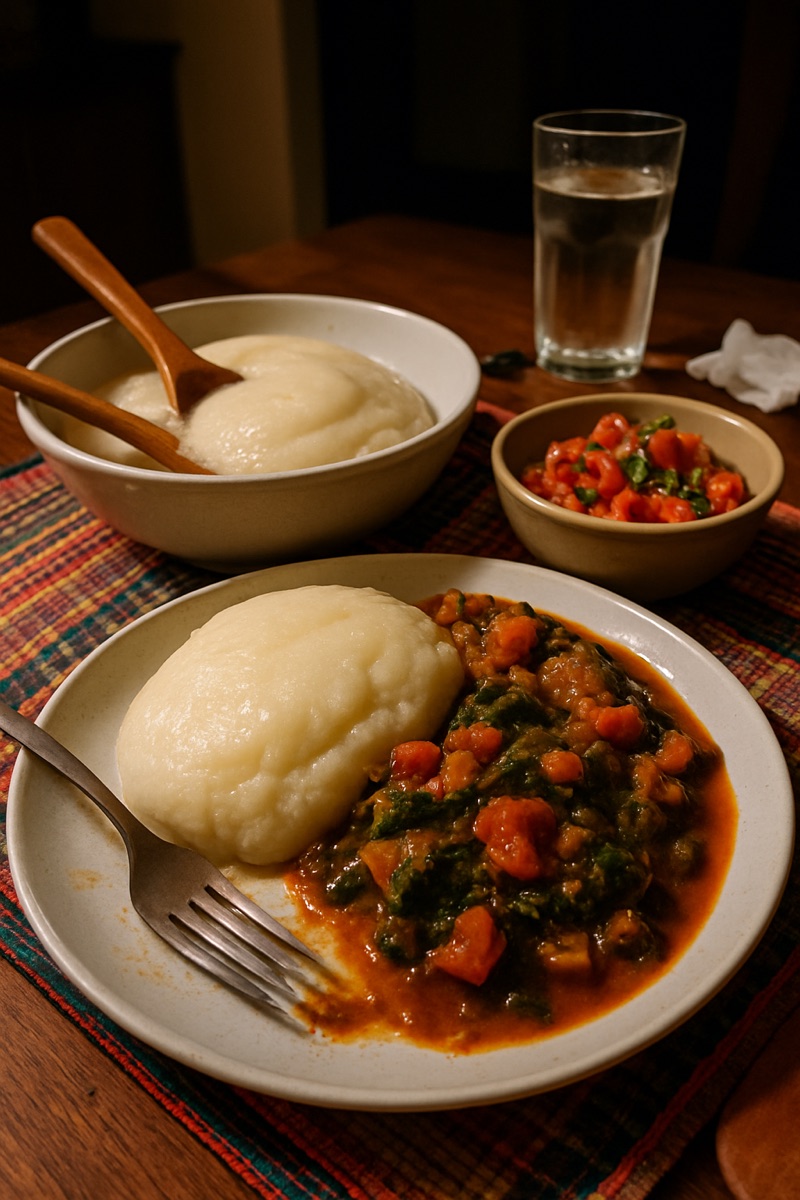 Pap🇧🇼 Botswana · 30 minutes
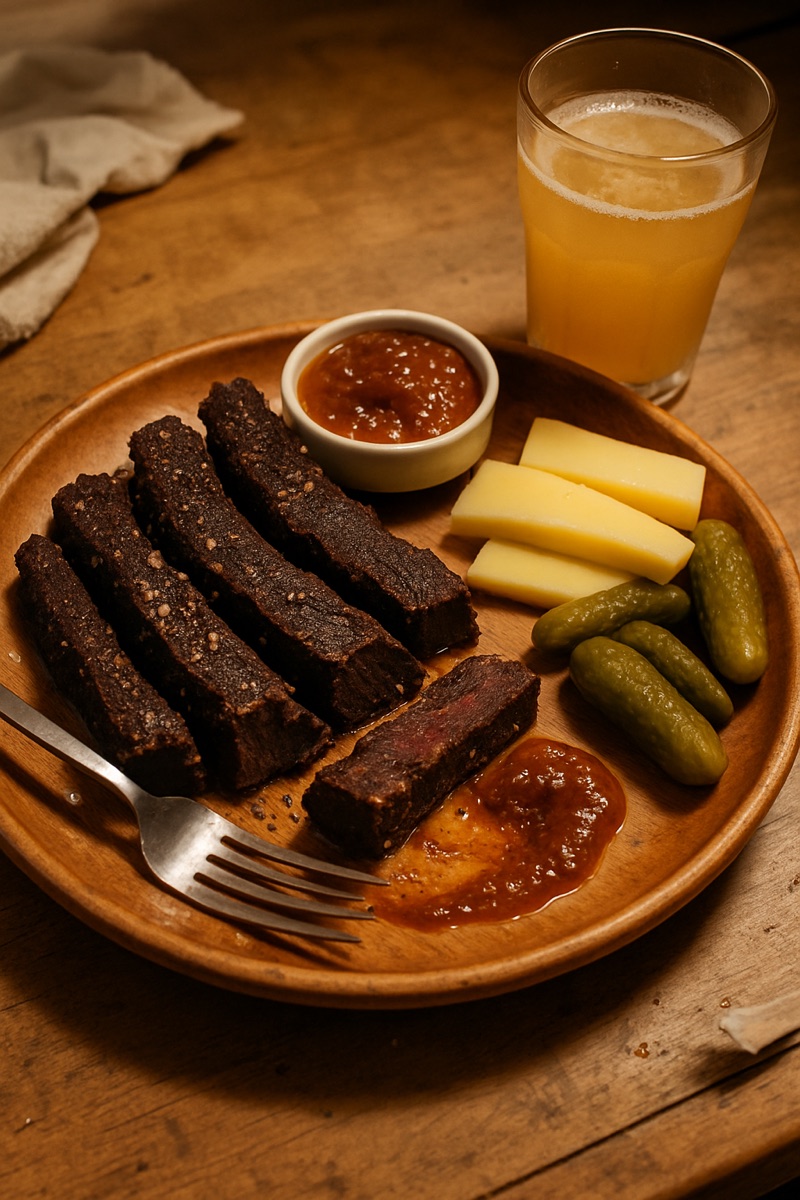 Biltong🇧🇼 Botswana · 5 days and 2 hours
Questions people ask
Is seswaa the official national dish of Botswana?
Seswaa is widely called Botswana's national dish, but we found no law or government decision making it official. It is the dish served at the country's weddings, funerals and independence celebrations.
What meat is used for seswaa?
Beef or goat, from tough cuts such as legs, neck and back, cooked on the bone.
What is seswaa served with?
Seswaa is served on pap (stiff maize porridge), samp, or bogobe, a sorghum porridge, often with morogo greens.
What is another name for seswaa?
In the south of Botswana and in western South Africa it is called loswao; it is also known as tshotlho.
Who cooks seswaa?
Seswaa is usually prepared by men, traditionally in a three-legged iron pot over an open fire, especially for weddings and funerals.
Keep reading
- Traditional food of Botswana: 13 dishes to know
- What is the national dish of Angola?
- What is the national dish of Eswatini?
- What is the national dish of Lesotho?
- What is the national dish of Malawi?
- What is the national dish of Mozambique?