 COPPER
Traditional food of Botswana: 13 dishes to know
Botswana food is built on beef and on porridge of sorghum or maize, called bogobe or pap, with sour milk, beans and greens. Meat is cooked simply, often with only salt, in a three-legged iron pot. The most emblematic dishes are seswaa, pounded salted beef, pap, bogobe jwa lerotse, sorghum porridge with melon, and dikgobe, samp and beans.
What Botswana food is built on
Botswana's cooking, known as Setswana food, shares a lot with the rest of Southern Africa but keeps its own dishes. Sorghum and maize are the main crops; wheat and rice are imported. Cowpeas, mung beans (letlhodi), peanuts (manoko) and ditloo beans are grown, along with spinach, cabbage, pumpkins and sweet potatoes, and wild vegetables such as thepe (amaranth) and delele (okra) are picked in season. Watermelons are believed to have originated in Botswana, and another melon, lerotse, is grown for cooking.
A large amount of high-quality beef is raised in the country, and beef is the most popular meat, followed by goat; sheep, Tswana chicken and river fish are also eaten. Batswana are known for preserving food: meat is cut into strings and dried (digwapa), bean leaves are cooked and dried, leftover porridge is turned into mageu, a sour drink, and some groups even dry meat that is starting to spoil into a long-keeping relish called mokungwana.
Meat dishes
- Seswaa — Tough, bone-in beef or goat boiled for hours with only salt and water, then pounded with a wooden pestle until it falls into threads. Usually prepared by men in a three-legged iron pot over a fire, it is the meat of weddings, funerals and national celebrations, and is also called tshotlho, or loswao in the south. It simmers for about three hours, until the meat falls off the bone, and is then pounded in a little of its cooking liquid; no onion, garlic or stock goes in.
- Serobe — The intestines and other offal of a goat, sheep or cow, washed thoroughly, cut small with scissors and cooked until soft. With sheep or goat, the trotters go in too.
- Mala mogodu — Tripe and intestines stewed together and served with hot pap or dumplings, a dish shared with South Africa. Mala means "the insides" in Setswana.
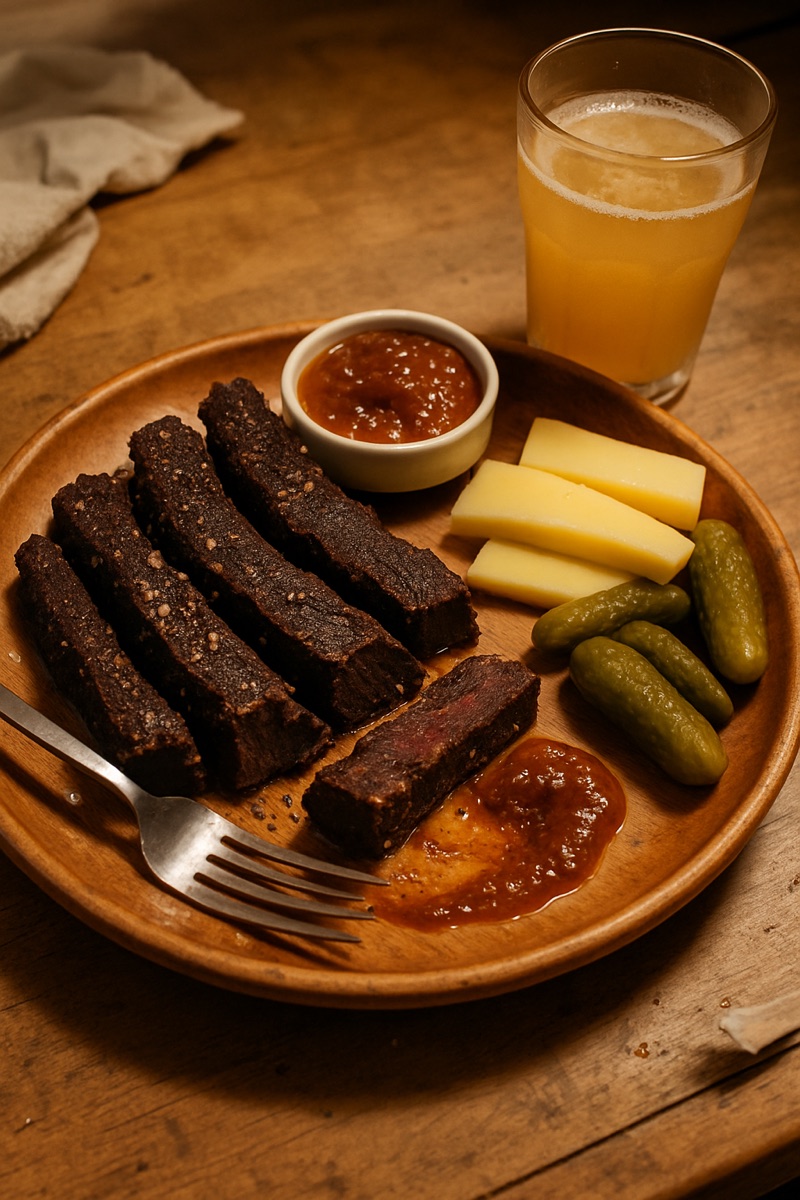
- Biltong — Strips of beef rubbed with salt, black pepper and toasted coriander, sprinkled with vinegar and air-dried until firm. It belongs to the same drying tradition as digwapa, the string-cut dried meat of Batswana households.
- Tswana chicken — Free-range, traditionally raised chicken, considered tastier than commercial birds. Cooking one for a guest is a sign of special hospitality; it is cooked in the three-legged pot over an open fire and eaten with dumplings or pap.
Porridges and starches
- Pap — White maize meal poured gradually into salted boiling water and stirred into a stiff porridge, eaten by hand with meat and stews. Seswaa is almost always served on it.
- Bogobe and ting — Bogobe is sorghum, maize or millet flour stirred into boiling water and cooked slowly into a soft paste. When the grain is left to ferment for some days first, the sour porridge is called ting, and it is eaten with meat, or with milk and sugar.
- Bogobe jwa lerotse — Sorghum porridge cooked with chopped lerotse melon and sour milk, stirred with a wooden whisk called a lehetho. It is eaten at weddings and other gatherings, and the Kalanga call it tophi.
- Bogobe jwa logala — A breakfast porridge of sorghum flour cooked in nearly boiling milk until it sets like a gel, eaten with or without sugar.
- Dikgobe — Samp, coarsely broken maize kernels, cooked together with beans. It is served at Setswana weddings and funerals, where it is one of the two acceptable starches, the other being sorghum.
Breads, greens and wild foods
- Magwinya — Fat cakes: yeast dough fried in hot oil, sold by vendors and takeaways across Botswana. With dumplings (matlebelekwane or madombi) boiled with meat and flat cakes (diphaphatha) cooked on hot coals, they are the breads that imported flour has made part of national food.
- Morogo wa dinawa — Bean leaves, cooked and often dried for later; dried bean leaves are one of the most popular Setswana foods. Many vegetables are seasonal, so drying and salting them is a common way of preserving them, and there are many ways of cooking them once dried.
- Mopane worms — Phane, the caterpillar of the moth Gonimbrasia belina, cooked in hot ashes, boiled, or dried and fried; in Botswana people tend not to eat the head. Botswana is one of the main producers, and the trade is worth millions of dollars a year.
Drinks and regional foods
Milk is fermented into madila, a sour milk eaten on its own or stirred into porridge. Homemade ginger beer, boiled ginger, sugar and cream of tartar fermented for a day, is the drink of weddings and parties, and watermelon and marula are made into soft drinks. Bojalwa ja Setswana is beer brewed from fermented sorghum; the Kalanga use millet (lebelebele) instead. Chibuku, a commercial beer of maize or sorghum, is a favourite in the villages, and khadi is brewed from various ingredients, including wild berries. Leaves of local mints such as kgomodimetsing are mixed into tea for their scent. In the remote Kalahari, people eat the huge underground tuber of the marama bean and its roasted seeds, along with desert truffles, and delele okra is eaten in the north-east.
Cook Botswana food at home
Seswaa is the national dish of Botswana in every reference, though no law makes it official. Copper has full recipes for seswaa, pap and biltong, with ingredients and step-by-step methods, on our page about the food of Botswana, alongside other Southern African recipes.
Pap, magwinya and biltong are shared across the border. Compare with the traditional food of Namibia and the traditional food of South Africa.
The recipes
- Biltong🇧🇼 Botswana · 5 days and 2 hours
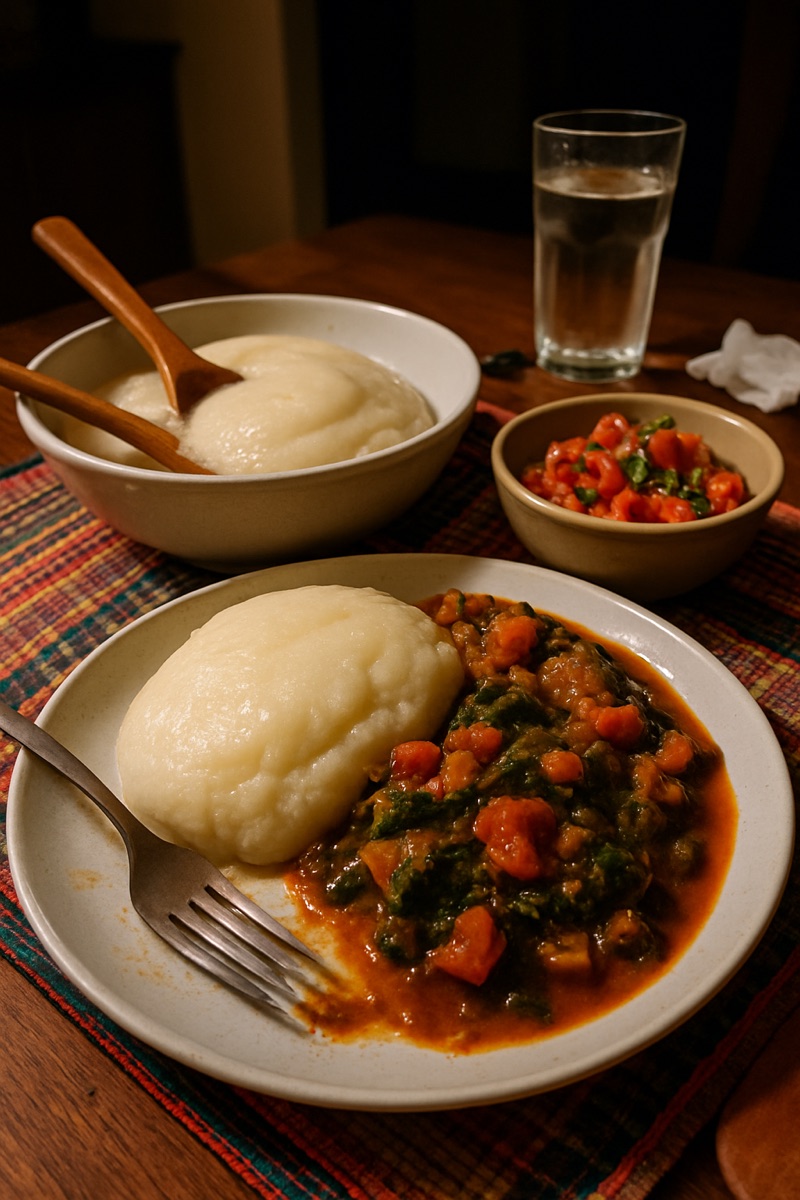 Pap🇧🇼 Botswana · 30 minutes
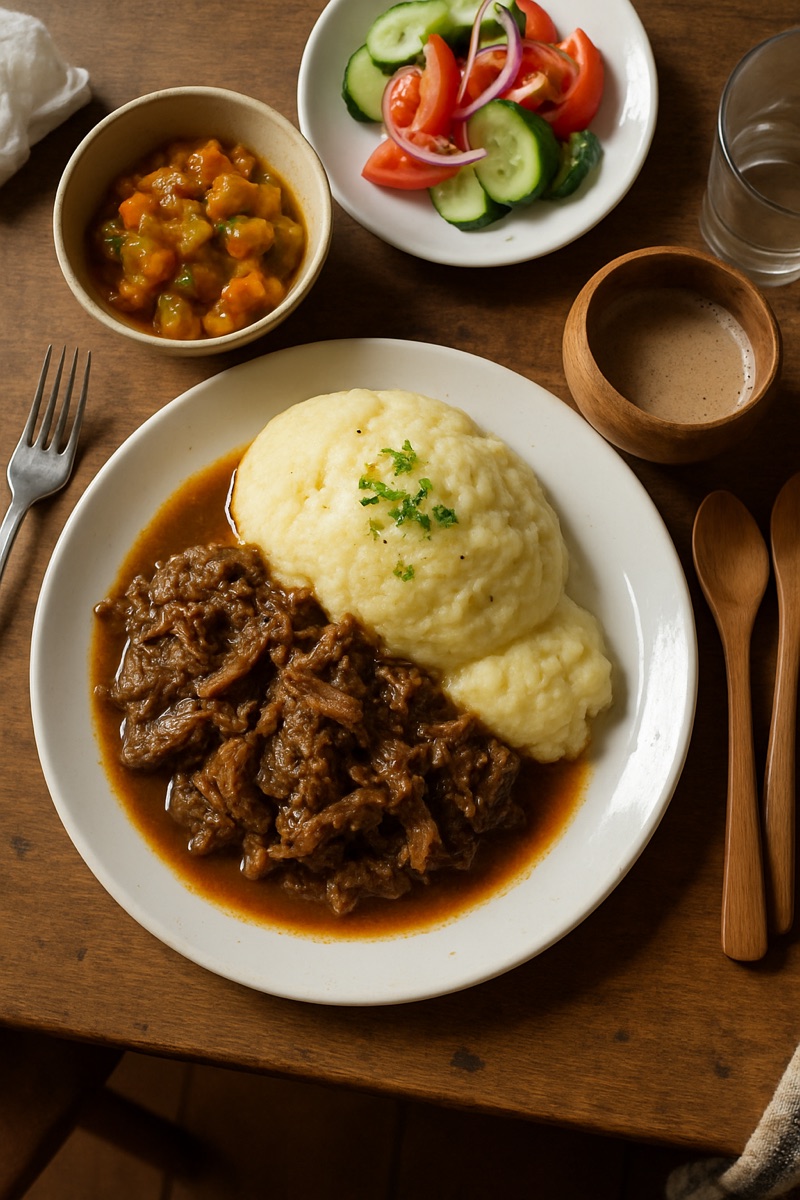 Seswaa🇧🇼 Botswana · 3 hours and 30 minutes
Questions people ask
What is the most popular food in Botswana?
Seswaa, salted pounded beef served on pap, is the best-known dish, cooked for weddings, funerals and national celebrations. Pap and bogobe porridge are eaten every day.
What do people in Botswana eat for breakfast?
Porridge is the usual start: bogobe jwa logala, a breakfast porridge of sorghum cooked in milk, eaten with or without sugar.
Is Botswana food spicy?
No. Traditional dishes are seasoned very simply; seswaa is cooked with nothing but salt and water.
What is ting?
Ting is a sour porridge made from sorghum or maize that has been left to ferment for a few days before cooking. It is eaten with meat, or with milk and sugar.
What is served at a Botswana wedding?
Seswaa with samp or dikgobe (samp and beans), bogobe jwa lerotse, and homemade ginger beer.
Keep reading
- What is the national dish of Botswana?
- Traditional food of Angola: 13 dishes to know
- Traditional food of Eswatini: 14 dishes to know
- Traditional food of Lesotho: 14 dishes to know
- Traditional food of Malawi: 10 dishes to know
- Traditional food of Mozambique: 13 dishes to know