 COPPER
Traditional food of Mozambique: 13 dishes to know
Mozambican food is built on xima, a stiff maize porridge, or rice, served with sauces of vegetables, beans, meat or seafood thickened with ground peanuts and coconut milk. Portuguese colonisation brought piri-piri, tomatoes and cassava; Indian Ocean trade brought curry and samosas. The most emblematic dishes are matapa, piri-piri chicken, prawns LM and caril de camarão.
What Mozambican food is built on
Mozambican cooking mixes indigenous foods and methods with influences from Indian Ocean trade and Portuguese colonisation. Before the Portuguese, millet and sorghum were the main grains; maize has largely replaced them in recent decades. The Portuguese introduced the crops that now form the core of the diet: maize, tomatoes, potatoes and sweet potatoes, peppers and cassava. They also left the refogado, a base of tomato, onion, garlic and piri-piri sautéed in oil that starts many sauces.
The staple is xima, a thick porridge of maize flour; cassava and rice play the same role, and all are served with a sauce of vegetables, meat, beans or fish. Other typical ingredients are cashew nuts, onions, bay leaves, garlic, coriander, paprika, black and red pepper, millet, sorghum and potatoes. Oranges, lemons, many spices and possibly sugar cane and bananas came from India and further east. As a long coastal country, Mozambique eats a great deal of seafood, and centuries of trade with India explain the curries, chamuças and achars.
Staples and stews
- Xima — Maize flour cooked in water into a thick, smooth porridge, the everyday starch for many Mozambicans; it is also written chima and called upswa. It is the same family of dish as nsima in Malawi and nshima in Zambia, and is eaten by hand with a sauce.
- Matapa — Young cassava leaves pounded in a wooden mortar with garlic and piri-piri, then cooked slowly with ground peanuts and coconut milk, often with crab or prawns. In the Portuguese-language description, the leaf paste is first cooked without water until almost dry, then tomato, onion and seafood go in, and the coconut and peanut milks are added last and left to reduce over low heat. It is one of the best-known Mozambican dishes and is served with rice or xima.
- Mucapata — Rice cooked with beans and coconut milk, one of the many Mozambican dishes in which coconut milk replaces water or stock.
- Xiguinha — A thick mixture of cassava, peanut and coconut milk, to which other ingredients such as leaves or seafood can be added.
Curries, grills and seafood
- Caril de camarão — A dish shared with the Indo-Portuguese cooking of Goa: shrimp curry in a thick yellow sauce that can include grated coconut, turmeric, cumin, coriander, chilli, garlic, tamarind and vinegar, served with white rice. Curry is considered one of Mozambique's national dishes, though the word covers almost any shrimp, fish, meat or vegetable sauce, with or without curry powder; in the south it is often thickened with peanut.
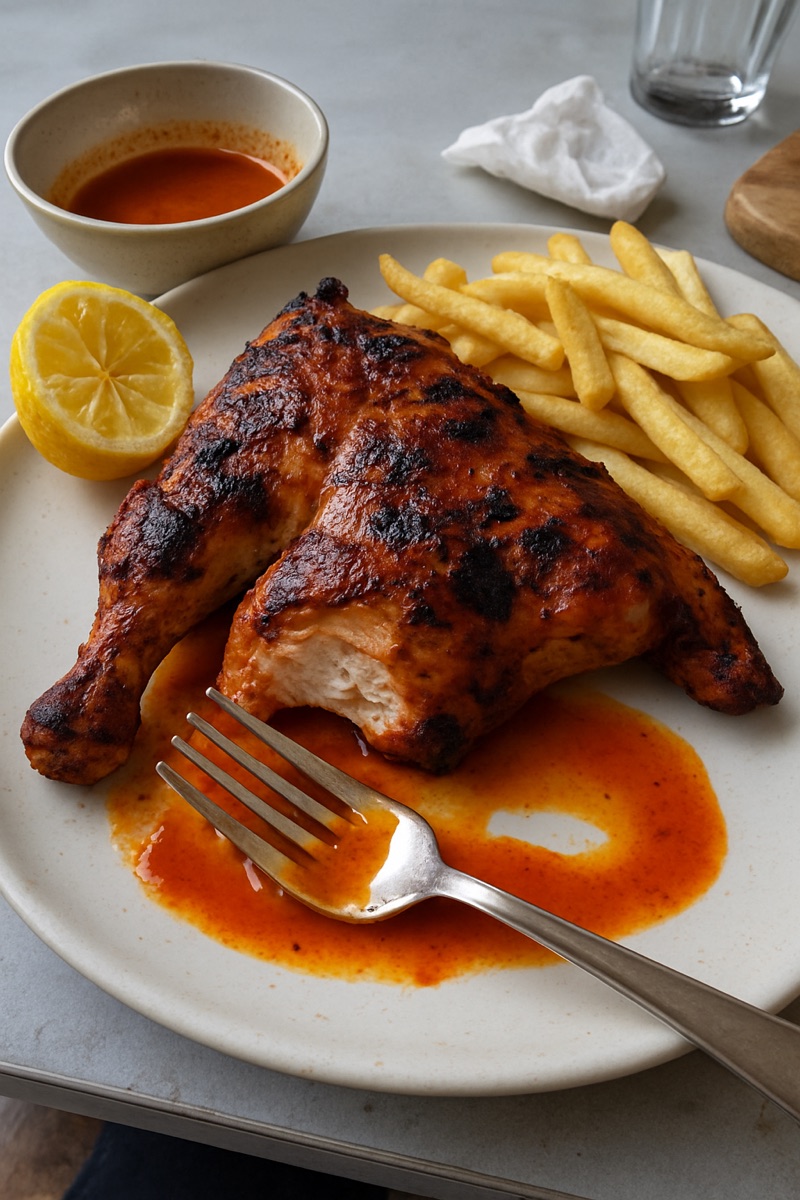
- Frango piri-piri — Chicken marinated for hours in pounded piri-piri chillies, garlic and lemon, then grilled and brushed with more of the sauce. The Oxford Dictionary of English traces the word piri-piri to the Ronga language of southern Mozambique, and the dish is claimed by both Mozambique and Angola. Outside Africa the sauce is best known in Britain, through the South African chain Nando's.
- Prawns LM — Large prawns marinated in piri-piri, lemon and garlic, grilled on skewers for two to three minutes per side and basted with the marinade boiled with butter. LM stands for Lourenço Marques, the colonial name of Maputo.
- Frango à zambeziana — Zambezian-style chicken: a spicy chicken dish cooked with coconut milk, one of the clearest examples of coconut in Mozambican main courses.
- Tocossado — Fish baked in a sauce of chilli, mango and tomato.
- Chamuças — Triangular fried pastries filled with spiced minced meat, potato or vegetables, the Mozambican version of the Indian samosa, also spelled samussa. They are common in Mozambique thanks to its large population of Goan origin, and are eaten as a snack. The same pastry travelled from Goa to Portugal, where it is often served with achar.
Pickles and sweets
- Achar — Mango or lemon fermented with salt and piri-piri, a pickle of Indian origin served on the side of rice and curries.
- Bolo polana — A cake made with cashew nuts and potatoes. Cashews are one of the typical ingredients of Mozambican cooking, in savoury dishes as well as sweet ones.
- Cocada amarela — A yellow coconut pudding made with sugar, grated coconut, egg yolks and cinnamon, eaten in both Mozambique and Angola. Sweet coconut puddings and candies are common across the country, possibly a Portuguese influence.
Regional Mozambique
The south, around Maputo, is where peanut is most often used to thicken curries, and where the Ronga language gave piri-piri its name. Southern cooks also stew pumpkin leaves into a dish called mbowa, and cabbage into macoufe, on the same model as matapa. Many of these leaves arrived from elsewhere: cassava came from Brazil, pumpkin from the Caribbean and cabbage from Europe, and Mozambican cooks made them their own. Along the coast, seafood, coconut and the Goan heritage behind curries, chamuças and achar dominate. Inland, kapenta, a small freshwater sardine, is fished on the Cahora Bassa lake on the Zambezi.
Cook Mozambican food at home
Matapa is the dish most often presented as the national dish of Mozambique, with curry and piri-piri chicken also named. Copper has full recipes for matapa, frango piri-piri and prawns LM, with ingredients and step-by-step methods, on our page about the food of Mozambique, alongside other Southern African recipes.
Mozambique's food travelled with its people: chakalaka is said to have been created by Mozambican mineworkers around Johannesburg, and Malawi cooks a close cousin of matapa called katapa. Compare with the traditional food of South Africa and the traditional food of Malawi.
The recipes
- Frango piri piri🇲🇿 Mozambique · 2 hours and 45 minutes
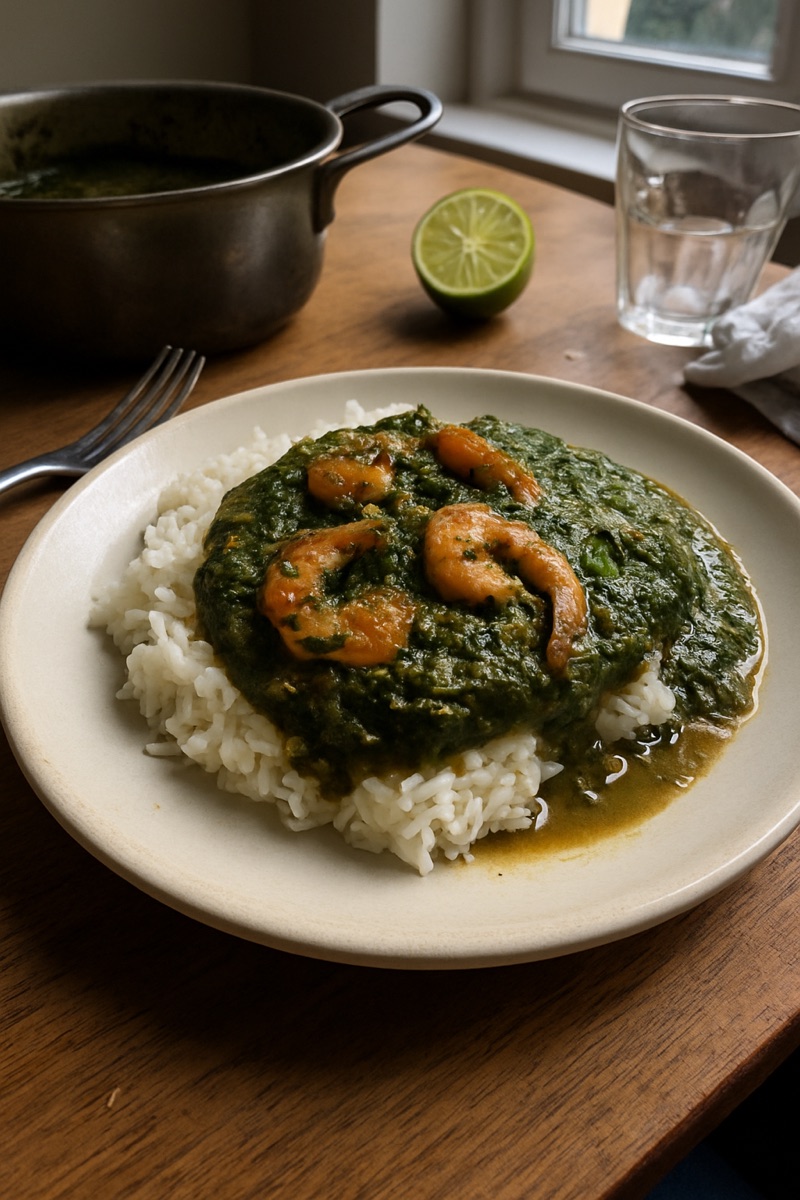 Matapa🇲🇿 Mozambique · 2 hours and 30 minutes
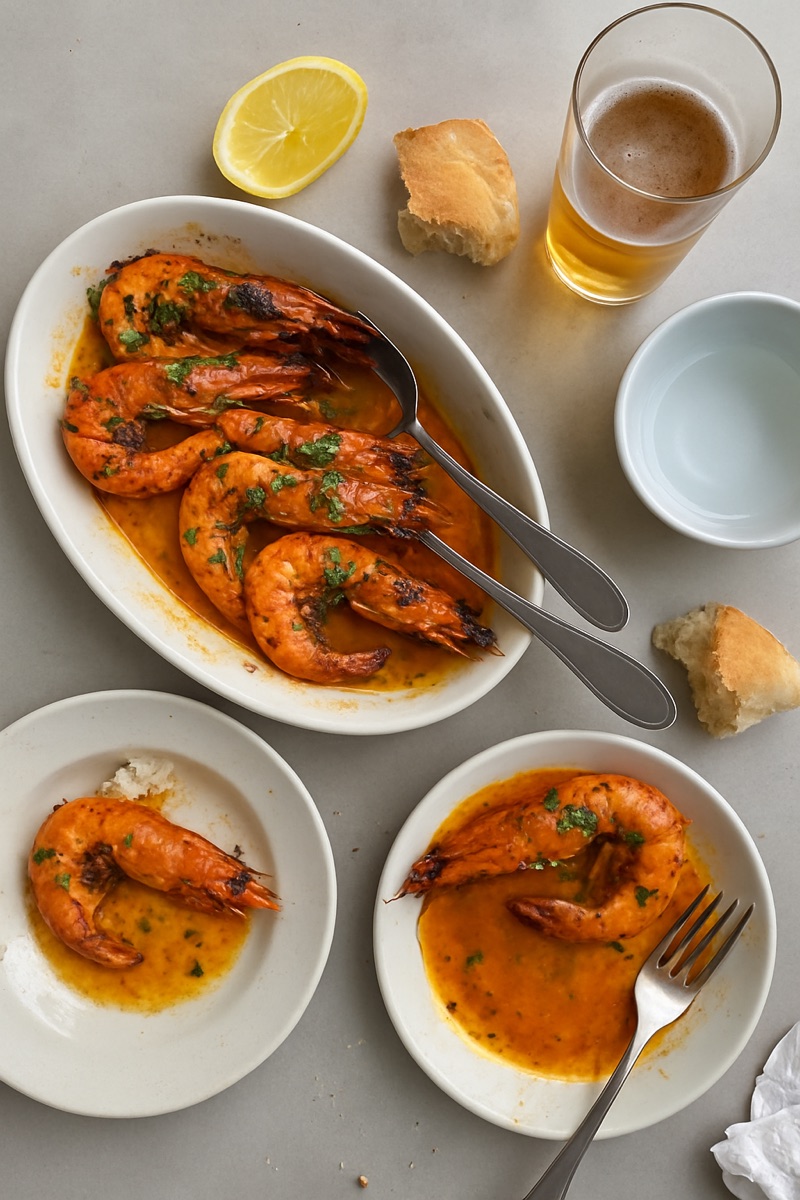 Prawns lm🇲🇿 Mozambique · 4 hours and 20 minutes
Questions people ask
What is the most popular food in Mozambique?
Xima, a stiff maize porridge, is eaten daily by many Mozambicans with a sauce. Matapa, piri-piri chicken and shrimp curry are the best-known dishes.
Is Mozambican food spicy?
Often, yes. Piri-piri chilli goes into the refogado base of many sauces, into marinades for chicken and prawns, and into pickles such as achar.
What is matapa?
Matapa is a stew of pounded young cassava leaves cooked with ground peanuts and coconut milk, often with crab or prawns, served with rice or xima.
Where does piri-piri come from?
The chilli descends from American peppers, but the Oxford Dictionary of English traces the word piri-piri to the Ronga language of southern Mozambique. The sauce grew out of the Portuguese spice trade.
What are chamuças?
Chamuças are the Mozambican version of samosas: triangular fried pastries with a spiced filling of meat, potato or vegetables, common because of the country's large Goan community.
Keep reading
- What is the national dish of Mozambique?
- Traditional food of Angola: 13 dishes to know
- Traditional food of Botswana: 13 dishes to know
- Traditional food of Eswatini: 14 dishes to know
- Traditional food of Lesotho: 14 dishes to know
- Traditional food of Malawi: 10 dishes to know