 COPPER
Traditional food of Malawi: 10 dishes to know
Malawian food is built on nsima, a stiff white maize porridge eaten by hand with relishes called ndiwo, and on fish from Lake Malawi, which runs along most of the country's eastern border. Beans, groundnuts and leafy greens fill the other relishes, and tea is the everyday drink. The most emblematic dishes are nsima, chambo (lake tilapia), usipa (small dried fish) and thobwa, a sweet maize drink.
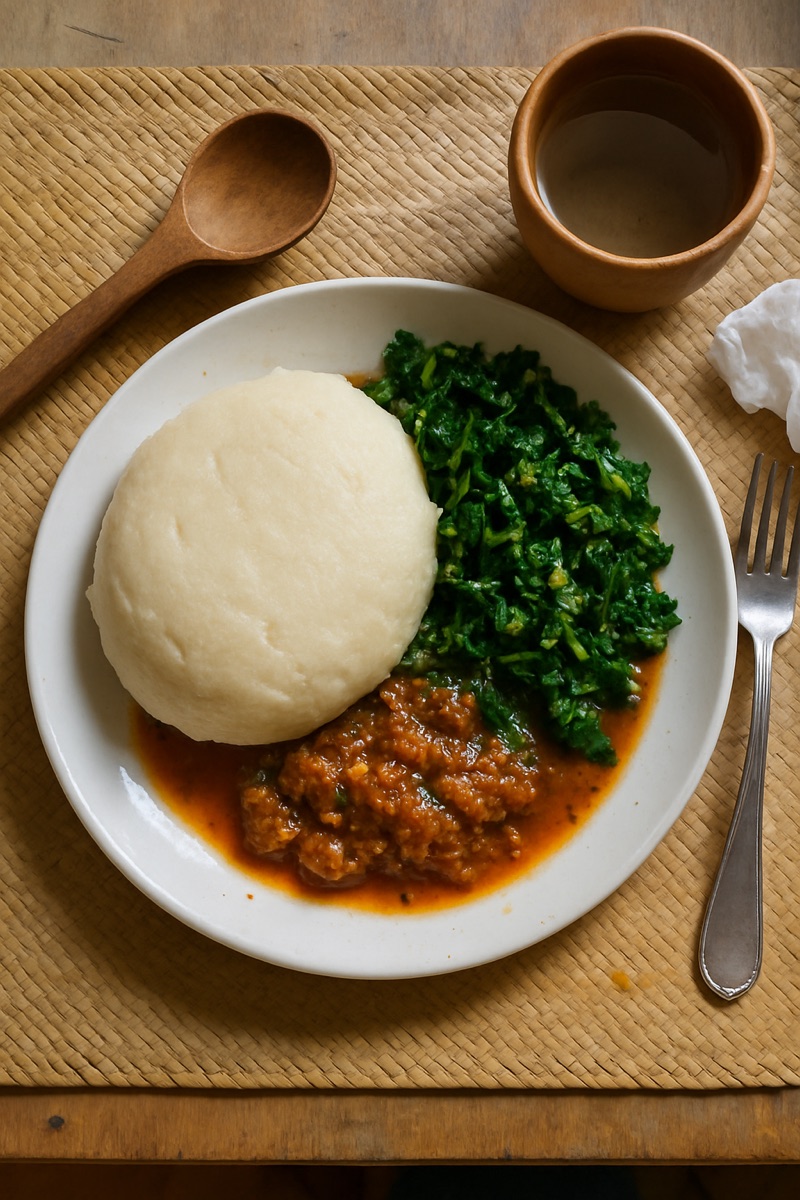
What Malawian food is built on
Maize is the base of the Malawian diet, alongside potatoes, sorghum, cattle and goats, while tea and fish are the two features most people associate with the country's table. Sugar and coffee are also important crops for both the kitchen and the economy. Maize is not native: it arrived from the Americas with the Portuguese between the 16th and 17th centuries and gradually replaced sorghum and millet as the main grain. It now matters so much that price rises during maize shortages have at times fed economic and political unrest. Lake Malawi, which forms more than three-quarters of the country's eastern border, supplies the fish, much of it sun-dried so it keeps.
A Malawian meal is a mound of nsima and one or more relishes. In Malawi the protein relishes, meat, fish, beans or groundnuts, are called ndiwo, and the vegetable sides are called masamba. Families wash their hands before eating, often with water poured by a younger person or the host, then eat with the right hand from shared dishes. Hot pepper sauces, homemade from piri-piri or small Kambuzi chillies, or bottled sauces such as Nali, are put on the table for those who want heat.
Nsima, kondowole and the relishes
- Nsima — White maize flour and water, cooked first into a thin porridge (phala), then beaten stiff with more flour using a flat wooden spoon called a nthiko. Portions, each called a ntanda, are shaped with a wet spoon and eaten with the right hand. In 2017 UNESCO inscribed "Nsima, culinary tradition of Malawi" on its list of the Intangible Cultural Heritage of Humanity. The inscription covers the whole tradition: girls learn early to pound maize and sift flour, boys to hunt for the accompaniments, and mealtime customs discourage greed. Most restaurants in Malawi have nsima on the menu.
- Kondowole — A very sticky staple made from cassava flour and water, eaten mainly in the north of Malawi. The cassava is soaked for days to ferment, pounded, sun-dried and ground before cooking, and the dough is so stiff that cooks often hold the pot between their feet to stir it with both hands. It is usually eaten with fish, and because its texture makes it hard to cook in bulk, it is eaten less often than nsima.
- Masamba — The vegetable relishes: pumpkin leaves, bean leaves, amaranth, mustard leaves or cabbage, served beside the protein relish. Hot peppers or a chilli sauce often join them, and dried vegetables, like dried fish, are a common partner for nsima.
- Katapa — Young cassava leaves pounded to a coarse paste in a mortar, simmered, then cooked with ground peanuts and coconut milk, sometimes with dried shrimp. It is eaten with nsima or rice and is a close relative of the matapa of Mozambique. In neighbouring Zambia, katapa is one of the names for a relish of greens.
Fish from Lake Malawi
Lake Malawi is said to hold more fish species than any other freshwater lake. Besides the fish below, Malawians eat mpasa, compared to salmon, kampango, batala (butter fish), mlamba, micheni and bombe.
- Chambo — A tilapia of Lake Malawi, often compared to bream, and the best-known fish in the country. It is scored, rubbed with lemon, salt and pepper and grilled whole over charcoal or fried, and in our recipe simmered in a tomato and onion gravy, then served with nsima and greens.
- Usipa — A small, sardine-like fish that swims in large shoals in the lake. Because it is so small it is usually sun-dried, and it is eaten bones and all, since the bones are soft. Dried usipa is sold in most Malawian markets, and many lakeside households depend on catching it.
- Utaka and kapenta — Utaka is a small lake fish eaten dried with nsima, and it is the usual partner for kondowole in the north. Kapenta, a sardine also known as matemba, forms a large share of the open-water fish of Lake Malawi and of Lake Tanganyika, where it comes from.
Salads and drinks
- Kachumbari — A fresh salad of chopped tomato, onion and chilli, known in Malawi as sumu or shum, or simply "tomato and onion salad". In Malawi it is usually eaten on its own, like any other salad, rather than as a condiment.
- Thobwa — A thick, milky drink of white maize porridge mixed with millet or sorghum flour and left in a clay pot for two days. Its name means "sweet beer", but it is non-alcoholic unless left for about five days. It is sold everywhere in recycled bottles in towns and from clay pots in villages, served to welcome guests and drunk in large quantities at weddings. It is available all year but drunk most in the hot months, September to November.
- Tea — Tea and fish are the two features Malawian cuisine is best known for. Tea is grown in Malawi alongside sugar and coffee, crops that matter as much to the economy as to the kitchen.
Cook Malawian food at home
Nsima is the national dish of Malawi, and our recipes for nsima, chambo and katapa are on our page about the food of Malawi, with quantities and step-by-step methods. Cook the nsima in two stages, then serve it with chambo in tomato gravy and a green relish for a complete Malawian meal.
Nsima, its relishes and lake fish are shared with the neighbours, as our guide to Southern African food shows. Compare with the traditional food of Zambia, where nsima is spelled nshima, and the traditional food of Mozambique, across the lake, where cassava leaves become matapa.
The recipes
- Nsima🇲🇼 Malawi · 30 minutes
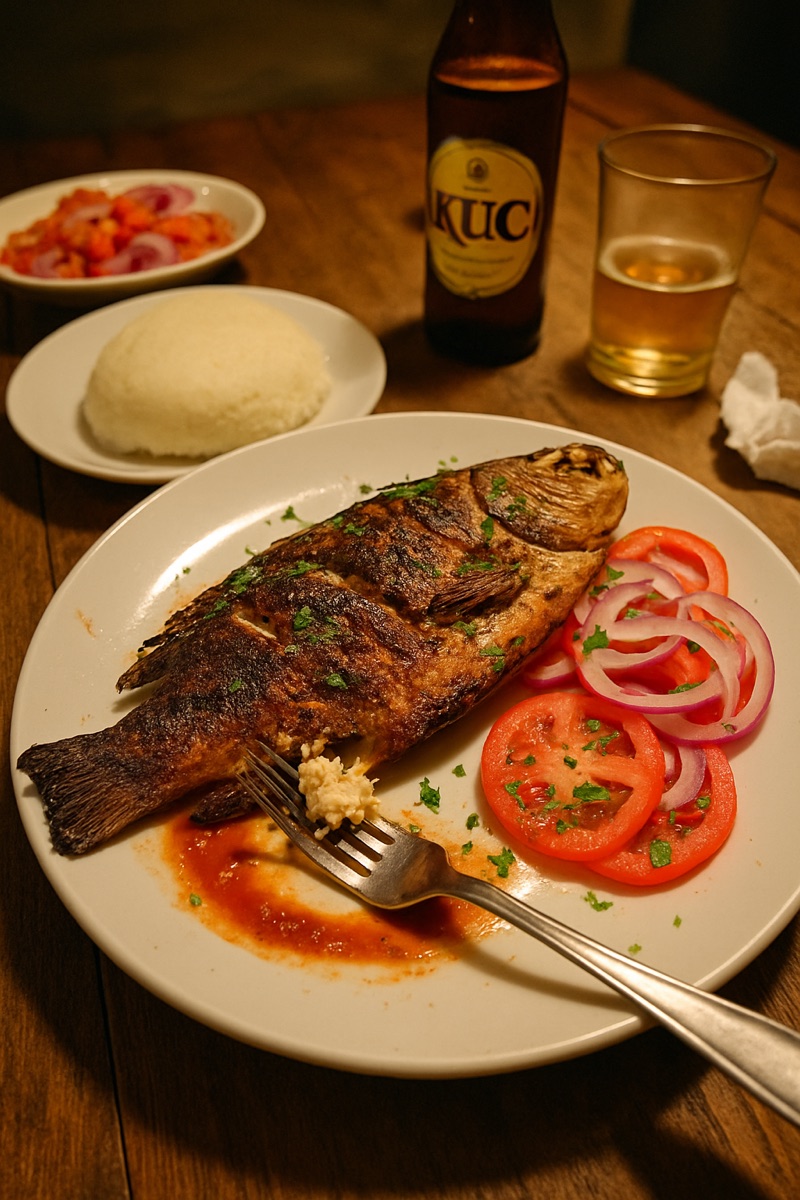 Chambo🇲🇼 Malawi · 1 hour and 15 minutes
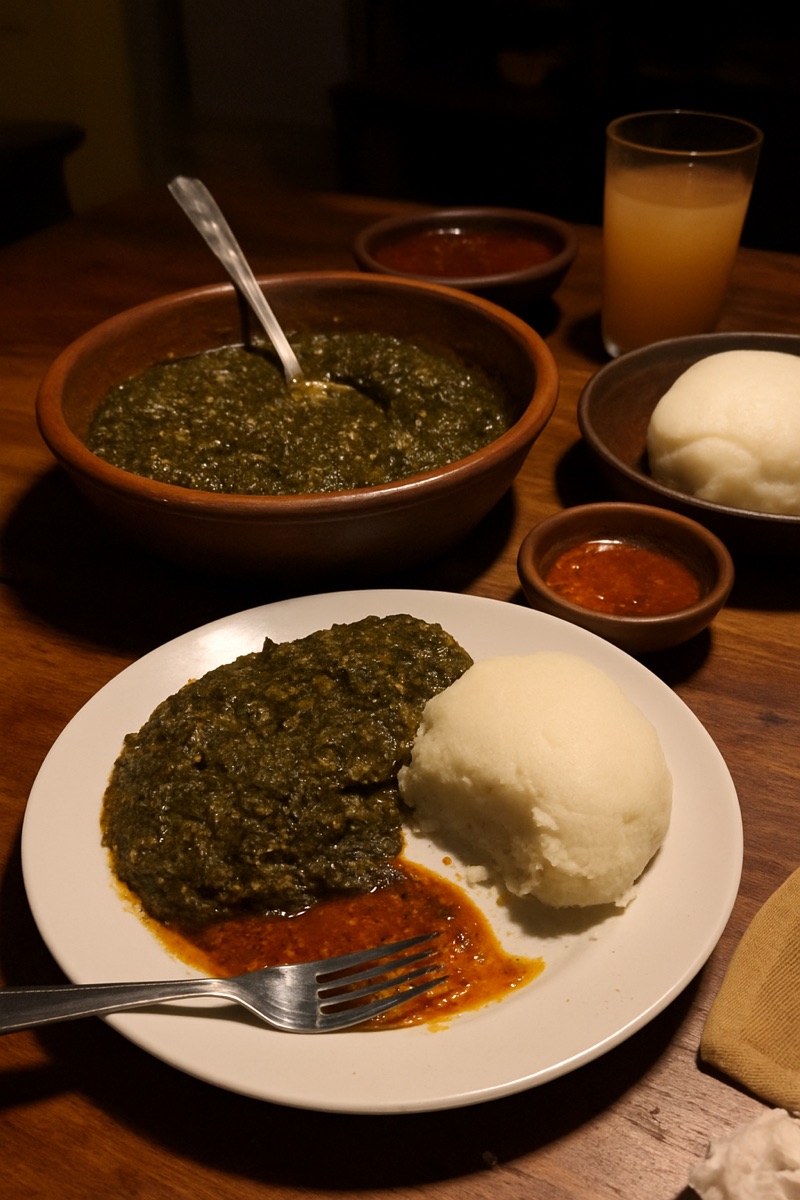 Katapa🇲🇼 Malawi · 1 hour and 15 minutes
Questions people ask
What is the most popular food in Malawi?
Nsima with ndiwo, a relish of beans, greens, meat or fish, eaten at lunch and dinner. Chambo from Lake Malawi is the best-known dish to go with it.
What do Malawians eat for breakfast?
Nsima can be eaten at any meal, including breakfast. Tea and thobwa, a filling maize drink many Malawians use as energy for the day, are also common in the morning.
Is Malawian food spicy?
The dishes themselves are mild. Heat comes from hot pepper sauces made from piri-piri or Kambuzi chillies, or bottled sauces such as Nali, served on the side.
What fish is eaten in Malawi?
Chambo, a tilapia from Lake Malawi, is the most famous. Usipa, a small sardine-like fish eaten dried, utaka, kapenta, mpasa and kampango are also common.
Is nsima the same as ugali?
Yes, it is the same kind of stiff maize porridge, called ugali in Kenya and Tanzania, nshima in Zambia and sadza in Zimbabwe.
Keep reading
- What is the national dish of Malawi?
- Traditional food of Angola: 13 dishes to know
- Traditional food of Botswana: 13 dishes to know
- Traditional food of Eswatini: 14 dishes to know
- Traditional food of Lesotho: 14 dishes to know
- Traditional food of Mozambique: 13 dishes to know