 COPPER
Traditional food of Zambia: 13 dishes to know
Zambian food is built on nshima, a stiff porridge of white maize meal eaten by hand with a relish of greens, groundnuts, fish or meat. Pounded raw groundnuts thicken many relishes, wild greens and mushrooms are foraged, and small fish are sun-dried. The most emblematic dishes are nshima, ifisashi (greens in groundnut sauce), kapenta and chikanda, the meatless "African polony".
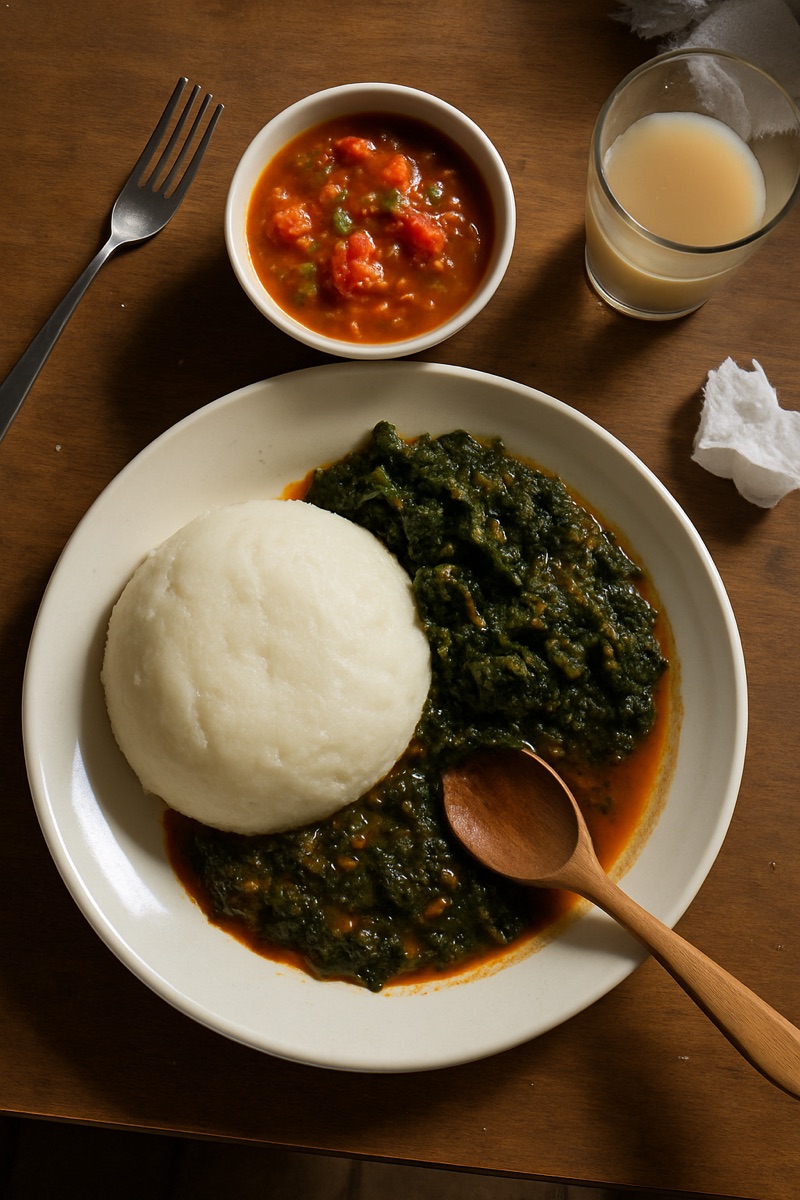
What Zambian food is built on
Zambia has more than 72 ethnic groups across 10 provinces, and each cooks a little differently, but the whole country shares the same staple: maize, eaten as nshima at lunch and dinner. Nshima itself is plain. The flavour is in the relish served with it, called ndiwo in Nyanja and umunani in Bemba, which can be as simple as boiled pumpkin leaves or as rich as a chicken stew.
Two old techniques give many relishes their taste. Kutendela is raw groundnuts pounded to a powder and stirred into greens. Chidulo is a liquid made from the ashes of burnt dry banana leaves, bean stalks or maize stalks, soaked in water and strained; it tastes slightly sour, like vinegar, and is used with leafy vegetables and wild mushrooms. Markets and street vendors are full of fresh vegetables, and foraged wild greens are part of the everyday diet.
Nshima and its relishes
- Nshima — White maize meal cooked first into a thin porridge, then paddled stiff with more meal using a flat wooden stick called an umwiko. No salt goes in. It is eaten with the right hand: a lump is rolled into a ball, pressed with the thumb and used to scoop the relish. In traditional communities the work starts long before the pot, with drying, sorting and pounding the maize.
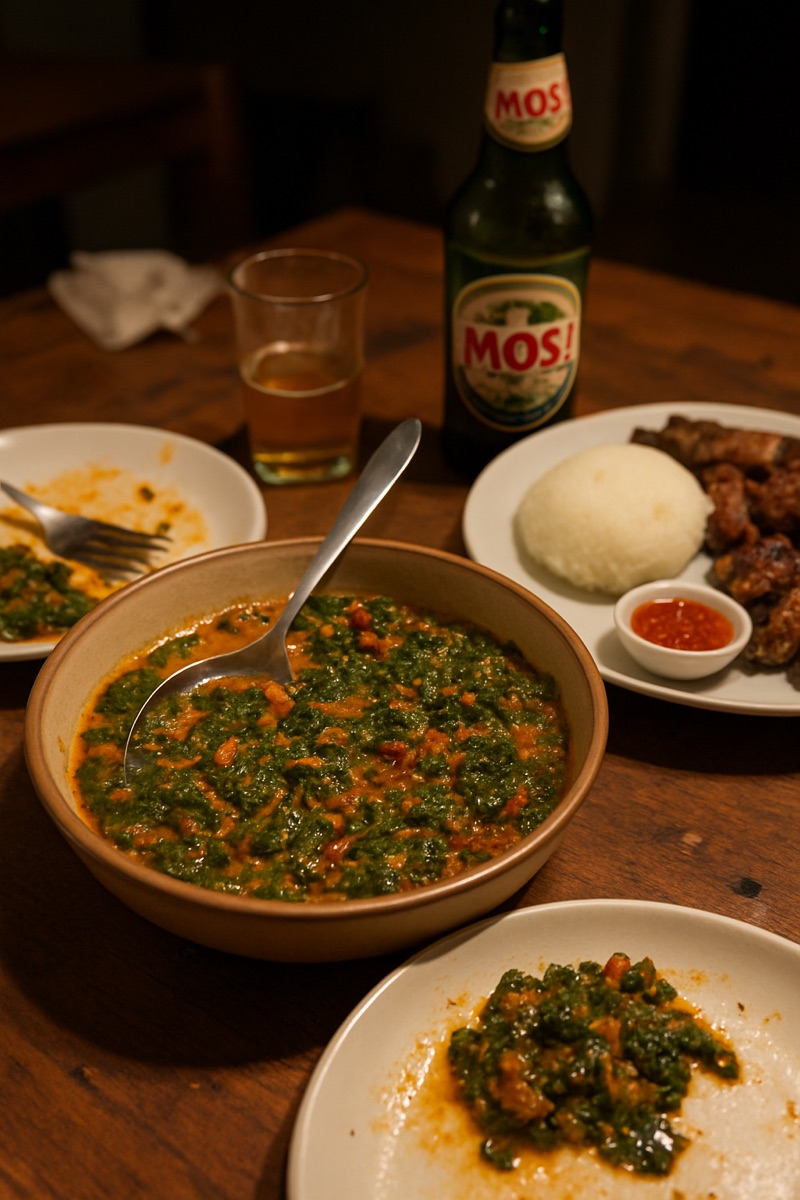
- Ifisashi — Greens such as pumpkin leaves, Chinese cabbage or sweet potato leaves simmered with tomato and onion in a sauce of pounded raw groundnuts until thick. It can be vegetarian, or cooked meat can be added, and it is one of the most common foods in the country.
- Chibwabwa — Pumpkin leaves, one of the simplest relishes: the chopped leaves are cooked with tomatoes and onions and served with nshima. They are also the most common base for ifisashi.
- Kalembula — Sweet potato leaves, usually fried with onion and tomato. They are quick to cook and are eaten with nshima and a protein such as beef or fish.
- Delele — Okra cooked with tomatoes and a teaspoon of bicarbonate of soda, which makes it smooth and slippery. It is eaten as a side with nshima in Zambia and across the border in Zimbabwe.
- Bowa — Wild mushrooms, of which Zambia has many edible kinds. Varieties such as tente, chitondo, kabansa and ichikolowa are cooked in a stew with tomatoes and onions, or with chidulo.
Fish, meat and insects
With many lakes and rivers, Zambia eats a lot of fish, fried until crisp or dried and stewed for hours with tomato and onion until the bones soften into a thick gravy. Beef stew, offal (matumbo and ichifu) and trotters (vimbombo) are stewed the same way and served with nshima.
- Kapenta — Small sardines from Lake Tanganyika, also introduced into Lake Kariba and other Zambian lakes. They are sun-dried to keep all year, then fried with tomatoes and onions and served with nshima and greens; fresh kapenta is fried or boiled.
- Vinkubala — Mopane worms, caterpillars harvested from mopane trees. They are dried, then boiled or fried and eaten as a snack or as a relish with nshima. Other insects, such as stink bugs, are eaten too.
- Village chicken stew — Free-range chickens, smaller than commercial birds, stewed slowly with tomatoes and onions. It is a traditional dish of rural Zambia and is served with nshima.
Snacks and drinks
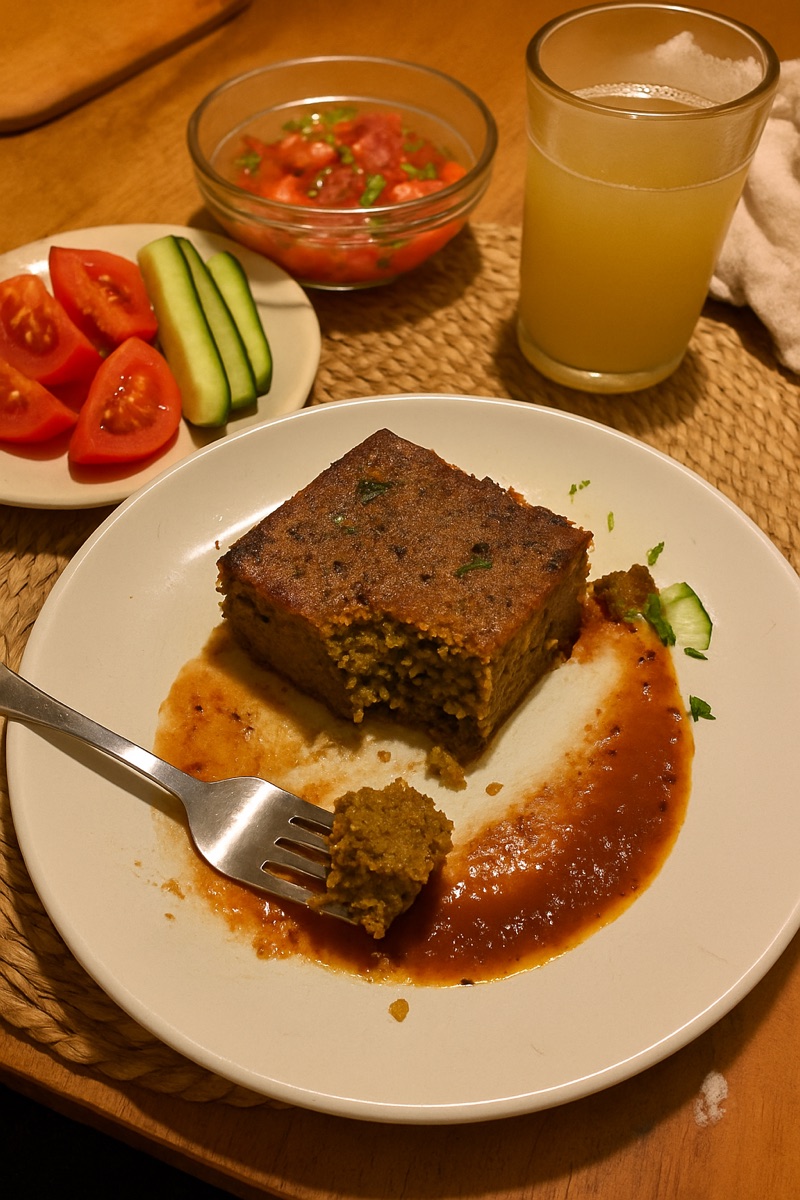
- Chikanda — "African polony" with no meat in it: the dried, pounded tubers of wild orchids boiled with groundnuts, soda, salt and chilli until they set into a loaf that is sliced. It comes from the Bemba of north-eastern Zambia and is eaten as a snack, a side or a main course.
- Tute ne mbalala — Cassava with groundnuts, a street snack with a smoky, nutty taste. It is roasted in some parts of the country and fried in others.
- Vitumbuwa — Fritters of flour, sugar and yeast batter, deep-fried until golden. They are sold by street vendors and in markets and eaten with tea.
- Munkoyo — A mildly fermented "sweet beer" of maize porridge and pounded roots of the munkoyo plant (Rhynchosia venulosa), also called ibwatu. It can be drunk as soon as it is made or left to ferment for several days, and is brewed mostly in rural villages.
Regional Zambia
In the north, the Bemba once ate ubwali, a thick millet porridge, with almost every meal, with a single relish called umunani of meat, fish, insects or vegetables. Maize only took over in the second half of the 20th century, and the Bemba also gave the country chikanda, served at weddings. In the east, thobwa, a non-alcoholic drink of maize and millet or sorghum flour, is especially popular, drunk warm or cold for breakfast. In the west and south, the Lozi and Tonga eat samp, pounded maize kernels, with sugar and sour milk, and the Tonga have long eaten insects, cooked or dried.
Across the country, maheu, a fermented maize drink served chilled, and Chibuku, a commercial maize beer nicknamed "shake-shake" because the carton is shaken before drinking, are the drinks most people know.
Cook Zambian food at home
Nshima is the national dish of Zambia, and our recipes for nshima, ifisashi and chikanda are on our page about the food of Zambia, with quantities and step-by-step methods. Nshima with ifisashi is the classic pairing to start with.
The neighbours eat the same porridge under other names, as our guide to Southern African food explains. Compare with the traditional food of Malawi, where it is called nsima, and the traditional food of the DR Congo, where cassava takes the place of maize.
The recipes
 Ifisashi
 Chikanda
Questions people ask
What is the most popular food in Zambia?
Nshima, eaten almost every day at lunch and dinner with a relish. Ifisashi, kapenta, beef stew, fried fish and beans are among the most common relishes.
What do Zambians eat for breakfast?
Boiled or fried sweet potatoes are a common breakfast in many homes, and fritters such as vitumbuwa are eaten with tea. In the east, thobwa, a thick maize and millet drink, is drunk in the morning.
Is Zambian food spicy?
Not usually. Traditional cooking is fairly plain, seasoned with salt, tomato, onion and groundnuts. Chilli goes into some dishes, such as chikanda, and chilli sauce is often served on the side.
What is chikanda?
Chikanda, or African polony, is a firm loaf made from dried wild orchid tubers and groundnuts, sliced and eaten as a snack or with nshima. It contains no meat.
What do Zambians drink?
Munkoyo and maheu, two fermented maize drinks, thobwa in the east, and Chibuku, a commercial maize beer. Popular bottled lagers include Mosi.
Keep reading
- What is the national dish of Zambia?
- Traditional food of Angola: 13 dishes to know
- Traditional food of Botswana: 13 dishes to know
- Traditional food of Eswatini: 14 dishes to know
- Traditional food of Lesotho: 14 dishes to know
- Traditional food of Malawi: 10 dishes to know