 COPPER
Traditional food of Lesotho: 14 dishes to know
Basotho food is built on maize and sorghum, cooked into stiff porridge, fermented porridge or boiled kernels, with leafy greens, beans and, when there is money for it, mutton, beef or chicken. Seasoning is mostly salt, and British rule left bread and tea. The most emblematic dishes are papa, moroho, motoho and makoenya.
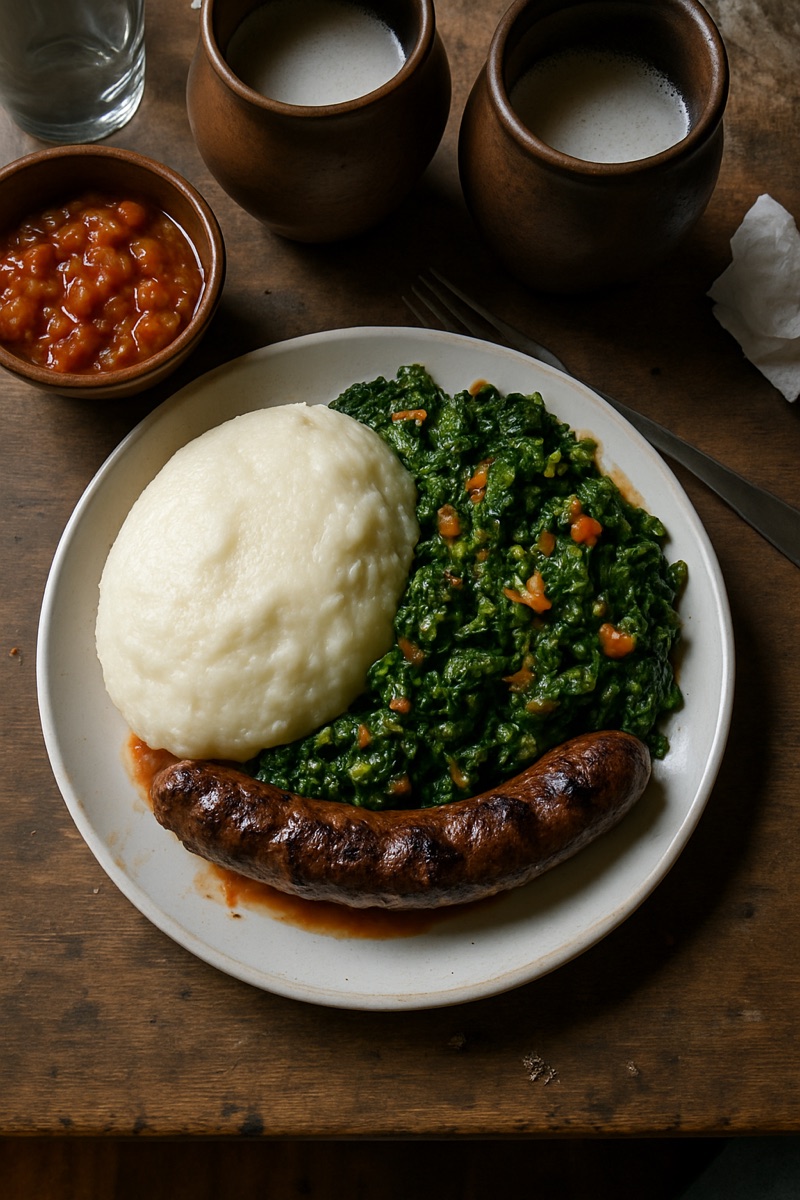
What Basotho food is built on
Lesotho is a mountain kingdom entirely surrounded by South Africa, and it shares much of its cooking with its neighbour. Basotho cuisine mixes African traditions with British influence, visible in potato dishes, bread, tea and British desserts. Sauces are generally less spicy than in other African countries, and many dishes are seasoned with nothing but salt. Beetroot and carrot salads are common side dishes.
Most Basotho are farmers. They grow maize, sorghum, wheat, beans and peas, and raise cattle, sheep, goats and chickens. A typical plate is papa with greens, beans or meat. Nothing from a slaughtered animal is wasted: tripe, feet and heads all have their own dishes.
Maize and sorghum: the everyday staples
- Papa — White maize meal stirred into boiling water with a wooden stick called a lesokoana until it is very thick, then turned over twice as it steams, a step called ho fetola. It must end up firm enough to hold its shape. It is on the table in almost every household and is eaten with the right hand.
- Moroho — Leafy greens cooked with salt and oil, often with onion and tomato: spinach, rape, cabbage, or wild plants picked in the fields. A favourite version, lepu, is made from the leaves and small fruit of summer squash. Papa le moroho is the staple meal of Lesotho.
- Motoho — A porridge of sorghum meal fermented before cooking. One part sorghum meal is mixed with three parts warm water, a traditional starter called tomoso is added, and the mixture is left overnight before being boiled. It is sour, thin enough to drink, and also counted among Lesotho's beverages.
- Likhobe — Dry maize kernels boiled until soft and seasoned with salt, eaten as a snack or a side. The same name is given to a stew of sorghum, beans and berries.
- Samp — Dried maize kernels pounded until broken, coarser than maize meal, and boiled until soft, sometimes with beans. It is cooked mostly for celebrations and at home in winter.
- Nyekoe — Sorghum and beans cooked together and seasoned with salt. Some cooks add chopped pumpkin or wheat. It is sold more often by street vendors than cooked at home.
Breads and fat cakes
Most Basotho breads start from the same dough of wheat flour, yeast, sugar, salt and water, left to rise until it doubles.
- Leqebekoane — Steamed bread: balls of dough placed on a steamer over boiling water in a covered pot and cooked in the steam. It is the classic partner for tripe. Baked bread (bohobe) is made in a greased iron pot with hot coals both under it and on the lid.
- Liphaphatha — Rounds of dough about 2 cm thick, left to rise, then roasted on the hot base of a pot dusted with flour. They are sprinkled with water and covered with a cloth to soften, and sold by street vendors at bus stops.
- Makoenya — Fat cakes: small balls of dough deep-fried until golden. They are a breakfast for office workers and schoolchildren, who buy them from street vendors, and come with chips, atchar, sausages or simply tea.
Meat dishes
- Sesotho potjiekos — Mutton on the bone browned in a three-legged iron pot, then covered with layers of carrots, potatoes, green beans and cabbage and steamed over low coals without ever being stirred. The pot-and-coals method is shared with South Africa, where potjiekos began.
- Likahare — Tripe and intestines, cleaned and cooked in water until soft, cut up, then simmered in their broth until it turns into a thick gravy. It is eaten with papa, samp or steamed bread.
- Skopo — Sheep feet and heads cooked in salted water. Street vendors sell them cold, to eat with papa or on their own as a snack.
- Braai — Meat grilled over wood or coals, a habit taken from South Africa. At home it is the food of get-togethers, served with papa and chakalaka; in town, vendors grill meat on wood fires and sell it with papa and moroho as a cheap lunch for workers.
What Basotho drink
Joala ba Sesotho, the traditional beer, is brewed from maize meal and malt with a starter of tomoso and fermented in two stages. Fresh milk and sour milk are drunk with papa, and tea, a British habit, is part of daily life.
- Khemere — Homemade ginger beer: brown sugar, ground ginger, tartaric acid and cream of tartar boiled in water, diluted, left overnight and served chilled. Lesotho is known for its ginger beer, served at family gatherings and special events and also made commercially.
Highlands and lowlands
Lesotho is the only country lying entirely above 1,000 metres, and altitude shapes what people eat. In the highlands, families still take their maize to the local mill, so their maize meal differs in colour and taste from the refined, store-bought meal of the lowlands. Cooking is done over open fires, where green maize cobs are roasted in the ashes in the evening. Highland cooks keep closest to the traditional recipes.
In the lowlands, the same dishes get new seasonings: samp, for instance, may be cooked with margarine, stock powder or cream soups. Roasted maize is bought from roadside vendors rather than made at home, and Western and Asian dishes and fast-food restaurants are part of town life. Fish is a luxury: trout is the prized one, since Basotho eat far more meat than fish.
Cook Basotho food at home
Papa with moroho is the dish most often named as the national dish of Lesotho, with motoho as the other answer. Copper has full recipes for papa, moroho and Sesotho potjiekos, with ingredients and step-by-step methods, on our page about the food of Lesotho, alongside other Southern African recipes.
Maize porridge, fat cakes and the braai are shared across the border: compare with the traditional food of South Africa and with the traditional food of Eswatini, the region's other small kingdom.
The recipes
- Pap🇱🇸 Lesotho · 45 minutes
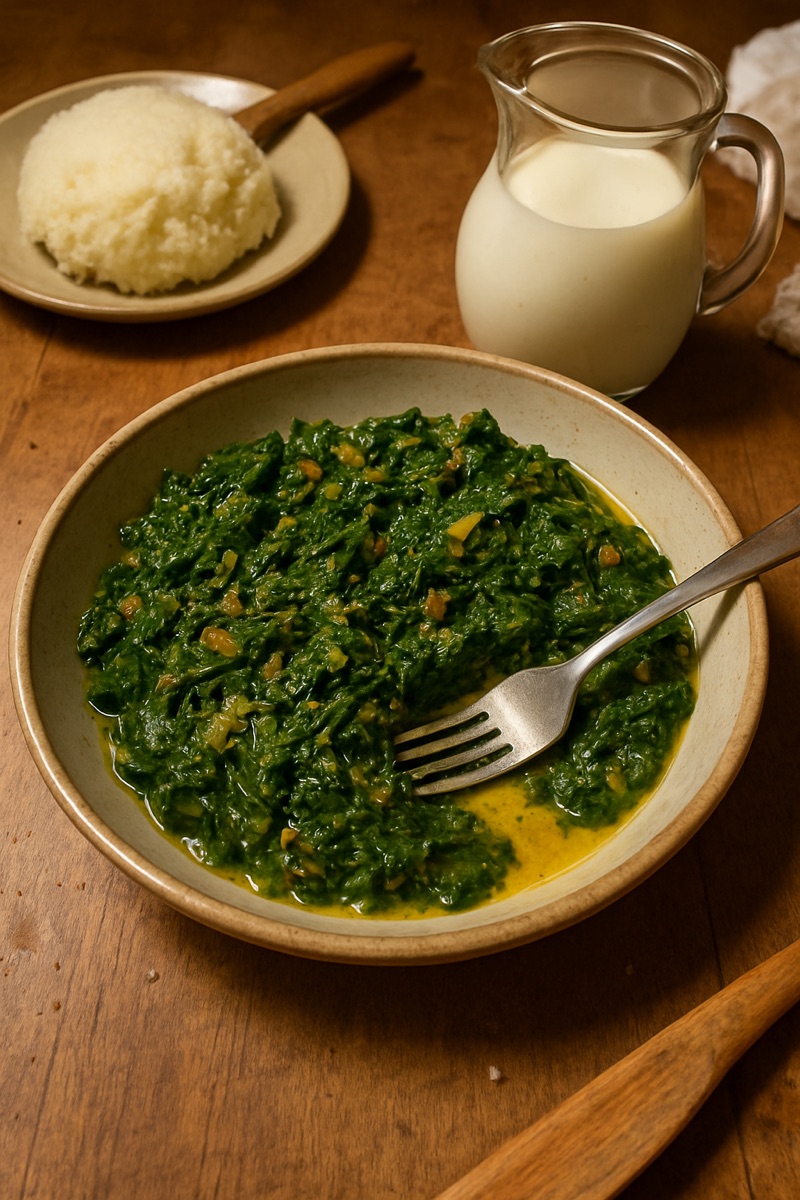 Moroho🇱🇸 Lesotho · 50 minutes
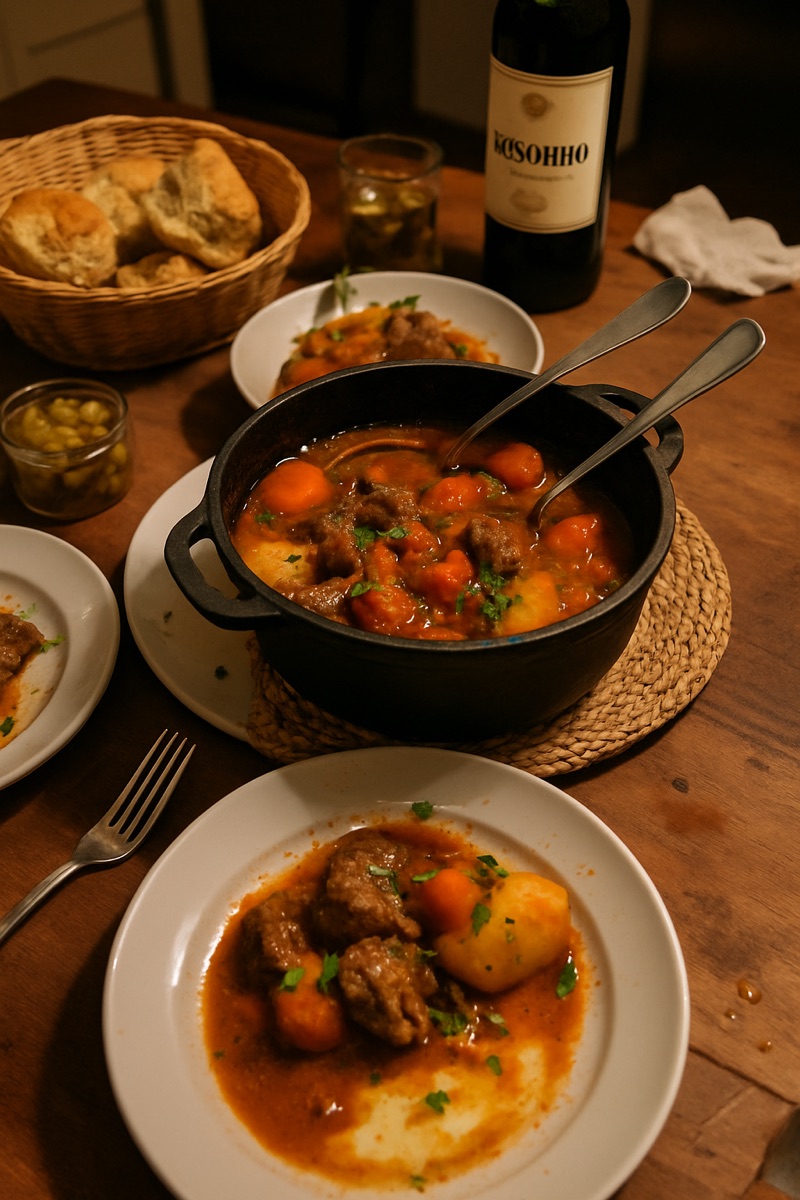 Sesotho potjiekos🇱🇸 Lesotho · 4 hours and 15 minutes
Questions people ask
What is the most popular food in Lesotho?
Papa le moroho, stiff maize porridge with cooked leafy greens, is eaten in almost every household. Meat, tinned fish, beans or an egg are added when there is some.
What do people in Lesotho eat for breakfast?
Makoenya (fat cakes) bought from street vendors are a common breakfast for workers and schoolchildren, usually with tea. Motoho, the fermented sorghum porridge, is also eaten.
Is Basotho food spicy?
No. Basotho cooking uses few ingredients and is seasoned mainly with salt, and its sauces are generally less spicy than in other African countries. Chakalaka, the spicy relish served at braais, comes from South Africa.
What is motoho?
Motoho is sorghum meal mixed with warm water and a starter culture called tomoso, fermented overnight and then boiled. It has a sour taste and a thin consistency, and is eaten as a porridge or drunk.
What do people drink in Lesotho?
Khemere (homemade ginger beer), joala ba Sesotho (traditional maize and malt beer), motoho, fresh or sour milk, and tea.
Keep reading
- What is the national dish of Lesotho?
- Traditional food of Angola: 13 dishes to know
- Traditional food of Botswana: 13 dishes to know
- Traditional food of Eswatini: 14 dishes to know
- Traditional food of Malawi: 10 dishes to know
- Traditional food of Mozambique: 13 dishes to know