 COPPER
Traditional food of Angola: 13 dishes to know
Angolan food is built on funge, a stiff porridge of cassava or maize flour, served with stews cooked in red palm oil with okra, greens, dried fish or chicken. Portuguese and Brazilian influences added rice, olive oil, piri-piri and egg-yolk sweets. The most emblematic dishes are funge, muamba de galinha, calulu and mufete.
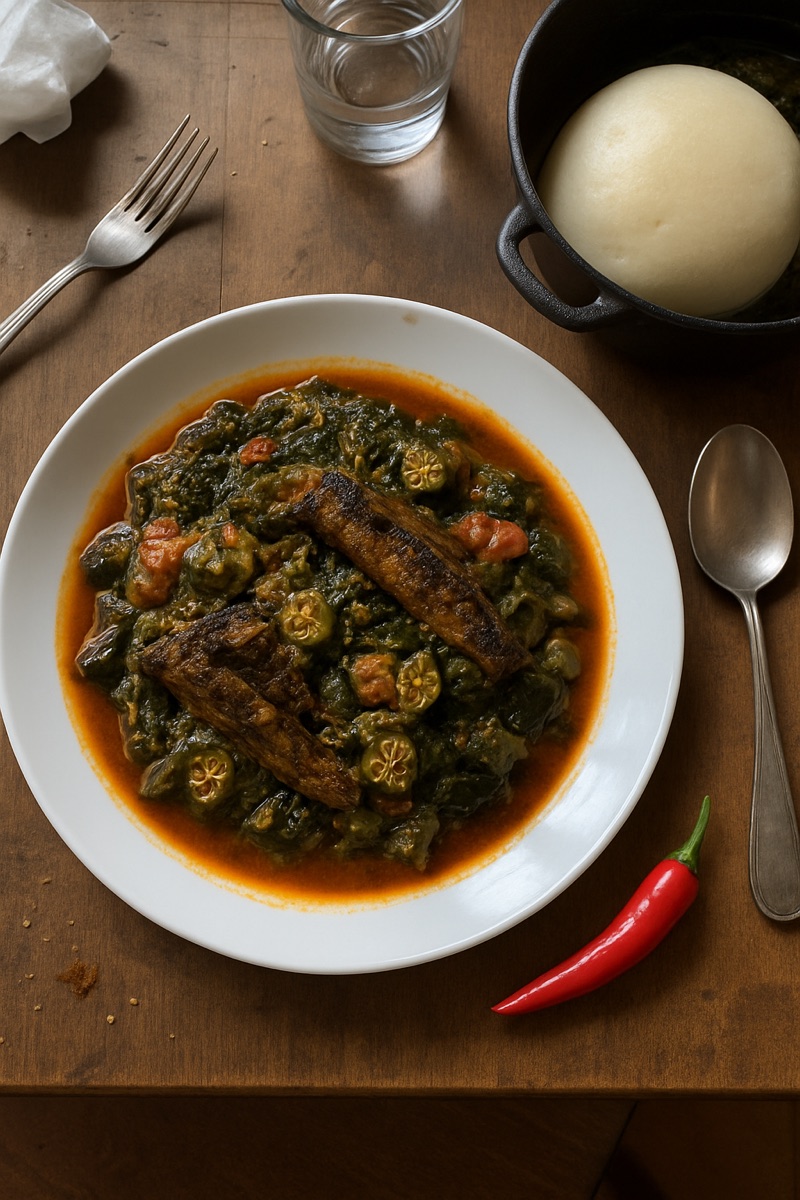
What Angolan food is built on
Angolan cooking is a fusion of indigenous African ingredients and techniques with Portuguese influences, and with ingredients brought from other Portuguese colonies, especially Brazil. The cereals grown for centuries are sorghum, millet and maize, alongside black-eyed peas, yams, pumpkin and okra; cassava, from the Americas, became a staple. Red palm oil gives many dishes their colour and taste, and gindungo, a hot condiment of chilli, garlic and onion, sits on the table.
A typical meal is a starch with a sauce. The starch is funge, or rice; the sauce is a stew of chicken, fish, beef or beans. Fuba is the word for the flour used for funge, and the same base runs from the cassava north to the maize south. The fruits most associated with Angolan cooking are watermelon, tamarind and mukua, the fruit of the baobab. Portugal also left olive oil and molho cru, a raw sauce of garlic, spring onion, parsley, cumin, vinegar and water served with fish and seafood. Gindungo is taken so seriously that some Angolans consider it an aphrodisiac.
Funge and the palm oil stews
- Funge — Cassava or maize flour stirred into boiling water until it forms a smooth, stiff mass, eaten by hand with a sauce. In the north it is funge de bombó, grey and made from cassava; in the south it is yellow and made from maize, and is also called pirão. The Portuguese-language encyclopedia calls it the most popular dish in Angola, and in poorer households it can be eaten at every meal.
- Muamba de galinha — Chicken seasoned with garlic and gindungo, then stewed in red palm oil with okra and, in many versions, pumpkin. It is one of the most popular dishes in the country and is served with funge or rice. Moamba de ginguba is the variant made with peanut instead of palm oil.
- Calulu — Dried fish and fresh fish layered in a pot with tomato, garlic, okra, sweet potato and leafy greens under red palm oil, cooked over medium heat. It is served with funge and palm oil beans. A meat version uses soaked dried meat, and the dish is shared with São Tomé and Príncipe.
- Muzongue — A fish stew of whole dried and fresh fish cooked with palm oil, sweet potato, onion, tomato and spinach, served with rice, funge and farofa. Some Angolans eat it as a cure for a hangover.
- Kizaka — Cassava leaves, similar to spinach, finely chopped and often cooked with ginguba, ground peanut. Kizaka com peixe adds fish, onion and tomato, and is eaten with rice and funge.
- Feijão de óleo de palma — Beans cooked with onion and garlic in red palm oil, also called dendem. It is the usual side for calulu and grilled fish, often with banana and farofa, toasted cassava flour.
Feast dishes, grills and seafood
- Mufete — A dish of the Ilha de Luanda: grilled fish such as carapau or cacusso tilapia, served with palm oil beans, cassava, plantain, sweet potato and cassava flour, plus a sauce of onion, vinegar, oil and gindungo. Traditionally eaten on Saturdays, it is also on the table at birthdays, engagements and weddings.
- Caldeirada de cabrito — A goat stew served with rice, the traditional dish for Angola's independence day, 11 November. The fish version, caldeirada de peixe, is made with whatever fish is available and is also eaten with rice.
- Galinha de cabidela — Chicken cooked in its own blood with vinegar, tomato, onion and garlic, served with rice and funge. The same blood-sauce method is also found in Brazilian cooking.
- Frango piri-piri — Chicken grilled after marinating in a very hot paste of piri-piri chilli, salt and lemon or lime juice. Angola and Mozambique, both former Portuguese colonies, are each considered its home. On the coast, lobsters, prawns and clams are also simply boiled in seawater and served with rice and gindungo.
Sweets and drinks
- Cocada amarela — A yellow coconut pudding of grated coconut, sugar, egg yolks and cinnamon. Its colour and its heavy use of yolks come from Portuguese convent sweets, and it is very different from the Brazilian cocada.
- Mukua — The dried fruit of the baobab tree, eaten as it is or made into ice cream and sorbet, a dessert Angolans count among their own. Doce de ginguba, a peanut candy, is the other everyday sweet.
- Quissângua — A traditional drink of the Ovimbundu of southern Angola, made from germinating maize; pineapple and rice versions exist. Once only home-made, it is now also produced industrially, and it has been used in traditional healing rituals.
Regional Angola
The north cooks with cassava: funge de bombó, kizaka and chikuanga, a cassava bread wrapped in banana leaves from the north-east. Luanda and its Ilha are the home of mufete and seafood rice. Provinces have their specialities: fried caterpillars (catatos) in Uíge, toasted palm grasshoppers in Cuanza Norte, goat tripe and blood (jinguinga) in Malanje, and sour milk with maize pirão in Huíla. In the Lundas, the Chokwe brewed mongozo, a palm-nut beer, before Europeans arrived.
Cook Angolan food at home
Funge and muamba de galinha are both named as the national dish of Angola, and they are usually eaten together. Copper has full recipes for muamba de galinha, calulu and cocada amarela, with ingredients and step-by-step methods, on our page about the food of Angola, alongside other Southern African recipes.
Palm-oil chicken and cassava porridge are shared with Angola's northern neighbours, and piri-piri and coconut sweets with the east coast. Compare with the traditional food of Congo DRC and the traditional food of Mozambique.
The recipes
- Calulu🇦🇴 Angola · 2 hours and 20 minutes
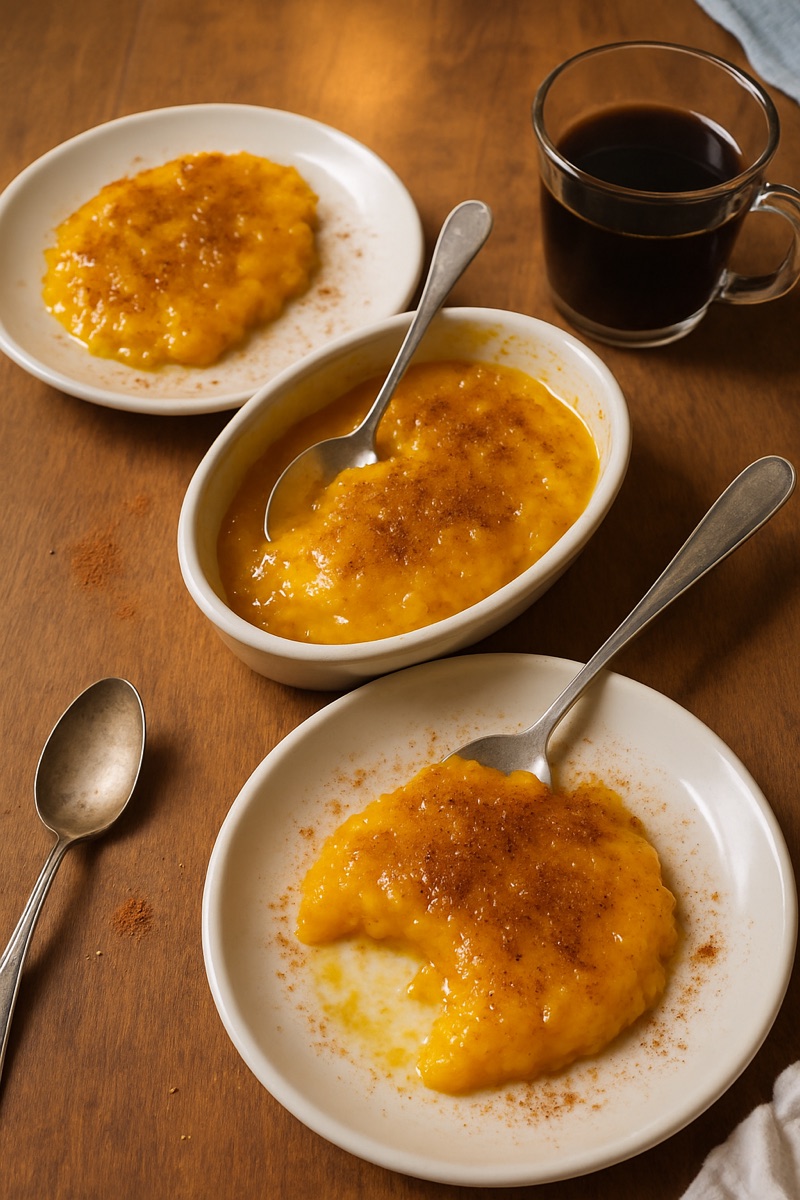 Cocada amarela🇦🇴 Angola · 50 minutes
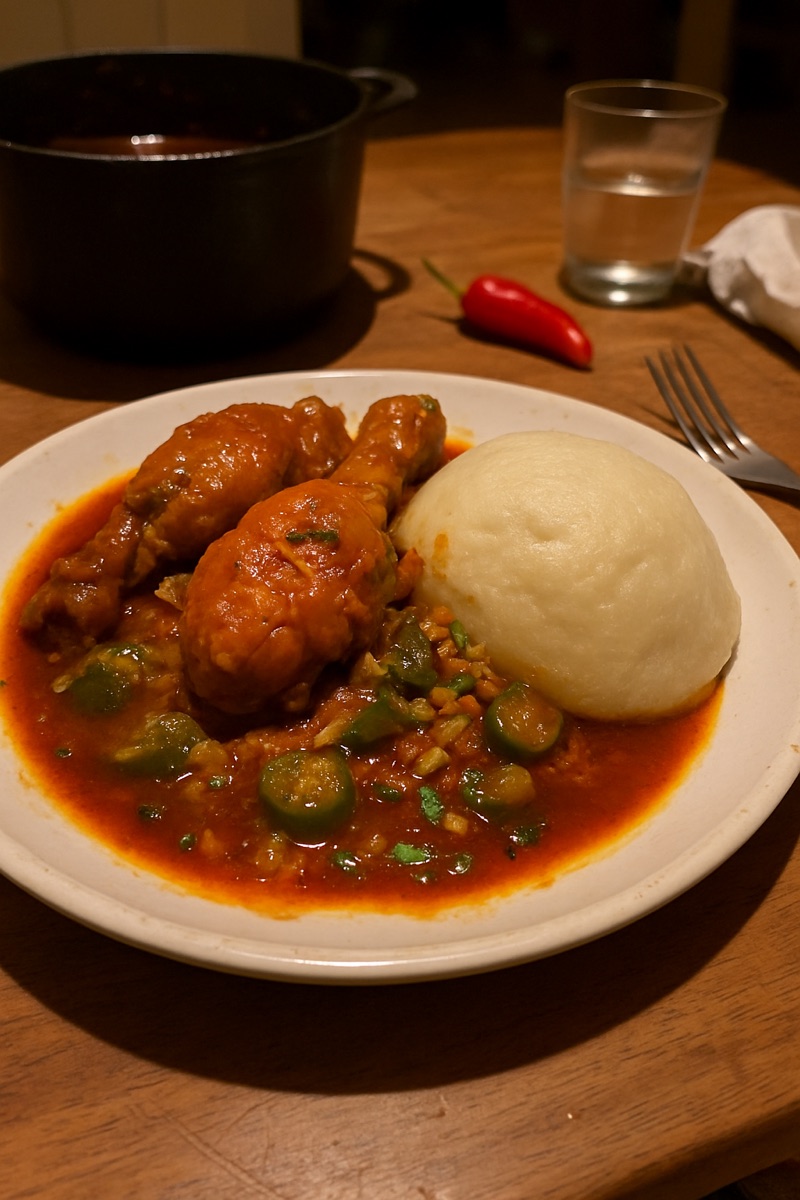 Muamba de galinha🇦🇴 Angola · 2 hours and 30 minutes
Questions people ask
What is the most popular food in Angola?
Funge, a stiff porridge of cassava or maize flour, is the most widely eaten dish. It is usually served with muamba de galinha, chicken in red palm oil, or with calulu, a dried fish stew.
Is Angolan food spicy?
The dishes themselves are usually moderately spiced, but gindungo, a hot condiment of chilli, garlic and onion, is served alongside, and piri-piri chicken is very hot.
What is funge made of?
Funge is cassava flour (in the north) or maize flour (in the south) stirred into boiling water until stiff. It is eaten by hand with a sauce.
What do Angolans eat on independence day?
Caldeirada de cabrito, a goat stew served with rice, is the traditional dish for 11 November, Angola's independence day.
What is a traditional Angolan dessert?
Cocada amarela, a yellow coconut and egg-yolk pudding with cinnamon, and sweets made with peanuts such as doce de ginguba.
Keep reading
- What is the national dish of Angola?
- Traditional food of Botswana: 13 dishes to know
- Traditional food of Eswatini: 14 dishes to know
- Traditional food of Lesotho: 14 dishes to know
- Traditional food of Malawi: 10 dishes to know
- Traditional food of Mozambique: 13 dishes to know