 COPPER
Traditional food of Namibia: 12 dishes to know
Namibian food is built on stiff porridge of pearl millet (mahangu) or maize, eaten by hand with soured milk, wild spinach or meat, and on beef, which is grilled, stewed and air-dried. Indigenous foods sit next to German and Afrikaner settler dishes. The most emblematic are oshifima, kapana, biltong and oshikundu, the fermented millet drink.
What Namibian food is built on
Namibian cooking comes from two strands. The first is the food of indigenous peoples such as the Ovambo, Herero, Himba and San, which before colonisation used a very wide range of wild fruits, nuts, bulbs and leaves, and hunted game. Cattle, domesticated in the region about two thousand years ago by Khoisan groups, added milk and meat. The second strand is settler cooking brought by German, Afrikaner and British colonists; German settlement began in the 19th century. During the colonial period, the seizure of communal land discouraged traditional farming and reduced the land available to indigenous people.
For farmers, the staples are maize, millet and sorghum; for herders, dairy products. Beans and greens are eaten with millet in the north, but elsewhere few vegetables are grown. Meat is highly prized: important occasions are marked by slaughtering cattle or goats, and in some cultures leftover meat is sent home with the guests. Across Africa, maize displaced sorghum and millet except in the drier regions, and Namibia is a dry country: in the north, mahangu is still at the heart of the daily porridge.
Porridge and what goes with it
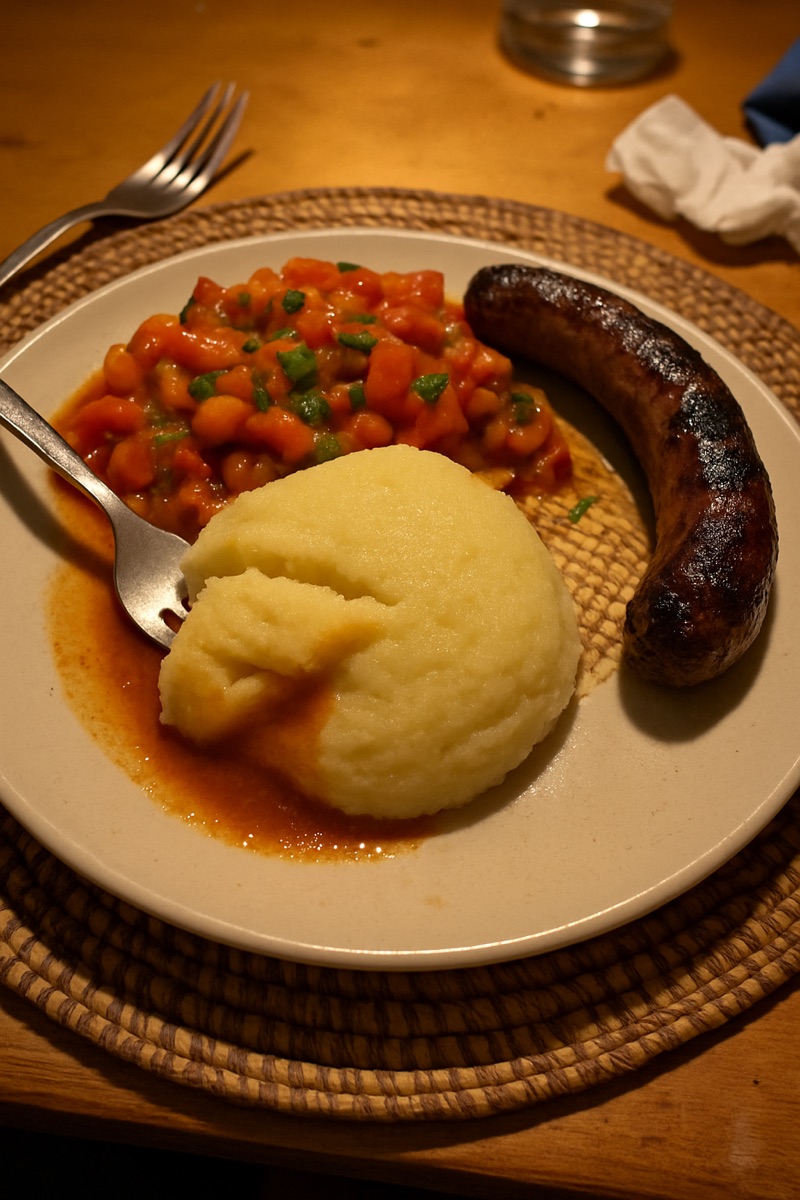
- Oshifima — A stiff porridge of mahangu (pearl millet) flour, maize meal or a mix of both, stirred hard with a wooden spoon until it pulls away from the pot. It is the staple of the Ovambo north and, by one Namibian cook's estimate, of more than two thirds of the population. It is pinched off by hand, rolled into a ball and dipped into stew; made only with maize, it is the mielie pap eaten across the country.
- Ombidi — Wild spinach cooked into a stew, one of the classic partners for oshifima. Oshingali, another meat-free Namibian stew, is also served with it, as are beef stew and chicken in tomato sauce.
- Oshikandela — Soured milk, eaten with oshifima or on its own. Fermented milk was a mainstay wherever cattle were kept, long before refrigeration.
Meat, grills and street food
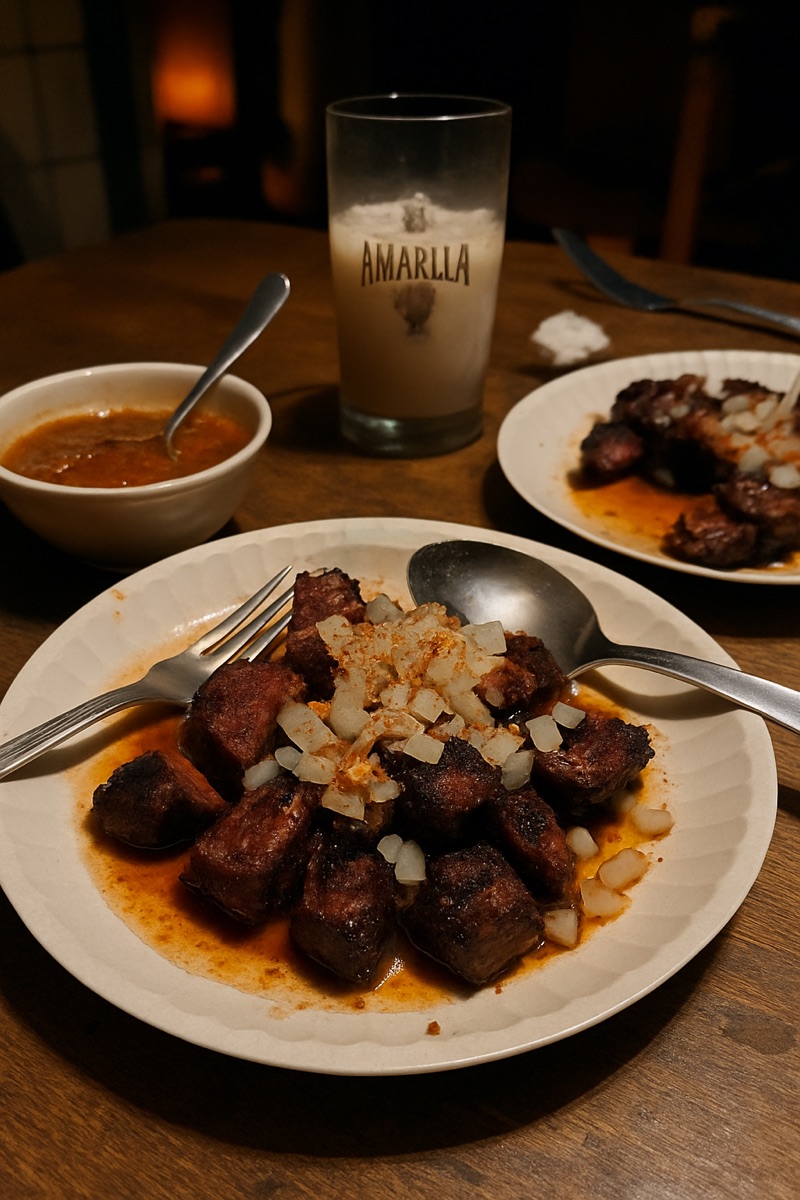
- Kapana — Raw beef cut small with a machete and grilled on a steel plate over a wood fire at market stalls, then eaten hot with a salsa of onion, tomato and vinegar and a dusting of kapana spice. The Windhoek township of Katutura is known for it, and the stalls are a social meeting place as much as a lunch, with traders shouting that their meat is the best cooked. During the 2014 drought, local farms could not supply enough beef and kapana meat had to be brought from further away.
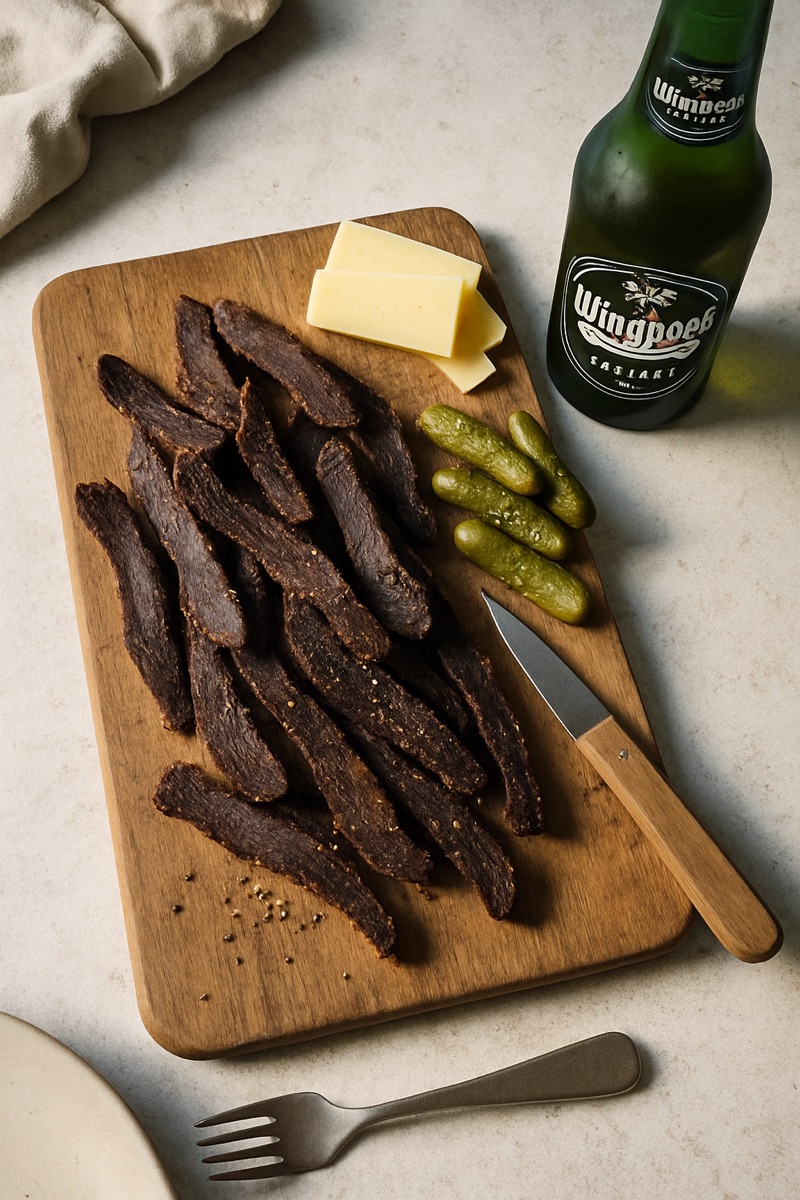
- Biltong — Strips of beef or game, such as kudu or ostrich, cured with vinegar, coarse salt and toasted coriander and air-dried for several days instead of being cooked. Droëwors, a thin dried sausage, is made the same way.
- Boerewors — A coiled, spiced sausage of Afrikaner origin, grilled on a braai, the Southern African barbecue. In Windhoek, grilled game such as kudu, oryx and even crocodile is also served.
- Vetkoek — Balls of yeast dough deep-fried until golden, the name meaning "fat cake" in Afrikaans. In Namibia they are often called junkies and are eaten with kapana, or split and filled. They are sold by street vendors and takeaways across Namibia, Botswana and South Africa.
- Wiener schnitzel — A breaded, fried veal or pork cutlet, the best-known dish of German settler cooking. German influence on Namibian cooking, from bakeries to sausages, remains strong more than a century after colonial rule ended.
Wild foods and drinks
- Mopane worms — The caterpillars of an emperor moth, hand-picked in the wild, gutted and dried. They are eaten as a crisp snack or cooked with onion, tomato and spices and served with porridge. Namibia is one of the region's main producers.
- Kalahari truffle — A desert truffle that grows in the sand of the Kalahari, which covers eastern Namibia. It is eaten by the Khoisan and other peoples of the Kalahari and is also sold commercially.
- Marama beans — The seeds of a Kalahari plant, very rich in protein and oil, usually roasted, which gives them a taste compared to cashew or chestnut. The underground tuber of young plants is also eaten.
- Oshikundu — A drink of fermented mahangu flour and bran with malted sorghum, mixed with tepid water and left to ferment for a few hours until brown and thick. It is drunk daily in the north and parts of Kavango, sold in open markets, and must be finished within about six hours.
Regional Namibia
The north, home of the Ovambo, is mahangu country: oshifima, ombidi, oshikandela and oshikundu, plus omalodu, a traditional beer. In the Zambezi region, Zambezi bream from the rivers is eaten. Windhoek and its township of Katutura are the capital of kapana. The Nama and Damara make magau, their name for mageu, a non-alcoholic drink of fermented maize porridge. The Kalahari in the east gives truffles and marama beans. And everywhere, German settler heritage survives in schnitzel and in lager brewed to German tradition, such as Windhoek and Tafel, while indigenous peoples brewed honey beer and sugar beer long before.
Cook Namibian food at home
Namibia has no official national dish; oshifima, kapana and biltong are the usual answers, as we explain in our article on the national dish of Namibia. Copper has full recipes for oshifima, kapana and biltong, with ingredients and step-by-step methods, on our page about the food of Namibia, alongside other Southern African recipes.
Porridge, biltong and vetkoek are shared with the neighbours. Compare with the traditional food of Botswana and the traditional food of Angola.
The recipes
 Kapana
 Pap
PapQuestions people ask
What is the most popular food in Namibia?
Oshifima, a stiff porridge of pearl millet or maize, is the daily staple, especially in the north. Kapana, beef grilled at street stalls, and biltong are the foods most associated with the country.
What is mahangu?
Mahangu is pearl millet. Its flour is used for oshifima and for oshikundu, a fermented drink.
Is Namibian food spicy?
Mostly not. Porridges, stews and biltong are mildly seasoned. Kapana is the exception: it is dusted with a spice mix that can include chilli.
What do Namibians drink?
Oshikundu, a fermented millet drink, is a daily drink in the north. Mageu, a fermented maize drink, is also common, and German-style lagers are brewed in the country.
What is kapana?
Kapana is beef cut into small pieces and grilled on a metal plate over a wood fire at market stalls, eaten hot with a tomato and onion salsa and vetkoek.
Keep reading
- What is the national dish of Namibia?
- Traditional food of Angola: 13 dishes to know
- Traditional food of Botswana: 13 dishes to know
- Traditional food of Eswatini: 14 dishes to know
- Traditional food of Lesotho: 14 dishes to know
- Traditional food of Malawi: 10 dishes to know