 COPPER
What is the national dish of Namibia?
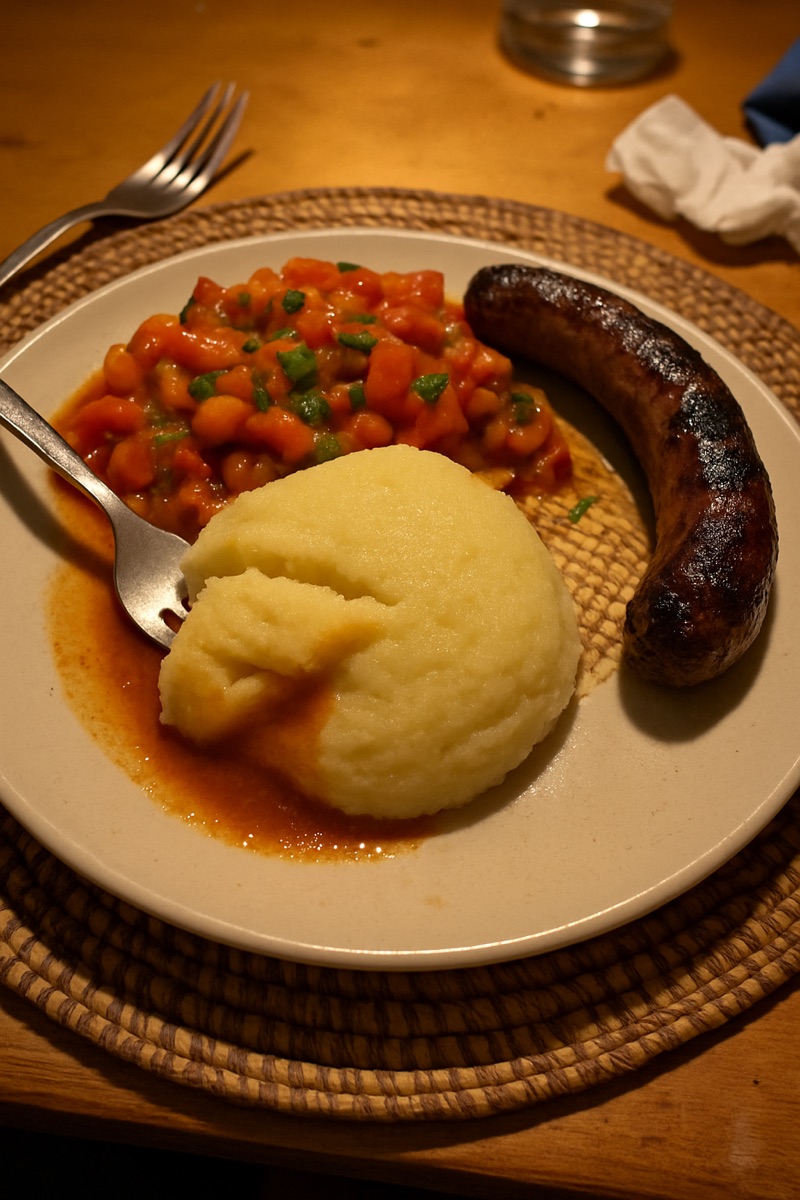
Namibia has no official national dish, and no single dish is cited everywhere. The strongest candidate is oshifima, a stiff porridge of mahangu (pearl millet) or maize flour eaten by hand with stew or soured milk, a daily staple in the north. Kapana, beef grilled over wood at street stalls, and biltong, air-dried cured meat, are the other two dishes most associated with the country.
Why Namibia has no single national dish
No law or official body has named a national dish for Namibia, and the main references on Namibian food do not pick one either. That reflects the country's history: Namibian cooking draws on the indigenous traditions of the Ovambo, Herero, Himba and San peoples, and on the settler cooking of German, Afrikaner and British colonists, which left Wiener schnitzel and German-style lager in the country.
Three dishes stand out across the sources on Namibian food: oshifima, the staple porridge; kapana, the grilled meat of the street; and biltong, the dried meat shared with the rest of Southern Africa. We present all three rather than invent a winner.
What is oshifima?
Oshifima is the Ovambo name for a stiff porridge made from mahangu flour (pearl millet), maize meal or a mixture of both, with water. A Namibian cook who grew up in the north describes it as the staple of more than two thirds of the population, eaten at least twice a day as the side to everything.
It is not a breakfast porridge: no milk and no sugar go into it, and many cooks add no salt. It is served with:
- Oshikandela: soured milk.
- Grilled meat, often beef.
- Stews of wild spinach or beef, such as ombidi or oshingali.
- Oshikundu to drink: a drink made from fermented millet.
How oshifima is made
A slurry of fine maize meal and cold water is poured into boiling water and cooked five minutes so it does not lump. Mahangu flour is then added a handful at a time with one hand while the other stirs hard with a wooden spoon. A whisk will not do it: the fast, forceful stirring is what makes the porridge stiff.
After two or three more minutes the mass pulls away from the pot. It is turned out onto a plate and should keep the shape of the pot. To eat it, you pinch off a piece, roll it into a ball, press a hollow into it with your thumb and scoop up the stew. Our recipe is listed as pap, Namibian oshifima, since the same porridge is called pap across Namibia, Botswana and South Africa.
Why millet and not only maize
Across Africa, stiff porridges of this kind were first made from sorghum and millet. Maize arrived from the Americas with the Portuguese between the 16th and 17th centuries and gradually displaced sorghum as the main cereal, except in the drier regions. Namibia is a dry country, and in the north mahangu is still at the heart of oshifima.
The family of dishes is the same from Kenya to South Africa: ugali, nsima, sadza, papa. In Namibia the porridge goes by oshifima among the Ovambo, pap more widely, and phaletšhe among Setswana speakers, a name shared with Botswana and South Africa.
Kapana: Namibia's street grill
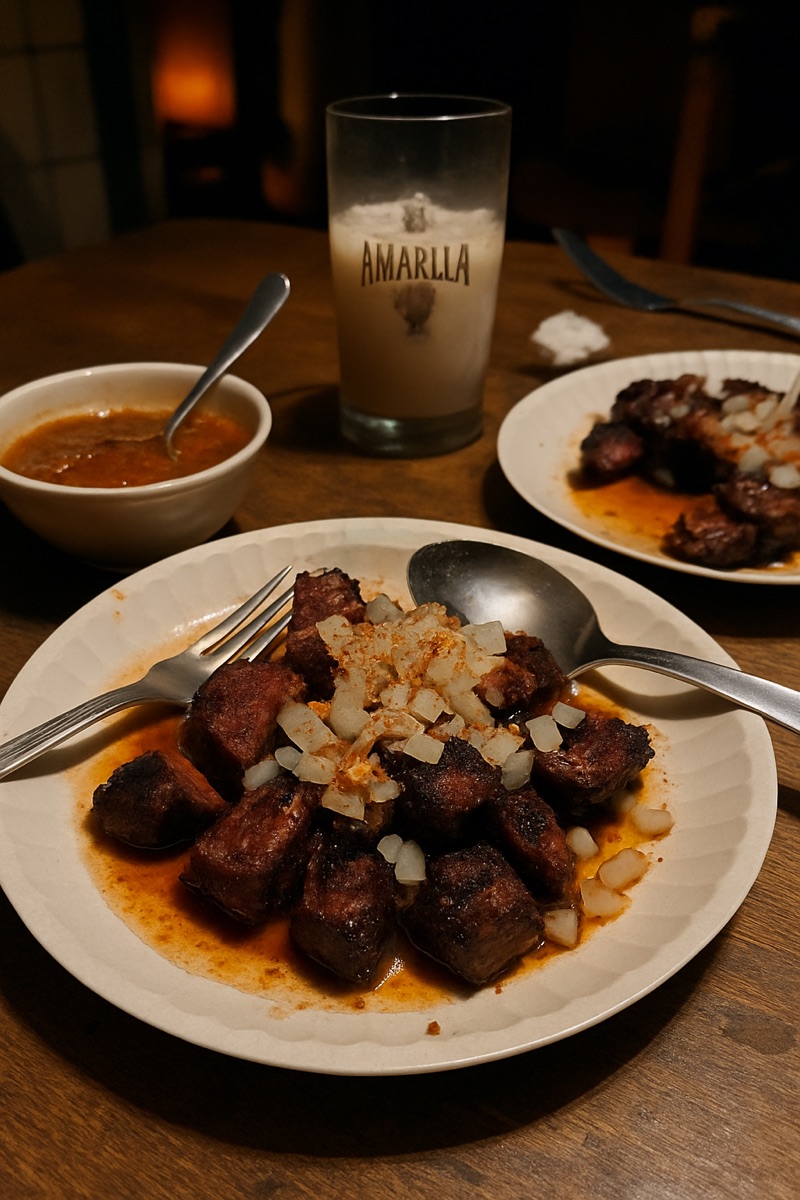
Kapana is raw beef grilled over an open fire and sold at stalls in open markets. A metal plate is welded onto a grill stand, the wood burns underneath, and the kapana men (a few women do it too) cut the meat into small pieces, grill it and sell it while it is hot, dusted with a spice mix of chilli, paprika and salt.
Kapana is cheap and quick, and the stall is a social place: people who could grill beef at home still come to eat there, standing, with their fingers, with a raw onion and tomato salsa and vetkoek, a fried-dough bread. In 2014, a drought meant local farms could not keep up with the demand and kapana meat had to be brought from further away. You can grill it at home with our kapana recipe.
Other dishes to know from Namibia
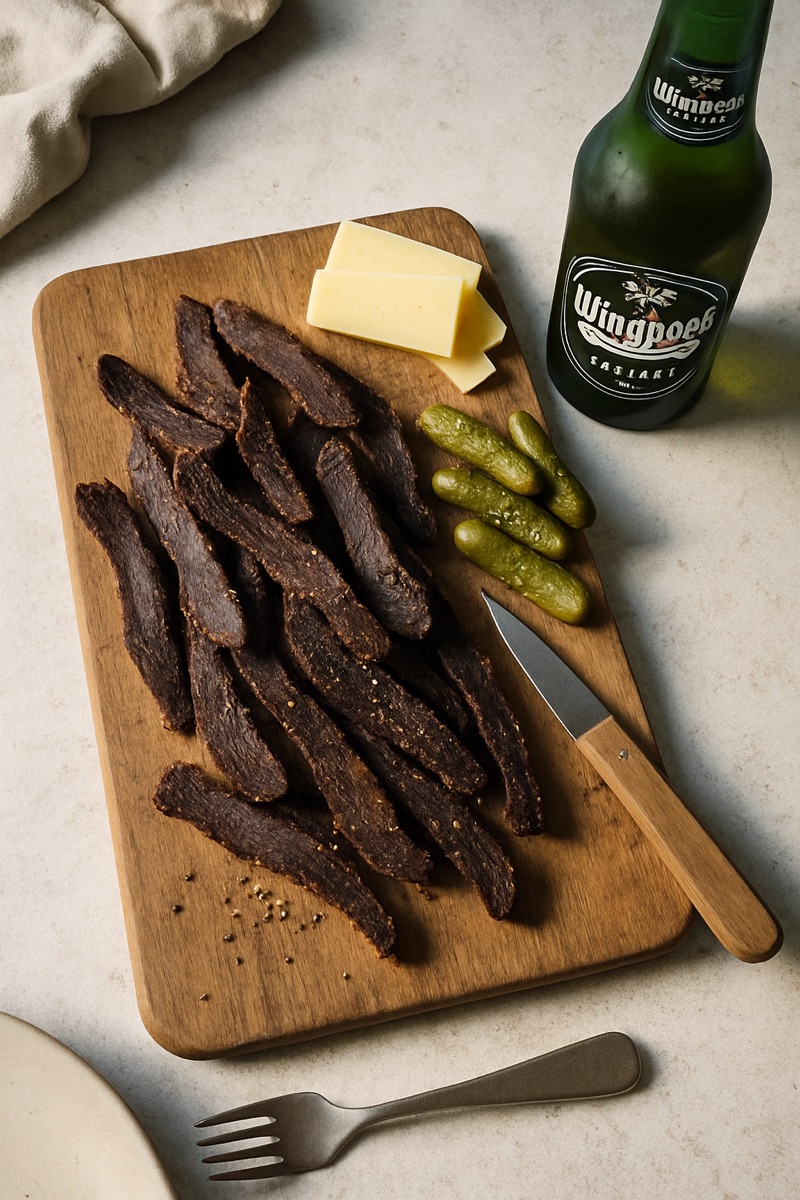
Biltong is air-dried cured meat from Southern Africa. Its name comes from Afrikaans: bil, buttock, and tong, strip. Beef is common, but game such as kudu or ostrich is also used. Strips of silverside are cured with brown vinegar, coarse salt and toasted coriander, then hung for four to seven days. It is the same tradition as in South Africa and Botswana.
You will find all three recipes on our page about the food of Namibia, and the neighbouring kitchens in our guide to Southern African food.
The recipes
 Kapana
 Biltong
Questions people ask
Does Namibia have an official national dish?
No. Namibia has never declared one. Oshifima, kapana and biltong are the dishes most often associated with the country.
What is mahangu?
Mahangu is pearl millet. Its flour is used for oshifima, alone or mixed with maize meal.
What is kapana made of?
Kapana is beef, cut into small pieces and grilled on a metal plate over a wood fire, then seasoned with a chilli, paprika and salt spice mix.
Is biltong the same as beef jerky?
No. Biltong is cured with vinegar, salt and coriander and air-dried for several days without being cooked or smoked.
What is oshifima eaten with?
Oshifima is eaten by hand with soured milk (oshikandela), grilled meat, or stews of wild spinach or beef.
Keep reading
- Traditional food of Namibia: 12 dishes to know
- What is the national dish of Angola?
- What is the national dish of Botswana?
- What is the national dish of Eswatini?
- What is the national dish of Lesotho?
- What is the national dish of Malawi?