 COPPER
What is the national dish of South Africa?
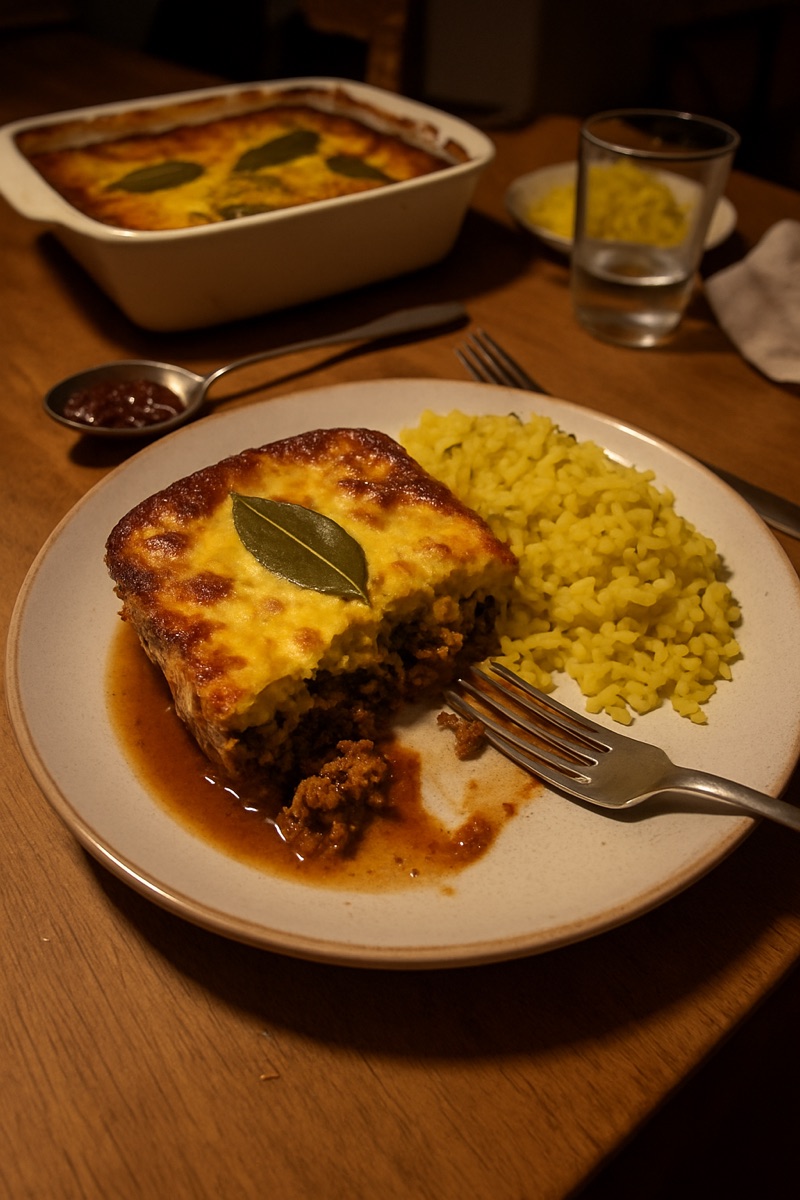
South Africa has no official national dish. The one most often named is bobotie, a Cape Malay bake of curried minced meat with raisins under a savoury egg-and-milk topping, served with yellow rice. It is often called the closest thing to a national dish because it is rarely found outside the region. The braai, with boerewors and pap, is the other usual answer.
Is there an official national dish?
No. No South African law or government body has declared one, and sources do not agree. Lists of national dishes put bobotie next to pap, braai, boerewors and chakalaka. Even reference sources disagree: one describes bobotie as perhaps closest to being the national dish, because it is not commonly found in any other country, while another states plainly that it is not a national dish.
The honest answer is in two parts: bobotie if you want a single dish, the braai if you want the food habit that South Africans of every background share.
What is bobotie?
Bobotie is minced meat, today usually beef or lamb, cooked with onion, curry powder and dried fruit, bound with milk-soaked bread, then baked under a layer of beaten egg and milk that sets like a custard. Bay leaves are pushed into the top. The curry gives a slight tang rather than strong heat, and the raisins and apricot jam give sweetness.
In our bobotie recipe, 500 g of beef is browned, cooked with onions, 2 tbsp curry powder and turmeric, mixed with the squeezed bread, raisins, apricot jam and lemon juice, then covered with 2 eggs beaten into the milk the bread soaked in and baked 35 to 40 minutes at 180°C.
It is traditionally served with:
- Yellow rice, cooked with turmeric.
- Chutney and sambal.
- Sliced banana and grated coconut.
Where bobotie comes from
Bobotie is a Cape Malay dish. It has been known at the Cape of Good Hope since the seventeenth century, when it was made with a mix of mutton and pork, and it was adopted by the Cape Malay community, descendants of enslaved people and political exiles brought from present-day Indonesia and Malaysia while the Cape, like Indonesia, was under Dutch control.
The name is disputed. The Afrikaans etymological dictionary links it to the Malay word boemboe, curry spices; others derive it from bobotok, an Indonesian dish made with quite different ingredients. Early recipes used ginger, marjoram and lemon rind, and curry powder later simplified them.
Bobotie travelled with South African settlers to Botswana, Kenya, Zambia and Zimbabwe, and even to Argentina's Chubut valley, where Boer settlers baked it inside a pumpkin. In 2009 the South African golfer Trevor Immelman served it at the Masters Champions Dinner in Augusta.
The braai: South Africa's national pastime
If bobotie is the dish, the braai is the ritual: meat cooked over an open wood or charcoal fire, as a social event. On weekends many families braai, often eating pap en vleis, stiff maize porridge with grilled meat.
Heritage Day, 24 September, is also celebrated as National Braai Day. The initiative started in 2005, had Archbishop Desmond Tutu as patron from 2007 and was endorsed by the National Heritage Council in 2008.
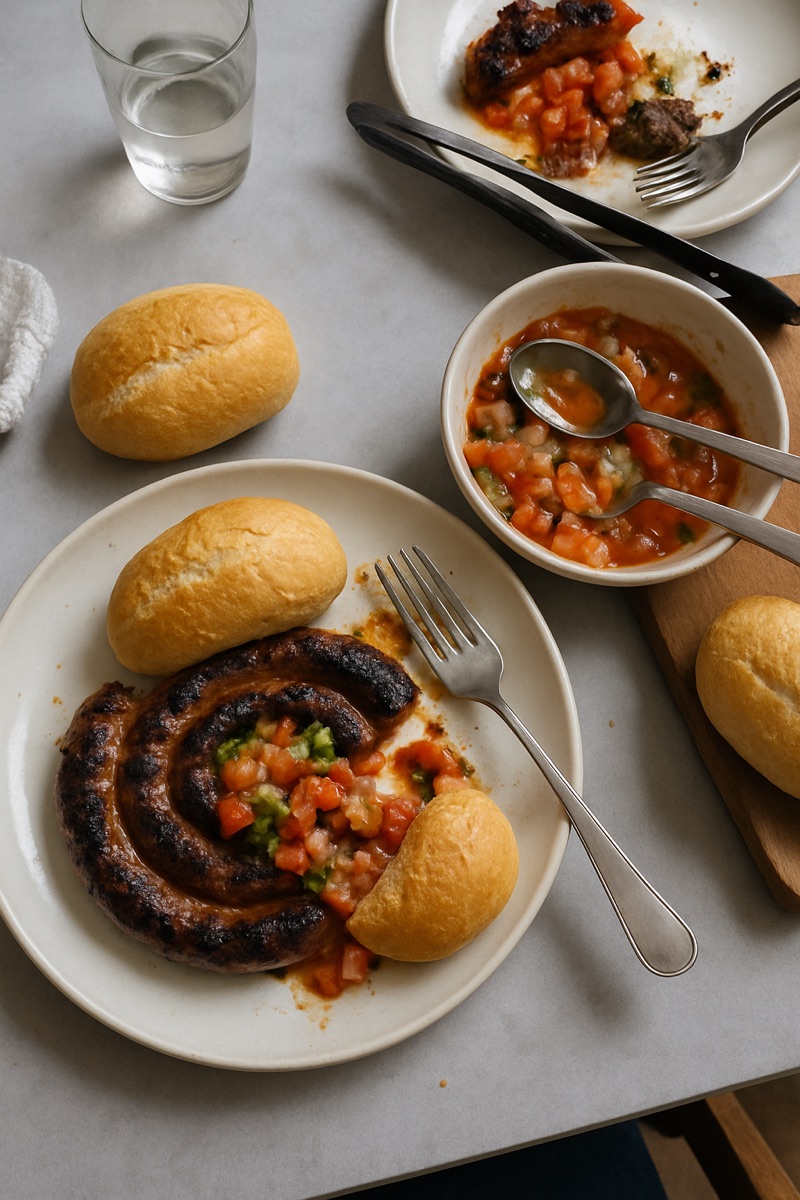
The sausage on the grid is usually boerewors, a coil of coriander-spiced farmer's sausage. In our boerewors braai, the coil goes whole over coals under grey ash for about 15 minutes, turned once or twice and never pricked, so the fat stays in. It is eaten in a roll with tomato-and-onion relish or on pap.
Other dishes to know from South Africa
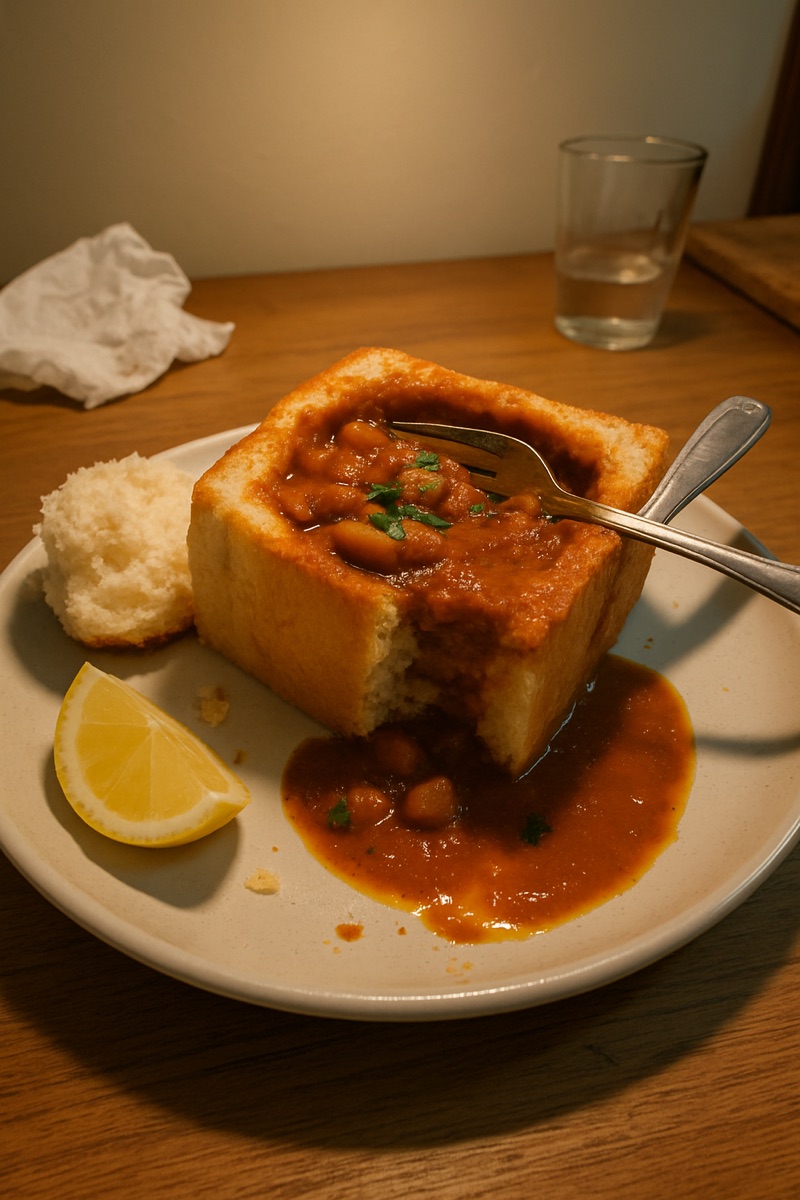
Bunny chow is Durban's contribution: a quarter of an unsliced white loaf hollowed out and filled with curry, the scooped-out bread set on top. It was created among Indian South Africans in Durban, generally dated to the 1940s, and is eaten with the fingers. Locals order by size and filling, a "quarter mutton" for example.
The original bunny chow was vegetarian, filled with bean curry, and a "beans bunny" is still on every menu. It comes in quarter, half and full loaves, with a side salad of grated carrot, chilli and onion, and the sign of a good one is gravy soaking into the bread walls without breaking through. In our recipe the walls are left about 1.5 cm thick for exactly that reason.
Biltong, air-dried seasoned meat, is the snack South Africans reach for, a habit that goes back to the Khoisan, who roasted meat and dried it for later. Bobotie's roots in the East Indies tie it to the national dish of Indonesia, and both bobotie and bunny chow crossed the border north, as you will see in the national dish of Zimbabwe. Explore the wider Southern African kitchen, or find every recipe on our page about the food of South Africa.
The recipes
- Bobotie🇿🇦 South Africa · 1 hour and 20 minutes
 Boerewors braai🇿🇦 South Africa · 1 hour and 10 minutes
 Bunny chow🇿🇦 South Africa · 2 hours
Questions people ask
Is bobotie the national dish of South Africa?
It is the dish most often given that title, but South Africa has no official national dish and some sources dispute it. The braai is the other common answer.
Is bobotie South African or Indonesian?
Bobotie is a South African dish developed by the Cape Malay community. Its name may come from the Indonesian bobotok or the Malay boemboe, but the dish itself is South African.
What is served with bobotie?
Yellow rice cooked with turmeric, plus chutney, sambal, sliced banana or grated coconut.
How do you pronounce bobotie?
buh-BOO-uh-tee, with the stress on the second syllable.
Why is it called bunny chow?
The origin of the name is disputed. The dish itself was created among Indian South Africans in Durban, generally dated to the 1940s.
Keep reading
- Traditional food of South Africa: 14 dishes to know
- What is the national dish of Angola?
- What is the national dish of Botswana?
- What is the national dish of Eswatini?
- What is the national dish of Lesotho?
- What is the national dish of Malawi?