 COPPER
Traditional food of Luxembourg: 12 dishes to know
Traditional Luxembourg food is peasant cooking from the line between Germanic and Latin Europe: smoked pork, potatoes, beans, dumplings, river fish and Moselle Riesling, with strong French, Belgian and German influence. The most emblematic dishes are Judd mat Gaardebounen, Bouneschlupp, Gromperekichelcher and Kniddelen.
What Luxembourg food is built on
Luxembourg's cooking reflects its place between France, Belgium and Germany. As in Germany, most traditional everyday dishes are of peasant origin, while French food dominates restaurant menus and pastry shops. Since the 1960s, Italian and Portuguese immigrants have added their own dishes to the national table.
The base is pork, fresh, smoked or cured, with potatoes, green and broad beans, cabbage and flour dumplings. Summer savory, called Bounekräitchen, is the herb that marks the bean dishes. From the rivers come trout, pike, crayfish and small Moselle fish, and the Moselle valley supplies the dry white wine that goes into many sauces.
Honesty matters here too: several of these dishes are also cooked in Lorraine, Saarland and Belgium's province of Luxembourg, and the cheese spread Kachkéis is the cancoillotte of eastern France. For the dish the country holds up as its own, see our article on the national dish of Luxembourg.
Pork, beans and potatoes
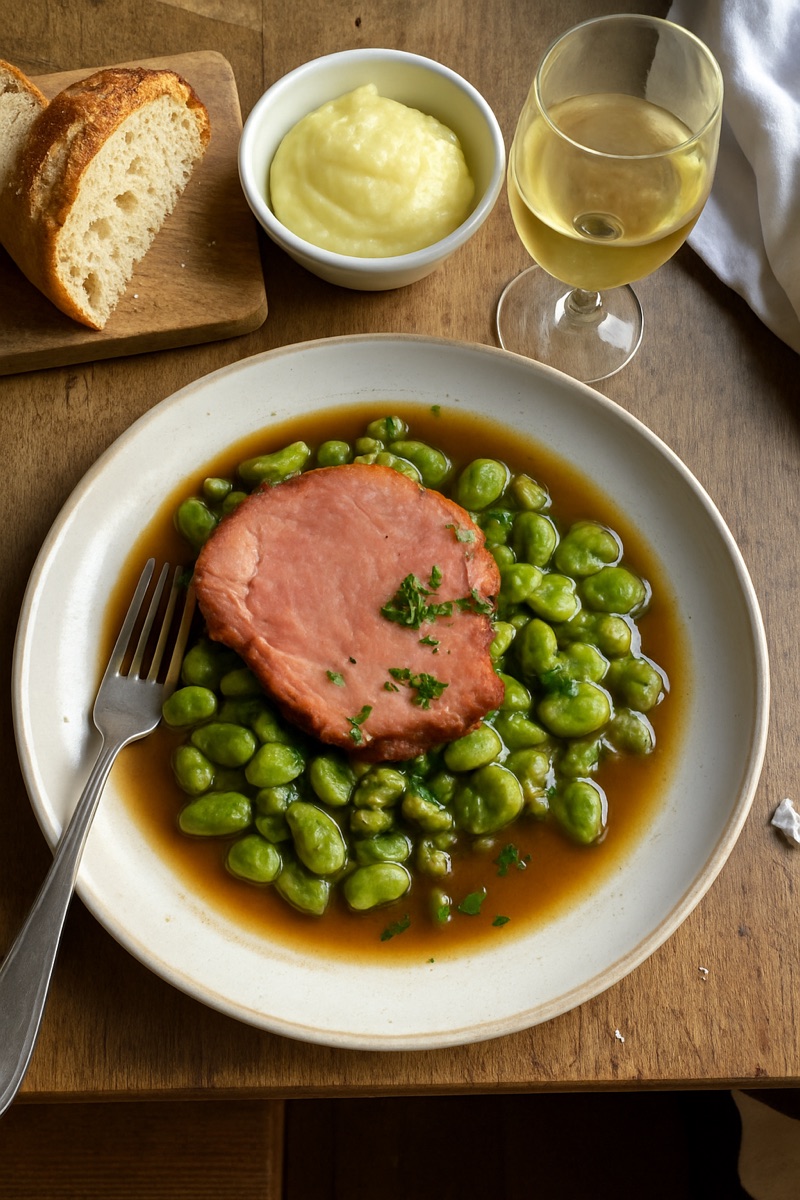
- Judd mat Gaardebounen — Smoked pork collar soaked overnight, then simmered gently with vegetables and spices, sliced and served with broad beans in a savory-scented sauce and boiled potatoes. Reference works describe it as perhaps the most traditional Luxembourg meat dish and the national dish. It is linked to the village of Gostingen, famous for its broad beans. Follow our Judd mat Gaardebounen recipe.
- Bouneschlupp — Green bean soup with potatoes, bacon and onion, finished with cream and dried summer savory and often served with slices of smoked Mettwurst sausage. The same soup is made across the borders in Saarland, Lorraine and the Belgian Gaume. Try our Bouneschlupp recipe.
- Gromperekichelcher — Grated potato mixed with chopped onion, shallot and parsley, wrung dry, spiced and deep-fried into flat fritters. They are the fixture of the Schueberfouer funfair and the Christmas markets and are eaten with apple sauce. See our Gromperekichelcher recipe.
- Kniddelen — Flour dumplings poached in water and served with bacon, cream or mustard sauce. The same word covers other dumplings too: Liewerkniddelen are liver dumplings, eaten with sauerkraut and boiled potatoes, and Stäerzelen are another local kind.
- Träipen — Luxembourg's black pudding, made from minced pork with its fat, finely grated white cabbage, flour and pig's blood, seasoned with summer savory and a little caraway, then fried. It is a winter food, and the Träipen season runs from All Saints' Day to the Buergbrennen bonfires of Lent. It is served with apple sauce.
- Éisleker Ham — Ham from the Oesling, the hilly north of the country, marinated for a couple of weeks and then smoked for several days. It is usually sliced very thin and served cold with chips and salad.
River fish, chicken and Riesling
- F'rell am Rèisleck — Trout in a Riesling sauce. River fish are the base of the classic Luxembourg fish dishes, along with pike in green herb sauce (Hiecht mat Kraiderzooss) and crayfish, usually cooked in Riesling too.
- Fritür — Friture de la Moselle: small fish from the Moselle, fried and eaten with a glass of local white wine.
- Hong am Rèisleck — Chicken pieces browned and then simmered in white wine with vegetables, spices and mushrooms, close to the coq au Riesling of Alsace.
- Rieslingspaschtéit — A loaf-shaped pie of minced meat made with Riesling and set with aspic, served cold in slices.
Cheese and sweets
Pastry shops sell French pâtisserie alongside local sweets: Äppelklatzen, apples baked in pastry; verwurelt Gedanken, small sugar-dusted doughnuts; Eisekuchen, crisp waffles; and the Bretzel, a sugar-glazed pretzel with almonds bought for Bretzelsonndeg during Lent. Peach, cherry and pear tarts are just as typical as plum.
- Kachkéis — Cooked cheese: a soft, runny spread made by melting a lean curd cheese with a little water or milk, salt and butter. In Luxembourg it is spread on an open sandwich over a layer of mustard. It is the same cheese as the cancoillotte of Franche-Comté and Lorraine.
- Quetschentaart — An open tart covered with halved Zwetschgen plums in overlapping circles, on a shortcrust of flour, butter and sugar in the classic Ketty Thull recipe or on yeast dough in others. It is an autumn tart, baked when the plums ripen, and often served with whipped cream at afternoon coffee.
Luxembourg food by region and season
The country is small but its food still follows the map. The Oesling, the hilly north, gives its name to the smoked Éisleker Ham. The Moselle valley in the east gives the wine, the crémant, the fried river fish and the Riesling sauces. The south-east has Gostingen and its broad beans, whose villagers carry the nickname Bounepatscherten.
Soups have their own list: Ierzebulli, a pea stew with Mettwurst and smoked bacon; Ënnenzopp, onion soup served with cheese toast; and Bouneschlupp. Wäinzoossiss, sausage in a mustard cream sauce, and Kuddelfleck, tripe in tomato sauce, are other old favourites. The calendar matters as much. Huesenziwwi, jugged hare, appears in the hunting season. Träipen are eaten from All Saints' Day, once after midnight mass at Christmas, until the Buergbrennen. Quetschentaart marks the autumn, and Gromperekichelcher the funfair at the end of summer and the Christmas markets.
To drink, Luxembourg makes mostly dry white wine on the north bank of the Moselle, from Riesling, Pinot gris, Pinot blanc, Auxerrois, Rivaner and Elbling, plus Crémant de Luxembourg, and every bottle carries the Marque Nationale. Beer is just as popular, from Bofferding, Mousel, Diekirch and Simon.
Cook Luxembourg food at home
Judd mat Gaardebounen, Bouneschlupp and Gromperekichelcher have full step-by-step recipes in Copper, with the step that decides each one: desalting the pork, cooking the beans soft and wringing the potato dry. Find them on our page about the food of Luxembourg.
Luxembourg shares a great deal with its neighbours, so compare it with the traditional food of Belgium and the traditional food of Germany, or browse our guide to Western European food.
The recipes
- Judd mat gaardebounen🇱🇺 Luxembourg · 15 hours
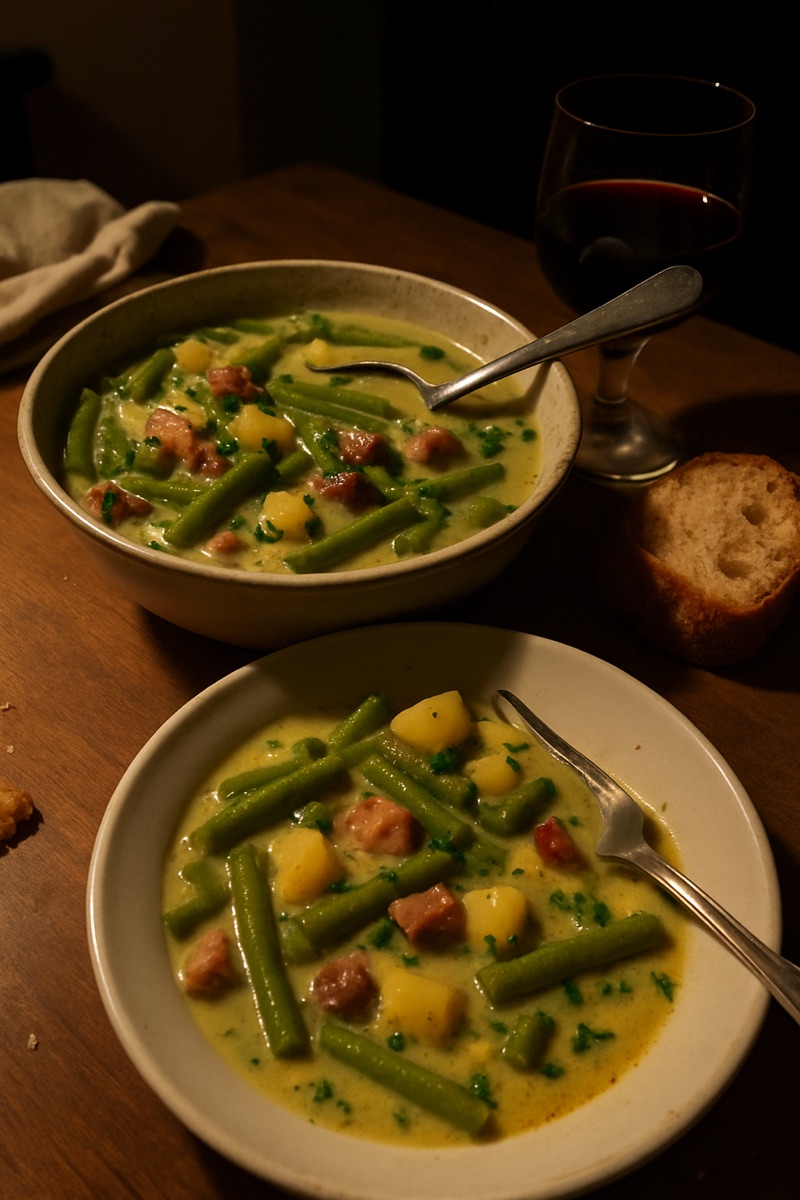 Bouneschlupp🇱🇺 Luxembourg · 1 hour and 10 minutes
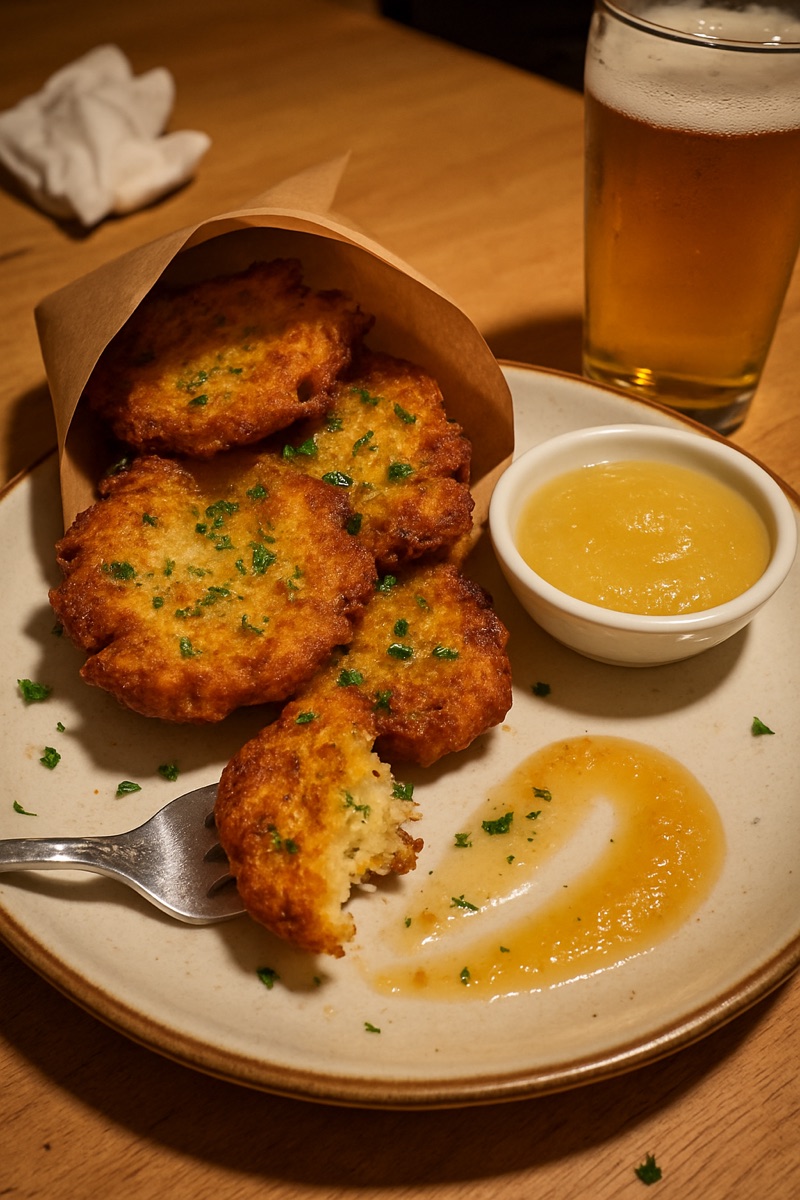 Gromperekichelcher🇱🇺 Luxembourg · 1 hour and 5 minutes
Questions people ask
What is the most popular food in Luxembourg?
Judd mat Gaardebounen, smoked pork collar with broad beans, is the national dish. Bouneschlupp, Gromperekichelcher and Kniddelen are the other dishes most associated with the country.
What is Luxembourg's national dish?
Judd mat Gaardebounen: smoked pork collar, soaked and poached, served with broad beans in a cream sauce and boiled potatoes. No law makes it official, but it is the dish most widely recognised.
Is Luxembourg food French or German?
Both. Its everyday dishes are peasant food close to German cooking, while French cuisine dominates restaurants and pastry shops, and Belgian, Italian and Portuguese influences are strong too.
What is Kachkéis?
A soft cooked-cheese spread, the same as French cancoillotte. In Luxembourg it is eaten on an open sandwich with mustard.
Is Luxembourg food spicy?
No. It is seasoned with herbs such as summer savory, mustard, onions and Riesling rather than chilli.
Keep reading
- What is the national dish of Luxembourg?
- Traditional food of Andorra: 13 dishes to know
- Traditional food of Austria: 13 dishes to know
- Traditional food of Belgium: 13 dishes to know
- Traditional food of Cyprus: 12 dishes to know
- Traditional food of France: 13 dishes to know