 COPPER
Traditional food of Zimbabwe: 13 dishes to know
Zimbabwean food is built on sadza, a stiff white maize porridge eaten by hand at lunch and dinner with a relish: stewed meat, leafy greens cooked with peanut butter, beans, dried fish or sour milk. Peanuts, maize and beef run through the whole cuisine. The most emblematic dishes are sadza, muriwo une dovi, kapenta and mazondo.
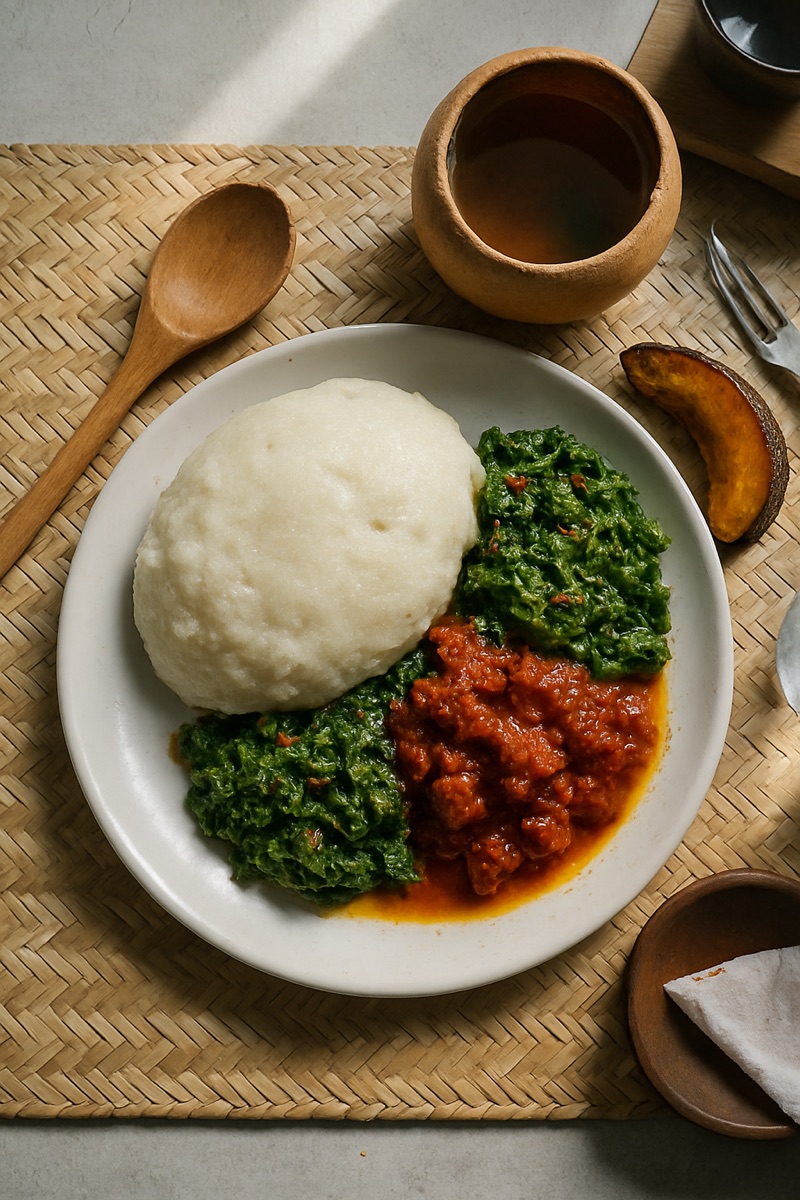
What Zimbabwean food is built on
Like many African countries, Zimbabwe depends on a few staple foods, and the first of them is mealie meal, finely ground white maize. Maize has only been grown there since about 1890; before that the staple porridge was made from finger millet. Today maize is the chief source of carbohydrate, and Zimbabweans strongly prefer white meal: yellow meal is associated with hard times and nicknamed "Kenya" because it was once imported from there. Families buy mealie meal in shops or have their own maize ground at a local mill, then cook it into sadza, called isitshwala in isiNdebele, and into a thin breakfast porridge.
A standard plate is sadza with meat and greens, which Shona speakers sum up as sadza nenyama nemuriwo. The meat is stewed, grilled, roasted or sun-dried; the greens are spinach, chomolia, collards or pumpkin leaves; and peanut butter, called dovi, thickens many relishes. British colonial habits also stuck: porridge in the morning, 10 o'clock tea and 4 o'clock tea. Family celebrations such as graduations and weddings are marked by killing a goat or a cow, which is barbecued or roasted.
Sadza and its relishes
- Sadza — White maize meal cooked in two stages: a thin porridge first, then more meal beaten in until the mass is stiff and smooth. It is eaten with the right hand, rolled into a ball and dipped into the relish, usually at lunch and dinner. It is also eaten with sour milk, mukaka wakakora, sold as "lacto". On its own it tastes of very little: it is the part of the meal that carries everything else, and it is one of the first foods given to babies.
- Bota — The thin porridge from the first stage of sadza, cooked without the extra meal. It is the usual breakfast, flavoured with peanut butter, milk, butter or jam, and is called ilambazi in isiNdebele.
- Muriwo une dovi — Leafy greens such as collards, chomolia or pumpkin leaves (muboora), cooked with onion, tomato and peanut butter and served with sadza. The peanut butter makes the sauce thick and creamy enough to cling to a ball of sadza. One preserved form, mufushwa, uses dried cowpea leaves (munyemba), a way of keeping vegetables for the dry season that Zimbabweans have practised for generations.
- Mazondo — Cow hooves cooked as a relish, served with sadza in the same way as oxtail or stewed beef. They belong to the nyama, or meat, side of the plate, next to stewed goat, chicken and beef.
- Derere — Okra, cooked fresh or dried with a little baking soda until it turns slippery, the texture that is the point of the dish. It is eaten with sadza in Zimbabwe and also in Zambia and north-eastern Botswana, where it is called delele.
Fish, insects and pulses
- Kapenta — Tiny freshwater sardines, also called matemba, fished on Lake Kariba and salted and sun-dried in the Zambezi Valley. In Zimbabwe the dried fish are shallow-fried with onions, tomatoes and groundnut powder and eaten with sadza.
- Madora — Mopane worms, the caterpillars of an emperor moth, hand-picked in the wild and gutted before drying. They are eaten as a crisp snack, or rehydrated and fried or cooked with onion, tomato and spices and served with sadza. Zimbabwe is one of the region's main producers.
- Mutakura — A traditional mix of boiled peanuts (nzungu), sun-dried maize, black-eyed peas (nyemba) and Bambara groundnuts (nyimo), boiled together. It is a filling dish made entirely from crops grown in the country, and the same nyemba beans are also stewed on their own as a relish for sadza.
- Rice with peanut butter — Rice cooked with peanut butter, a local favourite served with thick gravy, mixed vegetables and meat. Young Zimbabweans in particular increasingly eat rice alongside or instead of sadza.
Meat snacks, sweets and drinks
- Biltong — Strips of beef cured with salt and malt vinegar, coated in toasted coriander and hung to dry in the shade for four to seven days. An Afrikaner recipe, it is now a popular snack across Zimbabwe.
- Boerewors — A long, well-spiced sausage of Afrikaner origin, made of beef and often pork, barbecued and served with sadza. It is part of Zimbabwean cooking as much as South African.
- Mapopo — Papaya candy: the fruit is cooked down in sugar with lime until it reaches the hard-ball stage, then rolled into small balls and dusted with sugar.
- Mahewu — A thick, slightly sour, non-alcoholic drink made from thin maize porridge fermented with a little wheat flour. Shona and Ndebele families make it at home, and it is also sold in cartons in supermarkets, often sweetened and flavoured.
Shona, Ndebele and the cities
The food is largely shared between the Shona majority and the Ndebele of the west and south-west around Bulawayo, but the names change: sadza is isitshwala, bota is ilambazi and sour milk is amasi. Near Lake Kariba and the Zambezi, kapenta is a daily food. In rural areas, some families still eat sadza from a shared bowl. In the cities, lunch is often sandwiches or the previous night's leftovers, and rice, pasta and potato chips have joined the daily diet. Durban's bunny chow even crossed the border early: it was sold in Gwelo, now Gweru, during the Second World War and is still sold in Kadoma.
Cook Zimbabwean food at home
Sadza is the national dish of Zimbabwe in everything but law. Copper has full recipes for sadza, biltong and mapopo, with ingredients and step-by-step methods, on our page about the food of Zimbabwe, alongside other Southern African recipes.
Maize porridge, biltong and boerewors are shared across the region. Compare with the traditional food of South Africa and the traditional food of Mozambique.
The recipes
- Sadza🇿🇼 Zimbabwe · 30 minutes
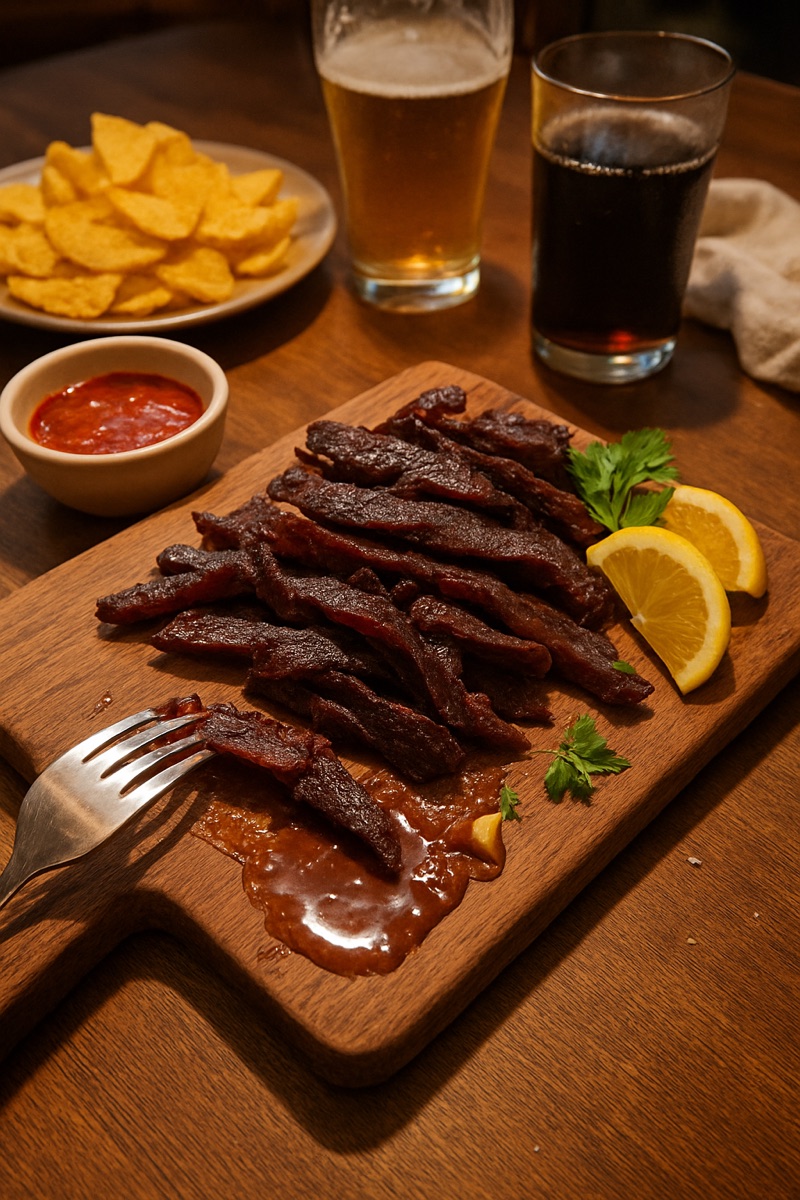 Biltong🇿🇼 Zimbabwe · 5 days and 4 hours
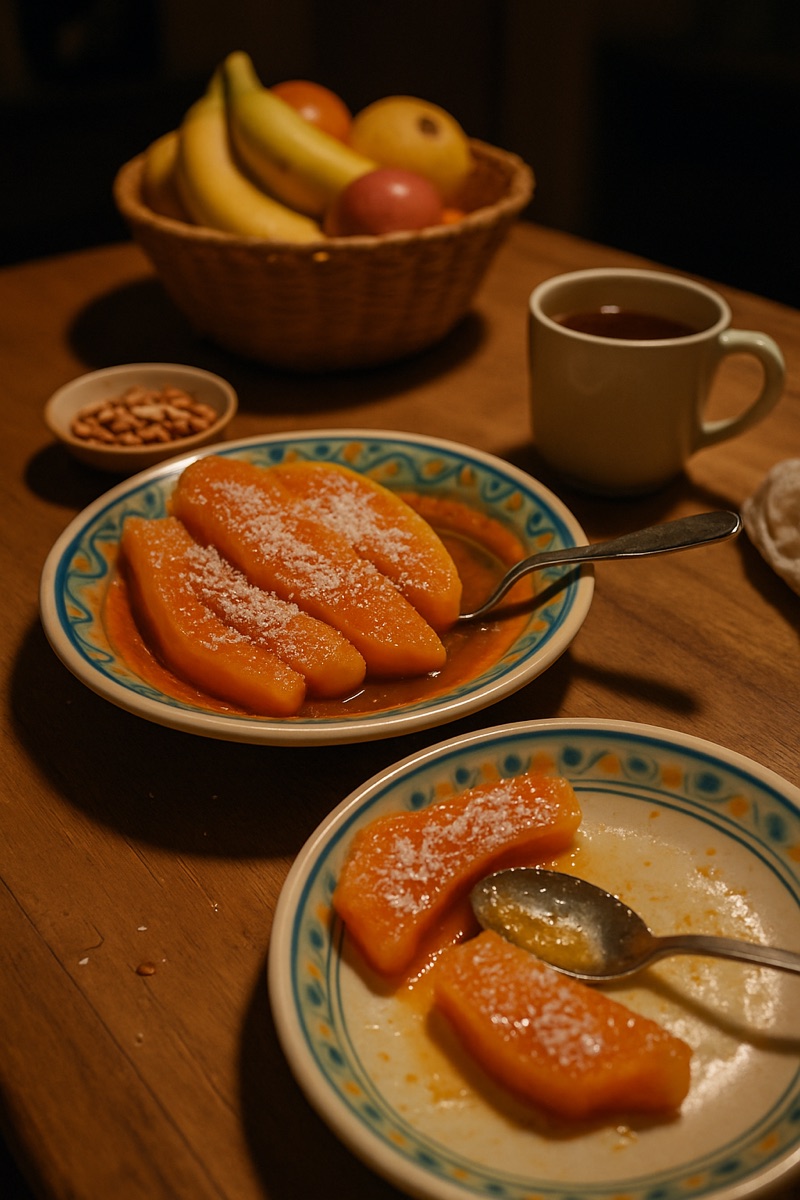 Mapopo🇿🇼 Zimbabwe · 3 hours and 40 minutes
Questions people ask
What is the most popular food in Zimbabwe?
Sadza, the stiff white maize porridge, eaten at lunch or dinner with a relish of meat, leafy greens, beans or dried kapenta fish.
What do Zimbabweans eat for breakfast?
Bota, a thin maize porridge flavoured with peanut butter, milk, butter or jam, is the usual breakfast, often followed by tea.
Is Zimbabwean food spicy?
Not usually. Sadza and its relishes are savoury and mild, seasoned with onion, tomato and peanut butter rather than chilli.
What is dovi?
Dovi is the Shona word for peanut butter. It is stirred into greens, meat and other relishes served with sadza.
What do Zimbabweans drink?
Tea is drunk several times a day, and mahewu, a fermented maize drink, and sour milk are traditional. Chibuku, a commercial beer brewed from maize or sorghum, is also made in Zimbabwe.
Keep reading
- What is the national dish of Zimbabwe?
- Traditional food of Angola: 13 dishes to know
- Traditional food of Botswana: 13 dishes to know
- Traditional food of Eswatini: 14 dishes to know
- Traditional food of Lesotho: 14 dishes to know
- Traditional food of Malawi: 10 dishes to know