 COPPER
Traditional food of São Tomé and Príncipe: 12 dishes to know
Santomean food mixes African and Portuguese cooking on two islands in the Gulf of Guinea. Its base is fish and seafood, breadfruit, cooked banana, beans, maize and red palm oil, seasoned with local leaves and hot malagueta chilli. The emblematic dishes are calulu, a slow palm-oil stew of smoked fish and pounded leaves, molho no fogo on Príncipe, and feijoada à moda da terra.
What Santomean food is built on
São Tomé and Príncipe sits in the Gulf of Guinea, off the coast of Gabon, and its cooking was shaped by African and Portuguese settlers. The national tourism office explains it as a fusion: the colonial centuries brought peoples with different food habits, and the equatorial climate lets a wide range of plants grow, many of which end up in the pot.
Fish and seafood come first. Fishing accounts for roughly a quarter of the economy, and flying fish, tuna and andala are eaten fresh, dried or smoked. The other staples are beans, maize, cooked banana, breadfruit and taro, with red palm oil as the cooking fat; papaya grows alongside them, while cocoa, copra and coffee are grown for export. Hot spices are common, malagueta chilli goes into the piri-piri sauce found in restaurants, and coffee is even used as a seasoning. Breakfast is often the previous evening's meal, reheated.
Local farming does not cover local needs, and much of the food, meat and grain especially, is imported. That makes the island produce, fish, breadfruit, bananas, palm oil and wild leaves, the backbone of traditional cooking, while bread rolls with Portuguese salami and sausage, omelettes and chicken in a coffee sauce with white wine and cream show the Portuguese side.
Palm oil stews
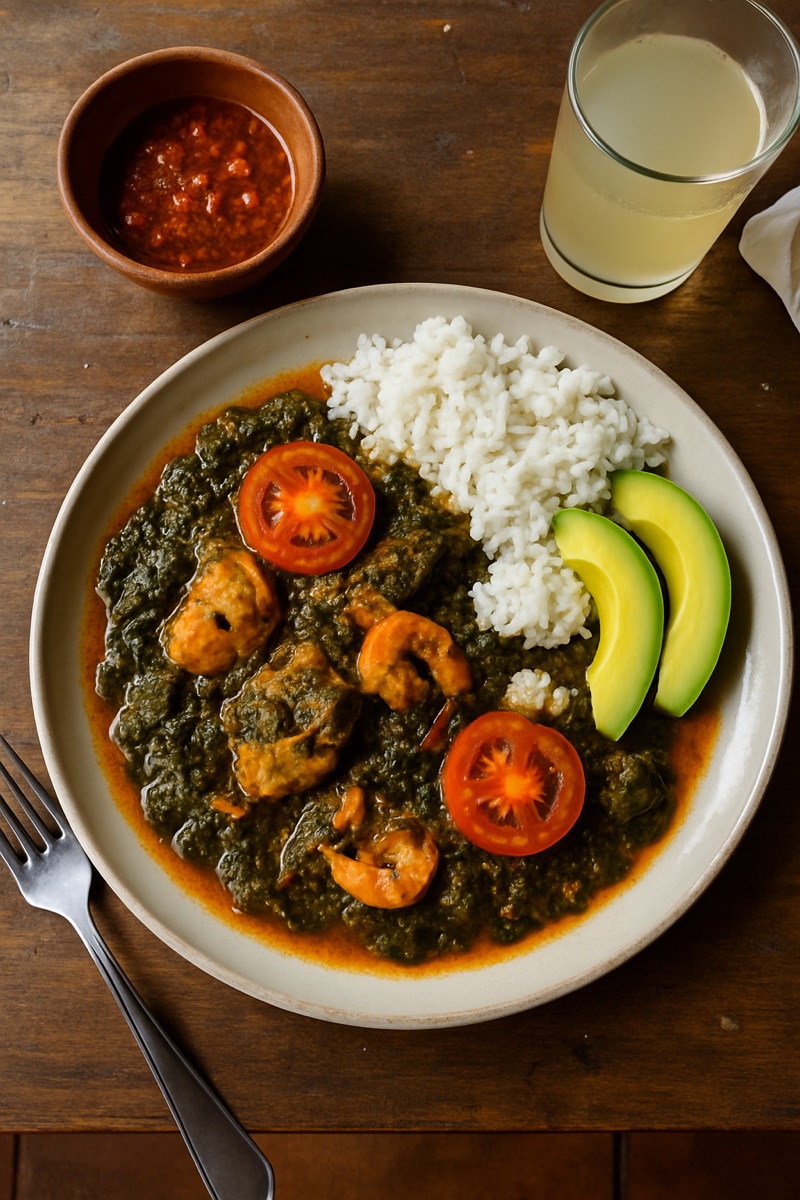
- Calulu — A thick, soup-like stew of smoked fish or smoked meat, chicken, river prawns or smoked sea snails, cooked in palm oil with a dozen pounded local leaves and herbs, okra, eggplant and breadfruit. A traditional calulu takes around five hours. It is the national tourism office's highlighted dish, served at family meals, church feasts, weddings and funerals. The office lists andala, flying fish, tuna and fulu-fulu among the smoked fish used, and pork, trotters or beef among the meats.
- Molho no fogo — The dish of Príncipe, close to calulu but much drier, with more fish and more palm oil. It is Príncipe's own dish, more common there than calulu.
- Muamba de galinha — Chicken stewed in red palm oil with okra and pumpkin, which collapse into the sauce and give it an orange, slightly slippery body.
- Feijoada à moda da terra — The island version of the Portuguese bean stew: red beans simmered with dried or smoked fish, palm oil, micocó leaves, ossame and pepper stick. Without micocó, cooks say, it loses its signature aroma.
Fish, breadfruit and banana
- Barriga de peixe — Grilled fish belly, a traditional Santomean dish served with rice, breadfruit or cassava. The fish comes from the market in São Tomé city, where local fishermen and farmers sell their catch and produce.
- Fruta-pão com peixe salgado — Breadfruit, one of the islands' main food crops, served with salted fish. The national tourism office lists it among the typical dishes of São Tomé island.
- Angu — Ripe or cooking bananas, cooked and pounded into a smooth mass and shaped into balls. It is the classic partner for calulu, alongside rice, maize flour and cassava flour.
Leaves, seeds and feast dishes
- Izaquente — A porridge made from the seeds of a local tree fruit, which look a little like coffee beans. It is eaten sweet, with sugar, or savoury, with palm oil, fish and local chilli.
- Lussua — A sauce of leaves and medicinal herbs built on *lussua*, a spinach-like leaf found around Monte Café on São Tomé island. It is eaten with rice or roasted breadfruit, and the national tourism office lists lússua among the islands' typical dishes.
- Estufa de morcego — Bat stew, a delicacy served on saints' days and during the island festas.
Snacks, sweets and drinks
In the street, vendors sell stews, grilled corn on the cob and *safú*, the fruit of Dacryodes edulis, sometimes grilled with bananas. Arroz doce, made with sweet corn and coconut, is a traditional breakfast. Snacks include banana seca, a whole dried banana with a smoky taste, *palla-palla* crisps of cocoyam or banana, *fios* of maize flour and banana, and *gigumba*, peanut brittle. Palm wine is considered the national drink; the islands also distil aguardente and Gravana rum from sugar cane, and make ponche with honey and aguardente. Rosema is the local beer, and *carioca de limão* is an infusion of lemon peel in hot water.
- Bobofrito — A speciality of Príncipe: bananas fried in coconut oil, eaten as a snack.
- Açucarinhas — Coconut and sugar shaped into patties and fried in palm oil, one of the traditional island sweets. *Aranha* is made from coconut and sugar strings, and *canjica* is a porridge of white maize kernels with egg, sugar and cinnamon.
São Tomé and Príncipe, island by island
The national tourism office lists the typical dishes of each island. On São Tomé: ijogó, blablá, izaquente, calulu, kisaca, feijão à moda da terra, soó de matabala, breadfruit with salted fish, pirão of cassava flour, octopus, omelette à moda da terra and matabala pastries. On Príncipe: molho no fogo, azagoa and other local dishes. Calulu is eaten across the country but mostly on São Tomé; on Príncipe it is uncommon, and molho no fogo and bobofrito are the island's own.
Cook Santomean food at home
Our article on the national dish of São Tomé and Príncipe explains calulu, its leaves and its history in detail. Copper has full recipes for calulu, feijoada and muamba de galinha, with ingredients and step-by-step methods, on our page about the food of São Tomé and Príncipe, next to other Central African recipes.
Calulu has travelled: it reached Bioko as calelú, as told in our guide to the traditional food of Equatorial Guinea. For the mainland across the water, see the traditional food of Gabon.
The recipes
- Calulu🇸🇹 Sao Tome and Principe · 2 hours and 40 minutes
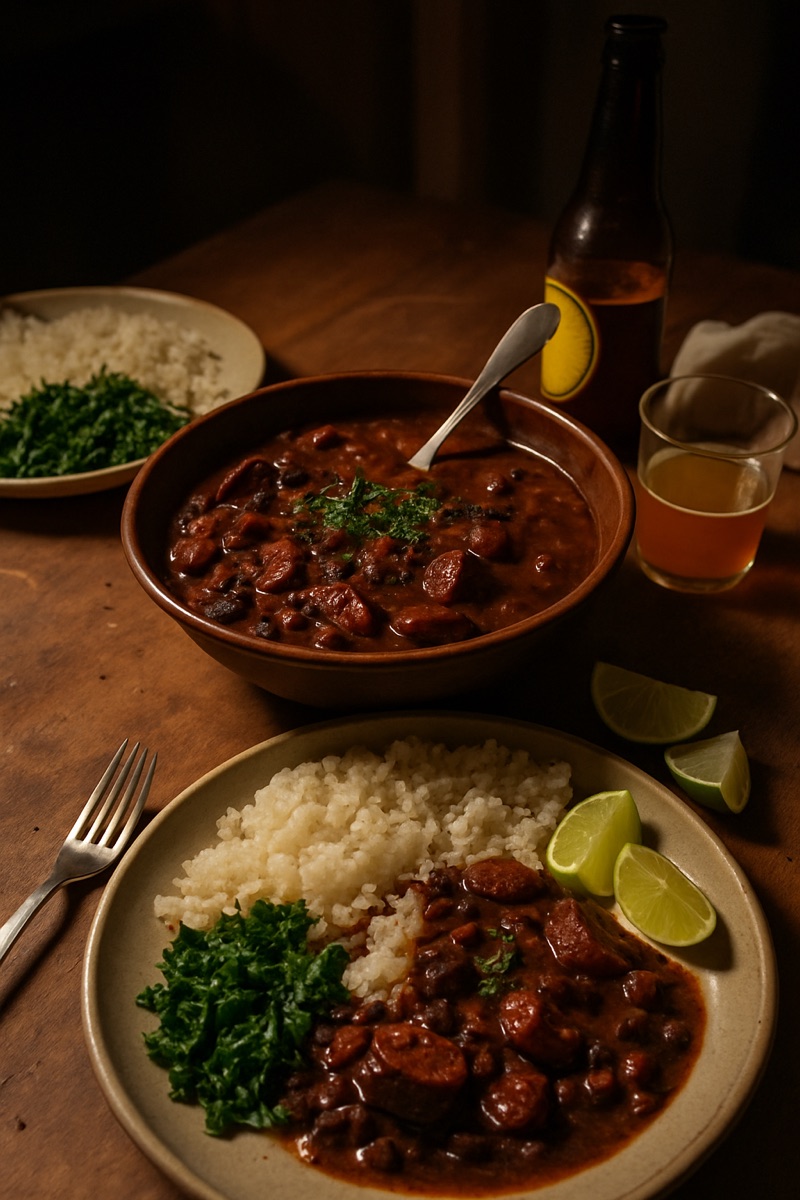 Feijoada🇸🇹 Sao Tome and Principe · 14 hours and 30 minutes
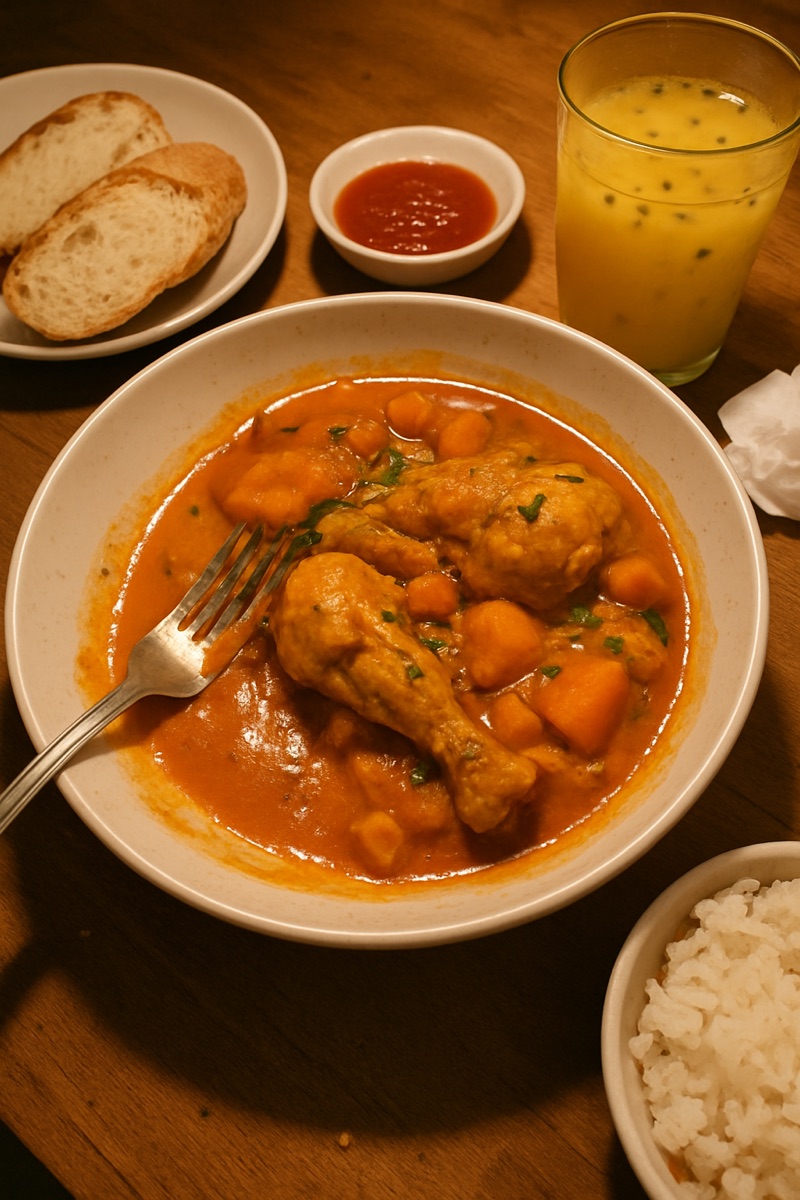 Muamba de galinha🇸🇹 Sao Tome and Principe · 1 hour and 50 minutes
Questions people ask
What is the most popular food in São Tomé and Príncipe?
Calulu, a palm-oil stew of smoked fish or chicken with pounded local leaves and breadfruit, is the dish most often named. It is the national tourism office's highlighted dish and is served at family meals and celebrations.
What do people eat for breakfast in São Tomé?
Breakfast is often the previous evening's meal, reheated. Arroz doce, a rice pudding made with sweet corn and coconut, is a traditional breakfast food.
Is Santomean food spicy?
Often. Hot spices are common, and piri-piri sauce made with malagueta chilli is on the table in most restaurants.
What is the difference between calulu and molho no fogo?
Both are palm-oil dishes with fish, but molho no fogo, the dish of Príncipe, is much drier, with more fish and more palm oil than calulu.
What is the national drink of São Tomé and Príncipe?
Palm wine is considered the national drink. Aguardente and Gravana rum are distilled from sugar cane.
Keep reading
- What is the national dish of São Tomé and Príncipe?
- Traditional food of Cameroon: 13 dishes to know
- Traditional food of the Central African Republic: 12 dishes to know
- Traditional food of Chad: 12 dishes to know
- Traditional food of the DR Congo: 13 dishes to know
- Traditional food of Congo: 10 dishes to know