 COPPER
What is the national dish of São Tomé and Príncipe?
São Tomé and Príncipe has no official national dish, but calulu is the one most often named. It is a thick palm-oil stew of smoked fish or chicken, cooked for hours with pounded local leaves, okra, eggplant and breadfruit, and served with angu, a banana mash. The national tourism office features it as its highlighted dish, and Santomeans serve it at family meals, church feasts, weddings and funerals.
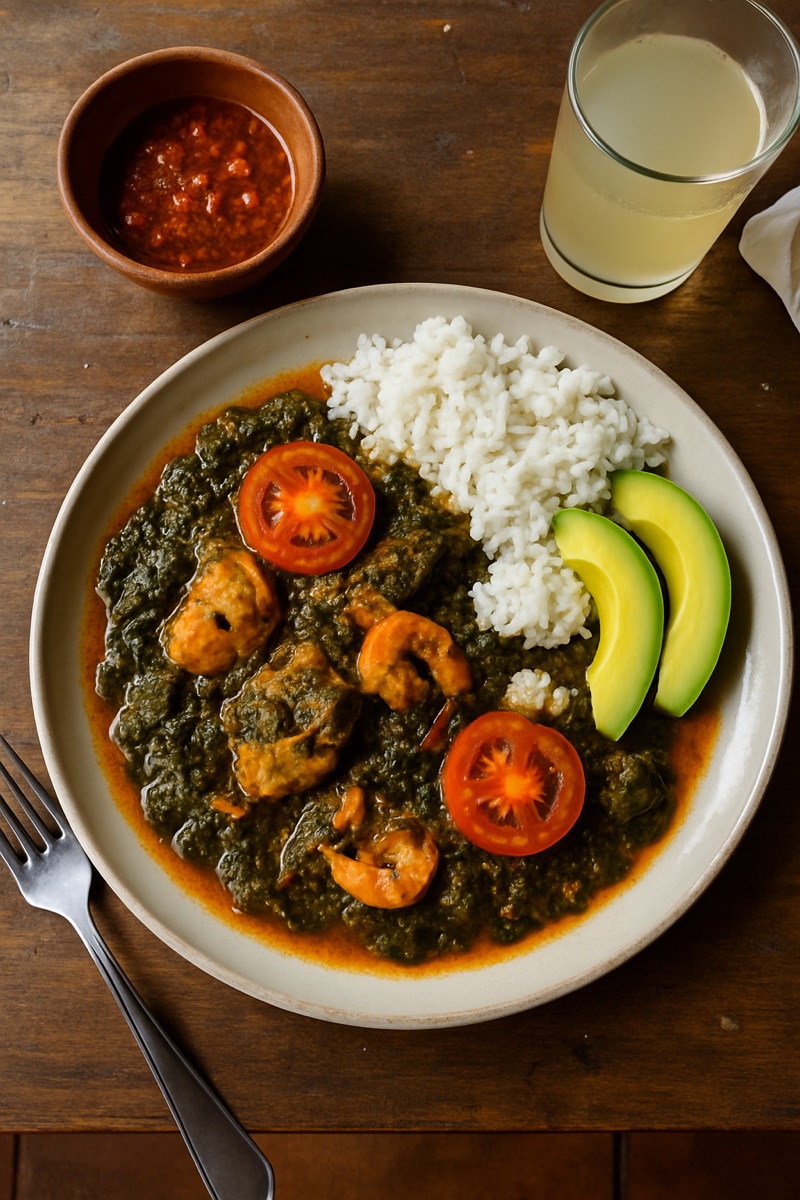
What is calulu?
Calulu looks like a very thick soup. Its base is a mix of leaves and herbs that grow on the islands, pounded in a mortar and cooked down in red palm oil. The protein is usually smoked fish: flying fish, tuna or andala. Smoked meat, chicken, pork, beef, river prawns and smoked sea snails are all used too.
Most of the leaves are hard to find outside São Tomé, and cooks there say that without them the dish is not calulu. The usual set includes:
- Mussua, micocó, ponto and maquêquê leaves, plus watercress.
- Flor de mosquito (mosquito leaf), for aroma.
- Ossame, a red, bulbous fruit, and pau-pimenta, a pepper stick.
- Malagueta chili, okra, eggplant, tomato and onion.
- Breadfruit, cooked in the stew, then pounded and stirred back in to thicken it.
How calulu is made
Calulu is slow food. English and Portuguese Wikipedia both put a traditional calulu at around five hours, and in São Tomé it is often left to cook overnight. Our calulu recipe keeps the island method:
The pounded leaves go into a large pot with eggplant, okra, tomato, onion, breadfruit, 100 ml of palm oil, the ossame and the pepper stick, covered with water, for about an hour. The breadfruit is then lifted out, pounded into a paste and returned: that is what thickens the sauce. Some cooks use cassava flour instead. Then come 1.2 kg of smoked fish, picked free of skin and bones, and a malagueta chili. The stew simmers at least two hours in all, stirred now and then, and the salt is adjusted at the end. The same method works with chicken in place of fish.
It is served with angu, cooked bananas pounded in a mortar and shaped into balls, or with white rice.
A dish for families, saints and guests
Calulu is an everyday family meal, but it also marks big occasions. At religious feasts it is often handed out near the churches, and it is served at weddings and funerals. The national tourism office describes it as a rich dish, suitable to offer a foreigner visiting the country.
It is eaten across the country, but mostly on São Tomé island. On Príncipe it is less common, and the island's own dish is molho no fogo, which is close to calulu but drier, with more fish and more palm oil.
Where calulu comes from
Calulu is also a classic of Angola, where it is layered with dried and fresh fish and served with funge. Some linguists trace the word to kulúlu, a Kikongo term for the portion of food set aside for the husband at the end of a meal. Others link it to callaloo, the leafy stew of the Caribbean, and to caruru, a Brazilian dish close to Angolan calulu whose name comes from a Tupi-Guarani word for an amaranth green.
The dish has also travelled north. Spanish Wikipedia notes that calelú reached Bioko, in Equatorial Guinea, from São Tomé.
What Santomeans eat every day
Fish and seafood are central on the islands, where fishing accounts for roughly a quarter of the economy. Fish, beans, maize and cooked banana are the staples, hot spices are common, and coffee even turns up as a seasoning. Breakfast is often the previous evening's meal, reheated.
The national tourism office lists the typical dishes of each island:
- São Tomé: ijogó, blablá, izaquente, calúlú, kisaca, feijão à moda da terra, soó de matabala, breadfruit with salted fish, cassava-flour pirão and octopus.
- Príncipe: molho no fogo, azagoa, ufundi, maquita, obobô, bobofrito (bananas fried in coconut oil), fried yam and moqueca.
- Barriga de peixe: grilled fish served with rice, breadfruit or cassava, described by Wikipedia as a traditional Santomean dish.
Other dishes to know from São Tomé and Príncipe
Two more dishes show how African and Portuguese cooking meet on the islands.
Feijoada à moda da terra is a local take on the Portuguese bean stew: red beans simmered with smoked fish, palm oil, micocó, ossame and pepper stick. Without micocó, cooks say, it loses its signature aroma. See our feijoada recipe.
Muamba de galinha is chicken stewed in red palm oil with pumpkin, which collapses into the sauce, and whole okra added for the last 10 minutes only. See our muamba de galinha recipe.
You will find all three dishes, with ingredients and step-by-step methods, on our page about the food of São Tomé and Príncipe. For the kitchens of the mainland next door, see our guide to Central African food.
The recipes
- Calulu🇸🇹 Sao Tome and Principe · 2 hours and 40 minutes
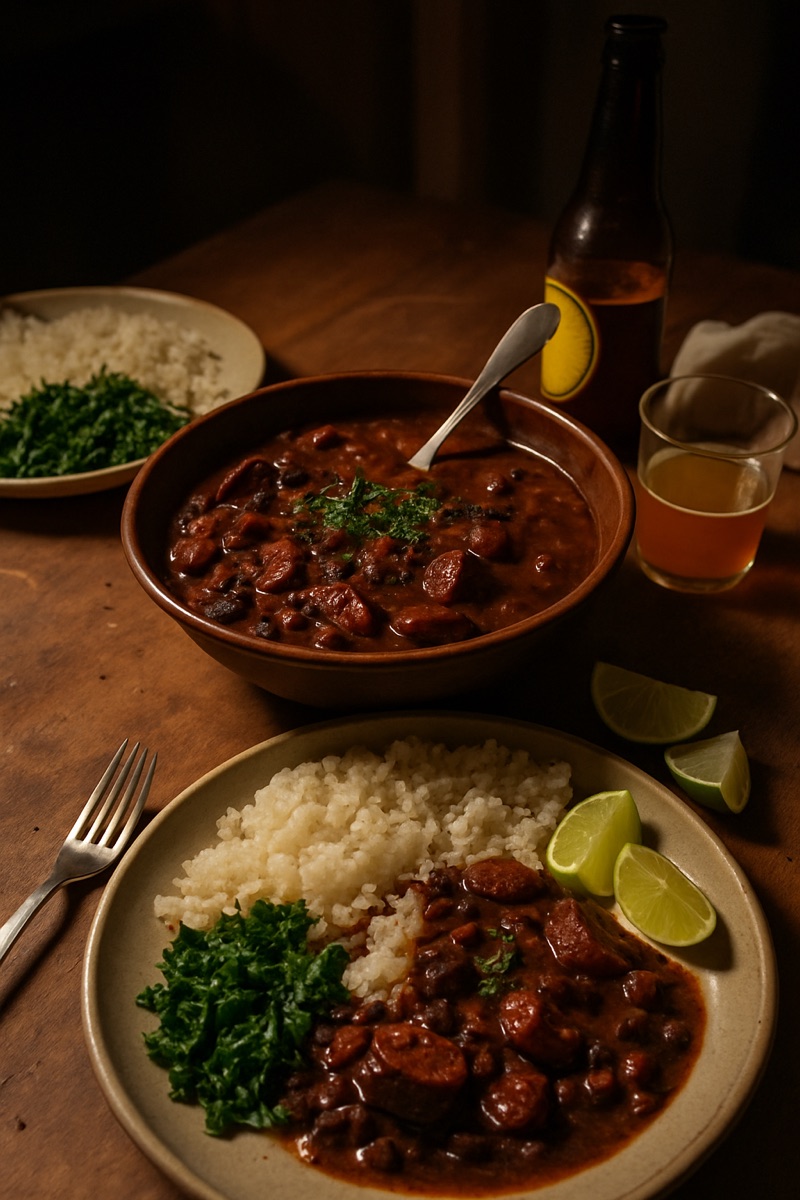 Feijoada🇸🇹 Sao Tome and Principe · 14 hours and 30 minutes
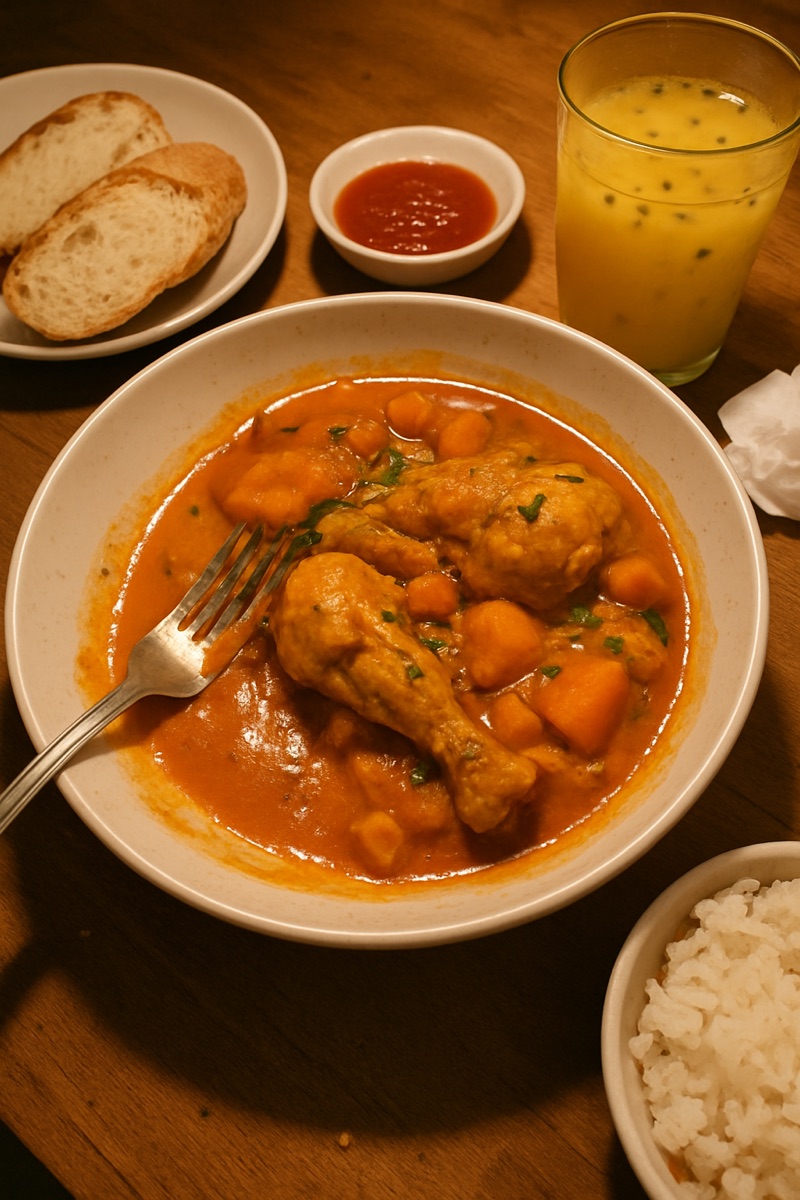 Muamba de galinha🇸🇹 Sao Tome and Principe · 1 hour and 50 minutes
Questions people ask
Is calulu from Angola or São Tomé?
Both. Calulu is a traditional dish of Angola and of São Tomé and Príncipe; the Santomean version is built on local leaves, breadfruit and smoked fish.
What is calulu served with?
In São Tomé it comes with angu, a mash of cooked bananas shaped into balls, or with white rice.
How long does calulu take to cook?
Around five hours for a traditional calulu, and it is often left to cook overnight. Our recipe needs at least two hours of simmering.
Can calulu be made with chicken?
Yes. Smoked fish is the most common version, but calulu is also made with chicken, pork, beef or river prawns.
What is the national drink of São Tomé and Príncipe?
Palm wine is considered a national drink of São Tomé and Príncipe.
Keep reading
- Traditional food of São Tomé and Príncipe: 12 dishes to know
- What is the national dish of Cameroon?
- What is the national dish of the Central African Republic?
- What is the national dish of Chad?
- What is the national dish of the DR Congo?
- What is the national dish of the Republic of the Congo?