 COPPER
Traditional food of the Philippines: 14 dishes to know
Traditional Filipino food is built on steamed rice and a balance of sour, salty and sweet, with vinegar, soy sauce, fish sauce, calamansi and coconut milk doing most of the seasoning. Stewing, braising in vinegar and roasting are the core techniques. The most emblematic dishes are adobo, the sour soup sinigang, whole roast pig lechon and the peanut stew kare-kare.
What Filipino food is built on
The Philippines is an archipelago of more than a hundred ethnolinguistic groups, and its cooking mixes native Austronesian methods with Chinese, Spanish and American influence. The constant is rice: it is steamed and served with meat, fish and vegetables at almost every meal, and leftover rice is fried with garlic the next morning.
Filipino cooking plays sweet, sour and salty against each other. Sourness comes from vinegar, tamarind and calamansi, a small native citrus; saltiness from soy sauce, fish sauce and bagoong, a fermented shrimp paste served on the side. Heat is regional rather than national: it matters in Bicol, the Cordilleras and Muslim Mindanao, much less in Manila.
The day is organised around rice. Breakfast (almusal) is often garlic rice with egg and a cured meat, lunch (tanghalian) is one or two dishes with rice and sometimes a soup, and in the afternoon comes merienda, a snack of noodles, rice cakes or bread with coffee. Pulutan, food eaten with beer or liquor, has its own repertoire of grilled skewers and fried pork.
Fiestas are where the cooking becomes elaborate: a whole lechon, Spanish-style stews such as caldereta, mechado and menudo, and a table of sweets. On Christmas Eve, Noche Buena, the centerpiece is often a glazed ham with a ball of Edam cheese, queso de bola.
Main dishes: stews and roasts
Most everyday Filipino mains are slow-cooked and eaten with a mound of rice to soak up the sauce.
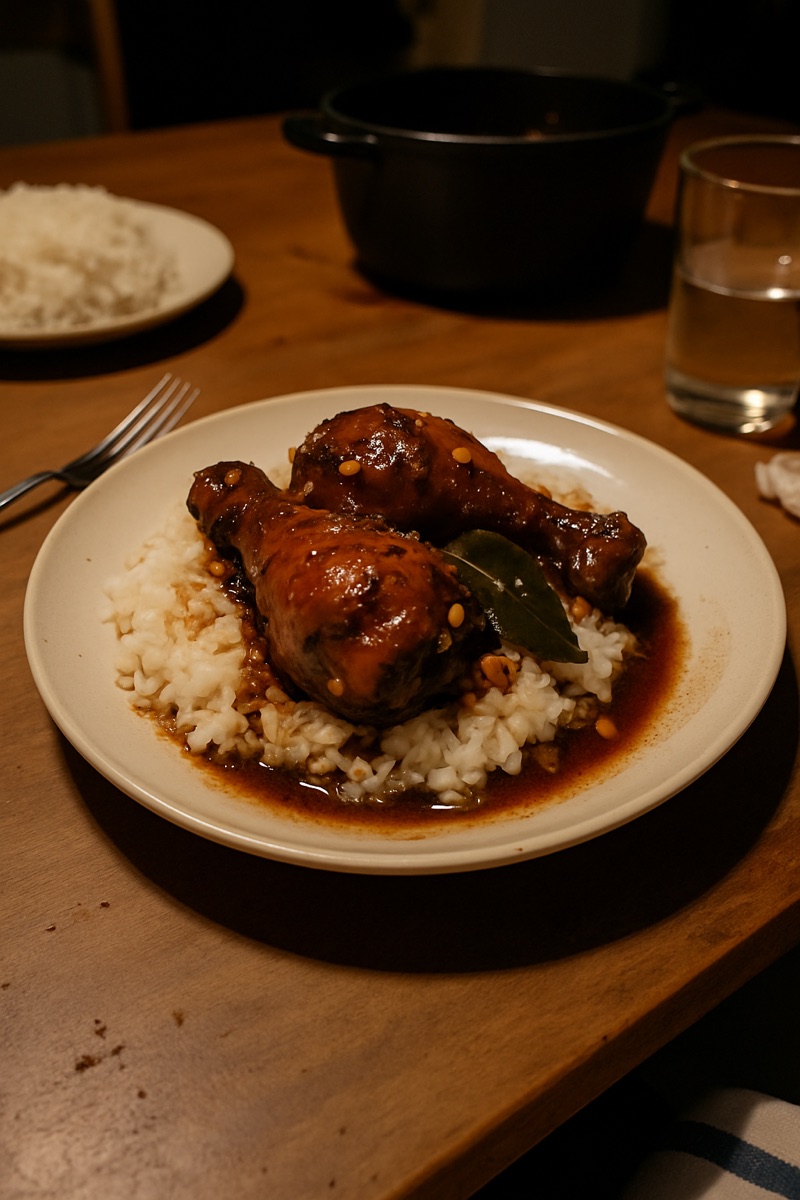
- Adobo — Chicken or pork browned, then braised in vinegar, soy sauce, garlic, bay leaves and black peppercorns until tender. It keeps well because of the vinegar and is the dish most often called the national dish of the Philippines. Our version is chicken adobo.
- Kare-kare — A thick stew of oxtail, tripe or pork hock with eggplant, long beans and greens, flavored with ground roasted peanuts and colored with annatto. It is served with bagoong on the side and appears at most fiestas.
- Lechon — A whole pig roasted over charcoal until the skin is crisp, the centerpiece of Filipino celebrations and Christmas Eve dinner. Cebu is known for a crisp-skinned version seasoned with a blend of spices; elsewhere it comes with a sauce traditionally made from the pig's liver.
- Sisig — Pig's cheek, ears and liver boiled, grilled over charcoal, then chopped and fried with onions, chili and calamansi. It began as a bar snack in Pampanga and is now served on a sizzling iron plate across the country.
Soups
- Sinigang — Pork, fish or shrimp in a broth soured with tamarind, with tomato, radish, long beans, okra and water spinach. The sourness should be obvious, not subtle. See our sinigang recipe, soured with young tamarind and thickened with taro.
- Bulalo — Beef shanks with the marrow bone left in, slow-cooked until the fat and collagen melt into a light broth, then finished with corn on the cob and greens. It comes from Batangas and Cavite in southern Luzon and is eaten with rice, soy sauce and calamansi.
Breakfast, snacks and street food
- Silog — The Filipino breakfast plate: sinangag (garlic fried rice) and a fried egg with one meat. The name changes with the meat, so tapa (cured beef) makes tapsilog, milkfish makes bangsilog and a hot dog makes hotsilog.
- Pandesal — Soft bread rolls coated in fine breadcrumbs, sold from neighborhood bakeries every morning and eaten with coffee. Despite the name (bread of salt), very little salt goes in.
- Lumpia — Spring rolls, fresh or fried. Lumpiang shanghai, thin rolls of seasoned ground pork, is the fried version served at almost every party; try our lumpia recipe.
- Pancit — The general name for Filipino noodle dishes, introduced by Chinese immigrants. Pancit canton and pancit bihon are stir-fried with meat and vegetables, finished with calamansi, and served at birthdays.
- Taho — Warm silken tofu with dark caramel syrup (arnibal) and tapioca pearls, sold door to door, mostly early in the morning, by vendors who call out "taho!" as they walk.
Desserts
- Halo-halo — Crushed ice and evaporated milk layered with sweet beans, coconut strips, jellies, ube jam, leche flan and often ube ice cream, served in a tall glass and mixed before eating. It is considered the country's unofficial national dessert.
- Leche flan — A caramel custard heavier than the Spanish original, made with condensed milk and extra egg yolks and usually steamed rather than baked. It is a fixture at feasts.
- Bibingka — A rice-flour cake baked over coals in a terracotta pot lined with banana leaves, topped with butter, salted duck egg, white cheese or grated coconut. It is eaten for breakfast or merienda, above all at Christmas.
Regional cooking across the islands
Pampanga, north of Manila, was declared the country's culinary capital by the Senate in 2024: sisig, kare-kare and sweet-cured tocino all come from Kapampangan kitchens. Bicol cooks with chili and coconut milk, in Bicol express (pork, coconut milk and chilies) and laing (taro leaves simmered in coconut milk). Ilocos has its orange-crusted empanadas, Iloilo its batchoy noodle soup, and Mindanao uses turmeric, lemongrass and galangal in ways closer to its neighbors.
Those links run through the Southeast Asian kitchen as a whole. Compare with the traditional food of Indonesia and the traditional food of Vietnam.
Cook Filipino food at home
Three of these dishes have full step-by-step recipes in Copper: chicken adobo, sinigang and lumpia. You will find all of them, with ingredients, timings and the technique that matters most for each, on our page about the food of the Philippines.
The recipes
- Chicken adobo🇵🇭 Philippines · 1 hour and 5 minutes
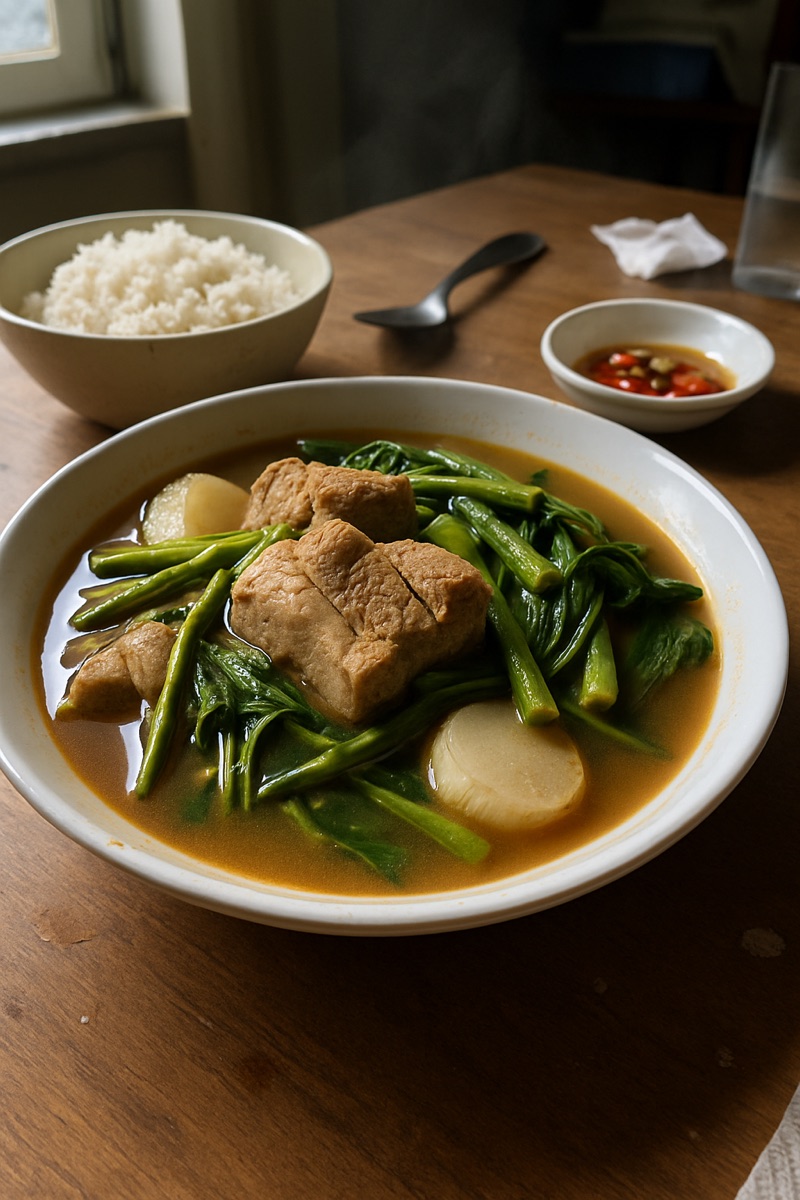 Sinigang🇵🇭 Philippines · 1 hour and 50 minutes
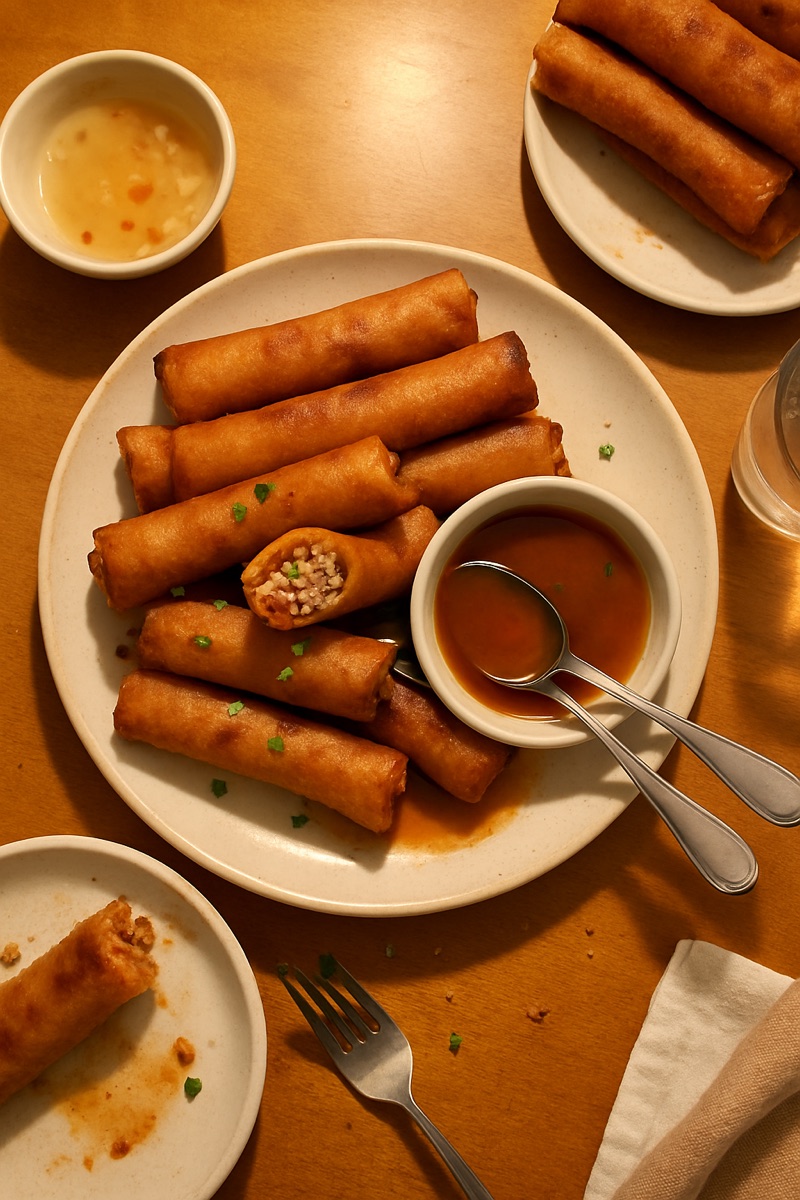 Lumpia🇵🇭 Philippines · 1 hour and 20 minutes
Questions people ask
What is the most popular food in the Philippines?
Adobo is the most widely cooked Filipino dish and the one most often named as the national dish. Sinigang, lechon, pancit and lumpia are also eaten across the whole country.
What do Filipinos eat for breakfast?
A typical Filipino breakfast is a silog plate: garlic fried rice, a fried egg and a meat such as tapa, longganisa or tocino. Pandesal rolls with coffee and champorado, a chocolate rice porridge, are also common.
Is Filipino food spicy?
Mostly not. Filipino cooking leans on sour, salty and sweet flavors, with chili added at the table. The exceptions are Bicol, the Cordilleras and Mindanao, where chili is part of the cooking.
Why do Filipinos eat rice with every meal?
Rice is the staple crop of the Philippines and is served with meat, fish and vegetable dishes at nearly every meal, including breakfast, where leftover rice is fried with garlic.
What is the national dessert of the Philippines?
Halo-halo, a shaved-ice dessert with evaporated milk, sweet beans, jellies, ube and leche flan, is considered the unofficial national dessert.
Keep reading
- What is the national dish of the Philippines?
- Traditional food of Brunei: 12 dishes to know
- Traditional food of Cambodia: 12 dishes to know
- Traditional food of Indonesia: 13 dishes to know
- Traditional food of Laos: 14 dishes to know
- Traditional food of Malaysia: 13 dishes to know