 COPPER
What is the national dish of the Philippines?
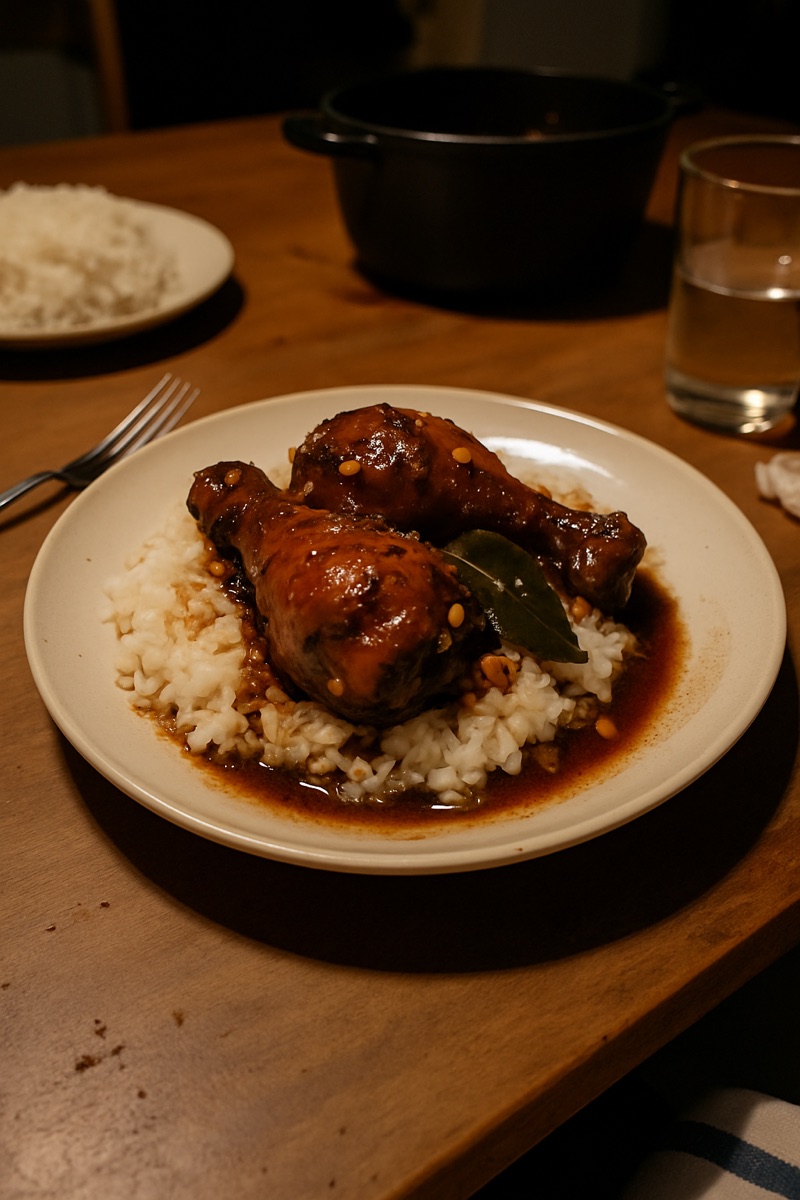
The Philippines has no official national dish, but adobo is the one most often given that title. It is chicken or pork, browned, then braised in vinegar, soy sauce, garlic, bay leaves and black peppercorns until tender, and served with rice. A 2014 bill proposed making adobo the official national food, but it has not become law. Sinigang, a sour soup, is its main rival.
Is adobo officially the national dish?
Not officially. Many well-known Philippine symbols, including the carabao and the mango, are widely recognised but have no law behind them, and adobo is in the same position. In February 2014, House Bill 3926, the proposed Philippine National Symbols Act, listed adobo as the national food. The bill stayed pending in committee and has not become law.
In practice adobo is described as the unofficial national dish of the Philippines, and in 2021 the Department of Trade and Industry's Bureau of Philippine Standards chose it as the first Filipino dish to receive a standard reference recipe. Google also gave it its own Doodle on 15 March 2023.
What is in Filipino adobo?
Adobo is better understood as a cooking method than a single recipe: meat, seafood or vegetables braised in vinegar with seasonings. The most common versions are adobong manok (chicken) and adobong baboy (pork), and many cooks use both.
The core ingredients are all Southeast Asian staples, which is what separates it from Spanish and Mexican adobos:
Beyond chicken and pork, Filipinos make adobo with beef, duck, squid, shrimp and fish, and with vegetables such as water spinach, eggplant, okra and banana flowers. Regional versions change it further:
- Vinegar: coconut, cane, palm or rice vinegar. It is the one ingredient no adobo goes without.
- Soy sauce: used in place of salt in most versions, giving the dark adobong itim.
- Garlic, plenty of it.
- Bay leaves and whole black peppercorns.
- No chili, paprika, oregano or tomato in the traditional dish.
- Adobong puti (white adobo): salt instead of soy sauce.
- Adobong dilaw (yellow adobo), from Batangas and Laguna: turmeric, no soy sauce.
- Adobo sa gata, common in Bicol and Zamboanga City: finished with coconut milk.
- Luñiz, from Batanes in the far north: pork preserved in jars with salt.
How chicken adobo is made
Our chicken adobo recipe starts by softening onion and garlic in oil, then browning 1 kg of chicken thighs for 8 to 10 minutes. In go ½ cup soy sauce, ½ cup vinegar, 1 cup water, 3 bay leaves and 1 teaspoon of peppercorns.
The pot boils hard for about 5 minutes, then simmers on low for 30 to 40 minutes until the chicken is tender. It is served hot over rice, with the sauce spooned on top. Some households cook the liquid down until the adobo is almost dry; others keep it saucy.
Adobo was traditionally cooked in small clay pots called palayok; today most cooks use a metal pot or a wok (kawali).
The vinegar also explains why adobo travels: it keeps well without refrigeration, which is why Filipino hikers and travellers pack it.
Where adobo comes from
The technique is older than the name. Precolonial peoples of the archipelago cooked with vinegar and salt to preserve food in the tropical heat. The Spanish word adobo, meaning marinade, was applied to this native dish and first recorded in a 1613 Tagalog dictionary as "adobo de los naturales". The dish's original name has been lost.
Adobo is one of four traditional Filipino ways of cooking with vinegar. The others are kinilaw, raw seafood in vinegar and spices; paksiw, meat in a vinegar broth; and sangkutsa, a vinegar pre-braise. The reference chosen for the 2021 adobo standard is Kulinarya: A Guidebook to Philippine Cuisine (2008).
Food historian Doreen Fernandez considered that adobo may have been influenced by Mexican adobo, while noting that the two dishes are very different; see our article on the national dish of Mexico. Closer in style are the soy-braised dishes of the region, such as ayam kecap in Indonesia.
Other dishes to know from the Philippines
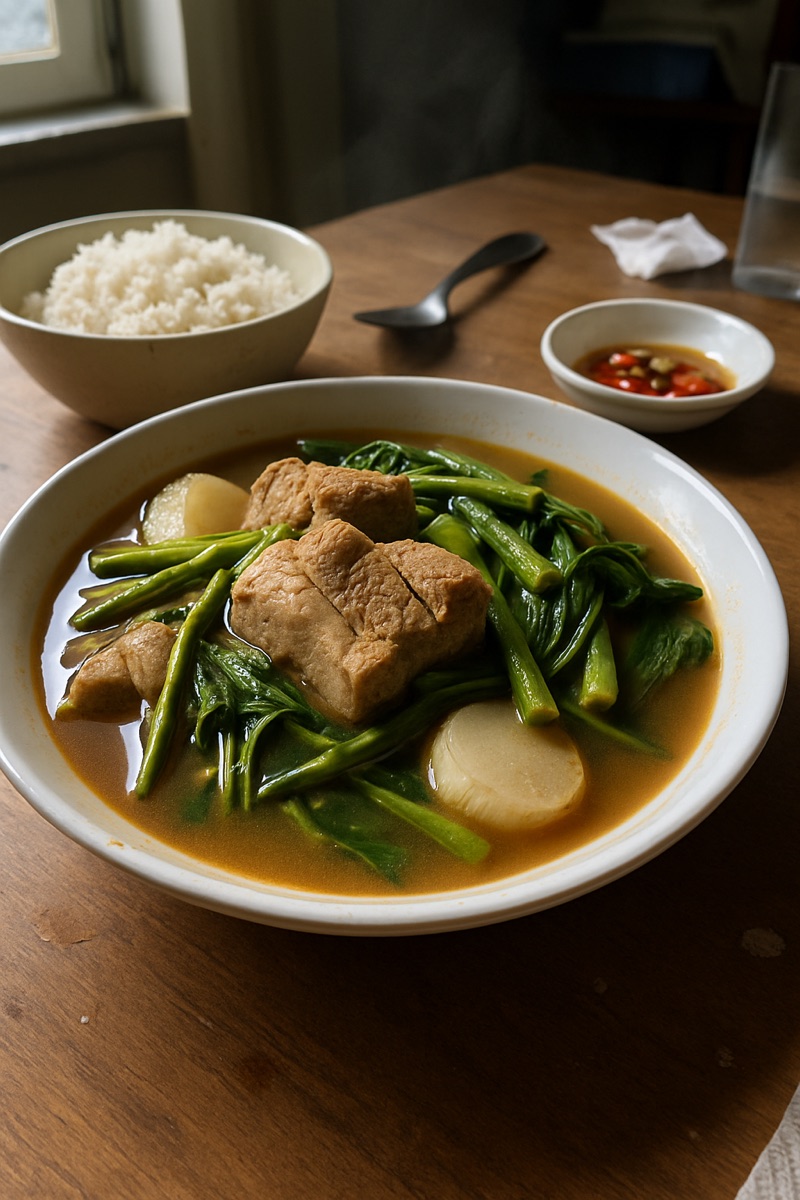
Sinigang is the dish that most often vies with adobo for the national title. It is a sour soup, usually pork, soured with young tamarind and thickened by taro that breaks down in the broth, then filled with daikon, yardlong beans, okra, eggplant and water spinach. It is seen as Tagalog in origin, and other sour fruits, such as unripe mango or guava, can replace the tamarind.
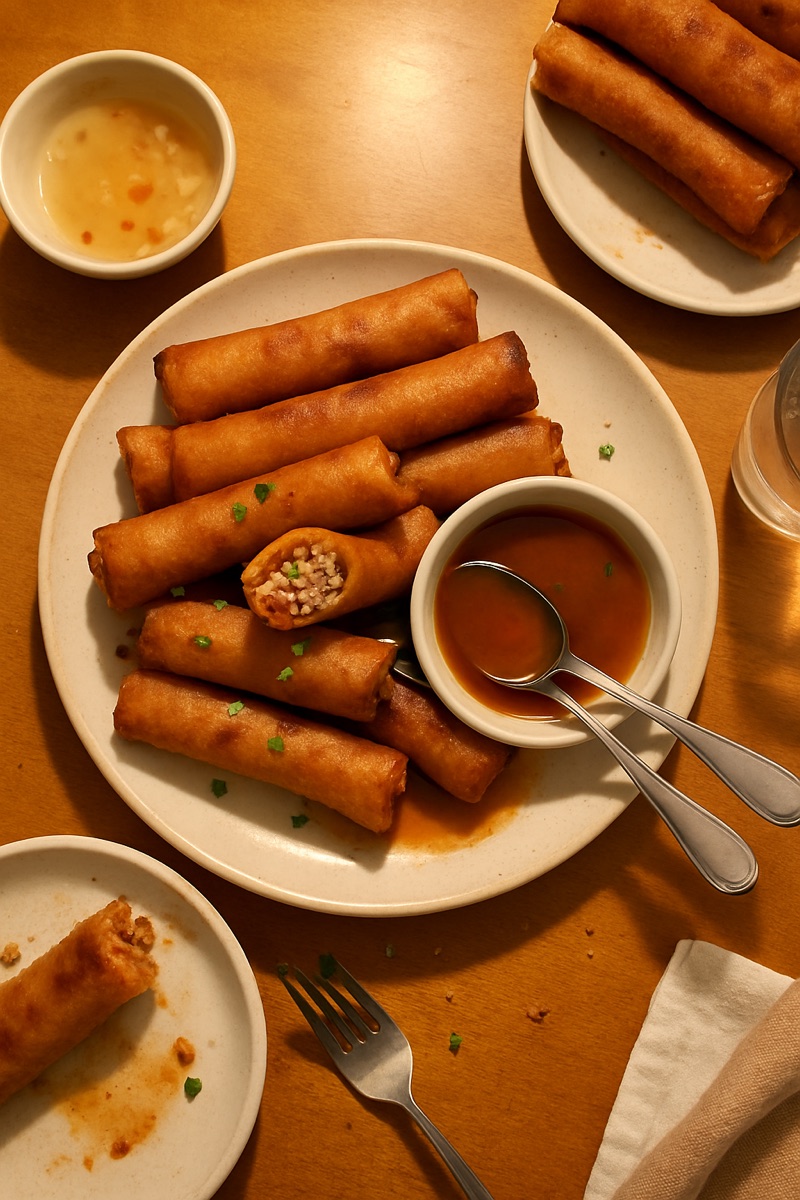
Lumpia are thin pork spring rolls, rolled as tight as a cigar and deep-fried at 175 °C for 3 to 4 minutes, then served with banana ketchup or a sweet and sour sauce.
All three are on our page about the food of the Philippines, and you can explore more of the region in our Southeast Asian recipes.
The recipes
- Chicken adobo🇵🇭 Philippines · 1 hour and 5 minutes
 Sinigang🇵🇭 Philippines · 1 hour and 50 minutes
 Lumpia🇵🇭 Philippines · 1 hour and 20 minutes
Questions people ask
How do you pronounce adobo?
Ah-DOH-boh, with the stress on the middle syllable.
Is Filipino adobo the same as Mexican adobo?
No. They share a Spanish name, but Filipino adobo is a braise built on vinegar, soy sauce, garlic and bay leaf, while Mexican and Spanish adobos are spicier and often use chili and oregano.
What is served with adobo?
Plain white rice, with the adobo sauce spooned over it. It is eaten both at everyday meals and at feasts.
Is adobo or sinigang the national dish of the Philippines?
Neither is official. Adobo is the one most often called the national dish, and sinigang is the dish most often named as its rival.
Why does adobo keep so long?
Vinegar, one of its main ingredients, slows the growth of bacteria, so adobo keeps for a long time without refrigeration.
Keep reading
- Traditional food of the Philippines: 14 dishes to know
- What is the national dish of Brunei?
- What is the national dish of Cambodia?
- What is the national dish of Indonesia?
- What is the national dish of Laos?
- What is the national dish of Malaysia?