 COPPER
Traditional food of Mauritania: 13 dishes to know
Mauritanian food is the cooking of Moorish nomadic herders, built on camel, goat and lamb, their milk, dates and grain, meeting the rice and fish of the Senegal River and the Atlantic coast. Meals are shared from one dish and followed by mint tea. The most emblematic dishes are thieboudienne, méchoui, couscous and maafe, with zrig and mint tea to drink.
What Mauritanian food is built on
Mauritania's cooking draws on Arab, Berber and African peoples who lived in or crossed the Sahara in caravans. The Moors were nomadic herders, so camels and cattle sit at the centre of the diet, as meat or as milk, from cows, goats, sheep and camels. Traditional Moorish meat dishes come with few vegetables, which the Moors did not traditionally care for, and seldom with sauces. Cereals, wheat or millet, become couscous.
Fish came late. Although the coast is rich in it, the nomads long disliked it, and it entered Mauritanian cooking only slowly, through government campaigns and the spread of Senegalese cuisine around Nouakchott and the coast. Large Wolof and Pulaar communities, and the overlap with Senegal in the south, have made rice and peanut dishes everyday food. French colonial rule, until 1960, also left traces. Alcohol is prohibited by the Muslim faith, and its sale is largely limited to hotels.
Moorish meat and grain dishes
- Méchoui — A whole lamb roasted slowly and eaten by hand, one of the traditional meat dishes of the Moors. Our version rubs the meat with spiced butter and roasts it for hours beside the embers until it pulls apart.
- Couscous — Made from wheat or millet, steamed over a lamb and vegetable stew and shared from one dish. In the desert it is also made with camel meat, cooked under a tent; cherchem is the Mauritanian lamb couscous.
- Tichtar — Strips of meat dried in the sun. It was once made from the addax antelope and is now made from camel or beef.
- Grilled camel liver — Served as a snack with cubes of fat from the camel's hump, a much-prized delicacy.
- Hakko — A sauce of ground bean leaves, which tastes like spinach, served with beans over couscous. When the couscous is made from scratch, sifted into small balls from millet, wheat or barley flour, the dish takes three to four hours, which makes it a meal for special days.
- Marolaym — A one-pot dish of lamb or goat cooked with rice in an onion base.
Rice, fish and stews from the coast and the south
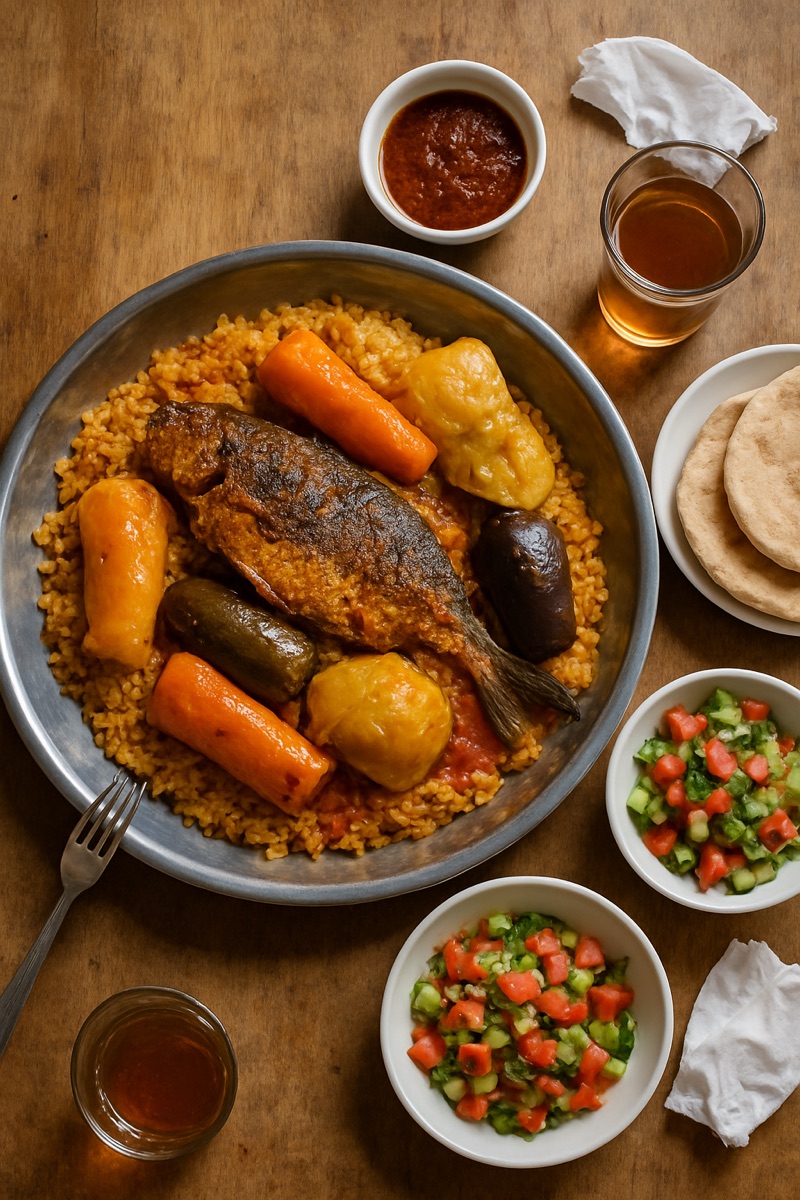
- Thieboudienne — Pronounced cheb-u-jin: fish stuffed with a parsley, garlic and chilli paste, cooked with vegetables in a tomato broth, with broken rice then cooked in the same broth. It is considered the national dish, comes in white and red versions, and is a lunch dish eaten daily by many people in coastal towns. Tiebousauce, rice in a fish sauce, is its close relative.
- Maafe — Goat or camel meat cooked in a sauce of peanuts ground by hand until they release their oil, with tomato paste and ground okra, served over rice. Because peanuts carry so much protein, it is also made without meat, as an inexpensive meal.
- Yassa poulet — A Senegalese dish made popular by the large Wolof and Pulaar communities: roast chicken with vegetables, served on French fries or white rice. Chicken is expensive, so it counts as a special meal. There is also a fish yassa.
- Banafe — A stew of meat and potatoes, or meat and vegetables, from Mauritania, popular with the Wolof.
- Fataye — A turnover-shaped fritter stuffed with tuna or meat, served with tomato sauce, and also popular in Senegal.
Dates, milk and sweets
Zrig is soured milk, from cow, goat or camel, mixed with sugar and cut with water. It was the national drink before tea took over and is still offered to guests. Baobab fruit juice (jus de bouye) and bissap, a hibiscus drink from Mali and Senegal, are also common.
- Dates — Harvested during the Guetna, the date season, when they are eaten fresh in abundance. The rest are stored in skins, where they turn into a paste, or served dried as a starter, dipped in cream or butter.
- Lakh — Cheese curds or yogurt with grated coconut, served over a sweet millet porridge.
Mint tea and the shared dish
Tea is a daily ritual, in tents as in offices. Green tea with sugar and mint is poured from a height to build a foam and served in three rounds: the first glass is very bitter, the last smooth and sweet. It follows meals and is always made when guests arrive.
Meals are eaten together, by hand, from one communal dish. Water and soap are passed around so everyone can wash first, the meal opens with "Bismillah!", and the host tosses the best pieces toward the guests' side of the platter.
North, south and the desert
The cuisine overlaps with Moroccan cooking in the north and with Senegalese cooking in the south. The Moorish table shares couscous and tajines with North Africa, while thieboudienne and yassa came from Senegal and maafe from the Senegal and Mali side. Desert regions have their own versions of zrig: in Hodh Ech Chargui, a variant called senguetti adds toasted millet, and in Oualata chilli goes in, a sign of Malian influence.
Cook Mauritanian food at home
Thieboudienne is the dish most often called the national dish of Mauritania. Copper has full recipes for thieboudienne, méchoui and couscous, with ingredients and step-by-step methods, on our page about the food of Mauritania, and the countries to the south are in our guide to West African food.
For the two sides of the cuisine, compare with the traditional food of Senegal and the traditional food of Morocco.
The recipes
- Thieboudienne🇲🇷 Mauritania · 1 hour and 45 minutes
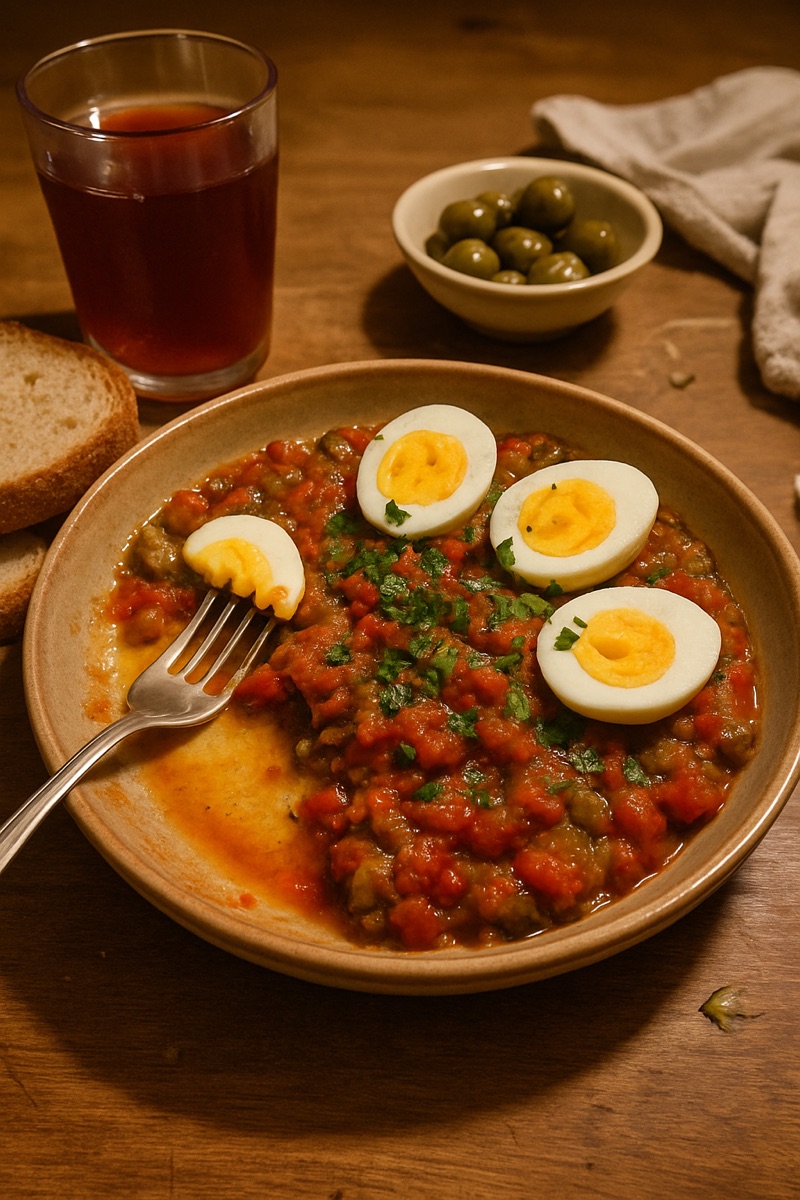 Mechouia🇲🇷 Mauritania · 5 hours and 45 minutes
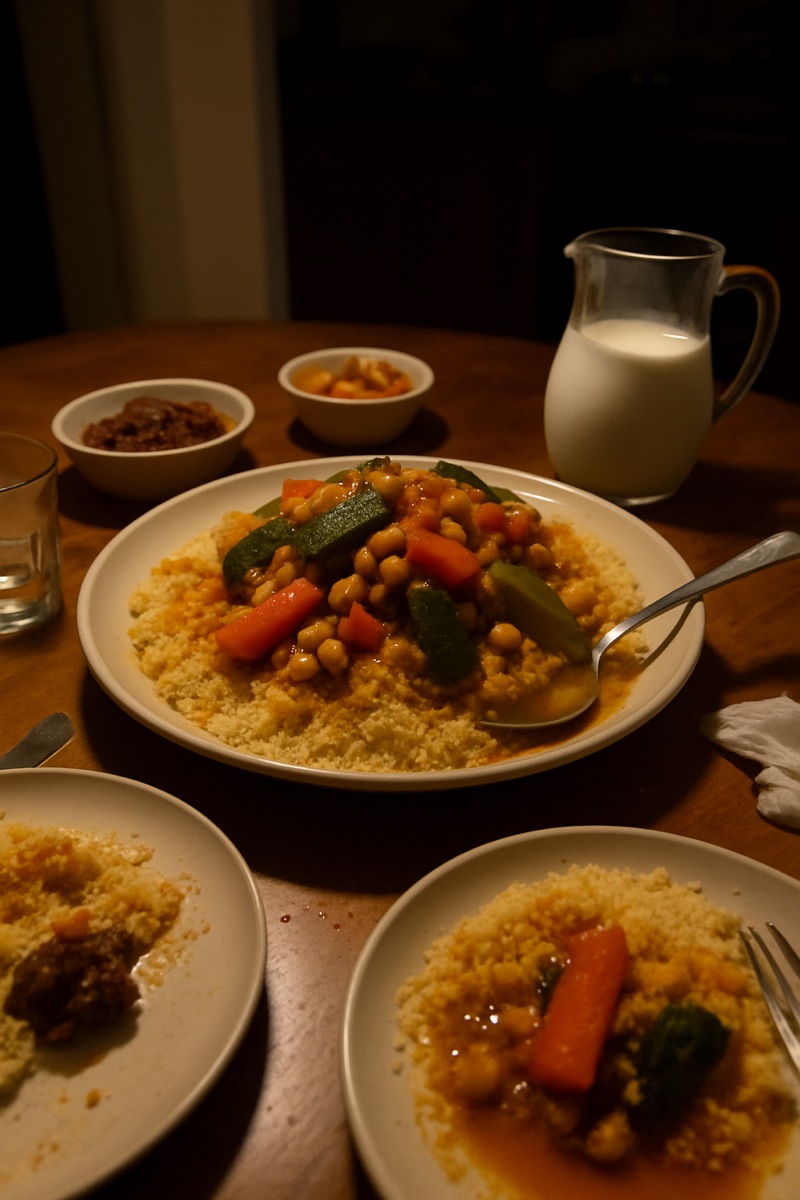 Couscous🇲🇷 Mauritania · 2 hours
Questions people ask
What is the most popular food in Mauritania?
Thieboudienne, fish and rice cooked in one pot, is considered the national dish and is eaten daily in coastal towns. Inland, méchoui and couscous are the traditional Moorish meals, and maafe and yassa poulet are common in the south.
What do people drink in Mauritania?
Green tea with mint and sugar, served in three glasses that go from bitter to sweet. Zrig, sweetened soured milk cut with water, is the older Moorish drink, and baobab and hibiscus juices are common too. Alcohol is largely limited to hotels.
Is Mauritanian food spicy?
Generally not hot. The traditional Moorish meat dishes come with few vegetables and rarely with sauces. Chilli appears in the stuffing of thieboudienne and in some southern dishes, and in Oualata it is even added to zrig.
Do people in Mauritania eat camel?
Yes. Camel meat goes into couscous in the desert and into maafe, it is dried as tichtar, and grilled camel liver with cubes of hump fat is a prized snack. Camel milk is drunk fresh or soured as zrig.
How do Mauritanians eat?
Together, by hand, from one large dish, after washing their hands. The meal opens with "Bismillah!" and ends with mint tea.
Keep reading
- What is the national dish of Mauritania?
- Traditional food of Benin: 13 dishes to know
- Traditional food of Burkina Faso: 11 dishes to know
- Traditional food of Cabo Verde: 13 dishes to know
- Traditional food of Côte d'Ivoire: 12 dishes to know
- Traditional food of The Gambia: 13 dishes to know