 COPPER
Traditional food of Fiji: 11 dishes to know
Fijian food is built on root crops, coconut and the sea: taro and cassava are boiled or baked, fish and greens are cooked in coconut milk, and feasts are cooked in an earth oven. Indian indentured workers added curry and roti. The most emblematic dishes are kokoda, the lovo, palusami and fish suruwa.
What Fijian food is built on
Native Fijians still eat mainly tubers and coconut. Taro, yams, sweet potato (*kumala*), cassava (*tavioka*) and breadfruit (*uto*) are the starch of the meal, served with a relish of meat, fish, seafood or greens. The greens are their own category: *rourou* (taro leaves), *bele*, a leafy plant close to spinach, and *ota*, a young forest fern. A great deal of food is cooked in coconut milk, flavoured with onion, garlic, ginger, lime, chilli and curry leaves, with soy and oyster sauce as Chinese additions.
Fiji's colonial past changed the table. Under British rule, the indenture system brought many Indian workers to the islands, which is why many homes now start the day with roti and curry, or boiled taro and fish soup, or cabin crackers with butter and tea. Chicken and lamb are everyday meats; beef and pork are kept for occasions such as weddings. Tinned mackerel, sardines, tuna, corned beef and condensed milk are pantry basics, and dinner is usually the big meat-based meal of stews, curries or stir-fries with rice or a root crop. Sharks are never eaten: they are believed to represent the sea god Dakuwaqa, and killing or eating one is thought to bring misfortune on the village. There is no official national dish.
Raw fish, fish curry and fish in leaves
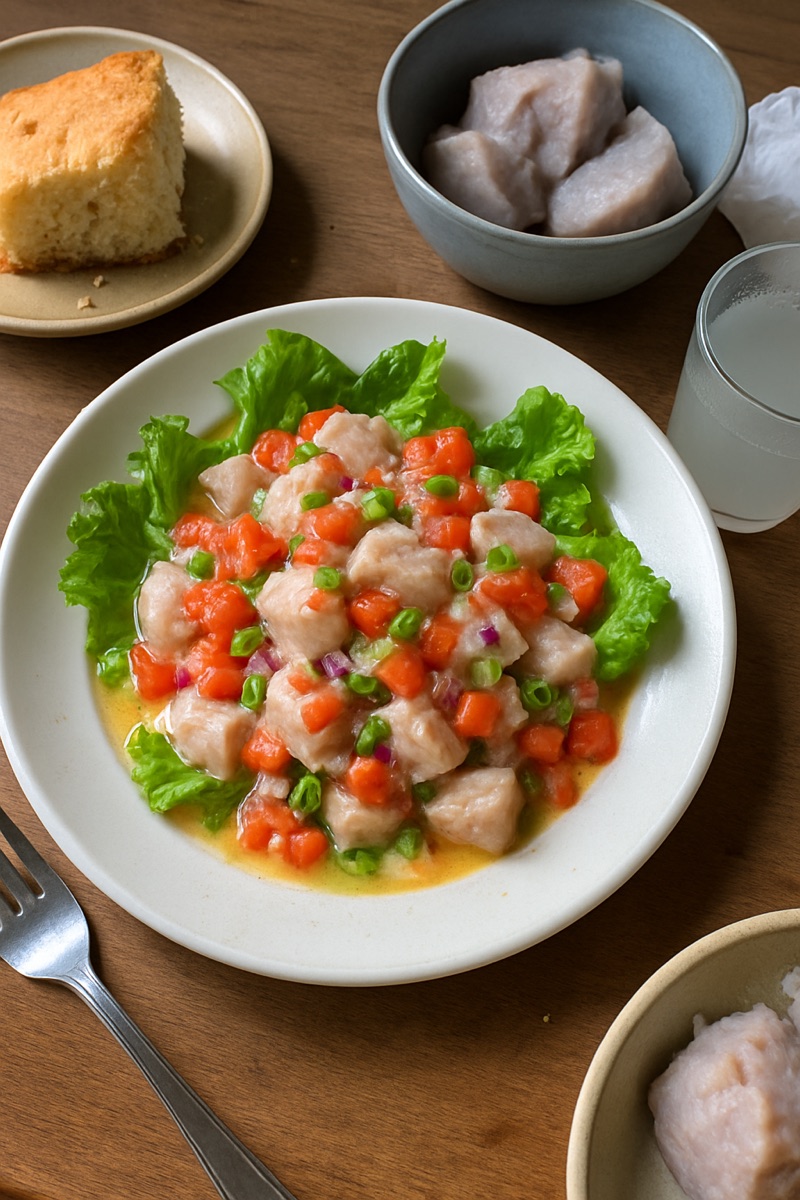
- Kokoda — Raw fish, usually walu (Spanish mackerel), cured in lime or lemon juice until opaque, drained, then bound in coconut cream with chilli, onion and tomato. It is served cold as a starter, often in a coconut shell, and is on the menu of almost every restaurant in the country. It is the dish most often named as Fiji's national dish.
- Fish suruwa — A Fijian-style fish curry, cooked in coconut milk with Indian spices such as cumin, turmeric and garam masala, plus onion, chilli and tomato. It is eaten with white rice or roti and is often served at weddings. Curries came with the Indian community, who first arrived as sugarcane workers in the 1870s. Wikivoyage calls it one of the best-known of Fiji's many local curries.
- Fish-in-lolo — Fish steamed in taro leaves with onion, garlic, chilli and coconut milk (*lolo*). It is one of the standard items cooked in a lovo.
The lovo and taro-leaf dishes
- Lovo — Fiji's earth oven and the feast cooked in it. Stones are heated white hot in a pit, food wrapped in leaves is laid on them, and everything is covered with earth and sacks for several hours. Root crops go at the bottom, then meat and fish seasoned with soy sauce, garlic, chilli and ginger. It takes many hands, which is why it belongs to weddings, holidays and village gatherings; it is not found in restaurants, but many hotels offer lovo feasts.
- Palusami — Young taro leaves folded around thick coconut cream with onion, salt and often canned corned beef, mutton or fish, then baked in the lovo. Corned beef became the classic filling because fresh meat was hard to come by on the islands. The same parcel is made in Samoa and Tuvalu.
- Rourou — Taro leaves stewed in coconut milk with onion and garlic until creamy, sometimes with corned beef, tuna or lamb. It is served as a side or starter with boiled taro, boiled or fried cassava, or roti. Rolled into balls around a filling, the leaves become *wacipoki*.
Indo-Fijian food and the daily starch
- Roti, dhal and curry — Indo-Fijian families keep to rice, dhal and a meat or vegetable curry with salad or chutney, and masala tea is the main drink in many of their homes. Wikivoyage points visitors to *thali* platters with rice and roti, which are cheap, spicy and found in every town.
- Boiled dalo and tavioka — Taro (*dalo*) comes in about 70 varieties, some turning pink or yellow when cooked, and is the staple for special occasions. Cassava has overtaken yams as the most grown and eaten staple; it is boiled in salted water until soft and eaten with stews and curries. In villages, lunch is often just a steamed root crop, a soup and sweet tea.
Puddings and kava
- Vakalolo — Grated cassava mixed with coconut, ginger and sugar, shaped into small flat cakes, wrapped in banana leaves and steamed. The result is dense, chewy and sweet, and many cooks add Indian spices such as cardamom or cloves.
- Purini (burnt sugar pudding) — A steamed pudding made with flour, coconut cream and caramelised sugar for colour, poured into tins and steamed 1 to 2 hours, sometimes with cinnamon or raisins. It is one of the most popular Fijian puddings and is eaten hot or cold, often spread with butter, at morning or afternoon tea.
- Kava (yaqona) — Powdered kava root in a muslin cloth, worked with water and drunk from a shared bowl. It is offered as *sevusevu*, the customary gift when visiting a village, and has a peppery, earthy taste that numbs the lips for a few minutes. Wikivoyage traces its social role to settling conflicts and smoothing negotiations between villages.
Cook Fijian food at home
Kokoda is the dish most Fijians name first; read the full story in our article on the national dish of Fiji. Copper has step-by-step recipes for kokoda, lovo and vakalolo on our page about the food of Fiji, next to the other kitchens in our guide to Pacific Island food.
Fiji's diet is close to those of Tonga and Samoa, linked by old trade routes. Compare with the traditional food of Tonga, where the same raw fish is called 'ota 'ika, and the traditional food of Samoa, home of palusami.
The recipes
- Kokoda🇫🇯 Fiji · 2 hours and 50 minutes
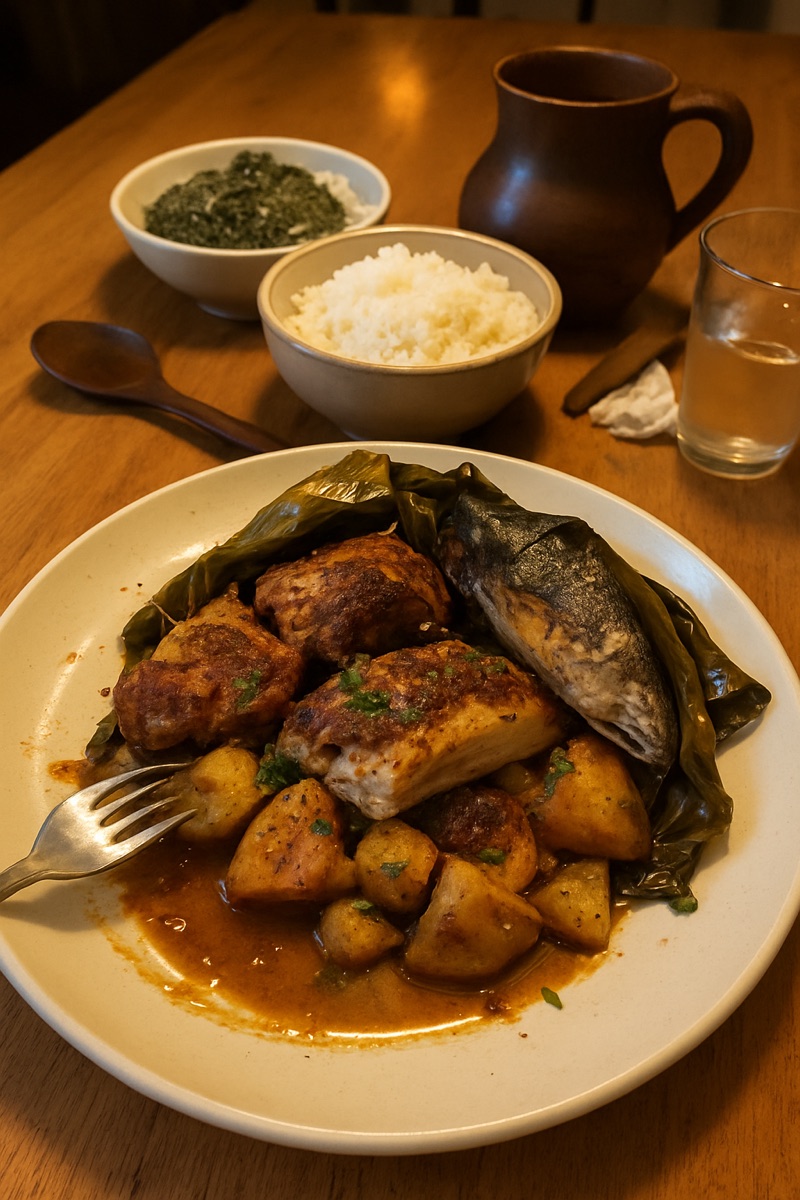 Lovo🇫🇯 Fiji · 4 hours and 20 minutes
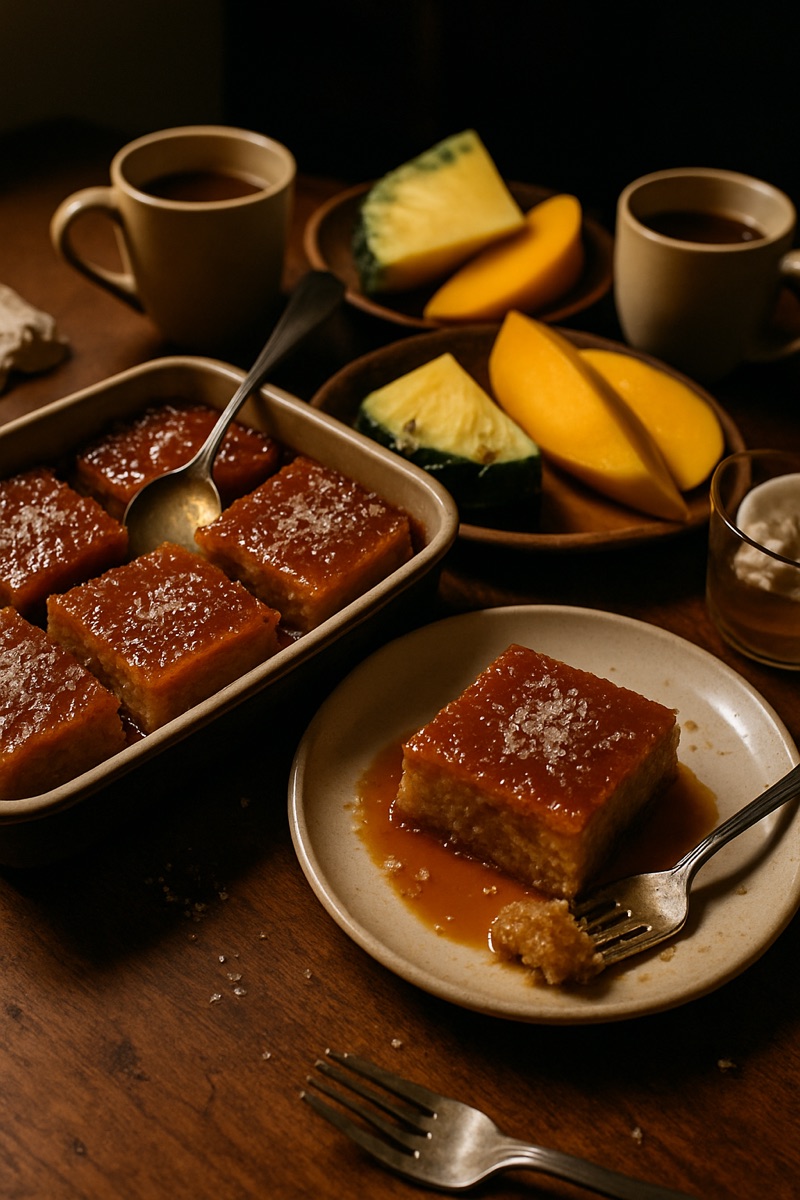 Vakalolo🇫🇯 Fiji · 1 hour and 25 minutes
Questions people ask
What is the most popular food in Fiji?
Kokoda, raw fish in lime and coconut cream, is the dish most often named, and it is on almost every restaurant menu. The lovo feast, palusami and fish curries are the other everyday classics.
What do people in Fiji eat for breakfast?
Many homes eat roti and curry, boiled taro with fish soup, or cabin crackers with butter, alongside bread, cereal, tea or coffee.
Is Fijian food spicy?
Traditional indigenous Fijian food is mild, based on root crops, coconut milk and fish. Indo-Fijian curries, thalis and chutneys bring the heat, and chilli is often added to kokoda.
What is a lovo in Fiji?
A lovo is an earth oven: food wrapped in leaves is cooked on hot stones in a pit, covered with earth, for several hours. The word also means the feast cooked this way, for weddings and community events.
What do Fijians drink?
Kava, or yaqona, made from the root of the kava plant, is the traditional drink and is shared at ceremonies. Masala tea is common in Indo-Fijian homes, and Fiji Bitter is the best-known local beer.
Keep reading
- What is the national dish of Fiji?
- Traditional food of Kiribati: 12 dishes to know
- Traditional food of the Marshall Islands: 12 dishes to know
- Traditional food of Micronesia: 14 dishes to know
- Traditional food of Nauru: 9 dishes to know
- Traditional food of New Zealand: 14 dishes to know