 COPPER
Traditional food of Samoa: 12 dishes to know
Samoan food is built on taro, breadfruit, green bananas, fish and thick coconut cream, cooked in the umu, an oven of hot stones, and lightly seasoned. Canned corned beef and Chinese dishes joined it later. The most emblematic dishes are palusami, oka i'a, fa'alifu fa'i and the Sunday umu.
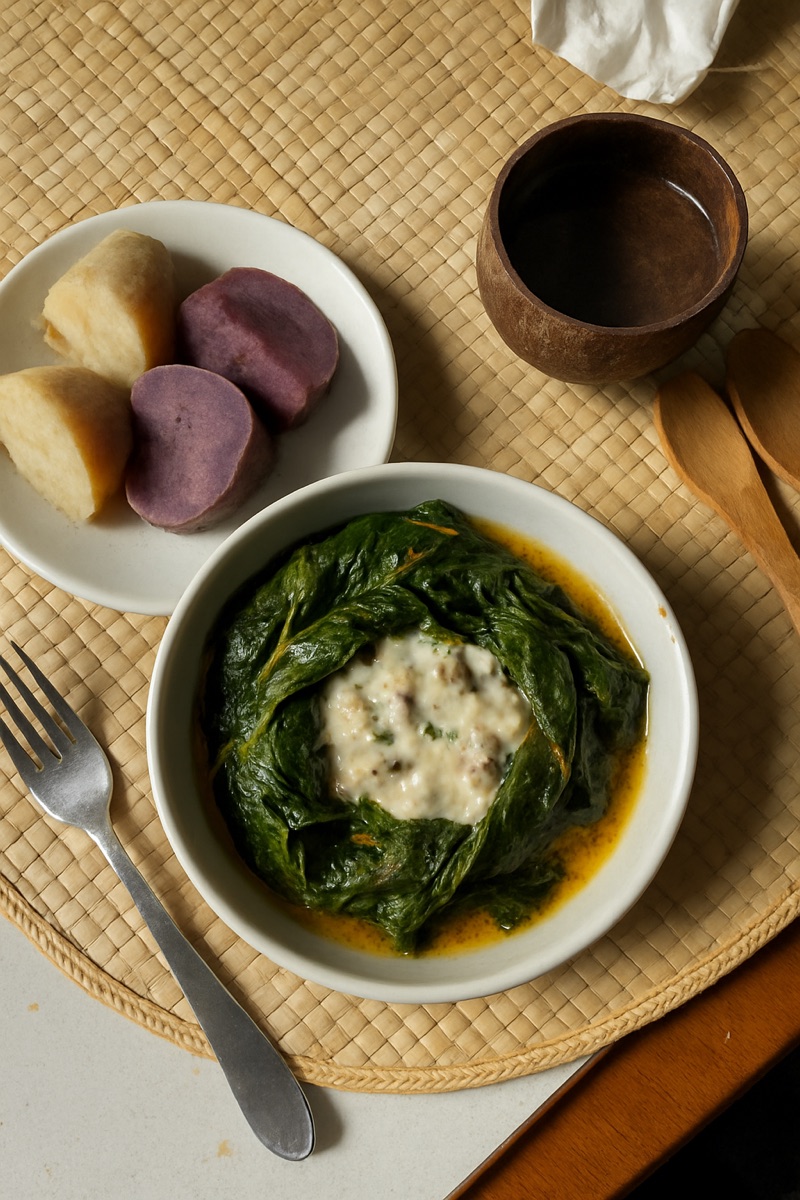
What Samoan food is built on
Eating is a central part of Samoan life, and Wikivoyage notes that Samoans often take food with them when they travel. The base is breadfruit, taro and its leaves, green bananas and fish, with coconut in almost everything. Much Samoan cooking is *lolo*, rich with thick coconut cream. The food is not highly spiced or seasoned.
Cooking happens in the umu, an above-ground oven of hot stones, and on Sundays, traditionally a day of rest, many families share one for an afternoon meal; in a traditional household the elders eat first. Later arrivals left their mark too: canned corned beef, *pisupo*, became a daily staple, and Chinese settlers and labourers, present since the 1870s, brought rice, noodles, chop suey and buns that are now standard Samoan food. Samoa has no official national dish; palusami is the one most often named.
From the umu
- Umu feast — A fire is built, stones are heated on it, and once it has burned down to embers the food goes on the stones and is covered with banana leaves. A Sunday umu can hold a whole pig, fresh seaweed and crayfish as well as taro, green bananas, breadfruit, fish and palusami.
- Palusami — Young taro leaves folded around thick coconut cream and onion, often with salted beef (*povi masima*) or canned corned beef, wrapped and baked in the umu for hours. The whole parcel, leaves included, is eaten. Wikivoyage says you should not leave Samoa without trying it. The name is thought to come from *palu (lu'au) sami*, taro leaves mixed with sea water.
- 'Ulu (breadfruit) — Often roasted and eaten on its own, or with a coconut sauce cooked with hot stones (*'ulu pe'epe'e*). It is also shaped into balls (*taufolo*), and any surplus was traditionally preserved by fermenting it as *masi*.
- Samilolo — A sauce made from the flesh of a green young coconut and sea water, cooked inside the nut on an open flame and then fermented, usually during the palolo fishing season.
Raw fish and green bananas
- Oka i'a — Samoa's raw fish: small cubes of fresh fish marinated in lemon or lime juice, then mixed with coconut cream, salt, onion, tomato and cucumber and served chilled, often with lime wedges. Wikivoyage describes the Samoan way simply as small bits of fish in lemon juice, coconut cream, salt and finely chopped onion. It belongs to the family of Tongan 'ota 'ika and Fijian kokoda.
- Fa'alifu fa'i — Green bananas boiled, then finished in a salted coconut cream and onion sauce. It is a starch served hot next to fish or meat, not a dessert: the bananas boil about 20 minutes in salted water, then simmer a few minutes more in coconut cream cooked with onion.
Corned beef and Chinese-Samoan dishes
- Pisupo — Canned corned beef. The word comes from pea soup, one of the first canned foods to reach the islands in the 19th century, and now covers canned food in general. It is eaten with white rice or coconut rice (*alaisa fa'apopo*), mixed with spaghetti (*supoketi*) or cooked with taro leaves, and cans of it are a common gift at weddings and birthdays. Critics call it a form of food colonialism, and nutritionists link imported processed foods like it to the rise in obesity and diabetes in Samoa since the 1960s.
- Sapasui — Samoan chop suey: noodles cooked with vegetables and meat, often corned beef. It came with Chinese immigrants and is now standard Samoan food, also popular in Fiji.
- Keke pua'a — Steamed pork buns, the Samoan form of Chinese char siu bao; the name means pork cake. Chinese pastries, *keke saina*, came the same way, along with rice (*alaisa*) and noodles (*lialia*), all now part of standard Samoan cooking.
Cocoa and kava
- Koko Samoa — Hot chocolate made from local cocoa beans that are fermented, sun-dried, roasted on a hot plate, ground in a wooden mortar and boiled with water and sugar. Cocoa was brought by German colonists in 1883, and most of the crop is drunk at home in this form; farmers sell it at local markets. The cocoa mass keeps well, so it is also exported to New Zealand, Australia and American Samoa. The drink is boiled about 15 minutes, sweetened, and drunk quickly before the fat rises; the grounds are eaten or strained through the teeth.
- Koko alaisa — Cocoa rice, a rice pudding cooked with koko Samoa.
- 'Ava — Kava, the ceremonial drink made from the roots of *Piper methysticum*. No significant gathering in Samoa, official or social, begins without an 'ava ceremony, in which the drink is passed around following strict rules. Visitors can buy it on some days at Apia's central market. Vailima is the local beer.
Cook Samoan food at home
To find out why palusami is the dish Samoa is known for, read our article on the national dish of Samoa. Copper has full recipes for palusami, oka i'a and fa'alifu fa'i on our page about the food of Samoa, alongside the other kitchens of the Pacific Islands. Wikivoyage warns that restaurants mostly serve Western-style or Chinese food, so the market in Apia is the easiest place to taste these dishes in Samoa itself, and to stock up on fruit.
Tonga cooks the same taro-leaf parcels and raw fish under other names: see the traditional food of Tonga, and the traditional food of Fiji for kokoda and the lovo.
The recipes
- Palusami🇼🇸 Samoa · 4 hours and 30 minutes
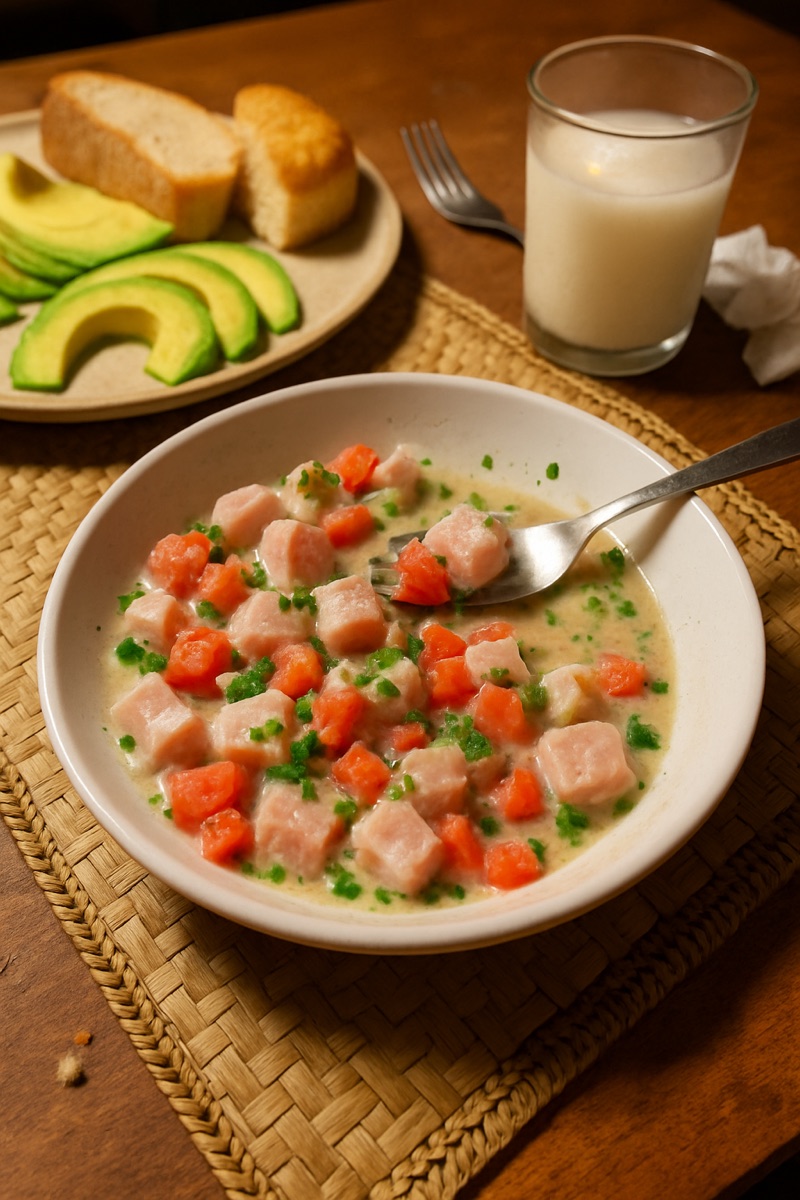 Oka i'a🇼🇸 Samoa · 30 minutes
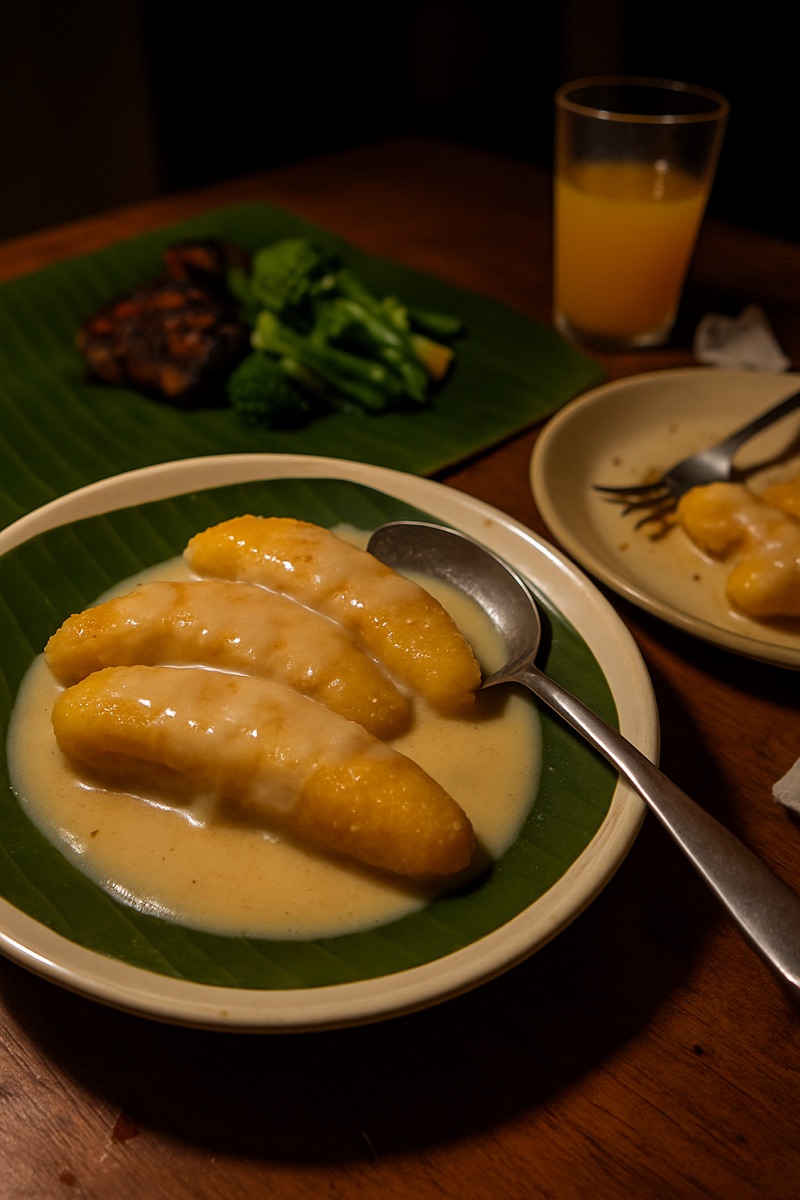 Fa'alifu fa'i🇼🇸 Samoa · 40 minutes
Questions people ask
What is the most popular food in Samoa?
Palusami, taro leaves baked with coconut cream, is the dish most often named, together with oka i'a, raw fish in coconut cream, and the food of the Sunday umu.
Is Samoan food spicy?
No. Samoan food is not highly spiced or seasoned; its flavour comes from coconut cream, taro, breadfruit, green bananas and cooking on hot stones.
What is an umu?
The umu is the Samoan oven of hot stones built above ground. Food is laid on the stones once the fire is down to embers and covered with banana leaves. Many families share one on Sunday afternoons.
What is pisupo?
Pisupo is canned corned beef, named after pea soup, one of the first canned foods to arrive. It is eaten with rice, cooked into sapasui or baked in palusami.
What is koko Samoa?
Koko Samoa is a hot chocolate made from Samoan cocoa beans roasted, ground and boiled with water and sugar. It is drunk hot, often with the grounds left in.
Keep reading
- What is the national dish of Samoa?
- Traditional food of Fiji: 11 dishes to know
- Traditional food of Kiribati: 12 dishes to know
- Traditional food of the Marshall Islands: 12 dishes to know
- Traditional food of Micronesia: 14 dishes to know
- Traditional food of Nauru: 9 dishes to know