 COPPER
Traditional food of Micronesia: 14 dishes to know
Traditional food in the Federated States of Micronesia is built on breadfruit, taro, yams, bananas and coconut, with reef fish as the main protein. Starches are boiled or baked in an earth oven, pounded while hot and dressed with coconut milk. The most emblematic dishes are Chuuk's pounded breadfruit kón, Pohnpei's pounded taro rotama, Kosrae's feast dish fahfah and the kava drink sakau.
What Micronesian food is built on
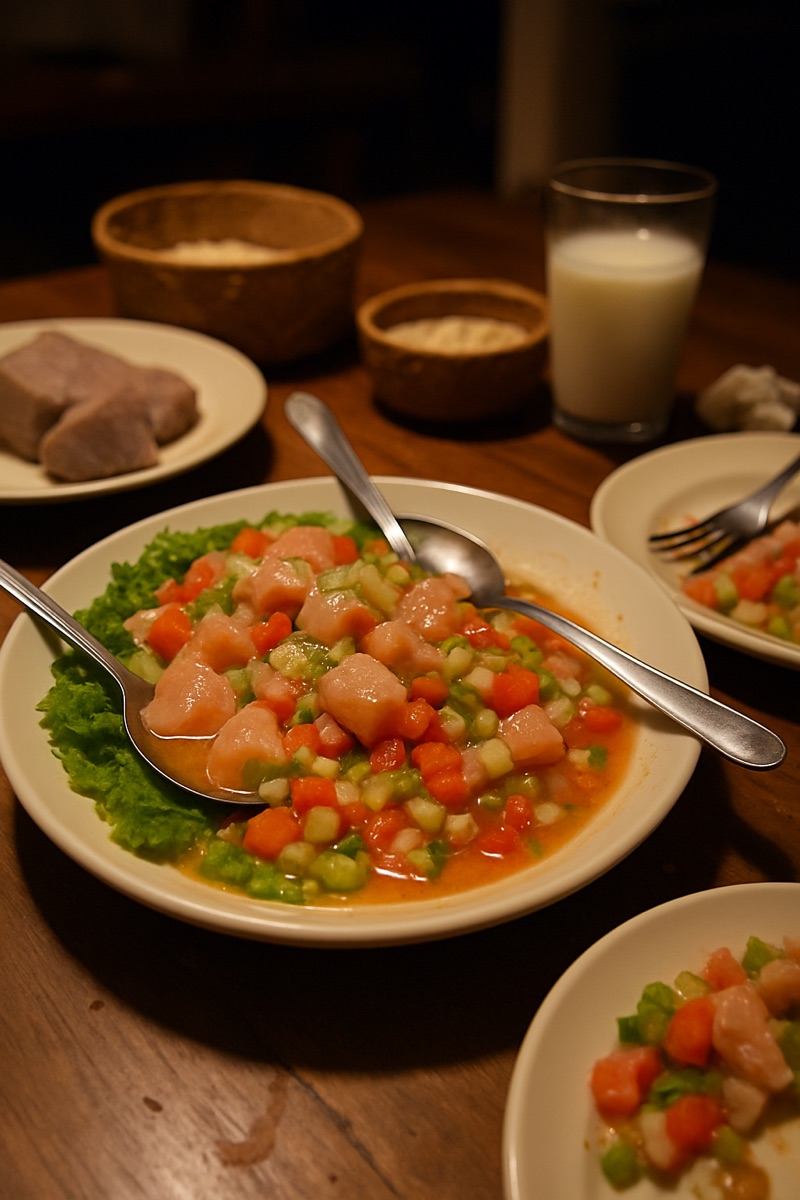
The Federated States of Micronesia is four states, Chuuk, Pohnpei, Kosrae and Yap, spread across the western Pacific, and each has its own food traditions. What they share is a kitchen of starches: breadfruit, taro, yams, bananas and tapioca, with coconut milk poured over almost all of them and fish from the lagoon on the side.
The key techniques are the earth oven, called umw on Pohnpei, and pounding. Breadfruit, taro and bananas are cooked, then pounded hot on a board or a stone until smooth. Each crop carries status: on Kosrae and the outer islands taro marks a good provider, while on Pohnpei that role goes to yams.
Spanish, German, Japanese and American rule all left traces, and imported rice and canned meats such as Spam are now everyday food. Kón, the dish most often presented as Micronesia's own, is covered in depth in our article on the national dish of Micronesia.
Pounded breadfruit, taro and yams
- Kón — Breadfruit boiled, then pounded while still burning hot on a breadfruit-wood board (niif) with a coral pounder (pwó) until creamy and elastic. In Chuuk it is eaten plain as kón, with coconut milk as mwatun, or as emesefich, reserved for chiefs. When first fruits are presented to chiefs, they are presented as kón. Our pounded breadfruit recipe follows the Chuuk method.
- Mahi umw — Breadfruit baked whole in the umw, the hot-rock oven, one of the oldest traditional foods on Pohnpei. At a traditional feast the number of pieces served must be odd: three, five or seven.
- Fermented breadfruit — In the outer islands of Yap, such as Woleai and Eauripik, breadfruit is fermented and wrapped in ti leaf to keep it beyond the harvest. On Kosrae, breadfruit was traditionally stored in leaf-lined pits for times of scarcity.
- Rotama — Hard or swamp taro, ground, cooked in the umw and then pounded with the stalk of a palm frond. It is rotama on Pohnpei, sero on Pingelap and rodoma on Kosrae.
- Uter — Ground hard taro rolled into balls with coconut, a dish known right across Micronesia. Pohnpei calls it uter, Kosrae kuhlamihs, Chuuk puna and Woleai yewagil.
- Koapnoair koakihr — Pohnpeian yams, boiled, ground and mixed with coconut milk, with small chunks of unground yam left in for texture. Because it is boiled in an iron pot, it must have appeared after cookware arrived from abroad.
Bananas, tapioca and feast food
- Uht sukusuk — Boiled bananas mashed with a palm stalk and smothered in coconut milk, a perennial crowd favourite on Pohnpei. A close relative, uht kekihn, is grated boiled banana formed into balls and cooked in coconut milk, and Kosrae makes ap from ground, steamed bananas.
- Fahfah — Kosrae's feast food, made from soft taro by men trained in the skills needed to prepare it. The pounding traditionally takes two people, and fahfah and pork are still considered feast foods on the island today.
- Tiogang — A Yapese dish of ground tapioca coloured with turmeric, called thiogang on the main island of Yap. The centre may hold a banana or coconut milk.
Fish, soups and dishes from the neighbours
- Kosraean all-star soup — Reef fish, crab and lobster cooked in a base of rice and coconut milk. Mostly Kosraeans make it, but it is a favourite across Micronesia. Kosrae also has soup usr, a simpler soup of boiled banana and fish.
- Chuukese sashimi — Tuna sliced thin and eaten raw with soy sauce and wasabi or a local hot pepper paste. Chuuk, also known as Truk, sits in the heart of Micronesia, and tuna is the fish of choice.
- Kelaguen — A Chamorro dish from the Mariana Islands, derived from the Filipino kilawin: chopped meat or seafood marinated in lemon juice with fresh coconut, green onions and hot peppers. It is served cold or at room temperature. Our chicken kelaguen grills the thighs over charcoal before chopping them.
- Tinola — A chicken soup with ginger and green vegetables, originally from the Philippines, eaten with rice and on some islands with breadfruit. Our tinola fries the ginger, garlic and onion first, then adds green papaya and chilli leaves.
Sakau, the drink of Pohnpei
Domar, young coconut in sweetened coconut juice, is a refreshment from Yap. The ceremonial drink, on Pohnpei and Kosrae, is kava.
- Sakau — Kava, made by pounding the root of Piper methysticum and mixing it with water, then straining it into a grey, slightly pungent drink. The plant was historically grown in the Federated States of Micronesia, and on Pohnpei sakau sits at the centre of formal apologies. On Kosrae the same drink, suhka, was served to the nobility.
Food across the four states
Chuuk is the home of kón and its social role. In the lagoon men pound it, in the outer islands women usually do, and the pattern on top may belong to a particular family: families settling a wrong send kón to each other covered with a taro leaf, and a smooth leaf that sheds water means the apology is accepted. Pohnpei pounds breadfruit on a stone with a pounder of Morinda citrifolia wood and builds its feasts around yams and sakau. Kosrae has fahfah, all-star soup and green-skinned tangerines sought after on the surrounding islands. Yap and its outer islands keep tapioca and fermented breadfruit.
Cook Micronesian food at home
Three of these dishes have full step-by-step recipes in Copper: pounded breadfruit, chicken kelaguen and tinola. You will find them, with ingredients and timings, on our page about the food of Micronesia, and the wider picture in our guide to Pacific Island food.
For Micronesia's neighbours, see the traditional food of Palau and the traditional food of the Marshall Islands.
The recipes
- Boka🇫🇲 Micronesia · 1 hour and 20 minutes
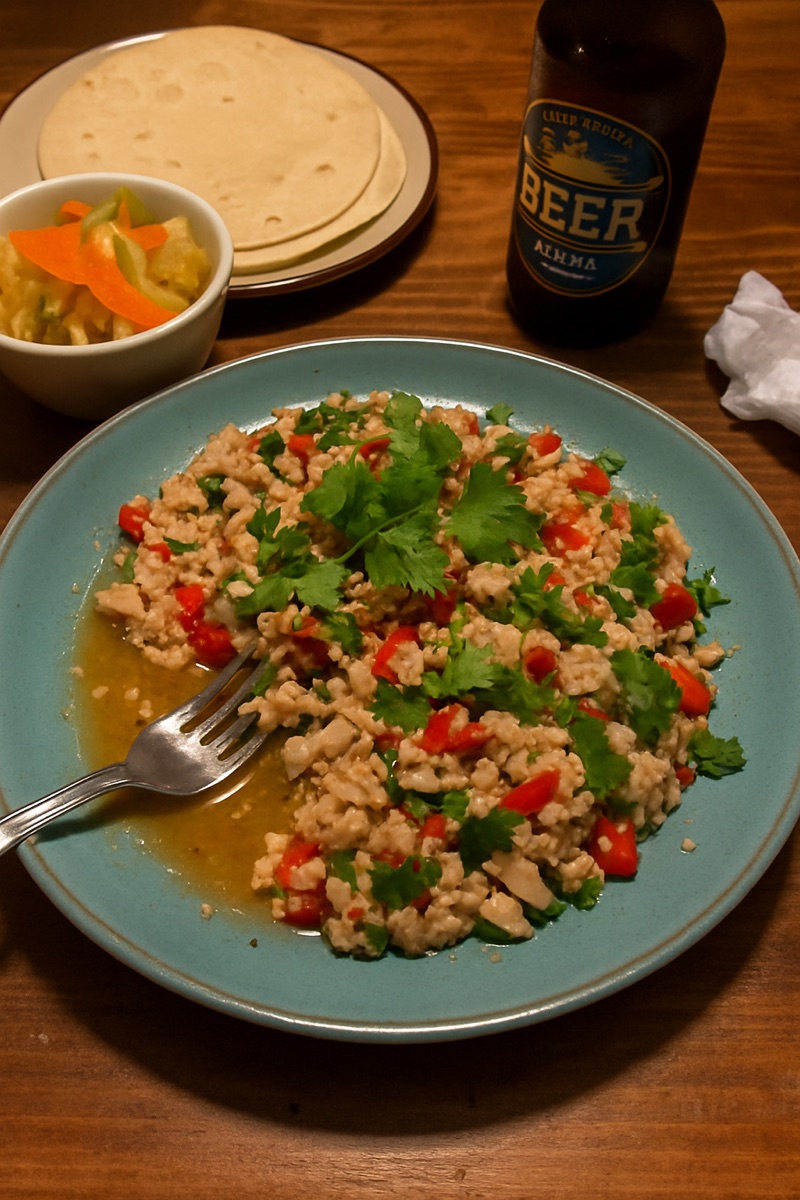 Kelaguen🇫🇲 Micronesia · 1 hour and 40 minutes
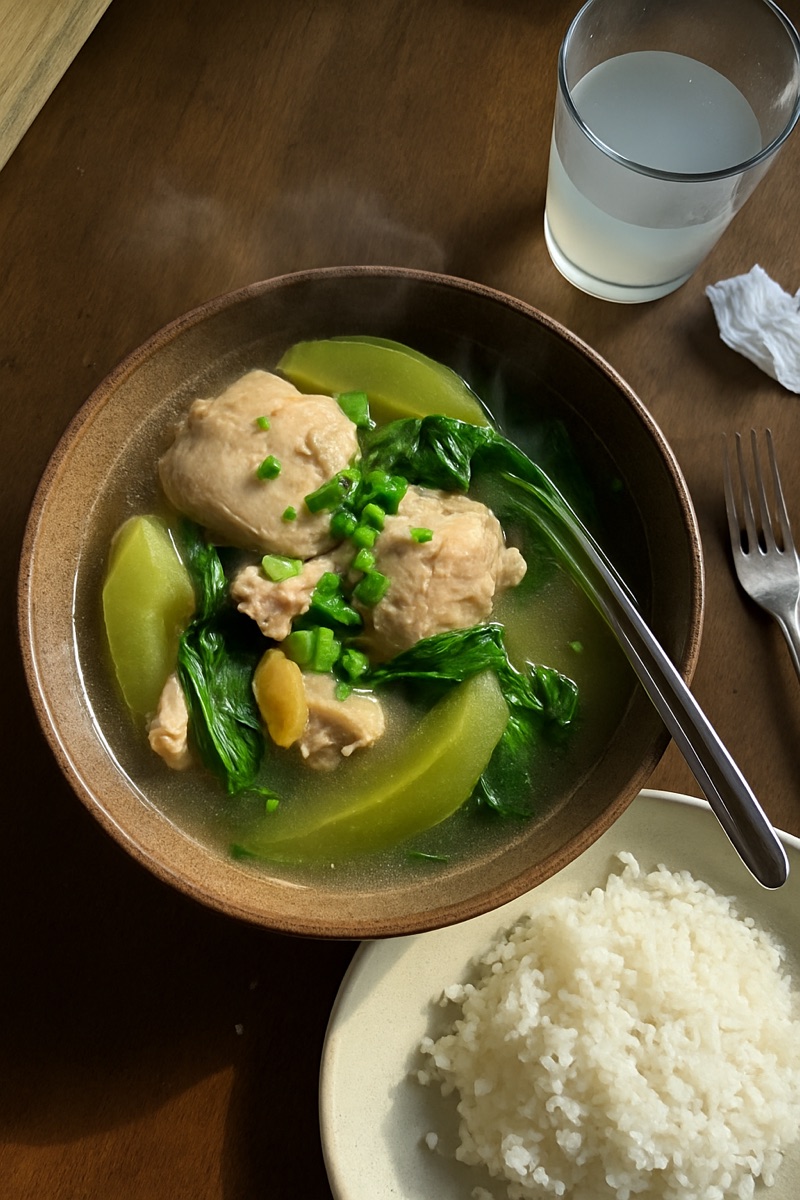 Tinola🇫🇲 Micronesia · 55 minutes
Questions people ask
What is the most popular food in Micronesia?
Breadfruit and taro, pounded while hot and served with coconut milk. Kón, Chuuk's pounded breadfruit, is the best-known dish, alongside rotama, pounded taro, on Pohnpei.
What is the national dish of Micronesia?
The Federated States of Micronesia has no official national dish. Kón, pounded breadfruit from Chuuk, is the dish most often presented as Micronesian.
What do people in Micronesia eat every day?
Rice and imported canned meat or fish alongside local fish and root crops. On Kosrae, for example, most families combine imported rice and tinned meat and fish with fresh fish and breadfruit, taro or bananas.
Is Micronesian food spicy?
Not as a rule. Coconut milk dominates; heat comes from hot peppers in dishes like kelaguen and from local pepper paste served with sashimi.
What is sakau?
Sakau is the Pohnpeian name for kava, a drink made from the pounded root of the kava plant mixed with water. On Pohnpei it is central to formal apologies.
Keep reading
- What is the national dish of Micronesia?
- Traditional food of Fiji: 11 dishes to know
- Traditional food of Kiribati: 12 dishes to know
- Traditional food of the Marshall Islands: 12 dishes to know
- Traditional food of Nauru: 9 dishes to know
- Traditional food of New Zealand: 14 dishes to know