 COPPER
Traditional food of the Marshall Islands: 12 dishes to know
Traditional Marshallese food is built on breadfruit, pandanus, coconut and fish, with swamp taro and imported rice alongside. Breadfruit is roasted, pounded with coconut cream or fermented, and pandanus is dried into a paste that keeps for years. The most emblematic dishes are fermented breadfruit bwiro, the pandanus paste mokwan, the coconut rice balls chukuchuk and reef fish, often eaten as sashimi.
What Marshallese food is built on
The Marshall Islands are coral atolls and volcanic islands in the central Pacific, and the food is what atolls can grow and the ocean can give. Breadfruit, pandanus, coconut, bananas, papaya and taro are the traditional crops; fish is the protein. The average Marshallese eats about 240 pounds of fish a year, and the language has some 50 words and phrases for fishing techniques alone.
Two ideas run through the cooking: coconut cream on almost everything, and preservation. On islands where harvests are seasonal, breadfruit was fermented and pandanus dried so that food would keep for months or years. Rice, flour, sugar and tea arrived from outside and are now part of daily meals, and Japanese and American influence shows in sashimi and Spam. Much of the everyday food is easiest to find at markets, church gatherings, petrol stations and family-run restaurants rather than in tourist venues.
Lists online often name barramundi cod or macadamia nut pie as the national dish, without an official source. We look at that claim in our article on the national dish of the Marshall Islands.
Breadfruit, taro and pandanus
- Mā (breadfruit) — The standard starchy staple of the islands, described in research as the most important and socially shared traditional Marshallese food. It is roasted, boiled, baked or fried, and thin mā chips are sold as a snack.
- Bwiro — Breadfruit paste that is fermented, wrapped in banana leaves and cooked in an underground oven. Properly made, it keeps for many months without spoiling, which is why it mattered on the atolls.
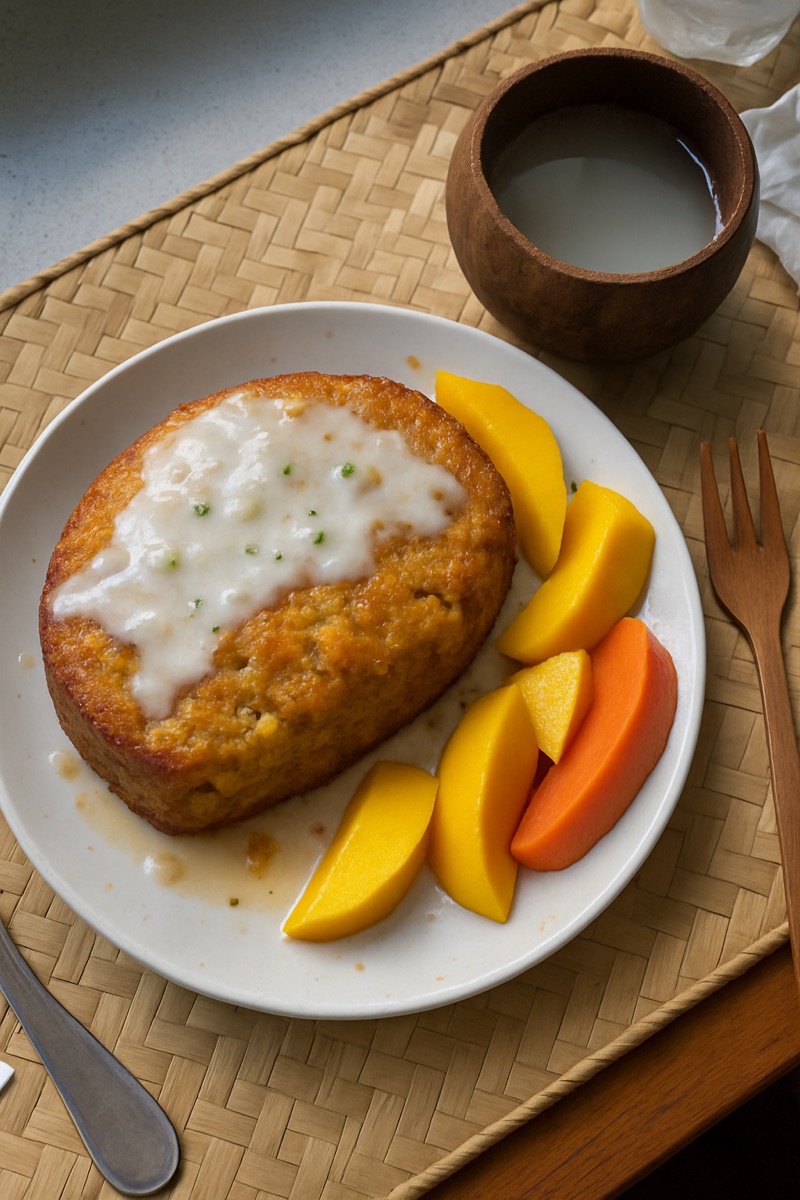
- Breadfruit pudding — Cooked breadfruit combined with coconut cream and sugar into a sweet, dense pudding. Our breadfruit pudding recipe pounds it hot with first-press coconut cream and sets it in banana leaves, with no eggs.
- Mashed taro — Swamp taro, iaraj in Marshallese, grown in freshwater pits, boiled and crushed with coconut cream. Our mashed taro recipe keeps it coarse and folds the cream in off the heat.
- Mokwan — Pandanus fruit cooked for hours in an earth oven, scraped, sun-dried for days and rolled tightly in pandanus leaves, so it stays edible for years. It is mokwan in the Ratak chain and jããnkun in the Ralik chain, and navigators carried it on long voyages. Slices are chewed as a snack, or soaked and mashed into a soft food for babies and the elderly. See our mokwan page.
Rice dishes, sweets and breakfast
Rice is an import, but Marshallese cooks have made it their own with coconut. Sides matter too: sweet potatoes and unripe bananas fried crisp in coconut oil are a common partner for barbecued fish or pork.
- Chukuchuk — Rice shaped into balls about the size of a golf ball and rolled in shredded coconut. It is served at every special occasion, including the kemem, and is popular because it is simple to make. It also comes as a side with grilled fish or meat.
- Banke — Also called rice-banke: rice simmered with pumpkin, squash or sweet potato in coconut water or coconut milk until thick and creamy. It is usually eaten warm with fried or grilled fish.
- Jāibo — Soft flour dumplings, made from flour, water and sugar, cooked in thick sweet coconut cream until the dish sits somewhere between a porridge and a pudding.
- Tōñut — The Marshallese doughnut, plain and without icing, shaped into balls at home and rings in shops. It is a breakfast staple in Majuro, eaten warm with instant coffee or boiled eggs. The same petrol stations sell namonamo, a modern snack of a hot dog wrapped in sweet fried bread.
Fish and crab
- Reef fish and tuna — Grouper (kūro), snapper, mullet (iōl) and surgeonfish (kwi) are grilled, fried or eaten raw as sashimi and poke. Majuro is one of the busiest tuna transshipment ports in the world, and tuna turns up as steak, sashimi and in everyday plate lunches.
- Coconut crab — A large land crab with a sweet meat, roasted whole or boiled in coconut milk. Coconut crab soup cooks the meat with breadfruit, taro, noni fruit and coconut cream. The crabs are prized enough that some communities hold annual crab festivals.
Drinks from the coconut and the pandanus
Coconut water is the drink most often listed as national. Pandanus is blended into bōbshakes, and dried pandanus paste dissolved in water becomes jōnnōb, traditionally drunk to restore energy. In Majuro, a distillery now turns fermented pandanus juice into a spirit sold as Bōb Whisky, and breadfruit into vodka.
- Jekaro — Sweet, milky sap collected from the unopened flowering stalk of the coconut tree. Fresh jekaro is so sweet that many people dilute it with water.
Food at celebrations
Food carries rank and generosity in Marshallese culture. It is a custom to bring food to the iroij, the chiefs, as a sign of recognition and respect. At a kemem, the party for a child's first birthday, a large spread of Marshallese dishes is served and guests are encouraged to take a household item home; a family's generosity is measured by how little it has left at the end. The coconut itself is also an economy: copra, the dried kernel, remains a significant export and is pressed for oil.
Cook Marshallese food at home
Three of these dishes have full step-by-step recipes in Copper: breadfruit pudding, mashed taro and mokwan. You will find them on our page about the food of the Marshall Islands, and the neighbouring kitchens in our guide to Pacific Island food.
Kiribati makes the same pandanus paste as te tuae: see the traditional food of Kiribati, or head west to the traditional food of Micronesia.
The recipes
- Breadfruit pudding🇲🇭 Marshall Islands · 2 hours and 5 minutes
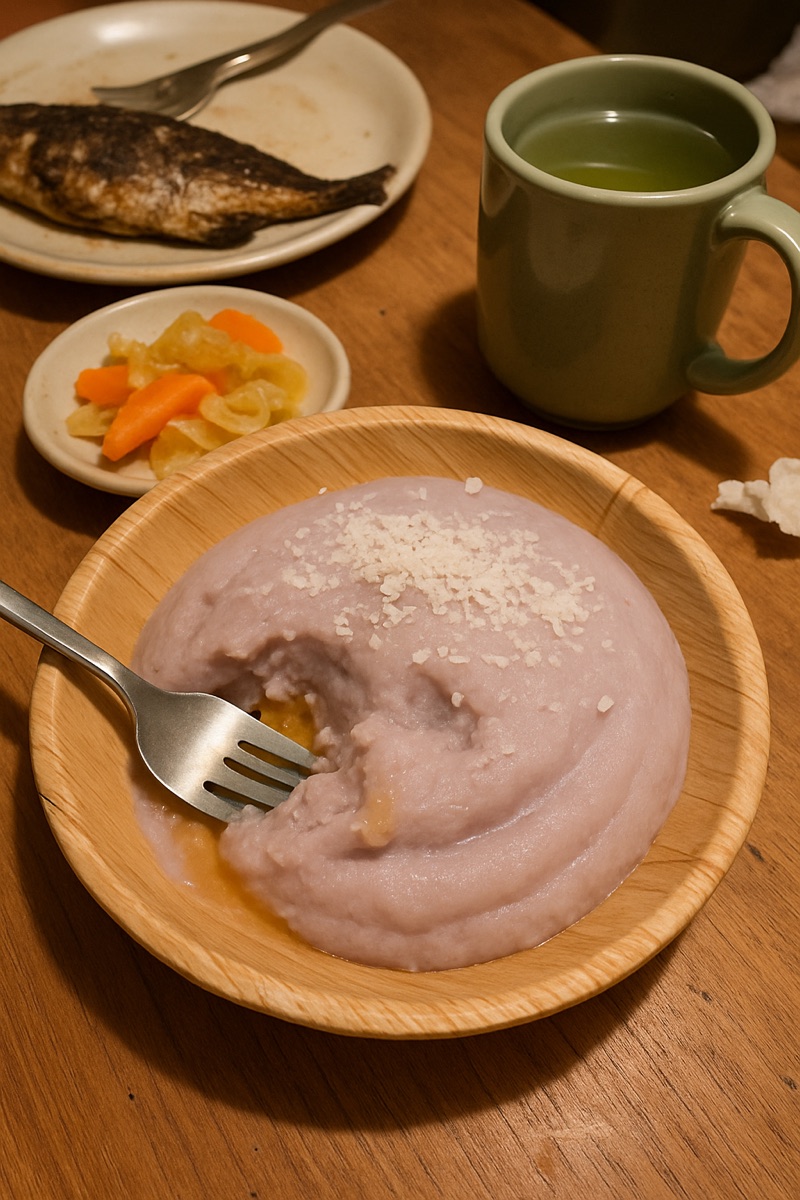 Mashed taro🇲🇭 Marshall Islands · 1 hour
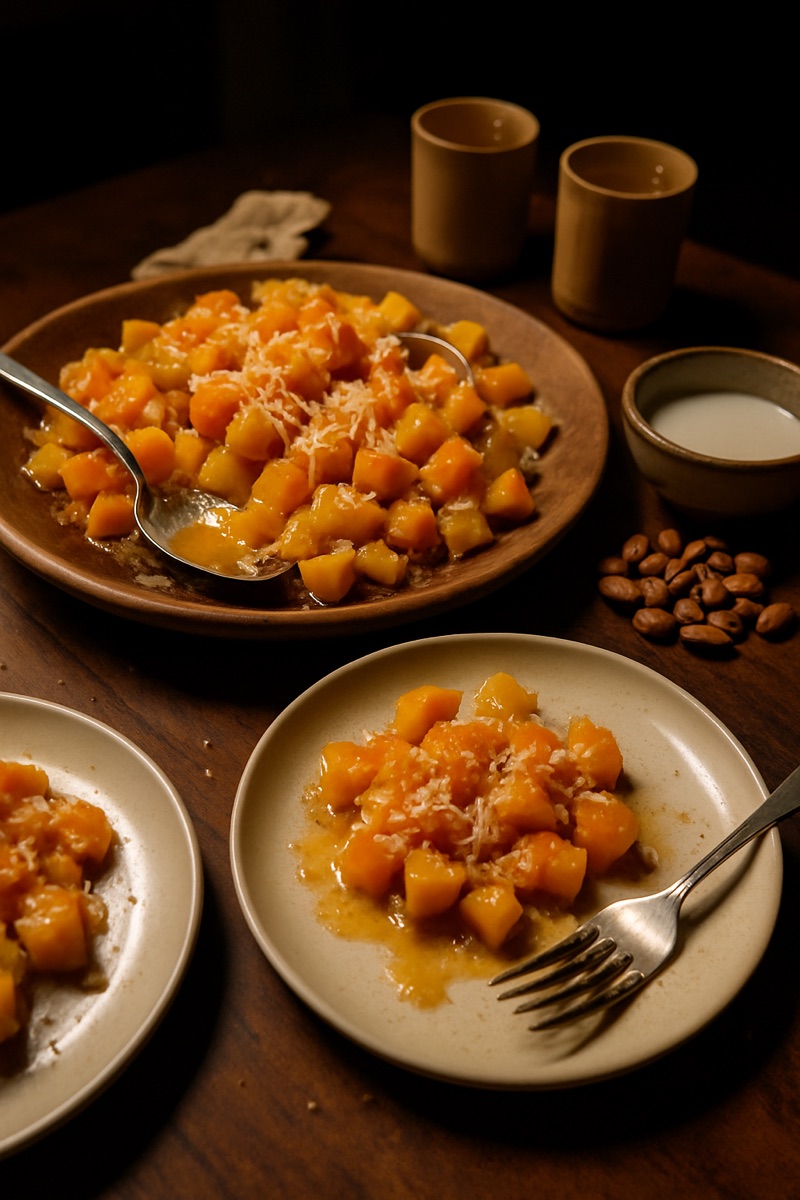 Mokwaṇ🇲🇭 Marshall Islands · 3 days and 4 hours
Questions people ask
What is the most popular food in the Marshall Islands?
Breadfruit and fish. Breadfruit is the main traditional staple and the most socially shared food, and the average Marshallese eats about 240 pounds of fish a year.
What do Marshall Islanders eat for breakfast?
Tōñut, plain Marshallese doughnuts, with instant coffee or boiled eggs are a common breakfast in Majuro, as is fried Spam with eggs and rice.
What is the national dish of the Marshall Islands?
There is no official one. Barramundi cod and macadamia nut pie are often listed without a source; breadfruit is the traditional staple.
Is Marshallese food spicy?
No. It relies on coconut cream, breadfruit, rice and fresh fish rather than chilli.
What is chukuchuk?
Chukuchuk is rice shaped into golf-ball-sized balls and rolled in shredded coconut, served at every special occasion in the Marshall Islands.
Keep reading
- What is the national dish of the Marshall Islands?
- Traditional food of Fiji: 11 dishes to know
- Traditional food of Kiribati: 12 dishes to know
- Traditional food of Micronesia: 14 dishes to know
- Traditional food of Nauru: 9 dishes to know
- Traditional food of New Zealand: 14 dishes to know