 COPPER
Traditional food of Kiribati: 12 dishes to know
Traditional I-Kiribati food is built on seafood and coconut, because the atolls grow few starches. Fish is mostly eaten raw with a coconut sap, soy or vinegar dressing, rice has been the daily staple since the Second World War, and pandanus and coconut sap are turned into preserves and drinks. The most emblematic dishes are palusami, the swamp taro bwabwai, raw fish and the pandanus paste te tuae.
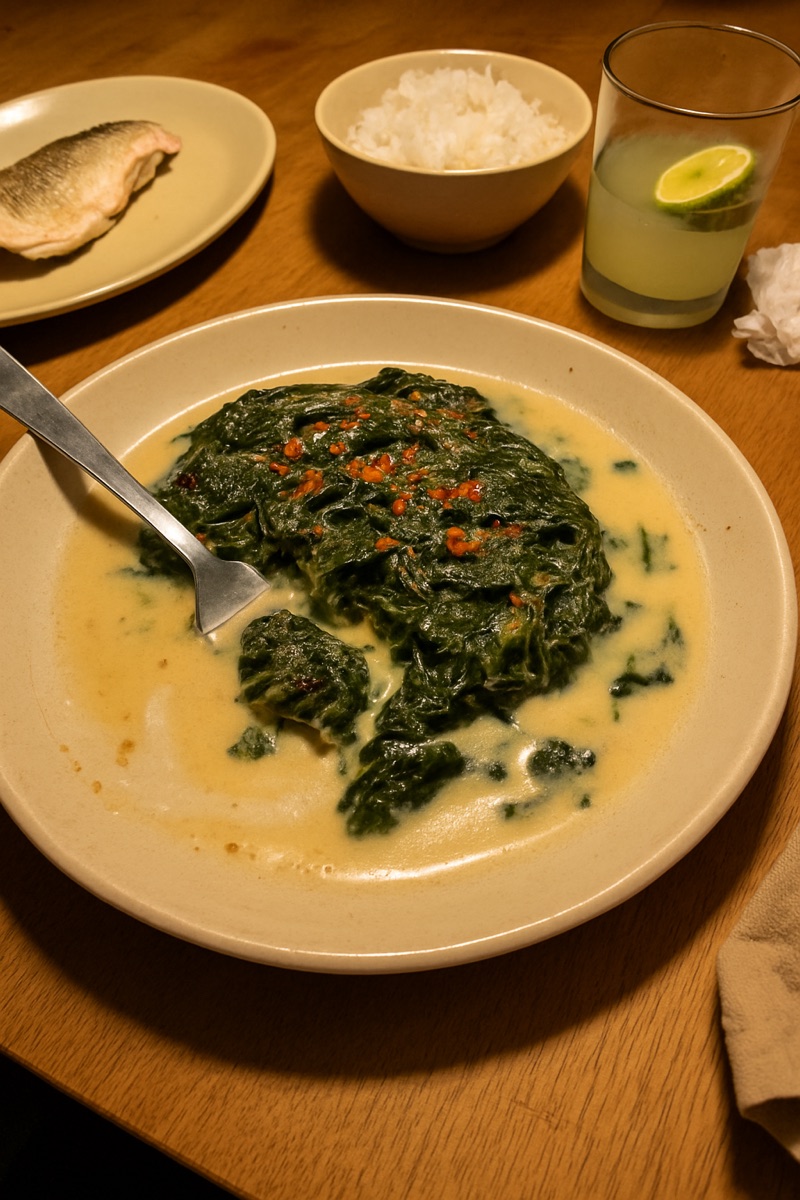
What I-Kiribati food is built on
Kiribati is a nation of coral atolls in the central Pacific, where coconuts are everywhere and fresh fruit and vegetables are scarce. Droughts and poor soil make farming hard, so islanders have long turned to the sea: most are fishermen and outrigger sailors, and seafood and coconuts were the traditional staples. Only the northernmost atolls could support steady agriculture.
To make up for the lack of starch, the I-Kiribati processed the fruit of the pandanus and the sap of the coconut palm into foods and drinks that keep. After the Second World War, rice became a daily staple in most households, and it still is; fruit and vegetables remain scarce and expensive, and many foodstuffs are imported. Root crops, breadfruit, coconut and fish are still among the most widely eaten foods, and rice comes with almost every main dish, either underneath it or on the side.
Palusami is the dish most often named as Kiribati's own, although nothing makes it official. We look at it in detail in our article on the national dish of Kiribati.
Main dishes
- Palusami — Young taro leaves cupped together, filled with thick coconut cream and onion, wrapped in banana leaf and baked in an underground earth oven until the leaves turn silky. Kiribati versions can add breadfruit leaves, curry powder and black pepper. The name is Samoan, and the dish belongs to a family of taro-leaf preparations found across Polynesia, from Tongan lū to Fijian rourou. Our palusami recipe bakes the parcels for an hour.
- Bwabwai — Giant swamp taro, also written babai, the national crop. It grows in pits dug down to the freshwater lens, can take up to 15 years to mature and must be cooked for hours to remove its toxins. Traditionally it was eaten only at special celebrations, together with pork. Left in the ground it keeps for decades, which made it an emergency food in times of drought and scarcity, and the cooked corms can also be sun-dried and stored.
- Raw fish — Most fish in Kiribati is eaten raw, sashimi-style, with a dressing of coconut sap, soy sauce or vinegar, often with chilli and onion. Japanese-style sashimi with wasabi and soy, and Hawaiian-style poke, are also widely eaten.
- Ika mata — Raw fish cut into cubes and cured with lemon juice and coconut milk, then served over rice as a main dish. Nothing in it is cooked with heat, so the fish has to be fresh enough to eat raw. It is the Kiribati member of the Pacific family that includes Tonga's 'ota 'ika and Fiji's kokoda.
- Te inai — Fried parrotfish. Inai, a colourful reef fish common in Kiribati, is marinated whole in lemon juice and garlic, deep-fried until crisp and served with mashed pumpkin and a salad.
- Coconut crab and mud crab — The two crabs of the atolls, valued enough that they are traditionally given to breastfeeding mothers, in the belief that the meat helps produce good milk.
Rice and everyday dishes
Rice, pumpkin, canned meat and coconut meet in the everyday cooking. Pumpkin, for instance, goes into a coconut soup flavoured with ginger, served hot or cold as a starter.
- Milk rice — Short-grain rice cooked with coconut milk, water and salt, set and cut into diamond shapes. It is described as one of the most popular dishes in the country and is served alongside other dishes.
- Te bua toro ni baukin — A baked dish of grated pumpkin mixed with flour, milk, shredded cabbage and canned corned beef, seasoned with salt, lemon juice and pepper and eaten straight from the oven. It shows how imported tins entered island cooking.
- Kakau — Grated cassava mixed with sugar and coconut milk, then steamed until tender and eaten as a sweet. It is usually eaten as a sweet dish rather than a side.
Pandanus and coconut: preserves and drinks
The pandanus tree and the coconut palm fill the gaps the atoll soil leaves. Their fruit and sap became the I-Kiribati answer to a diet short on carbohydrates: pastes and syrups that keep, and drinks tapped fresh every day.
- Te tuae — Pandanus paste. Ripe pandanus fruit is cooked for a long time in an earth oven, scraped, spread thin on leaves to dry in the sun for several days, then cut, rolled and tied tightly in pandanus leaves. It keeps for years.
- Te kabubu — Te tuae dried further in the earth oven and pounded into a flour, which is mixed with water as a drink. Nauru makes the same pandanus flour and calls it ekareba.
- Te karewe — Fresh coconut sap, tapped from the palm every day. Boiled down it becomes te kamaimai, a coconut sap syrup, and fermented it becomes toddy, which is widely drunk in Kiribati.
Food on the atolls today
Climate is now shaping what Kiribati eats. Rising seas threaten the bwabwai pits, because the plant does not thrive in brackish water, and sea level rise, drought and overfishing have caused food and water shortages. The government has responded by diversifying food sources and managing existing resources more carefully.
Modern diets have brought new health problems, and Kiribati's limited food storage makes the habit of eating semi-raw seafood risky: in the early 2000s, between 1 and 7% of the population was treated for food poisoning in hospital each year, depending on the island.
Cook I-Kiribati food at home
Palusami has a full step-by-step recipe in Copper, on our page about the food of Kiribati. For the neighbouring kitchens, see our guide to Pacific Island food.
Tuvalu grows the same swamp taro as pulaka, see the traditional food of Tuvalu, and Nauru makes its own pandanus paste: see the traditional food of Nauru.
The recipes
Questions people ask
What is the most popular food in Kiribati?
Fish and rice. Rice has been a daily staple since the Second World War, and fish is mostly eaten raw with a coconut sap, soy sauce or vinegar dressing.
What is the national dish of Kiribati?
Palusami, taro leaf parcels filled with coconut cream, is the dish most often named, though no law makes it official. Bwabwai, giant swamp taro, is the national crop.
What is bwabwai?
Bwabwai, or babai, is giant swamp taro grown in pits dug down to the freshwater lens. It was traditionally eaten only at celebrations, with pork.
Is I-Kiribati food spicy?
Not much. Chilli and onion often go into the dressing for raw fish, but coconut is the dominant flavour.
What is te tuae?
Te tuae is dried pandanus paste: the fruit is cooked in an earth oven, sun-dried for several days, rolled and wrapped in pandanus leaves, and keeps for years.
Keep reading
- What is the national dish of Kiribati?
- Traditional food of Fiji: 11 dishes to know
- Traditional food of the Marshall Islands: 12 dishes to know
- Traditional food of Micronesia: 14 dishes to know
- Traditional food of Nauru: 9 dishes to know
- Traditional food of New Zealand: 14 dishes to know