 COPPER
Traditional food of Tuvalu: 12 dishes to know
Traditional Tuvaluan food is built on pulaka, a giant swamp taro, on coconut in every form and on fish from the lagoon and the ocean. Pulaka is cooked for hours in an earth oven, then mixed with coconut cream or toddy, the sweet coconut sap. The most emblematic dishes are pulaka, grated pulaka steamed in its leaves as fekei, taro leaf parcels palusami and raw fish ika mata.
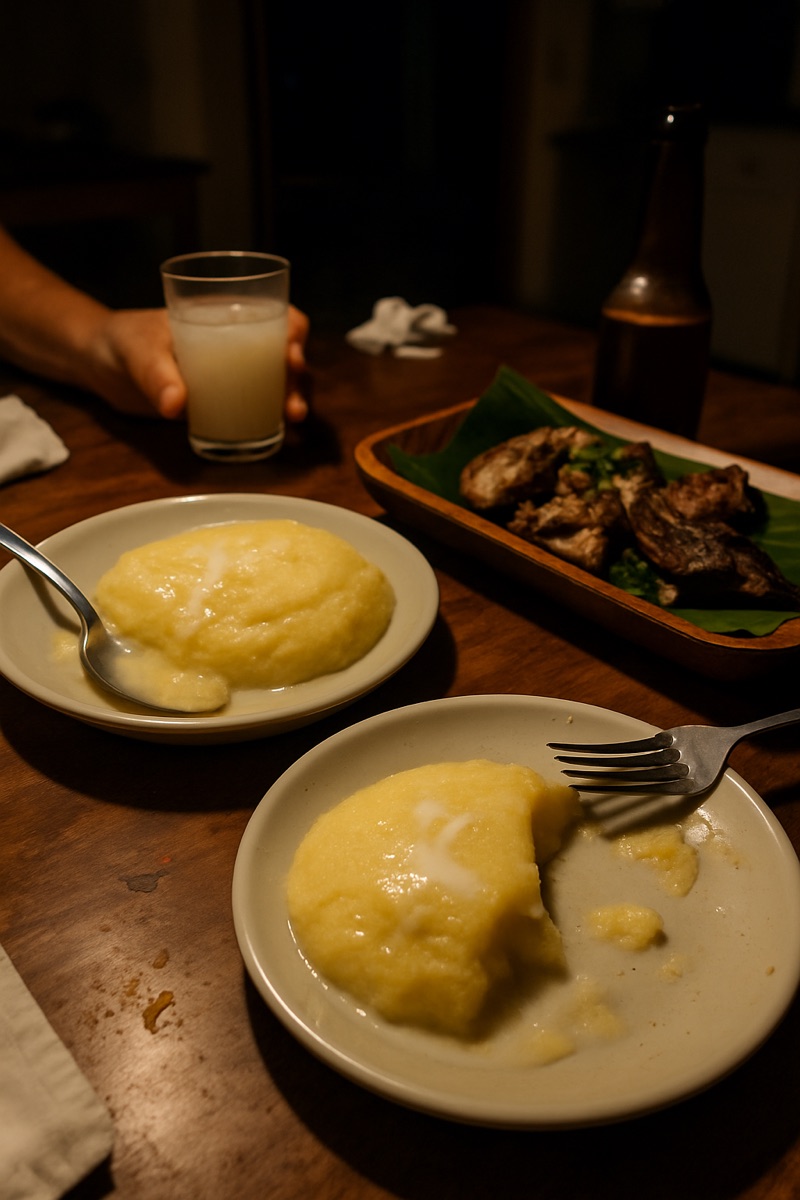
What Tuvaluan food is built on
Tuvalu is nine small atolls and reef islands in the central Pacific, with little land for farming and no room for livestock. Its cooking rests on three things: pulaka, a swamp crop similar to taro grown in pits dug below the water table; the coconut, used for its water, its milk, its flesh and its sap; and fish from the lagoon and the open ocean. Bananas and breadfruit are supplementary crops.
Because raw pulaka corms are toxic, most traditional dishes start in an earth oven, and many recipes call for coconut cream (lolo), toddy, or both. Pork is kept for fateles, the celebrations with music and dancing, and beef is rare for the same reason: there is nowhere to raise it.
Imported food changed the diet during and after the Second World War, when American forces supplied canned goods. Corned beef, rice and sugar are now everyday foods, and many pulaka pits are no longer worked. Tuvalu was a British colony, and some British elements remain in meals cooked with local flavours. Pulaka is also the dish usually given as Tuvalu's national dish: see the national dish of Tuvalu.
Pulaka dishes
- Pulaka — Giant swamp taro, Cyrtosperma merkusii, with bigger leaves and larger, coarser roots than common taro. It makes up the bulk of the traditional diet, usually with fish, and its pits are family property handed down over generations. The corms are cooked for hours, usually in an earth oven, before they are safe to eat, and they are rich in calcium. The crop is now threatened by rising seas, which push salt water into the pits and rot the roots, and growing it is a skill often passed from father to son.
- Fekei — Pulaka grated into a wet pulp on a piece of limestone with holes drilled in it, a task usually done by women, then wrapped in pulaka leaves, steamed and mixed with coconut cream. It is made on all of Tuvalu's islands, has a subtle flavour lightly sweetened by the cream, and travels well as a snack. Our fekei recipe explains the traditional method step by step.
- Tulolo — Coconut cream poured over beaten pulaka pulp, a dish from Niutao. On Nukufetau the version with halved corms is called tulolo pulaka, and the one with beaten corms fakapapa.
- Puatolo — A Nukufetau dish of grated pulaka mixed with toddy and baked in the oven, sweet from the coconut sap.
- Likoliko — Dried pulaka slices cooked in coconut cream and water. Baked corms are sliced and dried in the sun for six days into pulaka valuvalu, packed in coconut containers and hung from the roof beams, where they keep for up to seven years. Cooked corms can also be buried in the ground, which keeps them for about three months.
Taro leaves and coconut
- Palusami — Taro leaves folded around coconut cream, onion and lime juice, then baked until the leaves melt, and served with taro or breadfruit. Locally it is also called samoa, and it is a favourite on the outer islands. Spinach replaces the taro leaves where they cannot be found. See our Tuvaluan palusami.
- Taro leaf and coconut soup — Taro leaves simmered in coconut milk, one of the many ways outer islanders cook taro, alongside taro chips, taro cakes and taro leaf au gratin. Rourou, the Fijian stew of taro leaves in coconut milk, is also eaten in Tuvalu.
Fish and crab
Besides fish, seabirds were part of the traditional diet, notably the black noddy (taketake) and the white tern (akiaki).
- Ika mata — Raw fish cut into small pieces, marinated in citrus juice and salt, then tossed with vegetables and coconut cream. It belongs to the same family as Tonga's 'ota 'ika and Nauru's coconut fish. Our ika mata recipe cures the fish for an hour and throws the lime juice away before the cream goes in, so it does not curdle.
- Coconut crab — One of the islands' most prized resources. Tuvaluans cook it in a curry with onion, curry powder and spices; curries have become popular on the islands and are eaten with rice.
- Tuvalu tuna — Tuna steaks cooked in coconut milk with curry powder and soy sauce and served over rice, a dish that shows how imported ingredients have been absorbed into island cooking.
Sweets and drinks
Kava is listed as Tuvalu's national drink, and the juice of the coconut is the everyday drink.
- Puleleti — A sweet of desiccated coconut pounded with coconut syrup until the oil runs, then rolled into balls and left to dry. It is laborious to make, so it appears only on occasion; caramelised sugar stands in when there is no coconut syrup.
- Toddy — The sap of the coconut tree, sweet and often compared to honey. It is drunk, eaten, and added to pulaka dishes to sweeten them.
Funafuti and the outer islands
Tuvalu's nine islands eat broadly the same food, but there is a split. On Funafuti, the capital, where most people live, seafood dishes and meat are more common than mashed vegetables or soups. On the outer islands taro is the staple, cooked as soups, chips, cakes and palusami. Each island also has its own pulaka dishes, such as tulolo on Niutao and puatolo on Nukufetau.
Cook Tuvaluan food at home
Three Tuvaluan dishes have full step-by-step recipes in Copper: fekei, ika mata and palusami. You will find them on our page about the food of Tuvalu, and the neighbouring kitchens in our guide to Pacific Island food.
Kiribati grows the same swamp taro under the name babai: see the traditional food of Kiribati.
The recipes
- Fekei🇹🇻 Tuvalu · 2 hours
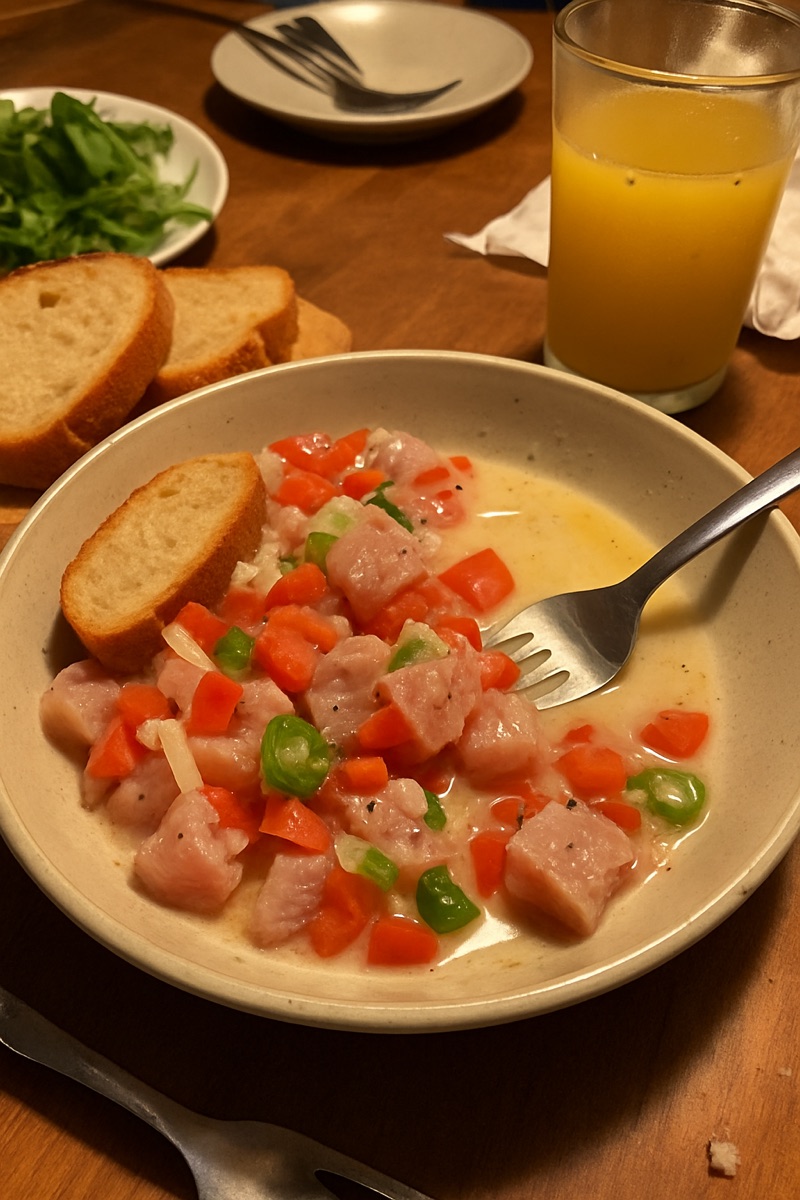 Ota ika🇹🇻 Tuvalu · 1 hour and 40 minutes
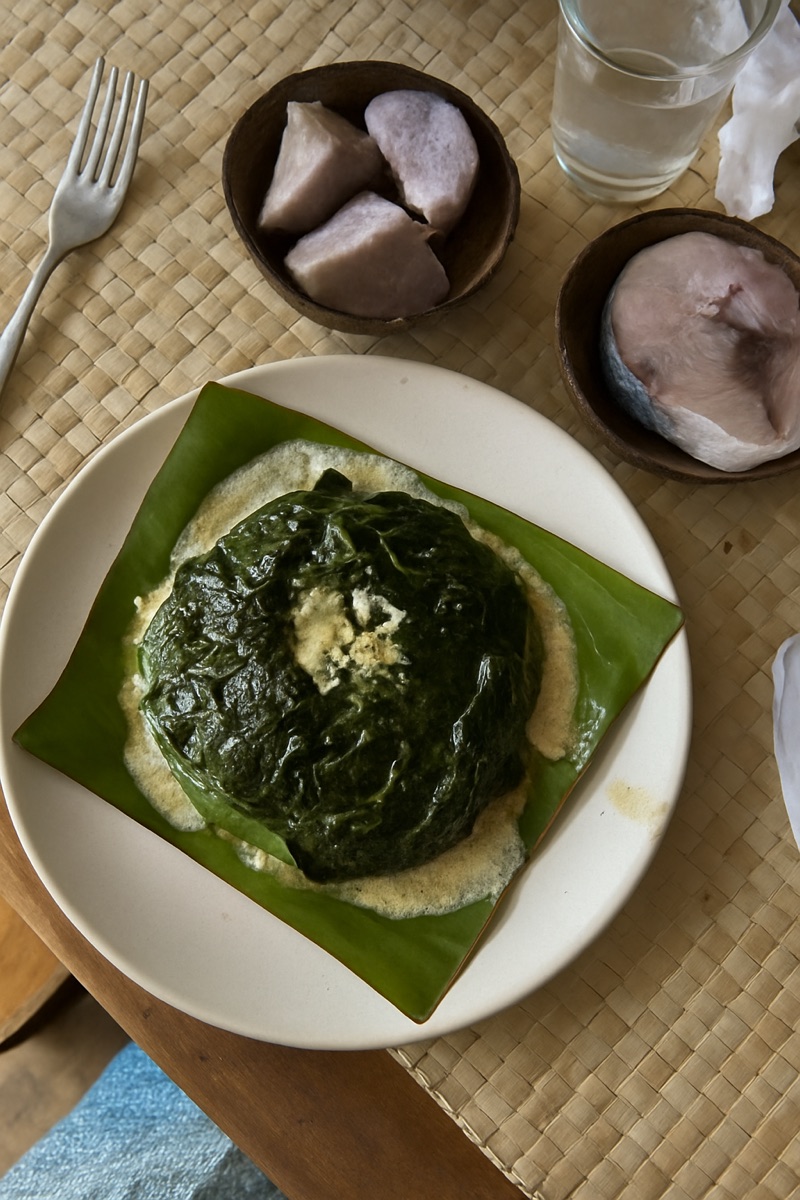 Palusami🇹🇻 Tuvalu · 1 hour and 15 minutes
Questions people ask
What is the most popular food in Tuvalu?
Pulaka, the giant swamp taro, with fish. Today rice and corned beef are eaten every day too.
What is the national dish of Tuvalu?
Pulaka is usually given as the national dish, although no law makes it official. Fekei, grated pulaka steamed in its leaves with coconut cream, is the best-known pulaka dish.
Is pulaka poisonous?
The raw corms are toxic, so pulaka is always cooked for hours, usually in an earth oven, before it is eaten.
Is Tuvaluan food spicy?
Not traditionally. Coconut cream and toddy set the flavour; curry powder arrived later in dishes such as coconut crab curry.
What do people in Tuvalu drink?
Coconut water, toddy (coconut sap) and kava, which is listed as the national drink.
Keep reading
- What is the national dish of Tuvalu?
- Traditional food of Fiji: 11 dishes to know
- Traditional food of Kiribati: 12 dishes to know
- Traditional food of the Marshall Islands: 12 dishes to know
- Traditional food of Micronesia: 14 dishes to know
- Traditional food of Nauru: 9 dishes to know