 COPPER
What is the national dish of Tuvalu?
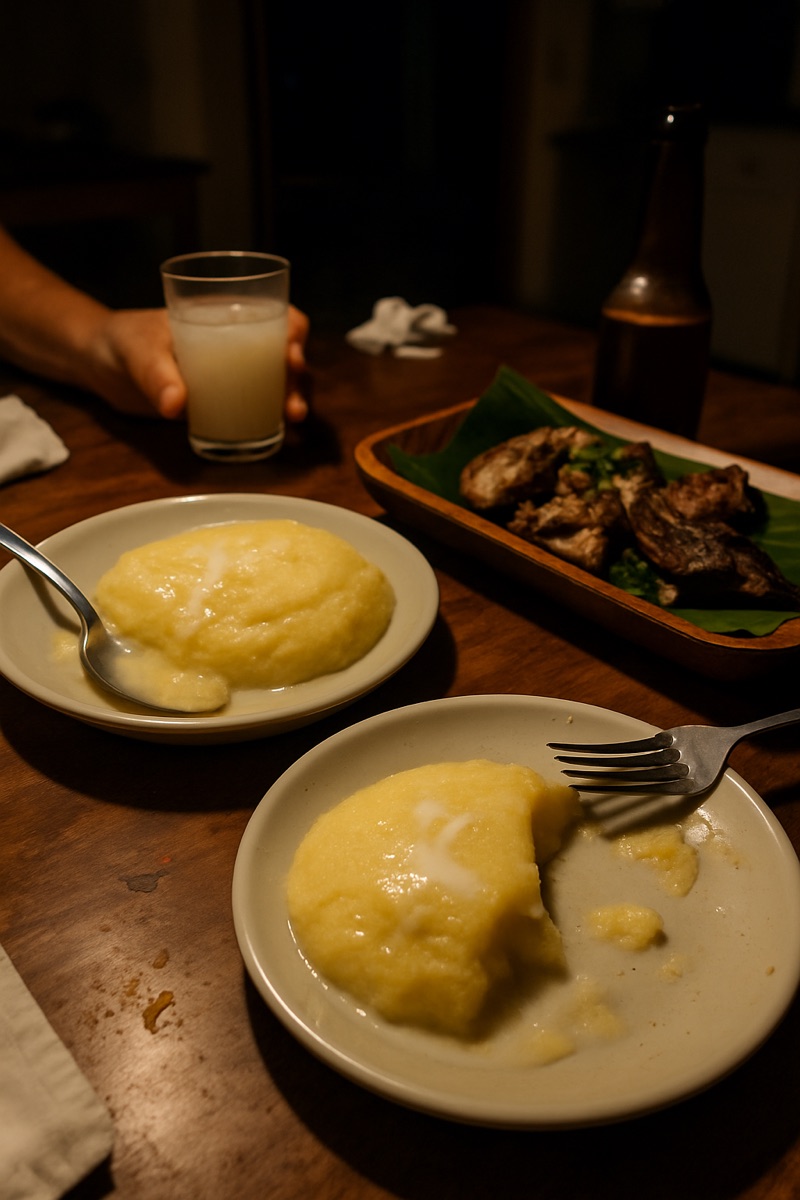
Tuvalu's national dish is usually given as pulaka, a giant swamp taro grown in pits dug into the atolls. Its corms are toxic raw, so they are always cooked, usually in an earth oven, and often finished with coconut cream. The best-known pulaka dish is fekei: grated pulaka steamed in its own leaves. No law makes it official.
Why pulaka is Tuvalu's national dish
Wikipedia's list of national dishes and its article on Tuvaluan cuisine both name pulaka for Tuvalu. There is no official declaration behind it. The reason is simpler: pulaka makes up the bulk of the islanders' traditional diet, usually supplemented by fish.
Pulaka is a plant, *Cyrtosperma merkusii*, rather than a single recipe. It is a swamp crop similar to taro, with bigger leaves and larger, coarser roots. The same plant is called babai in Kiribati, pula'a in Samoa and navia in Vanuatu.
It also anchors Tuvaluan identity in a way imported rice cannot: the crop, the pits and the recipes are a family inheritance, now under threat from the sea.
How pulaka is grown
Pulaka grows in large pits dug into the limestone of the atolls, fertilised with leaves and reaching below the water table, where the plant draws on the freshwater lens a few metres down. Families dig and keep these pits over generations, and owning one is part of family identity.
That makes the crop fragile. Higher tides push salt water into the pits, which rots the roots and yellows the leaves, and some islanders now line their pits with cement. Imported food since the Second World War has also left many pits unused.
The knowledge passes down through families too: the secrets of growing pulaka are often handed from father to son, and as Wikipedia's article on the crop puts it, a father teaching his son to plant pulaka is "practicing how to live like a man".
Fekei and the other pulaka dishes
The raw corms are toxic and need hours of cooking, so every pulaka dish starts in the fire. Fekei is made on all the islands: about 1 kg of peeled corm is grated into a wet pulp on a piece of limestone with holes drilled in it, wrapped in pulaka leaves and steamed about an hour, then broken up and mixed with around 400 ml of thick coconut cream. It is eaten warm with lagoon fish.
Keeping food in a hot climate is hard, and pulaka solved that too. Cooked corms buried in the ground keep up to three months. Sliced and dried in the sun for six days, they become pulaka valuvalu, packed in coconut containers hung from the roof beams.
Each island has its own versions:
- Tulolo (Niutao): coconut cream poured over beaten pulaka pulp.
- Tulolo pulaka and fakapapa (Nukufetau): the same with halved or with beaten corms.
- Puatolo (Nukufetau): grated pulaka with toddy, baked.
- Likoliko: sun-dried pulaka slices cooked in coconut cream and water. Dried this way, pulaka keeps up to seven years.
Raw fish and palusami in Tuvalu
Tuvalu also makes the Pacific raw fish dish, known there as ika mata. In our Tuvaluan ota ika recipe, 500 g of firm fish in 2 cm cubes is cured an hour in 150 ml of lime juice, then drained, and the juice is thrown away so the 250 ml of coconut cream added next does not curdle. Onion, tomato, cucumber, spring onion and chili are folded in.
On the outer islands, where taro is the staple, palusami is a favourite. Locally also called samoa, it is taro leaves folded around coconut cream, onion and lime juice, baked about 45 minutes at 180 °C and served with taro or breadfruit. Spinach replaces taro leaves where they cannot be found.
Other dishes to know from Tuvalu
Coconut runs through everything: its water, its milk and its flesh, plus toddy, the palm sap. Puleleti is a sweet of desiccated coconut and coconut syrup. Coconut crab and lagoon fish are prized, and pork is kept for fateles, the celebrations with dancing. Canned food supplied by American forces during the Second World War changed the diet for good, and corned beef and rice are now everyday foods.
Seabirds were part of the traditional diet as well, the black noddy (taketake) and the white tern (akiaki). On Funafuti, the capital, seafood and meat dominate; on the outer islands taro is the staple, cooked as taro leaf and coconut soup, taro chips, taro cakes and palusami.
All three recipes are on our page about the food of Tuvalu, and the region is covered in our guide to Pacific Island food. Kiribati grows the same plant as babai: see the national dish of Kiribati.
The recipes
- Fekei🇹🇻 Tuvalu · 2 hours
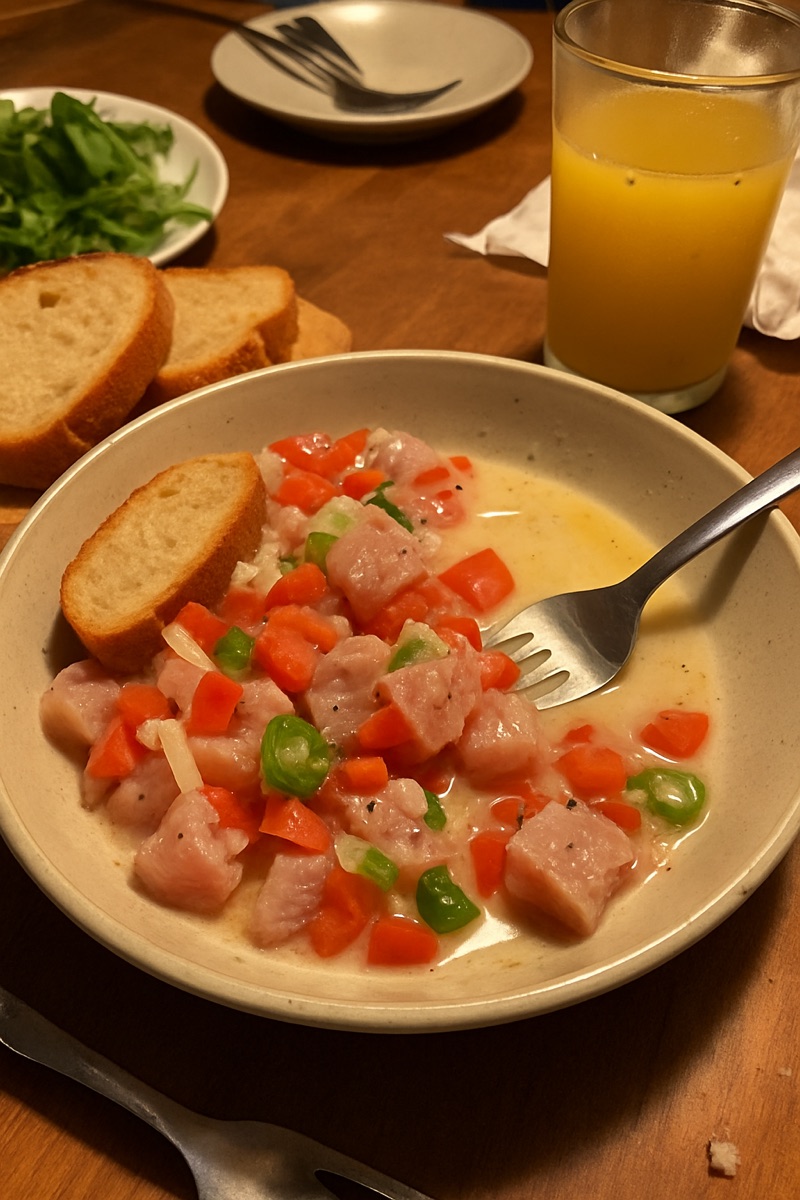 Ota ika🇹🇻 Tuvalu · 1 hour and 40 minutes
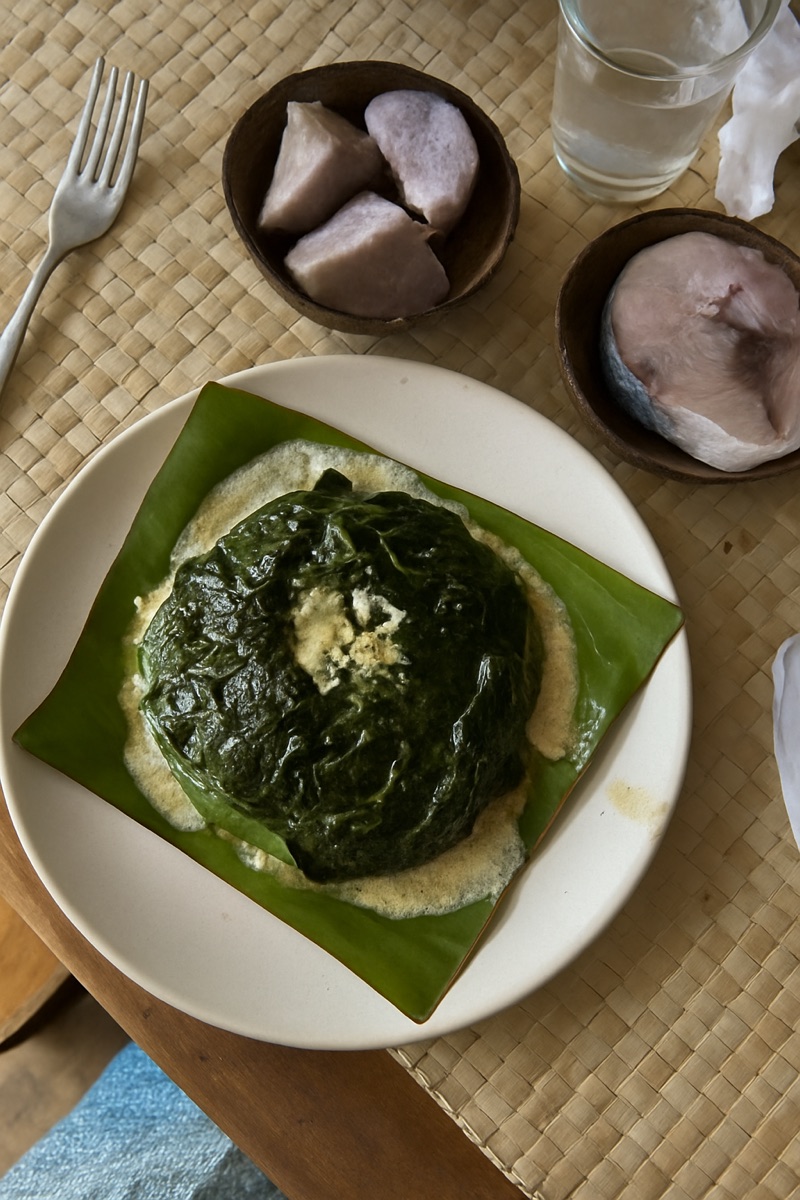 Palusami🇹🇻 Tuvalu · 1 hour and 15 minutes
Questions people ask
Is pulaka the same as taro?
Not exactly. Pulaka, or swamp taro (*Cyrtosperma merkusii*), is a related swamp crop with bigger leaves and larger, coarser roots than common taro.
Is pulaka poisonous?
The raw corms are toxic. They are always cooked for hours, usually in an earth oven, before eating.
What is fekei?
Fekei is grated pulaka wrapped in pulaka leaves, steamed and mixed with coconut cream. It is made on every island of Tuvalu.
Why is pulaka at risk in Tuvalu?
Rising sea levels push salt water into the pulaka pits, which rots the roots, and imported food has replaced much of the crop since the Second World War.
What is the staple food of Tuvalu?
Pulaka and coconut, with fish from the lagoon and the ocean. Rice is now an important part of the diet too.
Keep reading
- Traditional food of Tuvalu: 12 dishes to know
- What is the national dish of Fiji?
- What is the national dish of Kiribati?
- What is the national dish of the Marshall Islands?
- What is the national dish of Micronesia?
- What is the national dish of Nauru?