 COPPER
What is the national dish of Fiji?
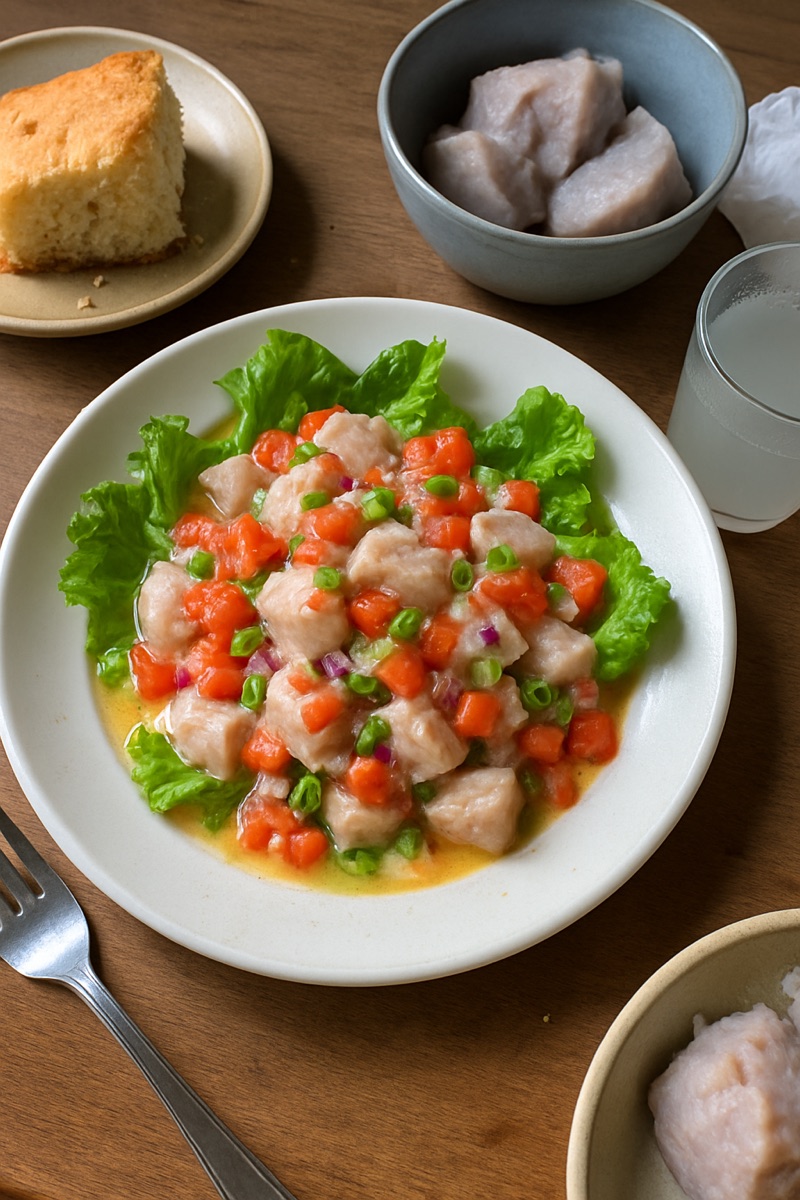
Fiji has no official national dish, but kokoda is the one most often named: cubes of raw fish cured in lime juice until opaque, drained, then folded into thick coconut cream with chilli, onion and tomato and served cold. The lovo, a feast cooked for hours on hot stones buried in a pit, is the other dish most closely tied to Fiji.
What is kokoda?
Kokoda is raw fish that is never heated. Cubes of very fresh fish sit in lime juice until the flesh turns opaque white, the acid doing the work that heat does elsewhere. The juice is then poured away and the fish is bound in thick coconut cream with chopped vegetables.
In Fiji the usual fish is walu, Spanish mackerel, cut into 1.5 cm cubes. The dish is served cold, often in a coconut shell, with lime wedges on the side. Because nothing is cooked, the fish has to be fresh enough to eat raw, and the cure takes time: 2 hours at the least, overnight at the most.
Wikipedia's list of national dishes gives kokoda for Fiji and describes it as a Fijian ceviche, but no law or government statement makes it official.
How kokoda is made
Our kokoda recipe follows the method used in Fijian homes. The order matters more than the quantities:
- Cure: 600 g of diced walu covered with 250 ml of lime juice and 1 tsp of salt, refrigerated 2 hours or overnight.
- Drain: every drop of the lime juice is thrown away. Left in, the acid splits the coconut cream.
- Chop: red onion, tomato, cucumber, spring onion and red chilli with the seeds left in, all cut small.
- Bind: 400 ml of thick coconut cream folded through the fish, then the vegetables and a handful of cilantro.
- Rest: 30 minutes in the fridge so the cream sets around the fish.
Is lovo Fiji's national dish?
Some sources put the lovo first. Wikipedia's article on Fijian cuisine lists curry and lovo as national dishes, and Tourism Fiji calls lovo the country's most cherished cooking tradition. Strictly, lovo is a method rather than a recipe: an earth oven used for weddings, holidays and village feasts.
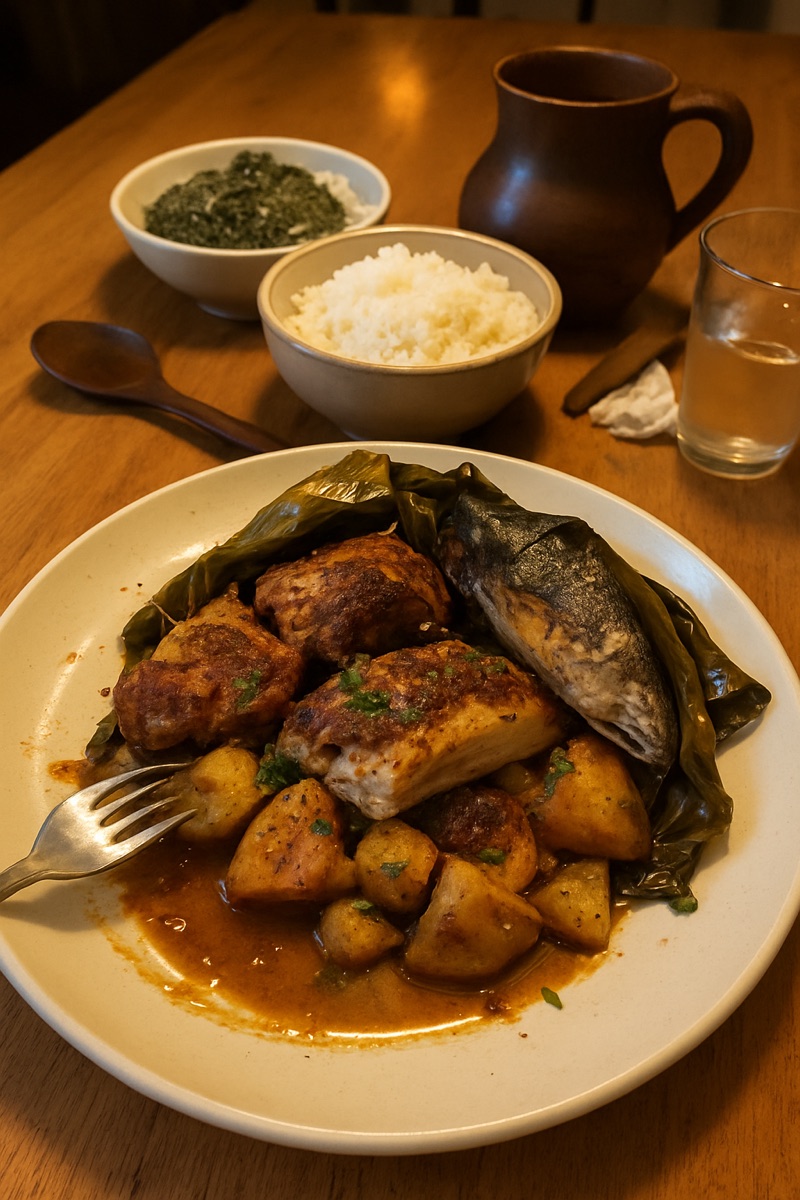
A pit is dug and lined with wood, river stones are heated in the fire until they are white hot, and the stones are covered with banana or palm leaves. Root crops such as dalo (taro) and cassava go in first, then leaf-wrapped meat and fish, then palusami, taro-leaf parcels filled with coconut cream, on top. Everything is buried under leaves and soil. Tourism Fiji gives 1 to 2 hours of cooking; our lovo recipe, for a full family load, allows 2 to 3.
The work is shared. Tourism Fiji notes that men usually tend the pit, peel the root crops and scrape the coconuts, while women take charge of the seasoning and side dishes. Fijian cooks flavour lovo meat with soy sauce, garlic, chilli and ginger, and often steam fish in taro leaves with onion, garlic, chilli and coconut milk, a dish called fish-in-lolo. The stones are heated for 1 to 2 hours before any food goes in, because once the pit is closed nothing can be checked.
Papua New Guinea cooks the same way under another name, the mumu.
Where kokoda comes from
Kokoda is Fiji's name for a dish made right across the Pacific: raw fish cured in citrus and dressed with coconut milk. It is ika mata in the Cook Islands, poisson cru in Tahiti, coconut fish in Nauru and 'ota 'ika in Tonga, where it is the national dish.
Fiji's everyday food also carries another history. Indian workers brought to the islands under British indenture shaped what Fijians eat today, which is why roti, dhal and curry sit next to taro and fish soup at many breakfasts, and why fish suruwa, a Fijian-style fish curry, is a common main dish.
Other dishes to know from Fiji
Root crops are the base of the Fijian table. Taro comes in some 70 varieties and is the staple for special occasions, while cassava, called tavioka, has overtaken yams as the most cultivated crop and is boiled to go with stews and curries. Young taro leaves, rourou, are stewed in coconut milk or folded into palusami.
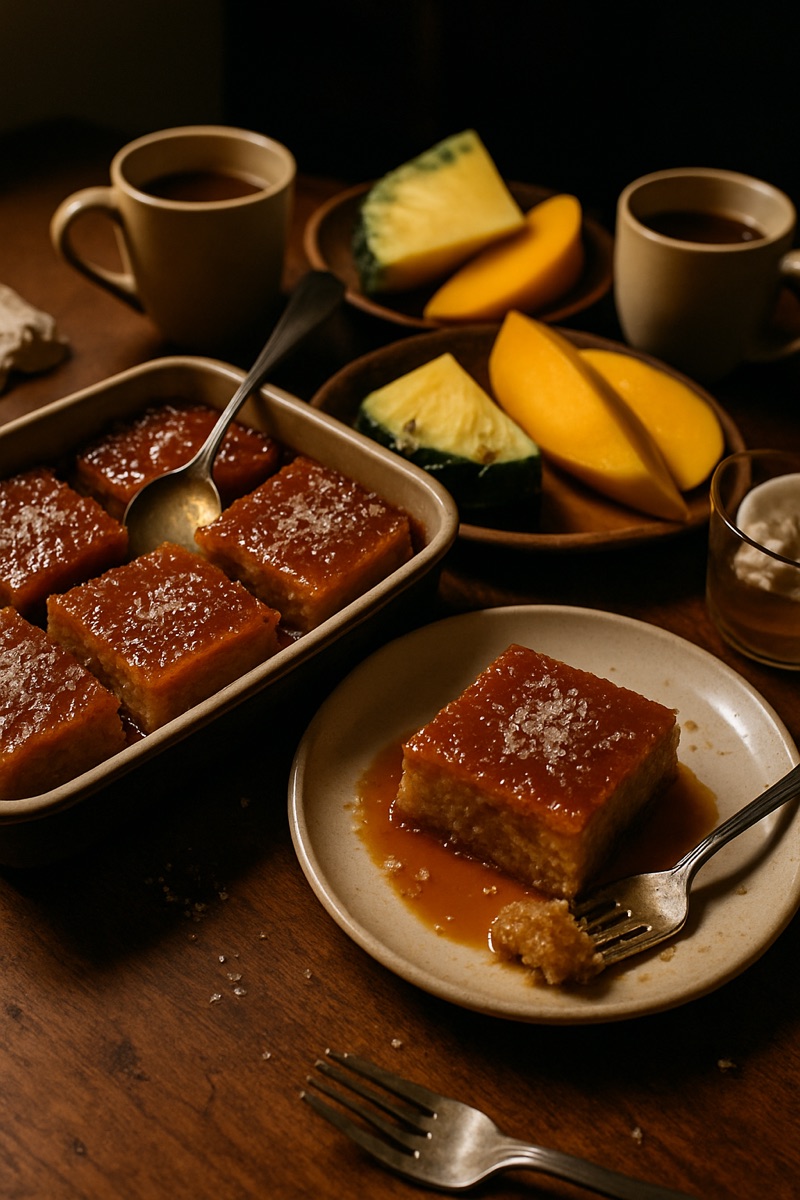
Fijian desserts lean on cassava and coconut. Vakalolo is fresh grated cassava mixed with grated coconut and ginger, pressed into flat cakes about 2 cm thick, wrapped in banana leaf and steamed for 40 to 45 minutes. The cakes are cut into squares and covered with a caramel of burnt sugar and coconut milk. Grated root matters here: tapioca flour sets into a rubbery gel.
The drink that goes with all of it is kava, or yaqona, made from the powdered root of the kava plant and shared at ceremonies as a sevusevu offering.
You will find all three dishes, with ingredients and step-by-step methods, on our page about the food of Fiji, and the neighbouring kitchens in our guide to Pacific Island food.
The recipes
- Kokoda🇫🇯 Fiji · 2 hours and 50 minutes
 Lovo🇫🇯 Fiji · 4 hours and 20 minutes
 Vakalolo🇫🇯 Fiji · 1 hour and 25 minutes
Questions people ask
Is kokoda the same as ceviche?
They are close relatives: both cure raw fish in citrus juice instead of cooking it. Kokoda differs in that the juice is drained off and the fish is bound in thick coconut cream.
Is kokoda cooked?
No. The fish is never heated; the lime juice turns the flesh opaque. That is why only very fresh fish should be used.
What fish is used for kokoda?
In Fiji the classic choice is walu, Spanish mackerel. Any firm, very fresh white-fleshed fish works the same way.
What is a lovo in Fiji?
A lovo is an earth oven: food wrapped in leaves is laid on white-hot stones in a pit and buried under leaves and soil until it is cooked. It is the centrepiece of Fijian feasts. See our lovo recipe.
What is Fiji's national drink?
Kava, called yaqona in Fiji. It is made from the powdered root of the kava plant mixed with water and is offered at ceremonies.
Keep reading
- Traditional food of Fiji: 11 dishes to know
- What is the national dish of Kiribati?
- What is the national dish of the Marshall Islands?
- What is the national dish of Micronesia?
- What is the national dish of Nauru?
- What is the national dish of New Zealand?