 COPPER
What is the national dish of Papua New Guinea?
Papua New Guinea has no officially declared national dish, but mumu is the one regarded as such: pork or chicken, sweet potato, taro, plantains and leafy greens wrapped in banana leaves and cooked for hours on hot stones in an earth pit. The dish takes its name from the earth oven itself, and it is still cooked at home and for feasts.
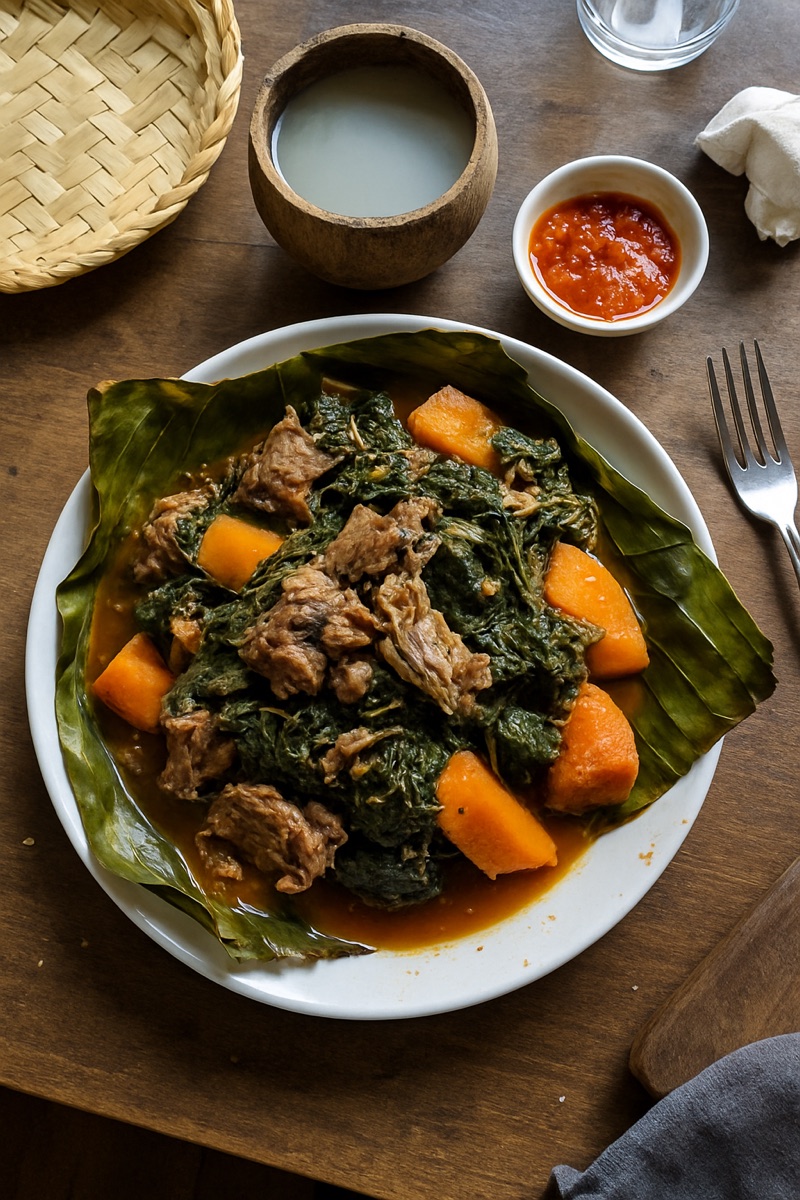
What is mumu?
Mumu is both a cooking method and the meal it produces. Food is wrapped in a parcel of banana leaves, today sometimes aluminium foil, and laid in a pit with hot coals or stones, then left for a long time. Wikipedia's article on Papua New Guinean cuisine describes mumu as regarded as the national dish, and notes that despite modern ovens it is still common at household level.
A typical mumu combines pork or chicken with sweet potato, taro, plantains and leafy vegetables, a balance of starchy crops and meat in one parcel. Pork is the celebration meat in Papua New Guinea, kept for special occasions such as Christmas feasts.
The recipe shifts by region. In the Highlands the preferred green is a type of fern; in the New Guinea Islands region, coconut cream goes in generously. The word itself is Tok Pisin, used by Tok Pisin and English speakers, while each of the country's hundreds of local languages has its own name for the earth oven.
How a mumu is cooked
Our mumu recipe feeds a crowd, because that is what a mumu is for:
- Pit: dig about 1 m across and 60 cm deep, fill it with firewood and pile on roughly twenty river stones. Burn 2 to 3 hours until the stones reach 400 to 500°C.
- Leaves: pass 10 large banana leaves over the fire to soften them without scorching.
- Food: 1.5 kg of pork in large pieces, 1 kg of sweet potato, 500 g of taro and 4 halved cooking bananas, salted and coated with 500 ml of coconut cream.
- Layers: pork at the bottom on the leaf-lined stones, then tubers, bananas and 300 g of leafy greens on top, with more hot stones tucked between the layers.
- Seal: fold the leaves closed, cover with fresh leaves and then earth, and leave it 3 to 4 hours without opening.
- Serve: clear the earth and eat straight off the leaves, together.
Mumu and its Pacific cousins
Earth ovens are found right across the Pacific. Fiji cooks the same way in its lovo: see the national dish of Fiji. In much of Polynesia the word is umu.
Papua New Guinea also has a faster relative. Aigir works on the same idea, but the hot rocks are dropped into a pot of coconut milk with chicken, plantains, sweet potato, leafy greens and ginger, and the dish is cooked in as little as 30 minutes.
Vanuatu, another Melanesian country, names laplap as its national dish: see the national dish of Vanuatu.
Sago and saksak
Root crops, bananas and sago are the staples of Papua New Guinea, and the diet is largely vegetarian, especially in the Gulf and Highlands regions. Sago is a starch extracted from the sago palm, and its local name is saksak.
In the Sepik region it is mixed with boiling water to make nangu, a gelatinous dumpling eaten as the main starch of many meals. It is also pressed onto a hot pan, sometimes with grated coconut, to make a pancake. A sweet version, also called dia or pariwa, is a sago and banana dumpling steamed in banana leaf and served with coconut cream.
Our saksak recipe is that sweet dumpling, made with sago pearls: 300 g of pearls soaked 10 minutes and drained, mixed with 3 mashed ripe bananas, wrapped in banana leaf and steamed 20 minutes until fully translucent, then served in 400 ml of warm coconut milk.
Other dishes to know from Papua New Guinea
Coastal Papua New Guinea cooks with coconut milk and cream; the Highlands traditionally do not. On the coast, kokoda is a favourite: raw white fish such as mahi-mahi or snapper, cured in lime juice for 2 to 8 hours until opaque and firm right through, drained, then dressed with fresh coconut cream, tomato, onion, green pepper and chilli. The same dish is made in Fiji.
Chicken pot is chicken stewed with mixed vegetables and coconut cream. Lamb flaps, lamb trimmings marinated with ginger and garlic, are grilled at roadside stands and eaten with plantain or sweet potato from the grill plate.
Staples also include karuka nuts, sweet potato (kaukau), cassava, breadfruit and coconut. About 80 percent of the population depends on subsistence farming, so most of what people eat is grown locally.
You will find all three recipes on our page about the food of Papua New Guinea and the neighbouring kitchens in our guide to Pacific Island food.
The recipes
- Mumu🇵🇬 Papua New Guinea · 7 hours
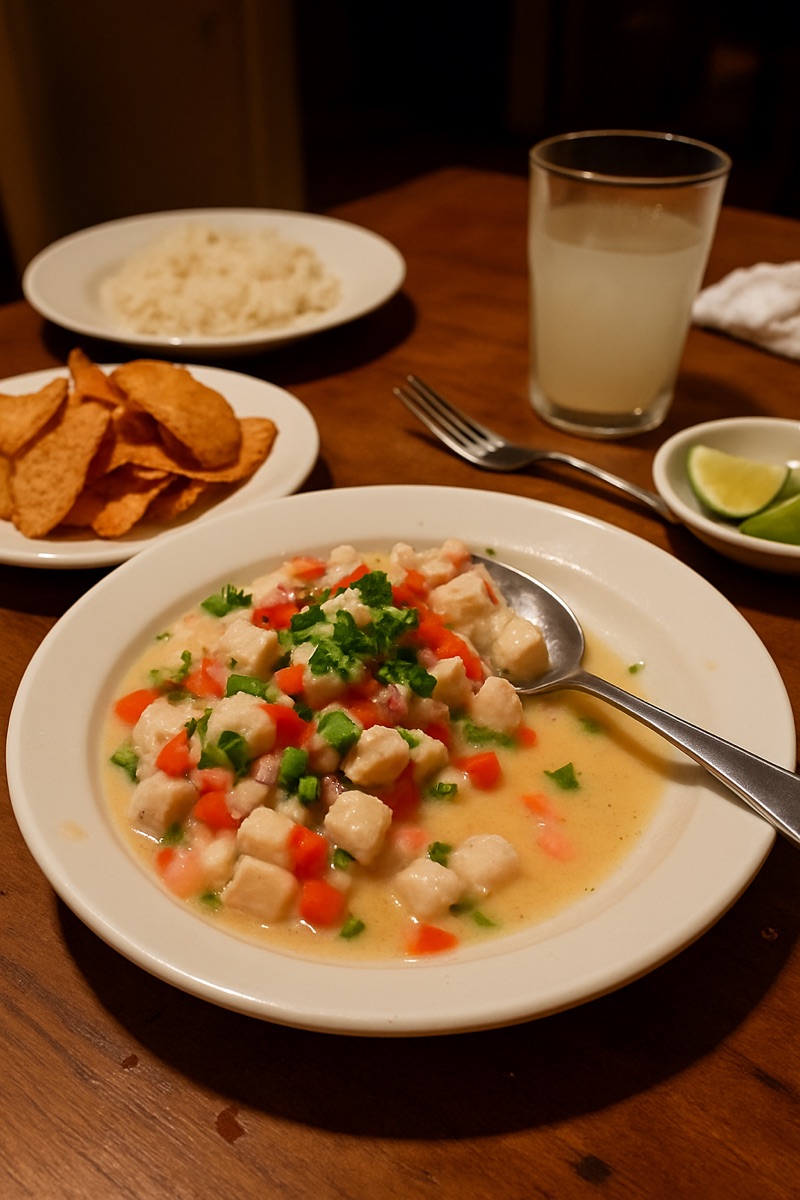 Kokoda🇵🇬 Papua New Guinea · 6 hours and 50 minutes
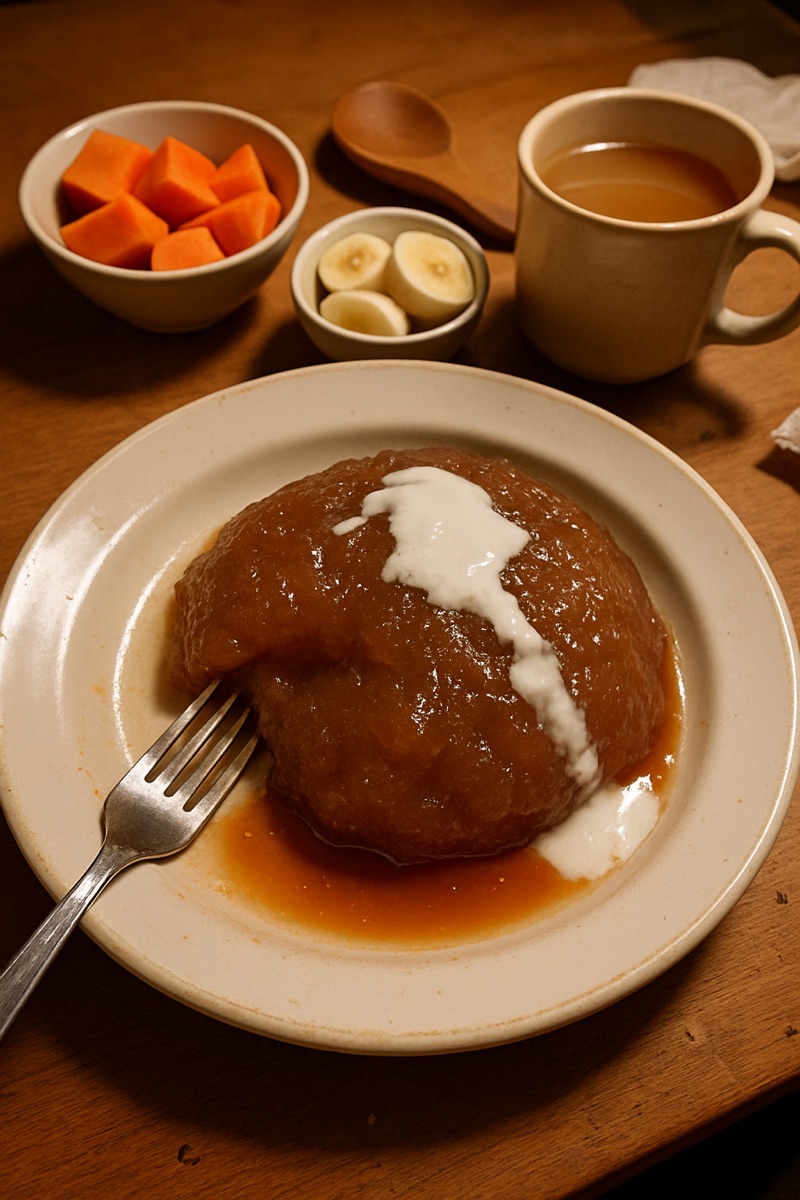 Saksak🇵🇬 Papua New Guinea · 50 minutes
Questions people ask
Is mumu a dish or an oven?
Both. Mumu is the earth oven of hot stones in a pit, and also the meal of pork, root crops and greens cooked in it.
How long does a mumu take?
The stones heat for 2 to 3 hours, then the sealed pit cooks for 3 to 4 hours. Plan most of a day.
What is saksak in Papua New Guinea?
Saksak is the local name for sago starch. It is made into nangu dumplings, pancakes, or a sweet sago and banana dumpling served with coconut.
Is kokoda from Papua New Guinea or Fiji?
Both countries make it. Kokoda, raw fish cured in lime and dressed with coconut cream, belongs to a family of dishes found across the Pacific.
What do people in Papua New Guinea eat every day?
Root crops such as sweet potato, taro and cassava, bananas and sago, with meat eaten only occasionally and seafood common on the coast.
Keep reading
- Traditional food of Papua New Guinea: 11 dishes to know
- What is the national dish of Fiji?
- What is the national dish of Kiribati?
- What is the national dish of the Marshall Islands?
- What is the national dish of Micronesia?
- What is the national dish of Nauru?