 COPPER
Traditional food of Papua New Guinea: 11 dishes to know
Papua New Guinean food is built on root crops, bananas and sago, grown by the 80 percent of people who farm for their own needs. Food is cooked on hot stones, in coconut milk on the coast and without it in the Highlands, and pork is kept for feasts. The most emblematic dishes are mumu, sago, kokoda and chicken pot.
What Papua New Guinean food is built on
About 80 percent of Papua New Guineans rely on subsistence farming, so most of what the country eats is grown locally. The staples are root crops, bananas and sago, the starch taken from the trunk of the sago palm, along with sweet potato (*kaukau*), cassava, breadfruit, coconut and karuka nuts. The diet is largely vegetarian, especially in the Gulf and Highlands regions. On the coast seafood is a large part of the diet, and pork is the meat of celebrations, kept for special occasions such as Christmas feasts.
The country divides by coconut. Coastal regions traditionally cook in coconut milk and cream; the Highlands do not, and there the preferred green in a mumu is a type of fern. Wikivoyage notes that the food is largely unspiced and that almost every meal has rice plus another starch. There is no officially declared national dish, but mumu is regarded as one.
Hot stones and coconut pots
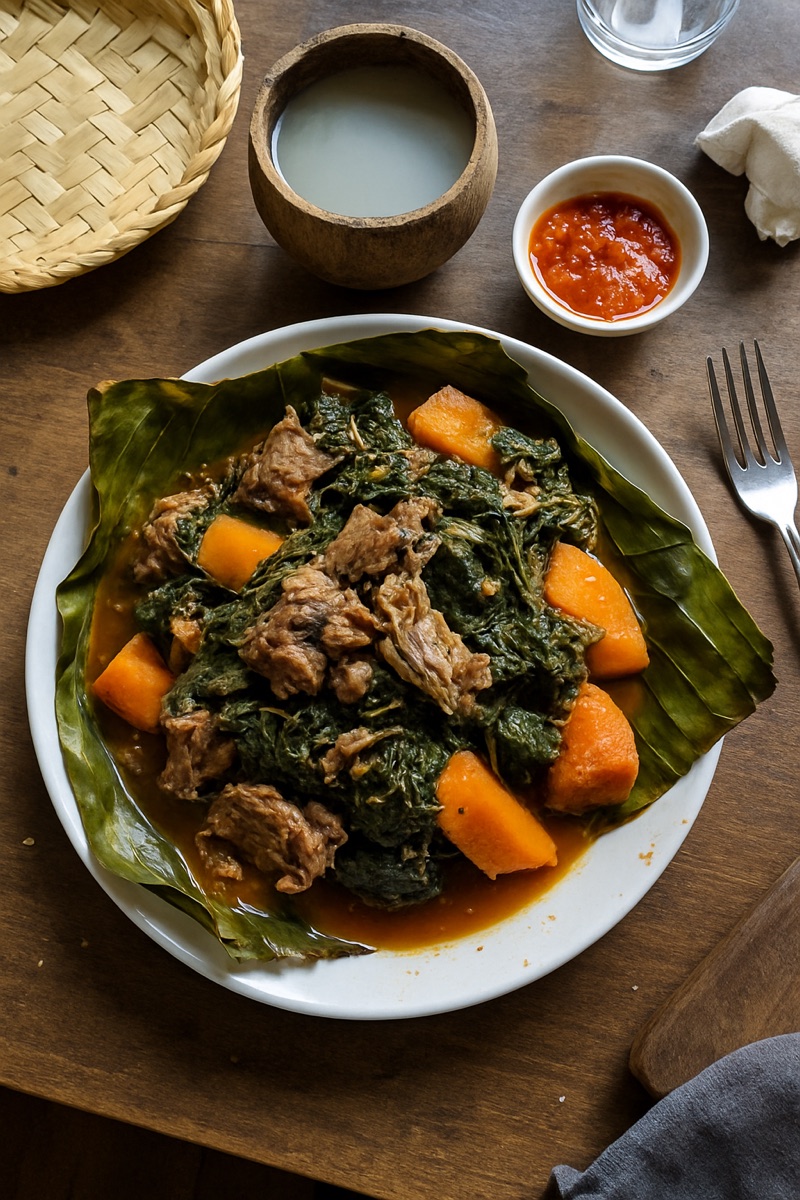
- Mumu — The earth oven and the meal cooked in it. Pork or chicken, sweet potato, taro, plantains and leafy greens are wrapped in banana leaves, today sometimes foil, and cooked for hours on hot stones in a pit. Despite modern ovens it is still common at household level, and preparing one usually involves the whole family, men and women, young and old. The earth-oven technique is thought to have originated in Papua New Guinea before Austronesian seafarers carried it across the Pacific.
- Aigir — A faster cousin of the mumu. Hot rocks are dropped into a pot of coconut milk with chicken, plantains, sweet potato, plenty of leafy greens and ginger, and the dish cooks in as little as 30 minutes.
- Chicken pot — Chicken stewed with mixed vegetables in coconut cream. Recipes add chopped kaukau, green onion and corn, and curry powder towards the end; the meat and vegetables are served apart and the broth is drunk as a soup.
Sago dishes
- Nangu — In the Sepik region, sago flour, known locally as *saksak*, is stirred into boiling water to make *nangu*, a gelatinous dumpling eaten as the basic starch of many meals.
- Sago pancake — The same flour pressed onto a hot pan, sometimes mixed with grated coconut, to make a flat, tortilla-like pancake.
- Dia (pariwa) — A dessert of sago and ripe banana dumpling, steamed in a banana-leaf wrapping and served with clotted coconut cream; the bananas give it its sweetness. In coastal areas it is eaten at lunch or dinner. Our recipe, listed under its sago name saksak, uses sago pearls steamed until translucent and served in warm coconut milk.
From the coast and the roadside
- Kokoda — Raw fish cured in lime juice for hours until opaque, then dressed with coconut cream, tomato, onion and chilli. It is a coastal favourite, eaten as a starter or snack, and the same dish is made in Fiji.
- Lamb flaps — Lamb trimmings marinated with ginger, garlic and chicken bouillon powder and grilled at roadside stands. They come with a salad of cress, raw ginger and onion, and plantain or sweet potato cooked on the same grill plate.
- Kaukau — Sweet potato, the everyday starch of much of the country. It goes into the mumu, is cooked on roadside grill plates next to lamb flaps, or is baked, mashed and mixed with coconut milk.
Nuts and drinks
- Galip and karuka nuts — Nuts have been part of the diet in Papua New Guinea for about 6,000 years. Galip nuts (*Canarium indicum*), harvested from May to July, are eaten raw, baked or roasted, as a snack or added to root crops and soups; karuka nuts are listed among the country's staples.
- Kulau — A green coconut opened and drunk for its sweet, slightly tangy water. Coffee, grown mainly in the Highlands, is widely drunk, and on the coast tea is taken hot, black and very sweet.
Highlands, coast and the Sepik
Papua New Guinea's food changes with altitude and coastline. In the Highlands, cooks traditionally use no coconut milk, the preferred mumu green is a fern, and coffee and tea are grown; the Highlands and the Gulf have the most vegetarian diets in the country. In the New Guinea Islands region, coconut cream goes into the mumu generously, and coastal people in general cook in coconut milk and cream, keep coconut oil for special occasions and eat a lot of seafood. In the Sepik, sago is the base, eaten as nangu.
Outside influence came late. Europeans arrived from the 16th century, settlers brought livestock and crops in the 19th, and the cooking still overlaps with that of Indonesian Papua next door and of other Pacific nations. Even now there are no American or European fast-food chains: the best known is Big Rooster, a local chicken chain. In tourist lodges, local food is usually served next to a more Western menu.
Cook Papua New Guinean food at home
Mumu is the dish Papua New Guinea is known for; read how it is built in our article on the national dish of Papua New Guinea. Copper has full recipes for mumu, kokoda and the sago-and-banana dumpling on our page about the food of Papua New Guinea, alongside the other kitchens of the Pacific Islands.
The Solomon Islands, just to the east, share the earth oven, taro and slippery cabbage: see the traditional food of the Solomon Islands. For the big neighbour to the south, compare with the traditional food of Australia.
The recipes
- Mumu🇵🇬 Papua New Guinea · 7 hours
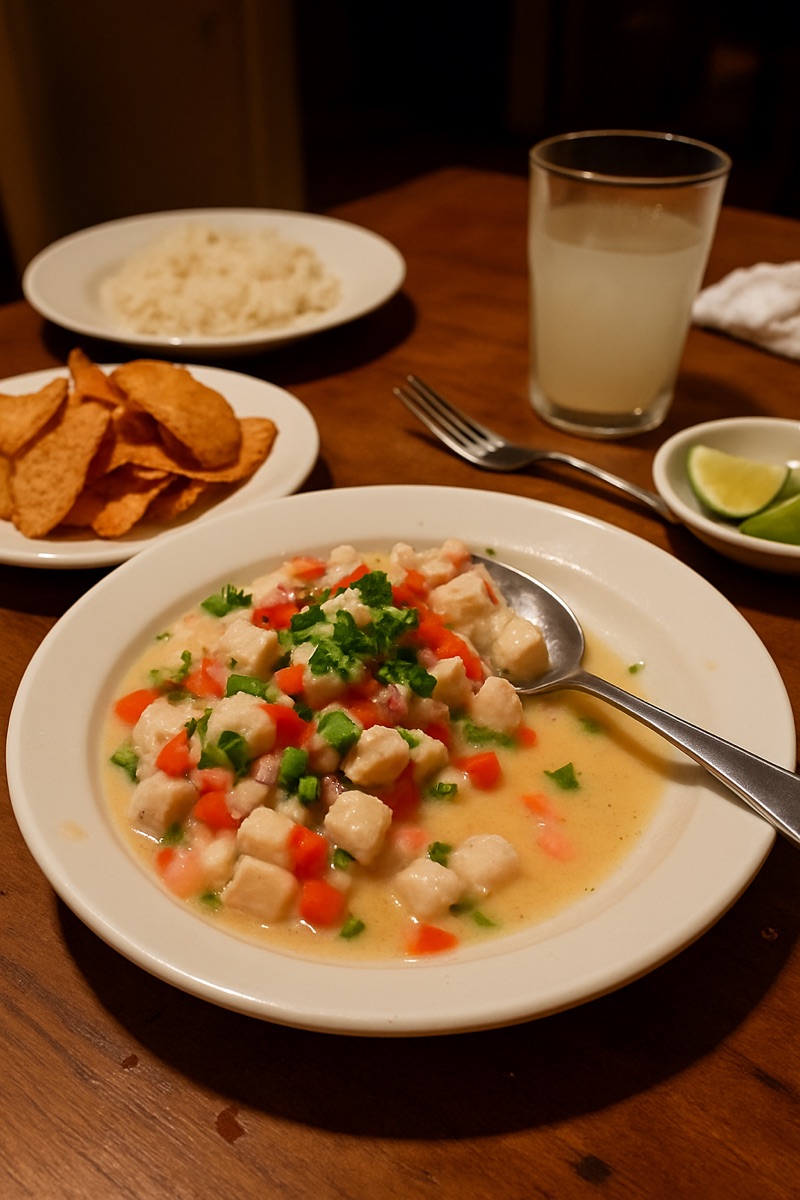 Kokoda🇵🇬 Papua New Guinea · 6 hours and 50 minutes
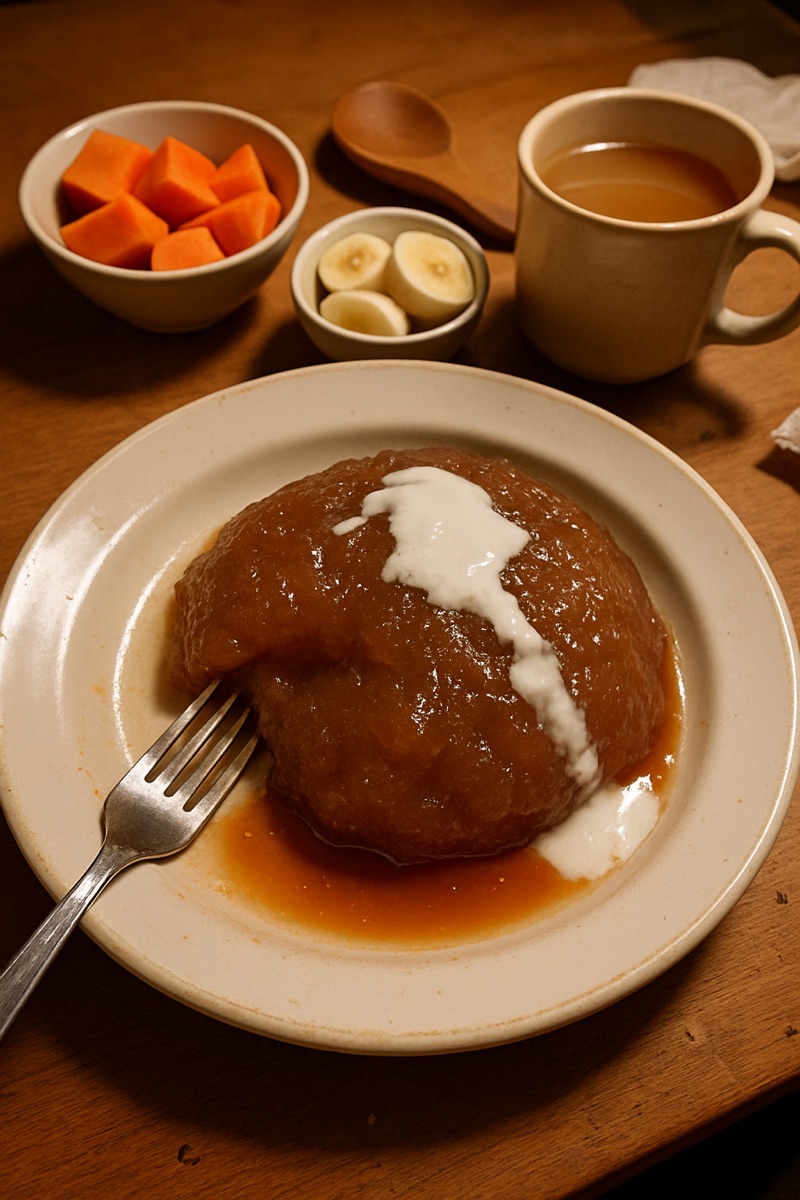 Saksak🇵🇬 Papua New Guinea · 50 minutes
Questions people ask
What is the most popular food in Papua New Guinea?
Mumu, pork or chicken cooked with sweet potato, taro, plantain and greens on hot stones, is regarded as the national dish. Day to day, sweet potato, sago, bananas and rice are the staples.
What is sago in Papua New Guinea?
Sago is a starch extracted from the sago palm, locally called saksak. It is made into nangu dumplings in the Sepik region, pressed into pancakes, or steamed with banana as the dessert dia.
Is Papua New Guinean food spicy?
No. Traditional food is largely unspiced and relies on root crops, greens, coconut milk on the coast and slow cooking on hot stones. Ginger and chilli appear in dishes such as aigir, lamb flaps and kokoda.
Do people in Papua New Guinea eat meat?
Less than in many countries. The diet is largely vegetarian, especially in the Gulf and Highlands; coastal people eat a lot of seafood, and pork is reserved for celebrations.
What do people drink in Papua New Guinea?
Kulau, the water of a green coconut, coffee from the Highlands, sweet black tea on the coast, and SP Lager, the main local beer.
Keep reading
- What is the national dish of Papua New Guinea?
- Traditional food of Fiji: 11 dishes to know
- Traditional food of Kiribati: 12 dishes to know
- Traditional food of the Marshall Islands: 12 dishes to know
- Traditional food of Micronesia: 14 dishes to know
- Traditional food of Nauru: 9 dishes to know