 COPPER
Traditional food of the Solomon Islands: 9 dishes to know
Solomon Islands food is built on fish, coconut and root crops: sweet potato, taro and cassava come with almost every meal, and food is wrapped in leaves and cooked on hot stones in the motu, the earth oven. The most emblematic dishes are poi, fermented pounded taro, palusami, cassava pudding and chili Taiyo noodles.
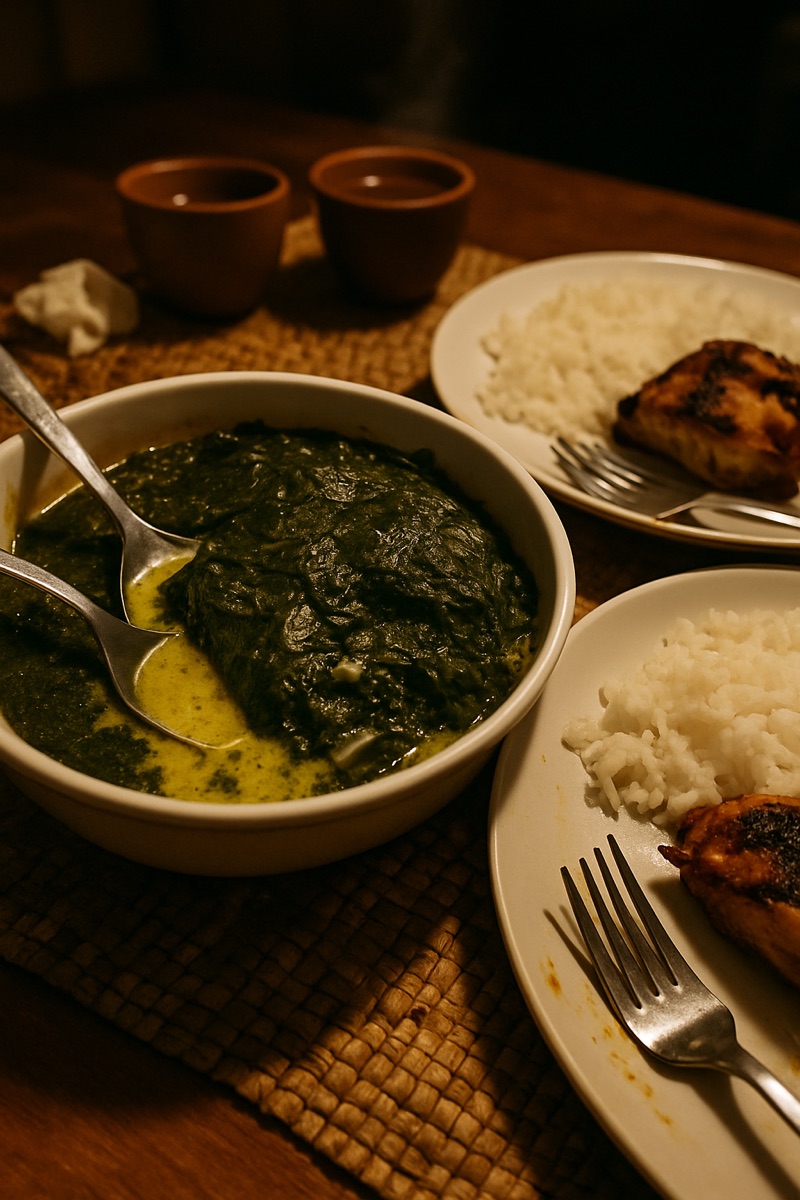
What Solomon Islands food is built on
Most Solomon Islanders live from fishing and farming, so fish, coconut, cassava, sweet potato, taro and fruit make up the everyday diet. Fish is the staple meat, and whatever meat is cooked is served with sweet potato, rice, taro, cassava or taro leaves. Cooks bake, boil and fry, and still use the motu: food wrapped in banana or taro leaves and cooked over heated stones.
Outside contact left its mark. Wikipedia credits the Spanish with bringing cattle, Asian and Indian traders with spices, vegetables and fruit, and the British with their own habits; breadfruit is older, brought by Lapita seafarers. Wikivoyage adds that the food differs little from that of other South Pacific islands and that in country shops you often find only canned meat and tuna. There is no official national dish, though poi is the one most often cited.
Taro, cassava and nut puddings
- Poi — Cooked taro root mashed on a wooden board with a pestle of basalt, coral or wood until smooth, then left to ferment until it turns tangy. It is served as a side with fish, chicken or pork, or thinned into a porridge, and appears at every kind of celebration.
- Cassava pudding — Grated cassava mixed with coconut cream and baked until firm and slightly chewy. A sweetened version is a dessert for weddings and religious holidays; a savoury one, without sugar, goes next to fish or meat. The grated cassava is squeezed hard in a cloth before baking, and the pudding only firms up once it is completely cold, so it is cut into squares cold.
- Tapioca pudding — Pearl cassava, or tapioca, cooked like a pudding and served frequently at holidays. Bananas and other fruit are sometimes wrapped in pearl cassava and served with whipped cream or caramel.
- Ngali nut pudding — Ngali nuts (*Canarium indicum*) combined with taro into a sticky pudding that is usually eaten with meat or seafood rather than as a dessert. The nut matters well beyond the plate: owning ngali trees is a measure of wealth in traditional society, and the kernels are also eaten raw, roasted or ground into a paste. The annual ngali harvest, which peaks in September and October, is said to mark the start of the islands' calendar year.
Leaves in coconut milk
- Palusami — Young taro leaves stacked into a cup, filled with coconut cream and onion, wrapped and baked for hours in the motu or a home oven until the parcel turns dark and soft. Long cooking is essential: raw taro leaf scratches the throat.
- Slippery cabbage in coconut milk — The leaves of aibika, the local slippery cabbage, cooked in fresh coconut milk with onion, tomato and chilli until soft and silky. It is the everyday green. In villages it is cooked without a stove: stones heated in the fire are dropped into the pot. A a similar cabbage and coconut soup is made with chunks of vegetables, sometimes with fish broth or seafood.
Fish, noodles and breadfruit
- Motu — The earth-oven meal: fish, root crops and meat wrapped in banana or taro leaves and cooked over heated stones. It is how puddings and palusami are traditionally baked.
- Chili Taiyo noodles — Noodles with chilli, tomato, onion and tuna, often the canned Taiyo brand that gives the dish its name; fresh tuna is used when it is available. It is a common lunch or dinner, and Wikivoyage notes that local tuna, also one of the country's main exports, is often served with chillies and pasta or rice. Solbrew, the local beer, is brewed near the capital.
- Ulu (breadfruit) — Brought to the islands by Lapita seafarers, breadfruit can be served with almost any dish.
Cook Solomon Islands food at home
To see why poi is the dish most often named, read our article on the national dish of the Solomon Islands. Copper has full recipes for palusami, cassava pudding and slippery cabbage on our page about the food of the Solomon Islands, and the rest of the region is in our guide to Pacific Island food.
The Solomons share their root crops, sago and earth ovens with their Melanesian neighbours: compare with the traditional food of Papua New Guinea and the traditional food of Vanuatu.
The recipes
- Palusami🇸🇧 Solomon Islands · 1 hour and 45 minutes
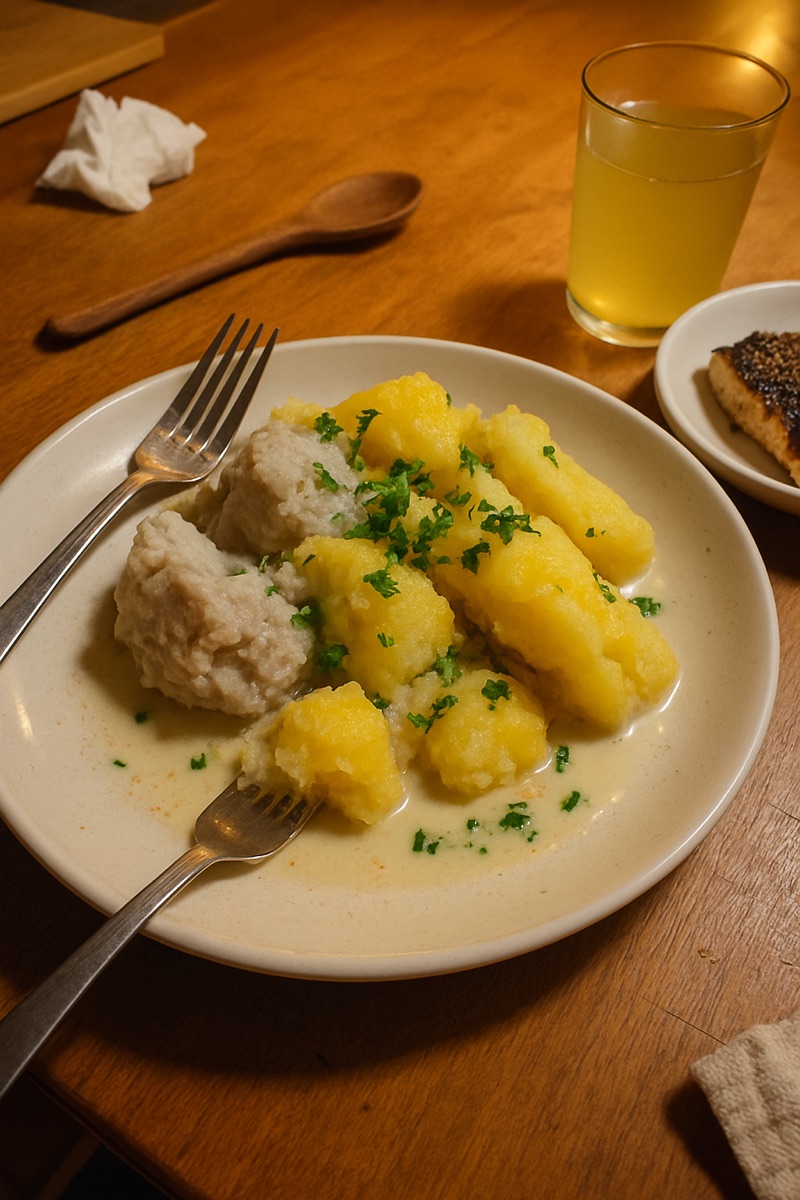 Cassava pudding🇸🇧 Solomon Islands · 5 hours and 30 minutes
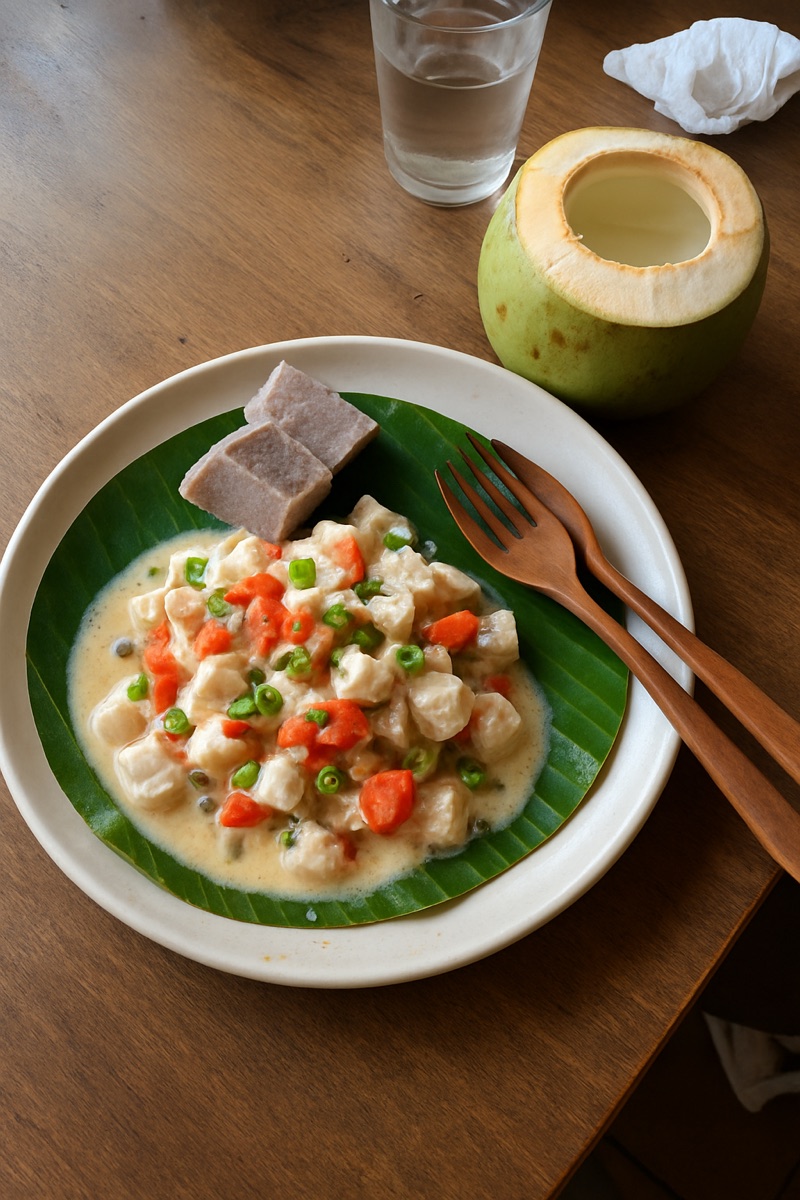 Slippery cabbage in coconut milk🇸🇧 Solomon Islands · 35 minutes
Questions people ask
What is the most popular food in the Solomon Islands?
Fish with root crops is the everyday meal. Poi, pounded and fermented taro, is the dish most often cited as national, and cassava pudding and palusami are the classics of celebrations.
What is the national dish of the Solomon Islands?
There is no official one, but poi, cooked taro pounded into a paste and fermented, is the dish most often named by food references.
Is Solomon Islands food spicy?
Mostly not. Traditional dishes rely on coconut milk, taro and fish; chilli appears in modern dishes such as chili Taiyo noodles and in slippery cabbage.
What is a motu?
A motu is the Solomon Islands earth oven: food wrapped in banana or taro leaves and cooked over heated stones, used for puddings, palusami, fish and meat.
What are ngali nuts?
Ngali nuts come from the Canarium indicum tree, native to Melanesia. They are eaten raw or roasted, ground into a paste, or cooked with taro into a pudding, and owning the trees is a sign of wealth.
Keep reading
- What is the national dish of the Solomon Islands?
- Traditional food of Fiji: 11 dishes to know
- Traditional food of Kiribati: 12 dishes to know
- Traditional food of the Marshall Islands: 12 dishes to know
- Traditional food of Micronesia: 14 dishes to know
- Traditional food of Nauru: 9 dishes to know