 COPPER
Traditional food of Vanuatu: 12 dishes to know
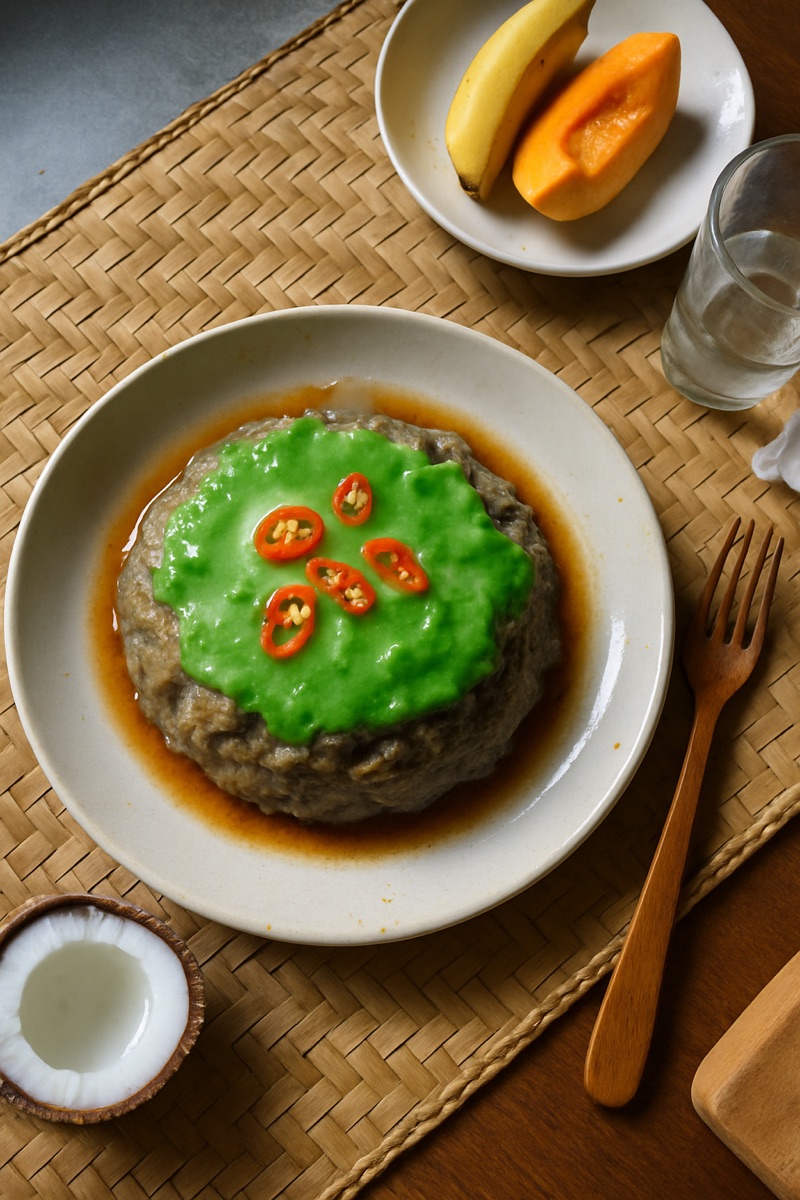
Vanuatu's food, *aelan kakae* in Bislama, is built on yam, taro, cassava, banana and coconut, with fish from the reef and pork for feasts. Most of it is cooked on hot stones or steamed, and little is fried. The most emblematic dishes are laplap, the national dish, its rolled cousin tuluk, simboro and the feast parcel bunia.
What Vanuatu food is built on
In Bislama, island food is *aelan kakae*. Its base is yam, taro, banana, coconut, sugarcane, tropical nuts, greens, pigs, fowl and seafood, and most families grow nearly all of it in their gardens; rice and tinned fish are the bought luxuries. Papaya, pineapple, mango, plantain and sweet potato are plentiful most of the year. Coconut milk and cream flavour many dishes, and food is cooked on hot stones, boiled or steamed rather than fried.
The pig is a sacred animal, eaten at important feasts and thought to have arrived with older migrations such as the Lapita people. Cattle came with European colonists and now feed a growing export trade. During the joint French-British colonial period, settlers from Vietnam, Wallis and Futuna, Fiji, China, New Zealand and Australia gathered in Port Vila and Luganville, and their food stayed. Laplap is named as the national dish by every major reference, though no law declares it. The word is Bislama, and the dish is old enough to appear in legend: chief Roymata is said to owe his name to a failed laplap, *mata* meaning badly cooked.
Laplap and the earth-oven puddings
- Laplap — Grated yam, banana, cassava or taro mixed with coconut milk and salt, wrapped in banana leaves and baked in an earth oven or on hot volcanic stones until it sets into a dense cake. Pork, chicken, beef or flying fox can go on top, and market stalls sell it by the piece with toppings such as chicken, beef, octopus or fried fish. Each island has its own style. Laplap is traditionally women's work and takes several hours, and at big occasions it is served on carved wooden dishes. At food markets a portion costs about 200 vatu.
- Laplap sosor — The Malekula technique. A glowing hot volcanic stone is set in the centre of the raw pudding with chicken wings, onion and tomato on top, coconut milk is squeezed over and the parcel is baked. Then the stone is lifted out and the hollow is filled with more coconut milk as a dipping sauce.
- Tuluk — Laplap rolled into a cylinder around a meat filling. Wikivoyage compares the taste to a sausage roll; it is sold warm at markets from foam boxes.
- Simboro — A steamed roll of grated banana, cassava, yam, taro or flour, wrapped in leaves and covered in coconut milk. It is the version without meat, and like laplap it is sold ready-wrapped at markets.
- Bunia — The feast dish, also spelled *bunya*: fish or meat, vegetables and coconut milk bundled in banana leaves and steamed with hot stones or in an underground oven for several hours. It is close to the bougna of neighbouring New Caledonia.
Fish, crab, beef and flying fox
- Tuna kokoda — The Pacific raw fish: tuna cured in lime juice until opaque, drained, then mixed with coconut cream, onion, tomato and chilli. Coastal villages are known for skilled fishers, and reef fish, lobster, prawns and snapper, called *poulet fish*, are on most restaurant menus. Fishers who land deep-sea fish such as tuna, barracuda or marlin with traditional methods are celebrated for it.
- Coconut crab — The largest land crab in the world and a local delicacy. Its numbers have fallen so fast that many restaurants no longer serve it; it is protected in most areas, with a minimum legal size for the shell.
- Flying fox stew — Flying foxes, large fruit bats, are kept in cages and stewed on some islands. A few restaurants serve them as *civet de roussette*, a French-style red wine stew, which Wikivoyage describes as bony and gamey.
- Vanuatu beef — Cattle are naturally reared, without feedlots, and the beef is renowned across Melanesia. It is served as steak in Port Vila, or as a curry with taro boiled in coconut milk and island vegetables.
Town food and kava
Colonial-era migrants settled mostly in Port Vila and Luganville, which is where their food stayed. Tourism has since added Western and Asian restaurants, but chicken and chips, pizza and fried rice remain luxuries in a local diet. Markets and roadside stands sell island fruit cheaply: ambarella (*naus*), Pacific lychee (*nandao*), dragon plum (*nakatambol*) and the small, tart Vanuatu raspberry (*frombwas*, from the French *framboise*).
- Nems — Vietnamese spring rolls, here stuffed with minced beef and deep-fried, a legacy of the Vietnamese community that settled during the colonial period. They are sold alongside French bread in Port Vila and Luganville.
- Gateau huit — A fried doughnut shaped like the number 8, another snack from the colonial-era mix of cultures.
- Kava — Made from the root of *Piper methysticum* and drunk at dusk before dinner in the *nakamal*, mostly by men but increasingly by women. Vanuatu kava is almost always made from the fresh root, which makes it much stronger than the dried, powdered kava of other islands; the cheapest kind is nicknamed *tudei*, two-day, after the length of its hangover. Tusker, a beer launched in 1989, has become a symbol of Vanuatu identity.
Cook Vanuatu food at home
Read how laplap is made, and where its name comes from, in our article on the national dish of Vanuatu. Copper has full recipes for laplap and tuna kokoda on our page about the food of Vanuatu, and the region's other kitchens are in our guide to Pacific Island food.
Compare with the traditional food of Fiji, where raw fish is called kokoda, and the traditional food of the Solomon Islands, with its taro and cassava puddings.
The recipes
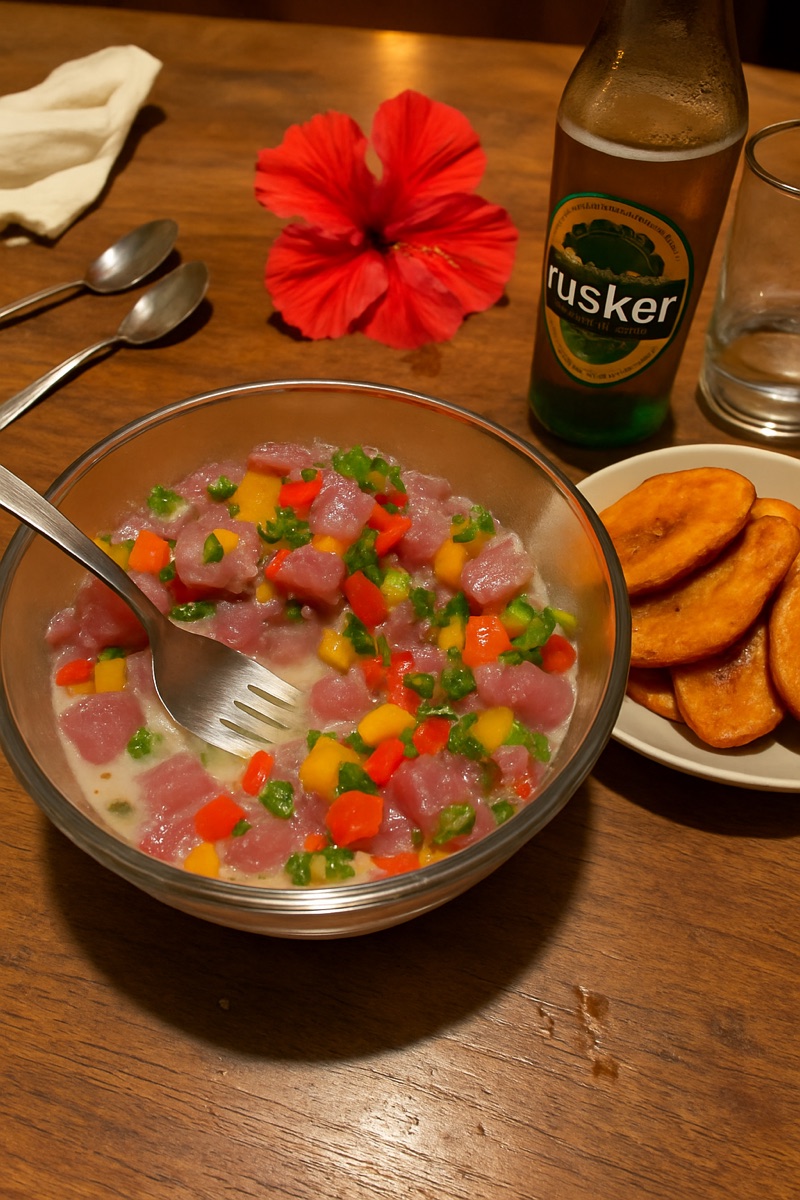 Tuna kokoda
Questions people ask
What is the most popular food in Vanuatu?
Laplap, a pudding of grated taro, yam, cassava or banana baked in coconut cream on hot stones, is the national dish and is sold at every food market, along with tuluk and simboro.
Is Vanuatu food spicy?
No. Traditional food is mild, based on root crops, coconut milk and seafood cooked on hot stones or steamed. Chilli appears mainly in raw fish and in town food.
What do people drink in Vanuatu?
Kava is the national drink, taken at dusk in the nakamal. Fresh juice, coconut water and Tusker, the local beer launched in 1989, are also common.
Can you eat coconut crab in Vanuatu?
It is a traditional delicacy, but the crab is protected in most areas because of falling numbers, and many restaurants have stopped serving it.
What is the difference between laplap and tuluk?
Laplap is a flat pudding baked in banana leaves with toppings; tuluk is the same paste rolled into a cylinder around a meat filling.
Keep reading
- What is the national dish of Vanuatu?
- Traditional food of Fiji: 11 dishes to know
- Traditional food of Kiribati: 12 dishes to know
- Traditional food of the Marshall Islands: 12 dishes to know
- Traditional food of Micronesia: 14 dishes to know
- Traditional food of Nauru: 9 dishes to know