 COPPER
Saksak recipe
A steamed banana-leaf parcel of sago pearls and ripe banana that turns translucent and chewy, served in warm coconut milk.
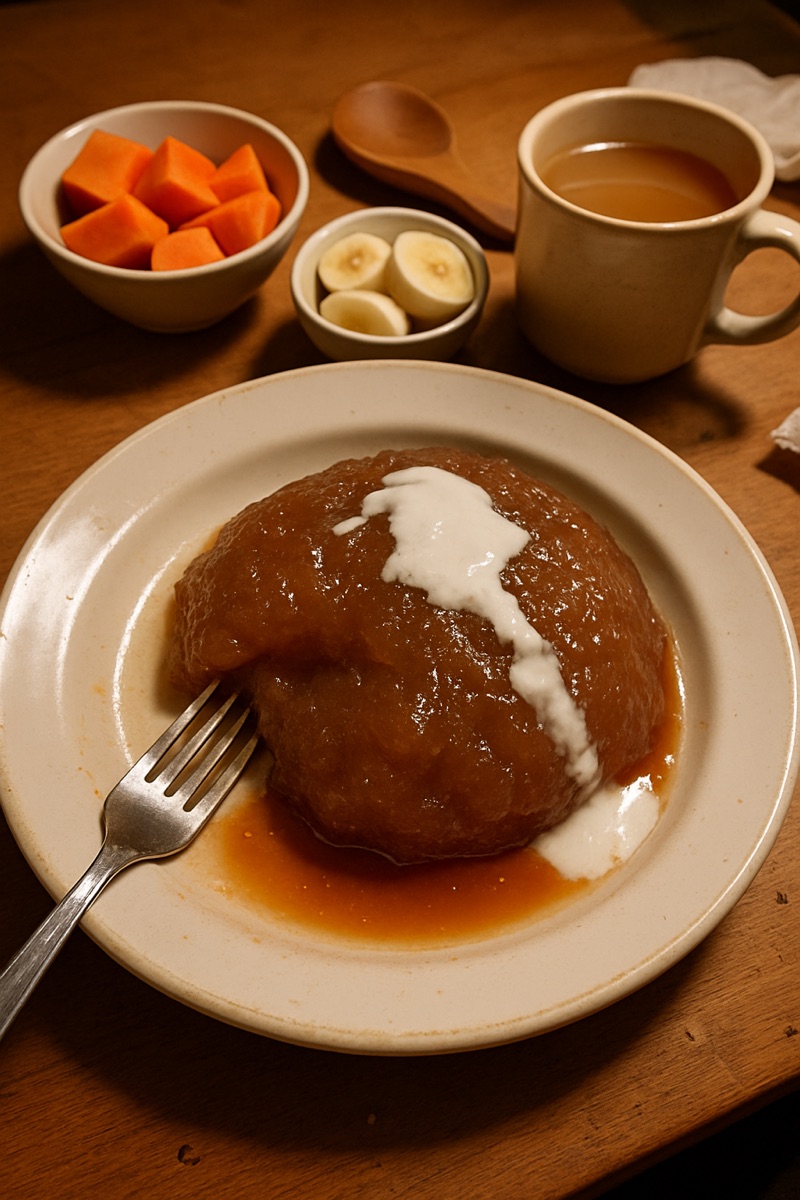
Ingredients
- 300 g sago pearls
- 3 ripe banana
- 400 ml coconut milk
- 6 banana leaves
- 2 tbsp sugar
- 1 pinch salt
How to make Saksak
- Cover 300 g of sago pearls with cold water, leave 10 minutes, then drain off the excess so they stay only damp.
- Mash 3 very ripe bananas and work them into the pearls by hand with 2 tbsp of sugar and a pinch of salt.
- Pass the banana leaves over a flame for a few seconds until they turn glossy and pliable.
- Spoon 3 to 4 tbsp of the mixture onto each leaf, fold into a tight rectangular parcel and tuck the ends under.
- Steam the parcels for 20 minutes. They are ready when the pearls are fully translucent with no white centre left.
- Warm 400 ml of coconut milk gently without letting it boil.
- Open the parcels and serve the dumplings in the hot coconut milk. In Papua New Guinea the starch is scraped fresh from a sago palm; sago or tapioca pearls are the equivalent available elsewhere.
What is Saksak?
Saksak is a traditional dish from Papua New Guinea, steamed, and takes about 50 minutes from start to finish. It is built around coconut milk and sago pearls. The recipe below uses 6 ingredients and is written out step by step.
How long does Saksak take?
At 50 minutes it is quicker than 83% of the 586 dishes in Copper's atlas. Copper's atlas has 35 dishes built on coconut milk. The method runs to 7 steps, the longest being 20 minutes.
Any tips for making Saksak?
Drain the soaked pearls so they stay only damp, and steam the parcels until the pearls are fully translucent with no white centre left.
How Saksak compares
Hard to find elsewhere: sago pearls (1) and ripe banana (1).
Cooked with the same thing elsewhere
Other traditional dishes built on coconut milk, from other countries.
- Nasi lemak 🇧🇳 Brunei Darussalam
- Satay 🇧🇳 Brunei Darussalam
- Moqueca 🇧🇷 Brazil
- Rice and beans 🇧🇿 Belize
- Callaloo soup 🇩🇲 Dominica
- Sancoche 🇩🇲 Dominica
Copper documents Papua New Guinea alongside 197 other countries. Every recipe is free to read, with the full ingredient list and every step.