 COPPER
What is the national dish of Tonga?
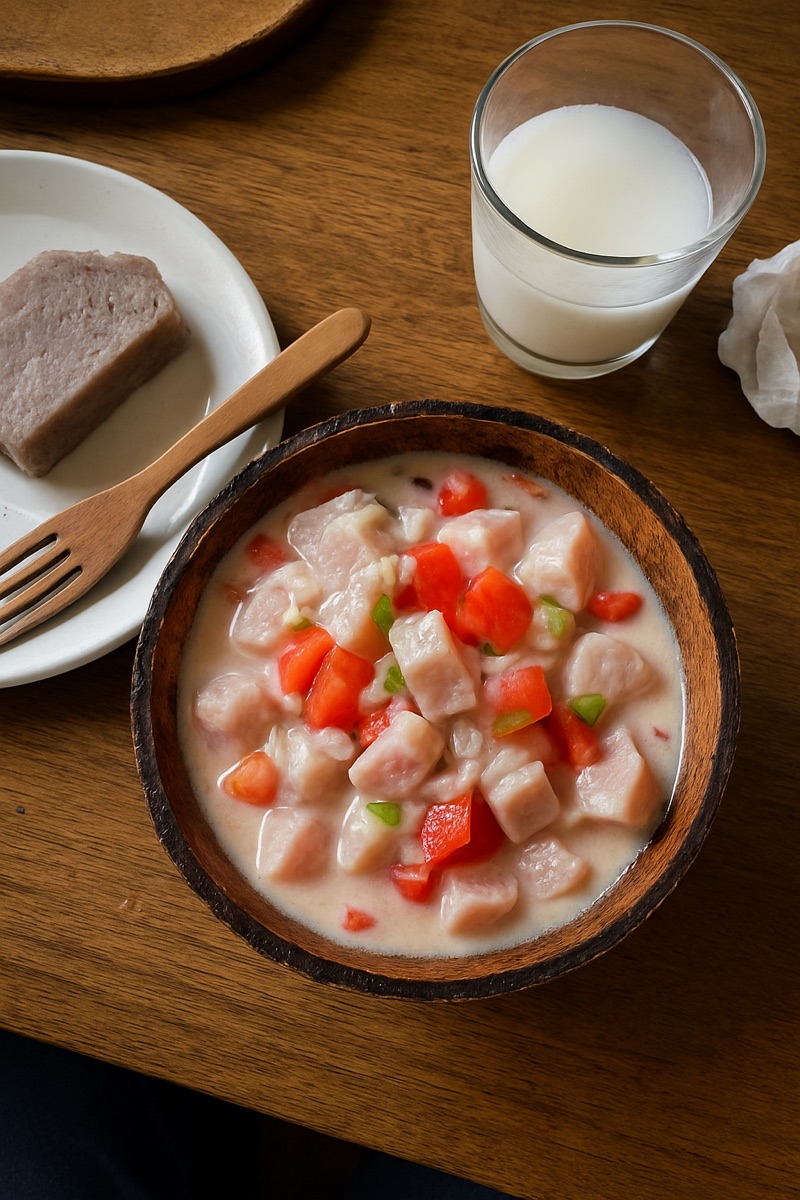
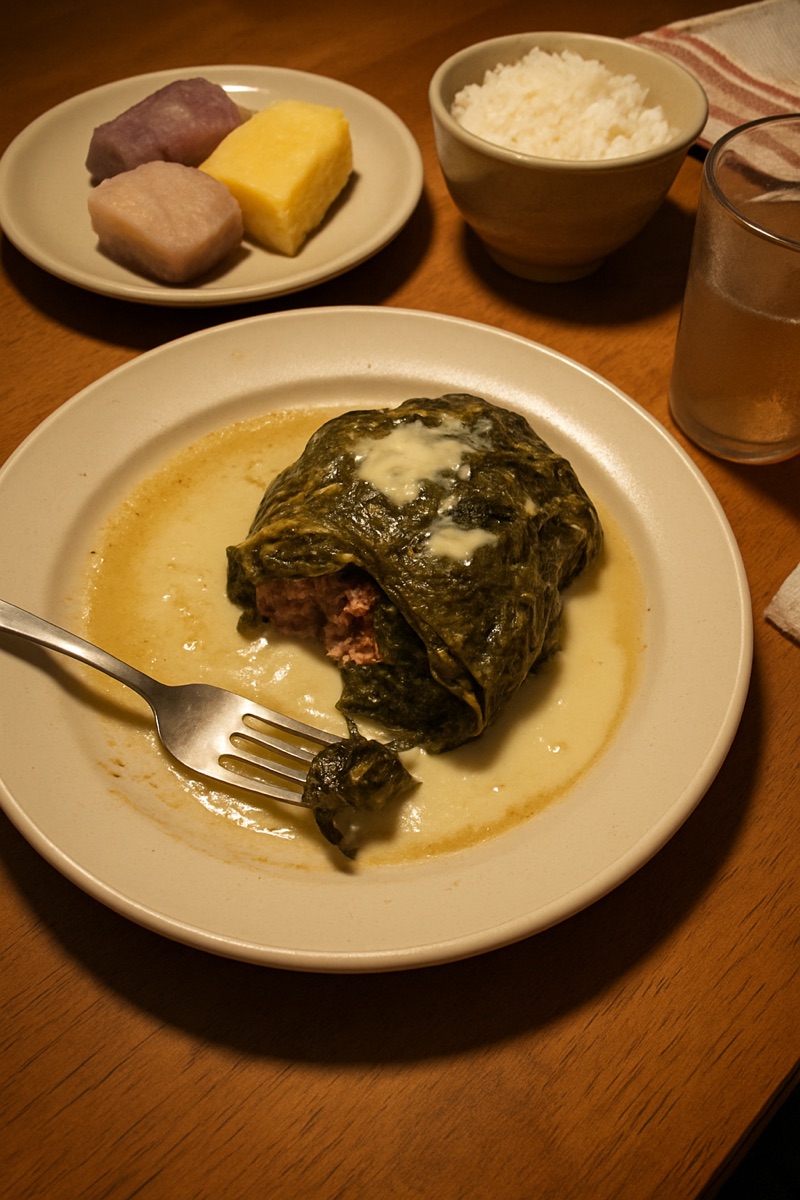
Tonga has no official national dish, and two dishes share the title. 'Ota 'ika is raw fish cured in lime or lemon juice, then mixed with coconut cream and diced vegetables; Wikipedia calls it Tonga's national dish. Lū pulu is corned beef, onion and coconut cream wrapped in taro leaves and baked in an earth oven, and it is also widely called the national dish.
Why two dishes claim the title
No law or royal decree names a Tongan national dish. Wikipedia's list of national dishes, and its article on the dish, give 'ota 'ika for Tonga. Other guides, such as Remitly's series on national dishes, give lū pulu. Wikivoyage settles nothing but tells visitors at a Tongan feast to try both: 'ota, the marinated raw fish, and lū, meat wrapped in taro leaves.
The two are not rivals in practice. One is a cold starter, the other the heavy centre of a feast, and both appear on the same table.
What is 'ota 'ika?
'Ota means raw and 'ika means fish. Tonga's version is essentially the same as the Samoan and Tahitian ones: raw fish is briefly marinated in citrus juice until the surface turns opaque, then mixed with coconut milk and diced vegetables.
Our Tongan 'ota 'ika recipe uses 500 g of very fresh tuna in 1 to 2 cm cubes, covered with the juice of four limes (about 120 ml) and refrigerated about an hour. Then come 240 ml of coconut cream and diced tomato, cucumber and onion, a teaspoon of salt and a pinch of pepper. It is served cold straight away.
The dish exists across the Pacific under other names: oka i'a in Samoa, kokoda in Fiji, ika mata in the Cook Islands, poisson cru in French Polynesia. See our article on the national dish of Fiji for the Fijian version.
What is lū pulu?
Lū means taro leaves, and pulu means bull, so beef. Lū are parcels of taro leaves around a filling: lū sipi with mutton or lamb, lū moa with chicken, lū ika with fish. Lū pulu, with corned beef, is the most common.
In our lū pulu recipe, 600 g of tinned corned beef is broken up with two chopped onions and pepper. No oil and no salt: the tin brings both. A handful goes into a cup of five or six young taro leaves, about 100 ml of thick coconut cream is poured over, and the leaves are gathered into a tight ball, then wrapped in banana leaf or foil.
Parcels were traditionally wrapped in banana leaves, but foil is more common today. In an umu, the wrapped food is laid on hot stones and covered for several hours; Remitly describes the covering as sand.
In Tonga the parcels go into the umu, an earth oven of hot stones, for most of an afternoon. In a kitchen they bake covered at 160 °C for 2 hours 30 to 3 hours, until the leaves are black-green and soft enough to spoon. Undercooked taro leaf itches in the throat, so they are never pulled out early.
Corned beef, mā and other Tongan staples
Canned corned beef arrived with Western contact and became a favourite, even in remote villages. Tongans eat it straight from the can, or mixed with coconut milk and onions, wrapped in leaves and baked in the earth oven, which is exactly lū pulu.
The earth oven itself used to be daily: in former times, the one main meal was cooked in it at midday. Tongans no longer light one every day, and pigs have always been kept for special occasions such as weddings, funerals and feasts.
A few more names to know:
- Feke: octopus cooked in coconut milk.
- Manioke: cassava, introduced in the 19th or early 20th century and now a common crop, though it lacks the prestige of the yam.
- Mā: taro, banana or breadfruit stored in pits until it ferments into a preserve, a very old way of keeping food.
- Mā pakupaku: the hard "ship's biscuit" crackers still sold across the South Pacific.
Other dishes to know from Tonga
'Otai is a drink of pulped watermelon mixed with coconut milk. Topai are doughboys, flour and water dropped into boiling water and served with a syrup of sugar and coconut milk, a common funeral food because they feed hundreds of mourners easily. Taro, yams, bananas, breadfruit and fish remain the base of the diet.
Both recipes are on our page about the food of Tonga, and the rest of the region is in our guide to Pacific Island food. Tonga's closest culinary cousin is Samoa: see the national dish of Samoa.
The recipes
 Lu pulu
Questions people ask
Is 'ota 'ika the same as ceviche?
It is similar: raw fish cured in citrus juice. The difference is the coconut milk or cream that 'ota 'ika is mixed with after the cure.
What does lū pulu mean?
Lū means taro leaves and pulu means bull, so beef. Lū pulu is corned beef baked in taro leaves with onion and coconut cream.
What is an umu?
The umu is the Tongan earth oven, a pit of hot stones where wrapped food such as lū pulu cooks for hours.
Can you make lū pulu without taro leaves?
Outside the Pacific, cooks use spinach, Swiss chard or other leafy greens in place of taro leaves, and foil in place of banana leaves.
What is 'otai?
'Otai is a Tongan drink of pulped watermelon mixed with coconut milk.
Keep reading
- Traditional food of Tonga: 12 dishes to know
- What is the national dish of Fiji?
- What is the national dish of Kiribati?
- What is the national dish of the Marshall Islands?
- What is the national dish of Micronesia?
- What is the national dish of Nauru?