 COPPER
Traditional food of Tonga: 12 dishes to know
Tongan food is built on taro, yam, banana, breadfruit, coconut and fish, with feasts cooked in the umu, an earth oven of hot stones. Taro leaves wrap meat and coconut cream, and canned corned beef became a favourite. The most emblematic dishes are 'ota 'ika, lū pulu, roast pig from the umu and topai.
What Tongan food is built on
The old Tongan diet was taro, yams, bananas, coconuts and fish baked in leaves, with shellfish served raw as a relish and the soft spoon meat of young coconuts much prized. There used to be one main meal, cooked in an earth oven at midday by the men; the leftovers hung in a basket from a tree and became the evening snack and the next day's breakfast. Pigs were cooked only for weddings, funerals and feasts for a visiting chief; chickens were also eaten, and surplus food could be stored, in effect, by feeding it to the pigs.
Western contact brought cassava (*manioke*), watermelons, citrus, onions, cabbage and tomatoes, then flour, sugar, canned corned beef, tinned fish and frozen mutton flaps from New Zealand. Today Tongans no longer light an earth oven every day; women do most daily cooking on open fires, wood stoves or gas, and meals follow a Western schedule. No law names a national dish: 'ota 'ika and lū pulu both claim the title.
Raw fish and lū parcels
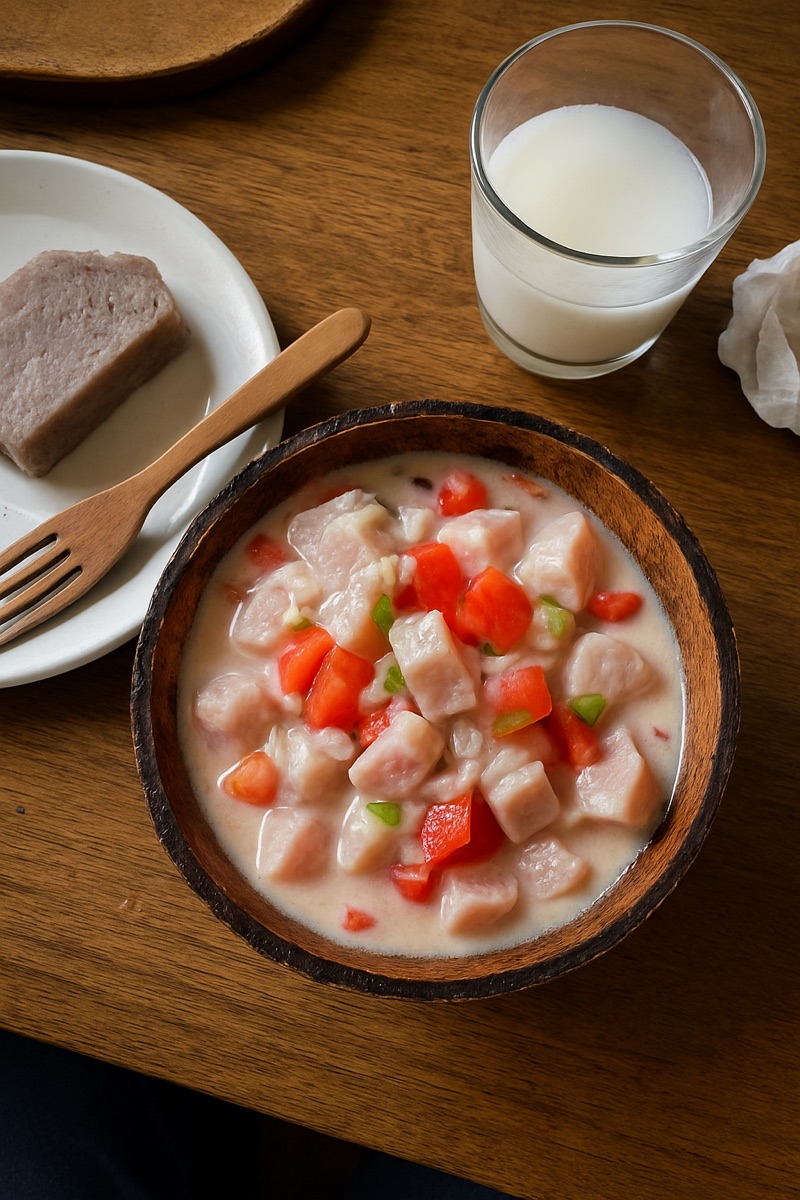
- 'Ota 'ika — 'Ota means raw and 'ika means fish. Cubes of raw fish, often tuna, are marinated in lime or lemon juice until the outside turns opaque, then mixed with coconut cream and diced tomato, cucumber and onion, and served cold as a starter. Tonga's version is essentially the same as those of Samoa and Tahiti.
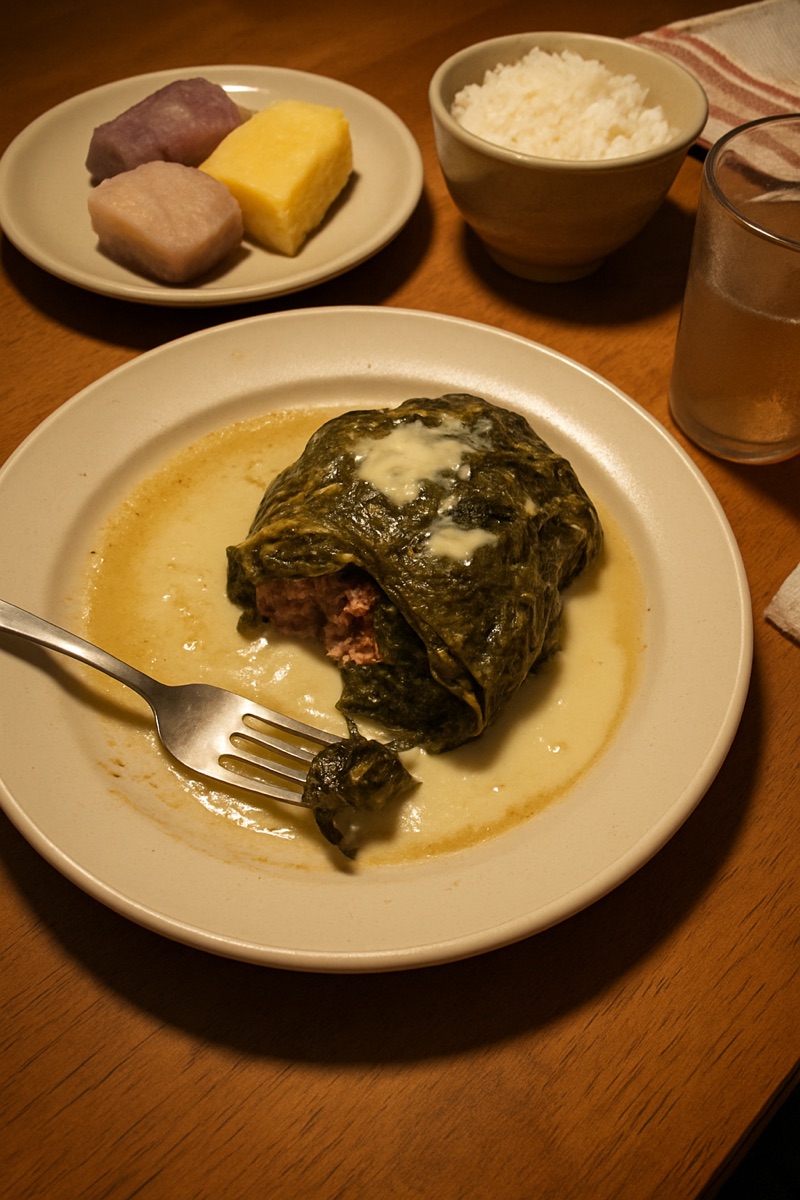
- Lū pulu — Lū are taro-leaf parcels and pulu means beef. Canned corned beef is mixed with coconut cream and onion into a thick paste, wrapped in taro leaves, then in banana leaves or more often foil, and baked in the umu for hours until the leaves melt into the filling. It is the most common lū, and the umu was traditionally covered over for several hours once the parcels were in.
- Lū sipi — The same parcel made with mutton or lamb, fresh, corned or canned, and cooked slowly in the umu. It is a dish for special occasions and holidays. Lū moa (chicken) and lū ika (fish) are made the same way, and today the filling is often mixed with coconut cream into a paste that dollops easily.
- Kapisi pulu — A variant that wraps the beef and coconut cream in cabbage (*kapisi*) leaves instead of taro leaves.
Feast meats and seafood
- Roast pig — Whole pigs, and sometimes lambs, are roasted over an open fire pit or cooked in the umu for weddings, funerals and other big occasions. Tour companies and hotels on Tongatapu and in Vava'u hold feasts with traditional dancing several nights a week, and Wikivoyage tells visitors to try both 'ota and lū there.
- Feke — Octopus cooked in coconut milk with onion, traditionally in the umu, and eaten as a main dish with yams or sweet potato.
- Lo'i hoosi — Horse meat braised in coconut milk. Horses arrived with British sailors to carry missionaries, and Tongans came to regard their meat as a delicacy.
- Mutton flaps — Cheap frozen lamb belly imported from New Zealand. With corned beef, it remains one of the firm favourites of modern Tongan cooking wherever there is refrigeration. Wikipedia links this influx of cheap, fatty meat to Tonga's very high rates of obesity, with over 90 percent of the population overweight.
Starches, sweets and drinks
- Mā — Taro, banana or breadfruit stored in pits until it ferments into a preserve, a very old way of keeping food.
- Topai — Doughboys: flour and water worked into a paste and dropped into boiling water, then served with a syrup of sugar and coconut milk. Because they feed hundreds easily, they are a common funeral food. In *faikakai topai* the dumplings are coated in a caramel-like coconut syrup and served at gatherings.
- 'Otai — Watermelon pulped and mixed with coconut milk, sometimes with pineapple, into a cooling drink that was once thick enough to eat with a spoon. Watermelons were introduced after Western contact and quickly became popular, eaten on their own or turned into 'otai.
- Kava — Formal kava drinking is an essential part of Tongan ceremony, while kava clubs play the social role that bars play elsewhere.
Yams, sharing and the modern table
The yam has always carried prestige. Before contact, Tongans built raised storehouses for yams, but they kept only a few months, so a household's real security was to share food generously with relatives and neighbours, who were then obliged to share in turn. Cassava, easier to grow, became common but never matched the yam's standing.
Imported flour and sugar now arrive in large quantities. Bakeries in the larger towns sell soft white loaves, local bottlers make sodas, and the hard ship's biscuits once carried on boats, *mā pakupaku* or dry meal, are still eaten. Tea and coffee are usually the cheapest kinds, served with tinned condensed milk. Farmers with large plots grow pumpkins and other vegetables for export. The local beer is Ikale.
Cook Tongan food at home
To see why 'ota 'ika and lū pulu share the title, read our article on the national dish of Tonga. Copper has full recipes for both on our page about the food of Tonga, and the other kitchens of the region are in our guide to Pacific Island food.
Tonga's closest culinary cousin is Samoa, with its palusami and oka i'a: see the traditional food of Samoa. For the earth-oven lovo and Indo-Fijian curries, see the traditional food of Fiji.
The recipes
 Lu pulu
Questions people ask
What is the most popular food in Tonga?
'Ota 'ika, raw fish in coconut cream, and lū pulu, corned beef baked in taro leaves, are the two dishes called national. At feasts, roast pig from the umu is the centrepiece.
What do people in Tonga eat for breakfast?
Traditionally, leftovers from the previous day's earth-oven meal, such as pork and yam. Today many Tongans have white bread and soda, or tea and coffee, usually served with tinned condensed milk.
Is Tongan food spicy?
No. Tongan dishes rely on coconut cream, onion, taro leaves and slow cooking in the umu rather than chilli or spices.
What is lū in Tonga?
Lū are parcels of taro leaves around a filling, baked with coconut cream: lū pulu with beef, lū sipi with lamb or mutton, lū moa with chicken and lū ika with fish.
What is 'otai?
'Otai is a Tongan drink of pulped watermelon mixed with coconut milk, sometimes with pineapple.
Keep reading
- What is the national dish of Tonga?
- Traditional food of Fiji: 11 dishes to know
- Traditional food of Kiribati: 12 dishes to know
- Traditional food of the Marshall Islands: 12 dishes to know
- Traditional food of Micronesia: 14 dishes to know
- Traditional food of Nauru: 9 dishes to know