 COPPER
What is the national dish of New Zealand?
New Zealand has no official national dish. Three foods are named most often: roast lamb, the Sunday roast of settler families; pavlova, a meringue dessert topped with cream and fruit, whose origin New Zealand disputes with Australia; and hāngī, the Māori method of steaming meat and vegetables in a pit over heated stones. Meat pies and fish and chips are the everyday contenders.
Why there is no single answer
No law, decree or government body has named a national dish for New Zealand. Lists of national dishes give several candidates at once: lamb, pavlova, the meat pie and the bacon and egg pie.
The country's food has two roots. Māori brought Polynesian cooking, including the earth oven. Nineteenth-century British settlers tried to reproduce the food of home, and for most of the twentieth century New Zealand cooking stayed close to British cooking. Each of the main candidates comes from one of these two sides.
Roast lamb: the settler Sunday roast
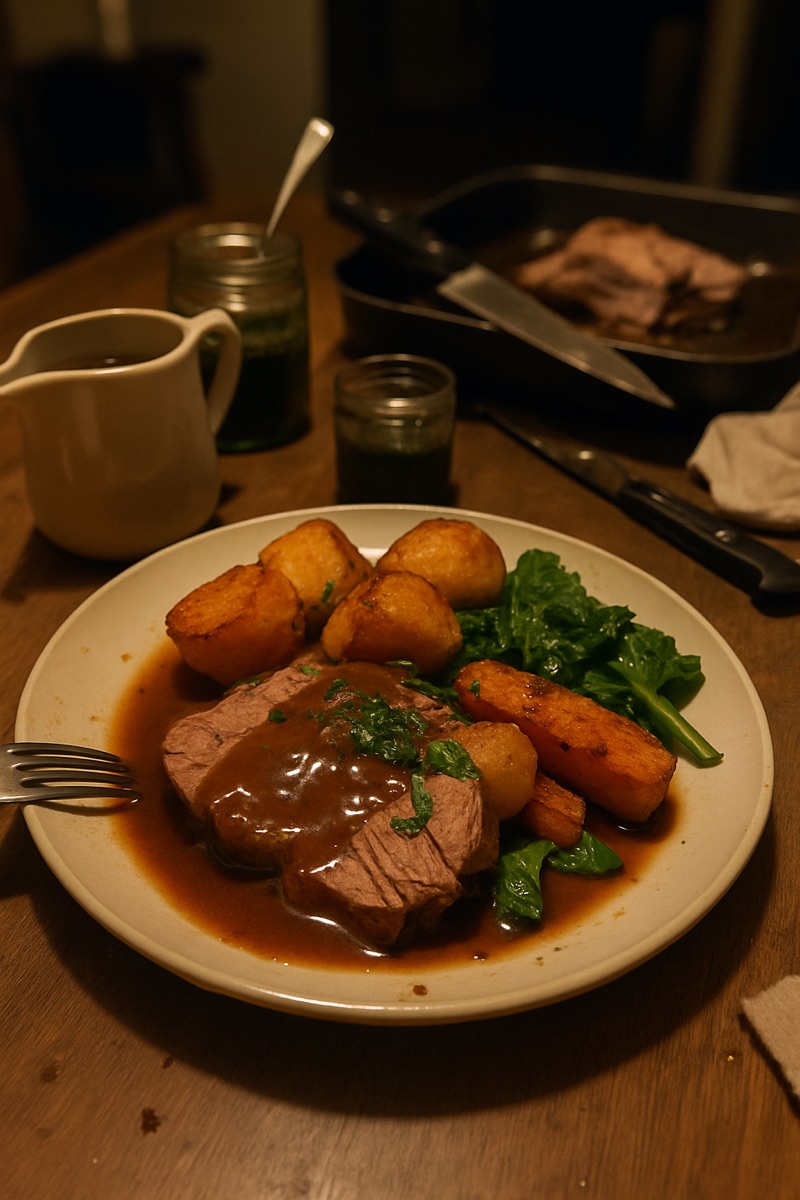
Meat was far more available to all social classes in New Zealand than in nineteenth-century Britain, where labourers ate it in small quantities. Settlers could have it at every meal, and lamb became the centre of the Sunday table. Until the mid-1980s many households also served colonial goose, a stuffed leg of lamb standing in for the goose of English recipes.
Our roast lamb recipe is the classic version: a 2 kg leg studded with garlic and rosemary, roasted 20 minutes at 200°C then 1 hour 10 minutes at 180°C over chunks of kumara, potato and pumpkin, rested 20 minutes, and served with pan gravy and a mint sauce of fresh mint, malt vinegar and sugar.
One honest caveat: the lamb roast is now more symbol than habit. In 2019 New Zealanders ate 3.6 kg of lamb and mutton per person, against 41.1 kg of chicken.
Pavlova: the dessert claimed by two countries
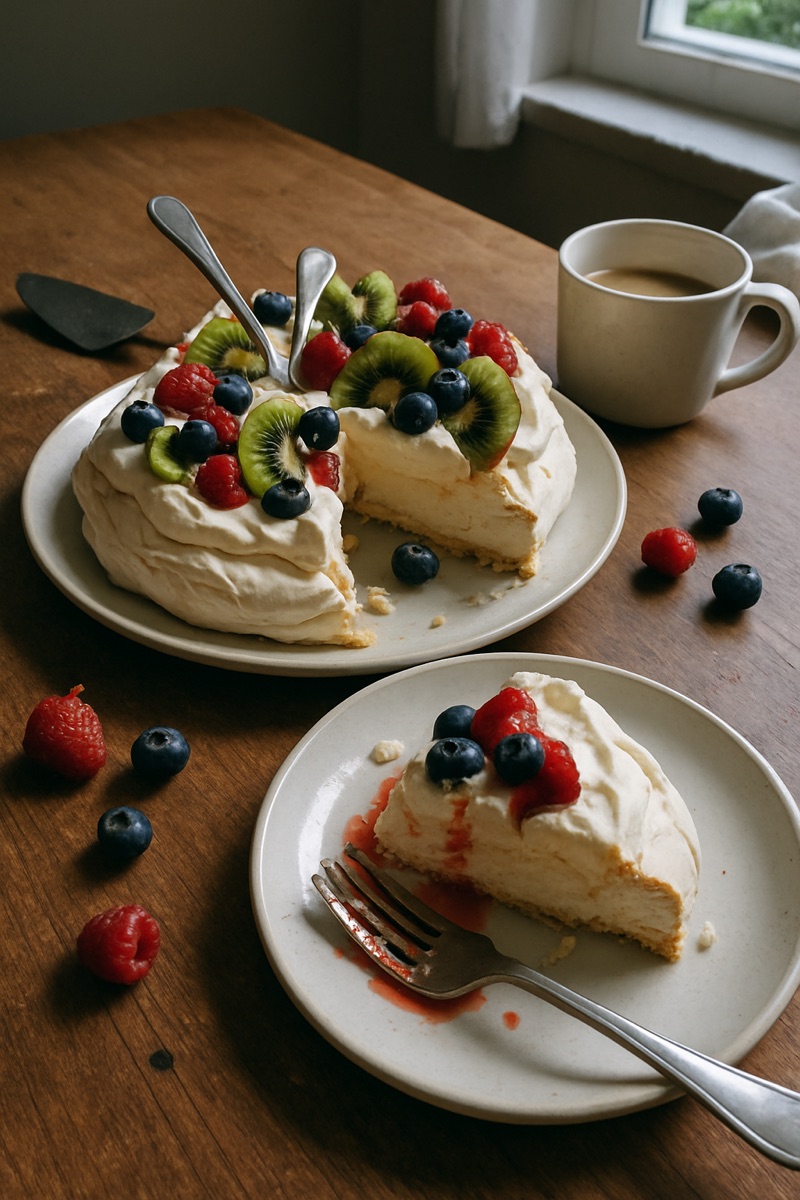
Pavlova is a disc of baked meringue with a crisp crust and a soft, marshmallow-like centre, topped with whipped cream and fruit. It was named after the Russian ballerina Anna Pavlova, who toured Australia and New Zealand in the 1920s.
Both countries claim it. Helen Leach, a culinary anthropologist at the University of Otago, found a New Zealand recipe for "pavlova cake" from 1929 and at least 21 pavlova recipes in New Zealand cookbooks by 1940, the year Australian recipes appeared. Australia points to the chef Bert Sachse, said to have created it at the Esplanade Hotel in Perth in 1935. Other researchers trace the meringue-cream-fruit idea back to Austro-Hungarian and German-American cakes, so neither side may be the true inventor.
In both countries it is a summer and celebration dessert, eaten above all at Christmas. New Zealand also holds pavlova records: Te Papa, the national museum, made a 45-metre "Pavzilla" in 1999, beaten in 2005 by a 64-metre "Pavkong" from students in Hawke's Bay.
Our pavlova recipe uses 4 egg whites, 200 g caster sugar, cornflour and white vinegar, baked an hour at 120°C and left to cool in the switched-off oven before the cream and berries go on.
Hāngī: the Māori earth oven
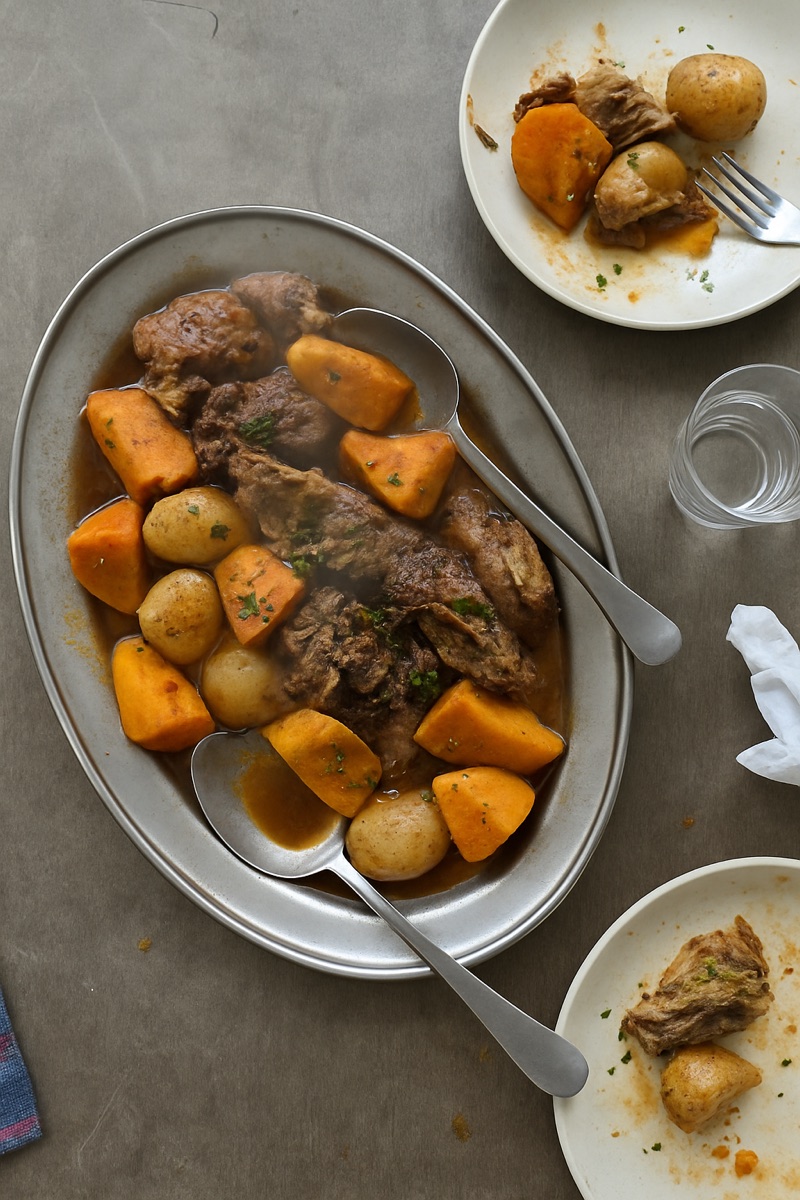
Hāngī is a cooking method rather than a recipe. A pit is dug 50 to 100 cm deep, and a fire of mānuka or kānuka logs heats volcanic stones, usually andesite or basalt, for 3 to 4 hours until they reach 600 to 700°C. The embers are raked out, wire baskets of food go onto the stones, wet sacks or cloths cover them, and earth seals the pit for 2 to 4 hours of steaming. Before metal wire arrived, food was laid between bark and large leaves; wire baskets and sacking took over in the nineteenth century.
Most large Māori gatherings still feature one, and the whole extended family (whānau) helps. Typical contents are:
- Meat: lamb, pork, chicken, sometimes seafood (kaimoana) on top.
- Vegetables: potato, kūmara (sweet potato), pumpkin, squash, taro and cabbage.
- Wrapping: puka, banana or cabbage leaves lining the baskets.
Other dishes to know from New Zealand
Our hāngī guide walks through laying one for a crowd, from the 70 cm pit to lifting the baskets. It cannot be reproduced in a kitchen oven: without the stones and the earth seal you get roast meat, not hāngī.
The everyday candidates are takeaways. The meat pie, filled with beef mince or steak, lamb or chicken, is the nearest thing New Zealand has to street food, sold in bakeries, dairies and petrol stations. Fish and chips has been the staple takeaway for decades; the first shop advertised in Invercargill in May 1903.
For the pavlova argument from the other side, read the national dish of Australia. The earth oven links New Zealand to the rest of Polynesia, which you can explore in our Pacific Island cooking guide, and every recipe is on our page about the food of New Zealand.
The recipes
- Lamb roast🇳🇿 New Zealand · 2 hours and 15 minutes
 Pavlova🇳🇿 New Zealand · 3 hours and 20 minutes
 Hangi🇳🇿 New Zealand · 8 hours
Questions people ask
Does New Zealand have an official national dish?
No. No law or government body has named one. Roast lamb, pavlova and hāngī are the dishes most often cited, with meat pies and fish and chips as everyday contenders.
Is pavlova from New Zealand or Australia?
It is disputed. The earliest New Zealand meringue pavlova recipe found by Helen Leach dates from 1929, while Australia credits a Perth chef in 1935. Some researchers think neither country invented it.
What is a hāngī?
A Māori way of cooking in an earth oven: meat and vegetables in baskets are steamed for several hours over stones heated in a pit and sealed under earth.
How do you pronounce hāngī and pavlova?
Hāngī is said HAH-ngee, with long vowels and a soft ng as in "sing". Pavlova is usually pav-LOH-vuh.
What is served with roast lamb in New Zealand?
Roast kumara, potato and pumpkin, pan gravy and mint sauce, as in our lamb roast.
Keep reading
- Traditional food of New Zealand: 14 dishes to know
- What is the national dish of Fiji?
- What is the national dish of Kiribati?
- What is the national dish of the Marshall Islands?
- What is the national dish of Micronesia?
- What is the national dish of Nauru?