 COPPER
Traditional food of New Zealand: 14 dishes to know
Traditional New Zealand food has two roots: Māori cooking from Polynesia, built on kūmara, seafood and the hāngī earth oven, and the British cooking of nineteenth-century settlers, with lamb, pies and home baking. The most emblematic dishes are roast lamb, pavlova, hāngī and the meat pie, alongside whitebait fritters, boil up, Anzac biscuits and hokey pokey ice cream.
What New Zealand food is built on
When Māori arrived from tropical Polynesia they brought kūmara, taro and yam, but only kūmara grew well far enough south and stored through the winter, so it became the staple. Birds and the sea filled the rest of the diet: kōura (freshwater crayfish), pāua, Bluff oysters and fernroot. Food was cooked in earth ovens, steamed over geothermal water or roasted, and preserved by smoking, drying or sealing in fat.
European settlers from the late eighteenth century brought pork and potatoes, which Māori adopted quickly, along with wheat, pumpkin, mutton and sugar. British settlers tried to reproduce the food of home, and for most of the twentieth century New Zealand cooking stayed close to British cooking, with one big difference: meat was within reach of every class, so they ate a great deal of it. A culture of sweet home baking grew around the Edmonds Cookery Book, which started as publicity for a baking powder company.
Since the 1970s Asian, Mediterranean and Pacific cooking has reshaped how New Zealanders eat, but the dishes below, often grouped as Kiwiana, are the ones still treated as the country's own.
Māori dishes
- Hāngī — A pit oven in which baskets of meat and root vegetables steam for hours on volcanic stones heated by a mānuka or kānuka fire, sealed under wet sacks and earth. Most large Māori gatherings still feature one, and our hāngī guide walks through laying one for a crowd.
- Boil up — A broth of pork meat and bones boiled with greens such as pūhā (sow thistle), watercress or cabbage, kūmara or potatoes, and flour dumplings called doughboys. It dates from the arrival of iron pots, pigs and potatoes in the nineteenth century and is regarded as distinctively Māori, as is the related pork and pūhā.
- Rēwena bread — Māori bread, a sourdough leavened with a fermented potato starter called a bug: boiled, mashed potatoes, often Māori potatoes, mixed with flour and sugar and left to ferment for one to several days. The starter gives the round loaf its sweet and sour taste. Fry bread, parāoa parai, is served at Matariki feasts and hākari on the marae.
- Pāua — The Māori name for New Zealand abalone, a taonga (treasure) prized as seafood. Traditionally it was eaten raw, smoked, cooked in a hāngī or preserved for winter; settler New Zealanders came to it later, first in soups and chowders. Recreational gathering is limited to five per person per day.
Roasts, pies and takeaways
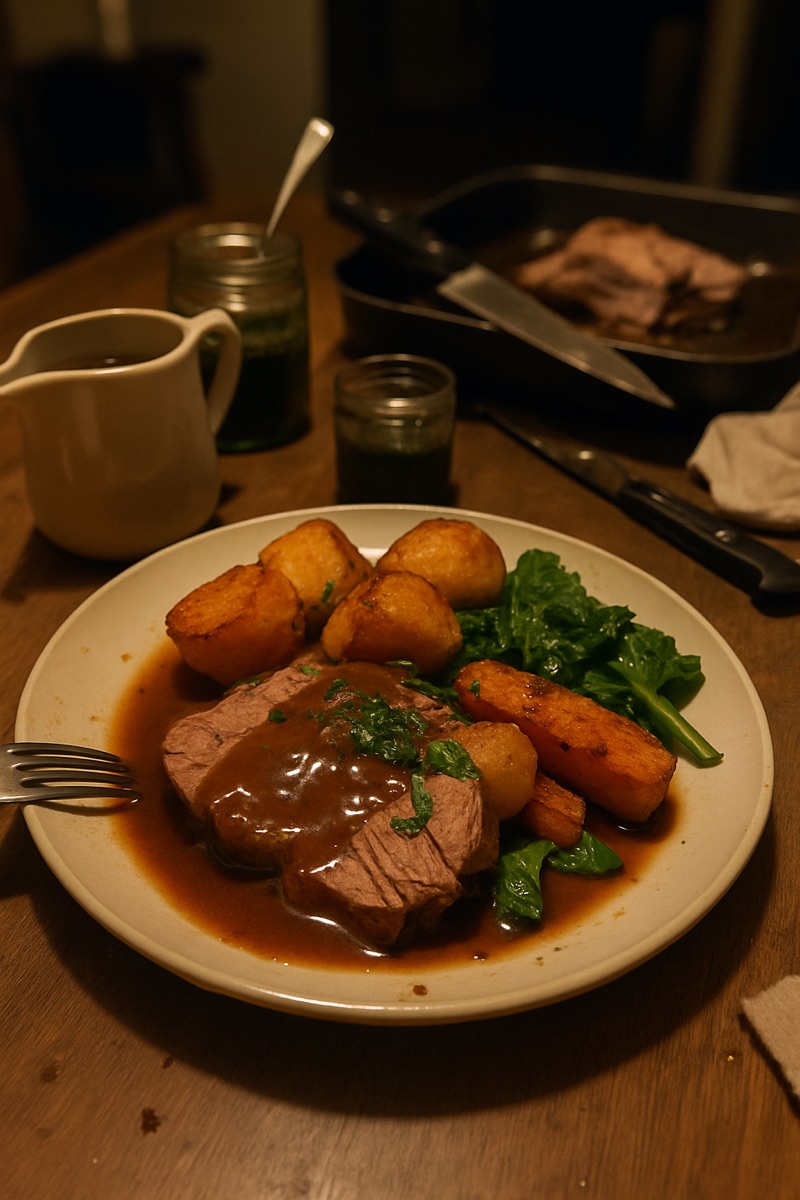
- Roast lamb — The Sunday roast of settler families: a leg of lamb with garlic and rosemary, roasted over kumara, potato and pumpkin and served with gravy and mint sauce. Until the mid-1980s many families served colonial goose, a boned leg of lamb stuffed to stand in for goose. Our roast lamb recipe gives the full method.
- Meat pie — A hand-sized pie of mince or steak in gravy, sometimes with cheese, sold in bakeries, dairies, supermarkets and petrol stations; it is the nearest thing New Zealand has to street food. A 2004 study found the average New Zealander eats 15 a year, and the Supreme Pie Awards have judged categories such as mince and cheese since 1997.
- Bacon and egg pie — Shortcrust pastry filled with bacon and whole eggs, sometimes with onion, peas, tomato or cheese, and sometimes served with tomato sauce. It appears with lamb, pavlova and the meat pie on lists of New Zealand's national dishes.
- Fish and chips — The staple takeaway meal for decades. The first fish and chip shop advertised in Invercargill in May 1903, run by a Cornishman opposite the provincial council building.
- Whitebait fritters — The tiny juveniles of five native galaxiid fish, netted at river mouths during a short legal season, bound in an omelette-like fritter; purists use only the egg white so it does not mask the fish. Whitebait was traditional Māori food and is now the most expensive fish on the market when in season.
Baking and desserts
- Pavlova — A disc of baked meringue with a crisp crust and a soft centre, topped with whipped cream and fruit and named after the ballerina Anna Pavlova. New Zealand and Australia both claim it, and it is the dessert of summer and Christmas; our pavlova recipe cools the meringue inside the switched-off oven.
- Anzac biscuits — Biscuits of rolled oats, flour, sugar, butter, golden syrup and baking soda, often with desiccated coconut, linked to the Australian and New Zealand Army Corps of the First World War. A 1919 New Zealand cookbook already printed "Anzac Crispies", and commercial versions may only be sold as biscuits, never as cookies.
- Afghans — Rich, unleavened biscuits of butter, flour, sugar, cocoa and cornflakes, topped with chocolate icing and half a walnut. A Timaru Herald recipe from 1934 is the earliest printed under the name.
- Lolly cake — An unbaked log of crushed malt biscuits, butter and sweetened condensed milk studded with soft, fruit-flavoured lollies, rolled in coconut, chilled and sliced. Sold in supermarkets, bakeries and dairies, it has been eaten since at least the 1940s.
- Hokey pokey ice cream — Vanilla ice cream with small lumps of honeycomb toffee, which New Zealanders call hokey pokey. It is the country's second most popular flavour after plain vanilla.
Across the Tasman and the Pacific
New Zealand and Australian food differ by little: the meat pie, pavlova and Anzac biscuits are claimed on both sides, and the arguments are part of the fun. Read about the traditional food of Australia for the other half of the story, and about the national dish of New Zealand for why lamb, pavlova and hāngī all compete for the title.
The earth oven, the kūmara and the taro tie Māori cooking to the rest of Polynesia, which you can explore in our guide to Pacific Island food.
Cook New Zealand food at home
Roast lamb and pavlova have full step-by-step recipes in Copper, and the hāngī is documented as it is actually laid. Find all three on our page about the food of New Zealand.
The recipes
- Lamb roast🇳🇿 New Zealand · 2 hours and 15 minutes
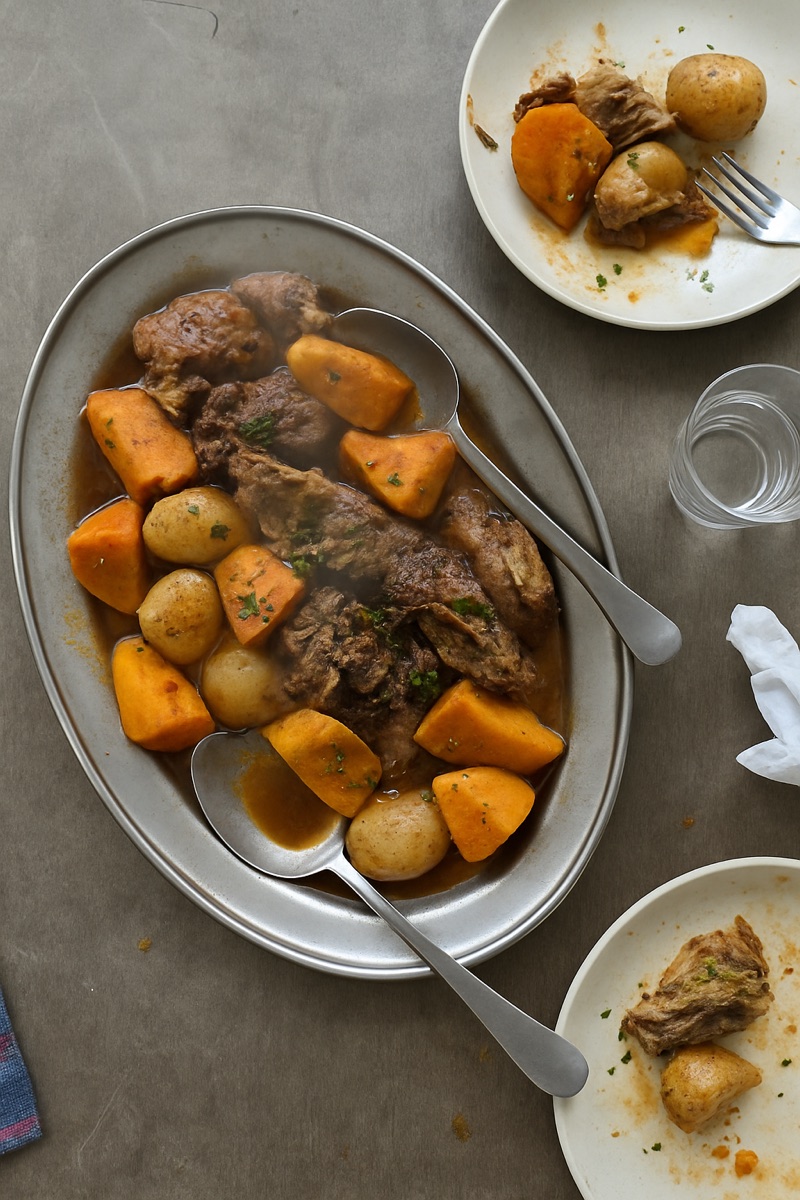 Hangi🇳🇿 New Zealand · 8 hours
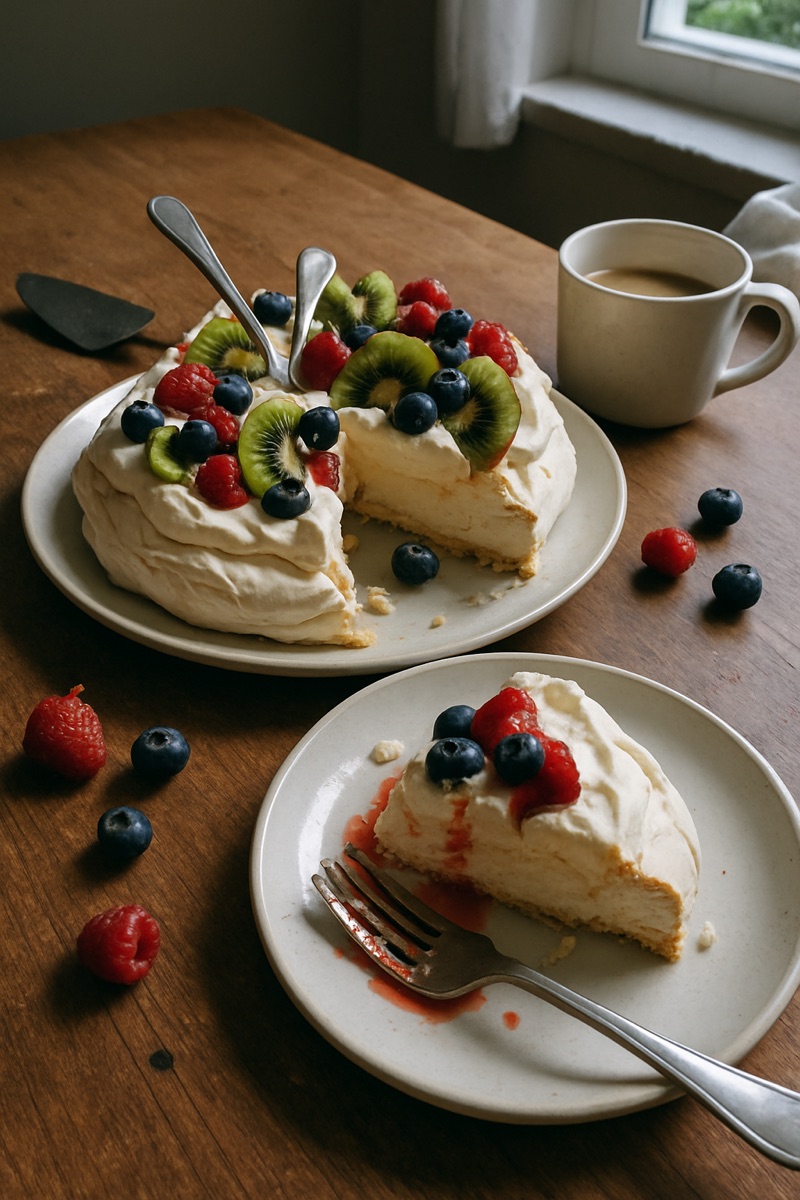 Pavlova🇳🇿 New Zealand · 3 hours and 20 minutes
Questions people ask
What is the most popular food in New Zealand?
Fish and chips and the meat pie are the everyday favourites, with the average New Zealander eating about 15 pies a year. Roast lamb, pavlova and hāngī are the dishes most often named as national foods.
What is a traditional Māori food?
Hāngī, boil up, pork and pūhā, rēwena bread and fry bread are the best-known Māori dishes today, along with seafood such as pāua and whitebait, and kūmara, the sweet potato Māori brought from Polynesia.
Is New Zealand food spicy?
No. Traditional New Zealand food is mild, built on roast meat, pies, seafood and baking. Spice comes from the Indian, Thai and other Asian cooking that became widespread after the 1980s.
What is the national dessert of New Zealand?
Pavlova is the dessert most associated with New Zealand, eaten above all at Christmas, and the Oxford English Dictionary credits it to New Zealand. Hokey pokey ice cream, Anzac biscuits and lolly cake are the other classics.
What do New Zealanders eat at a barbecue?
Grilled meat, traditionally cooked by the men, with salads. Guests usually bring beer or wine and sometimes the meat or a salad, in the same spirit as the bring a plate custom of New Zealand gatherings.
Keep reading
- What is the national dish of New Zealand?
- Traditional food of Fiji: 11 dishes to know
- Traditional food of Kiribati: 12 dishes to know
- Traditional food of the Marshall Islands: 12 dishes to know
- Traditional food of Micronesia: 14 dishes to know
- Traditional food of Nauru: 9 dishes to know