 COPPER
Traditional food of Palau: 14 dishes to know
Traditional Palauan food is built on taro, tapioca and fish, with coconut milk as the main seasoning and Japanese, American and Filipino dishes layered on top. Taro is boiled or stewed, tapioca is steamed or roasted, and fish is grilled, smoked, fried or eaten raw. The most emblematic dishes are the taro leaf soup demok, the crab dish ukaeb, steamed tapioca billum and fruit bat soup.
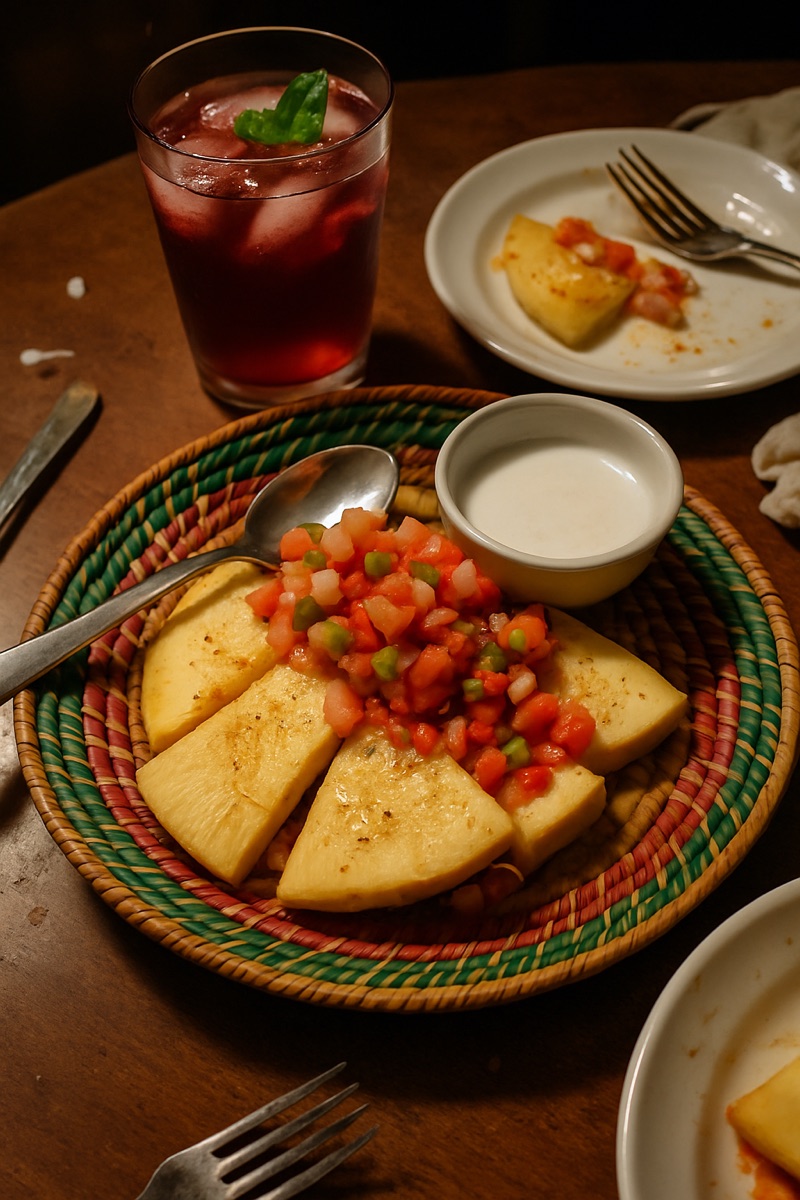
What Palauan food is built on
Palau's local staples are cassava (tapioca), taro, yams, fish and pork. Taro is the one Palauans hold dearest: its cultivation is tied to custom and sustainability, and taro is harvested exclusively by women. Pandan, pumpkin and tropical fruit complete the traditional larder. In shops and restaurants it is sold in thick slices, often eaten with fried fish.
On top of that base sits a mixed kitchen. Japanese influence shows in sashimi, sushi, tempura and cheap bento boxes sold at petrol stations and mini-marts; American influence in barbecue-sauced grilled pork and chicken and in Spam musubi, grilled Spam on sushi rice wrapped in nori; and the many Filipino workers on the islands explain dishes such as tinola, ulkoy and pichi-pichi. Restaurants in Koror add Indian, Chinese, Korean and Italian food to the mix.
Palau has no officially declared national dish: no law names one, and Wikipedia's list of national dishes has no entry for it. The Palau Visitors Authority does call demok the national soup, which is the closest thing to an official answer. We cover it in depth in our article on the national dish of Palau.
Taro and tapioca
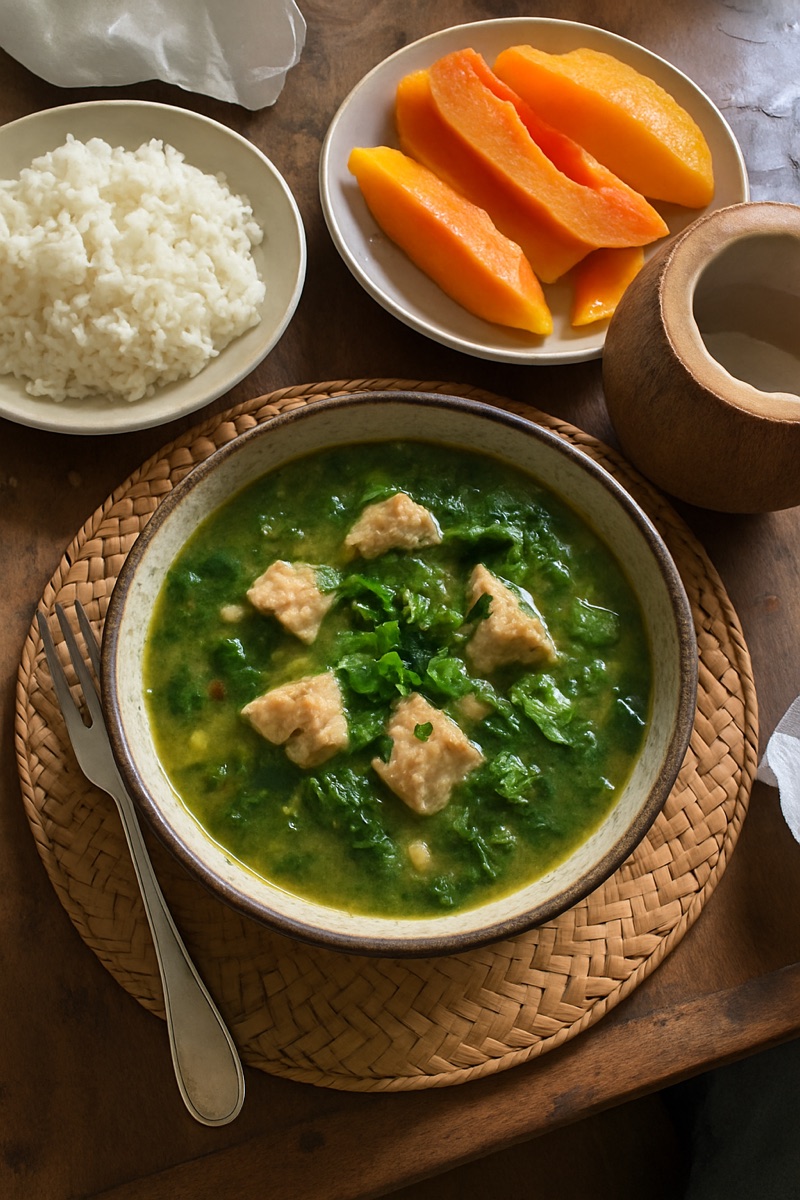
- Demok — Young taro leaves simmered in coconut milk until they collapse, sometimes with land crab, and thickened only by the starch the leaves release. Onion, fresh ginger and a green chilli are the usual seasonings, and the pot is kept at a gentle simmer so the coconut milk does not split. It is served hot at local eateries and small family-run places, with boiled taro, cassava or rice. Our demok recipe blanches the leaves first, and our slow-simmered taro leaf and crab stew cooks the crab in its shell for a darker sauce.
- Taro — Boiled and sliced thick, the everyday starch on Palauan plates and the usual partner for fried fish. Stores and restaurants sell several varieties. Taro soup appears among the island's specialties too.
- Billum — Tapioca, Palau's other great starch, shaped by hand to fit the palm, wrapped in ti leaves and steamed until golden. It shows how versatile tapioca is in Palauan cooking.
- Delul diokang — Grated tapioca cooked over a fire into small smoky pieces and served with a coconut dip.
Fish, crab and seafood
Palauans have a word, cheled, for all the seafood gathered but not yet cooked: clams, mud clams, mangrove clams, white wedge clams, sea cucumber and its intestine, chitons and trochus among them.
- Ukaeb — Minced crab meat mixed with coconut milk or cream and served in the crab's own shell. Palau's tourism authority calls it a favourite among locals.
- Fish — The main protein, caught by local fishermen and grilled, smoked or fried. Fish tempura, crumbed and deep-fried and served with mayonnaise, is a crowd-pleaser, and broiled fish seasoned with garlic and ginger and cooked in banana leaf is one of the local specialties.
- Poke — Raw fish, usually tuna, seasoned with sesame oil, sesame seeds, chilli and lemon and garnished with thin strands of seaweed. Palauans pronounce it po-kee.
- Fruit bat soup — Fruit bat meat cooked with coconut milk, fresh ginger, spices and root vegetables. It is the dish most visitors have heard of, a delicacy rather than daily food, and one that sits uneasily with changing dietary habits.
Dishes from the Philippines and Japan
- Tinola — Chicken soup with ginger, green papaya and chilli leaves, brought by Filipino workers and now one of Palau's hearty everyday dishes. Our Palauan tinola browns the chicken before any liquid and simmers it in rice washing water.
- Ulkoy — Crunchy deep-fried fritters of shrimp and squash, the Palauan name for the Filipino okoy. In the Philippines the batter is glutinous rice with small unshelled shrimp, and the fritters are dipped in a vinegar sauce and eaten for breakfast or as a snack.
- Tama — Small fried dough balls like doughnut holes, a modern go-to breakfast and snack on the island. Newer versions bring in other flavours, and the best known is banana: tama tuu, tuu being the Palauan word for banana. Locals pair it with a freshly brewed cup of coffee.
Desserts and drinks
Alongside the traditional drinks below, Palauans drink kava, made from the roots of the kava plant, an alcoholic drink from the sap of the coconut tree and the local Red Rooster beer. Chewing betel nut is a common social habit.
- Pichi-pichi — A Filipino dessert of steamed cassava balls with sugar, rolled in freshly grated coconut, often flavoured with pandan leaves and listed among the desserts Palauans eat.
- Delebdeb — Coconut juice with tender coconut meat, the traditional welcome drink and the usual way to cool off after a hot day.
- Ilaot — Coconut tree sap simmered into a dark, smoky syrup. It is poured over French toast and ice cream or used to sweeten coffee.
Where Palauans eat
Local food is easiest to find in markets, stores and small family-run restaurants rather than hotel dining rooms; demok in particular is a mom-and-pop dish. Bento boxes from petrol stations are the everyday quick lunch. Palauans also enjoy a few quirky pairings, such as fruit with Kool-Aid or kimchi with Kool-Aid, and the legal drinking age is 21.
Cook Palauan food at home
Three Palauan dishes have full step-by-step recipes in Copper: demok, the slow-simmered crab version and tinola. You will find them on our page about the food of Palau, and the neighbouring islands in our guide to Pacific Island food.
For where tinola and pichi-pichi come from, see the traditional food of the Philippines. For Palau's eastern neighbour, see the traditional food of Micronesia.
The recipes
 Bai
Bai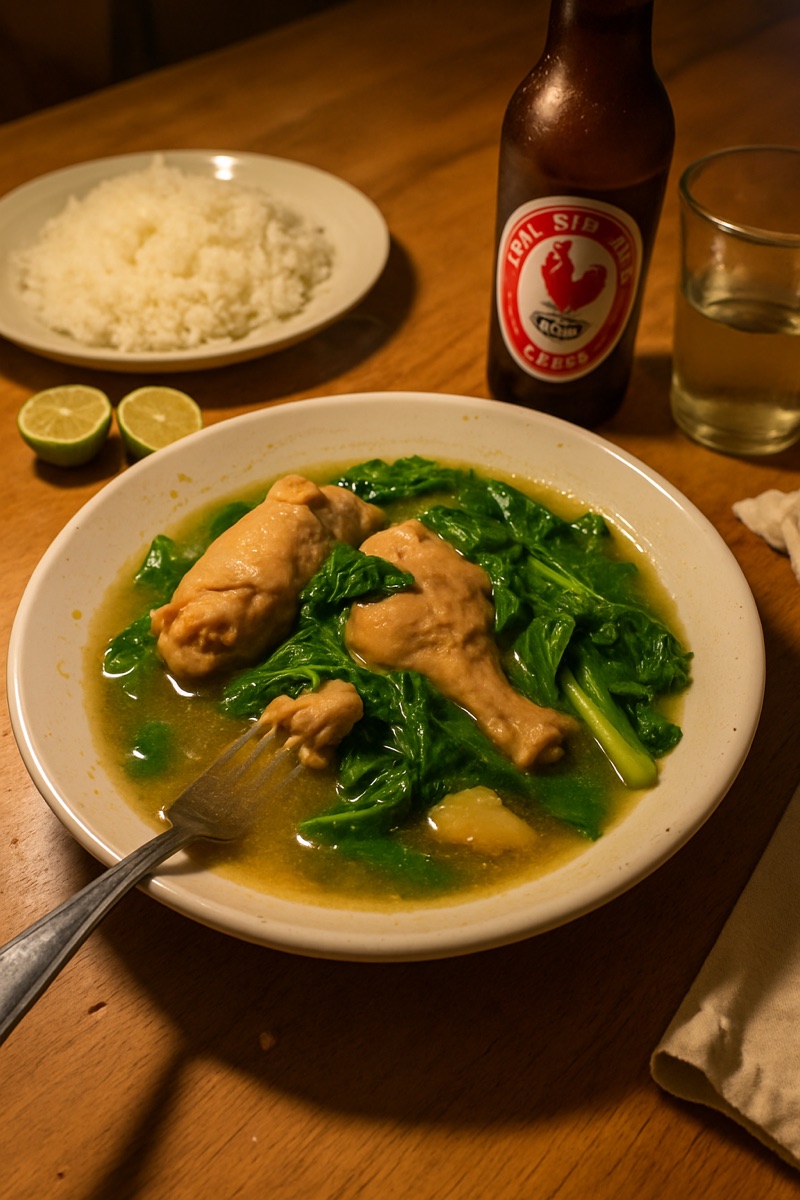 Tinola
Questions people ask
What is the most popular food in Palau?
Taro and fish. Taro is the staple Palauans hold dearest, and fish is the main protein, grilled, smoked, fried or eaten raw. Demok, the taro leaf and coconut soup, is the best-known local dish.
What do Palauans eat for breakfast?
Tama, small fried dough balls, often in the banana version tama tuu, are a go-to breakfast with coffee. Bento boxes from petrol stations are another everyday option.
Do people in Palau really eat fruit bat soup?
Yes, but as a delicacy rather than an everyday dish. It combines fruit bat meat with coconut milk, ginger, spices and root vegetables.
Is Palauan food spicy?
Mostly not. Coconut milk and ginger set the tone; chilli appears in demok and poke but in small amounts.
What is ukaeb?
Ukaeb is minced crab meat with coconut milk or cream, served in the crab's own shell, a Palauan favourite.
Keep reading
- What is the national dish of Palau?
- Traditional food of Fiji: 11 dishes to know
- Traditional food of Kiribati: 12 dishes to know
- Traditional food of the Marshall Islands: 12 dishes to know
- Traditional food of Micronesia: 14 dishes to know
- Traditional food of Nauru: 9 dishes to know