 COPPER
What is the national dish of Palau?
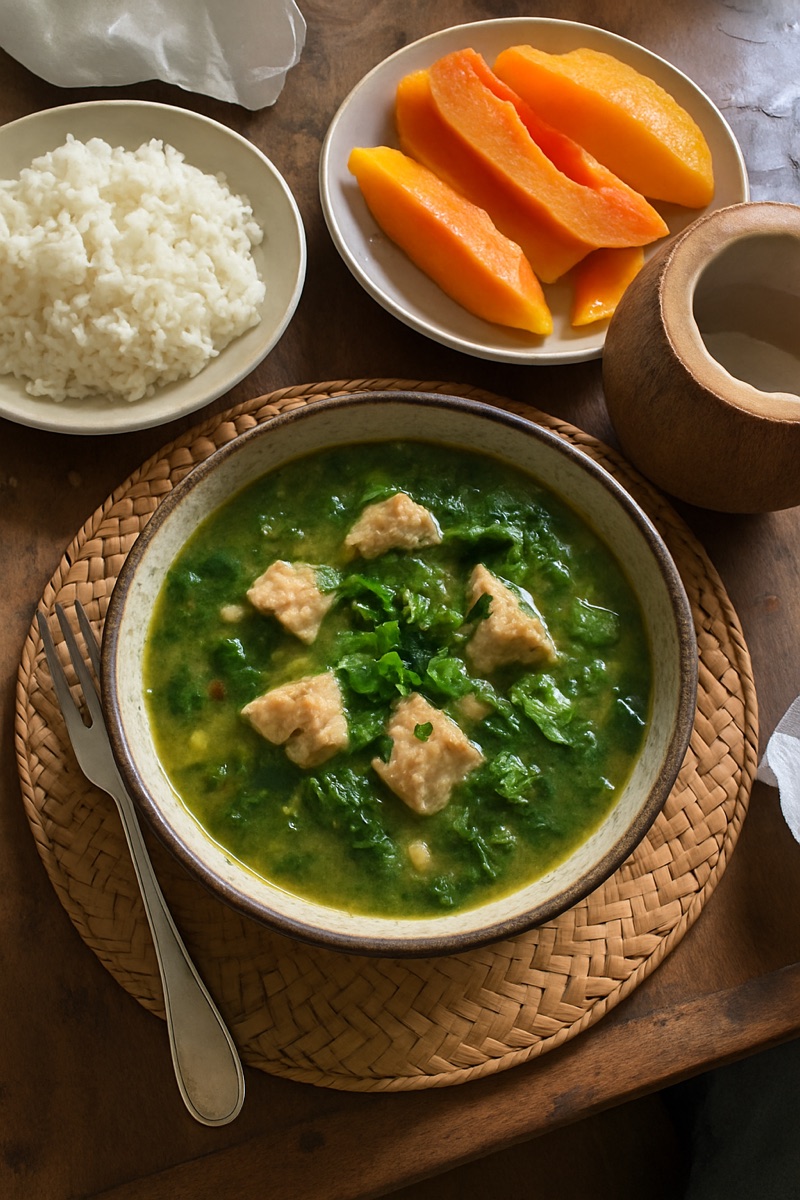
Palau has no officially declared national dish, but demok is the one Palau's tourism authority calls the national soup: young taro leaves simmered in coconut milk until they collapse, often with land crab, and served hot with boiled taro, cassava or rice. Fruit bat soup, also cited, is described as a Palauan delicacy rather than an everyday dish.
What is demok?
Demok is a thick green soup. Pristine Paradise Palau, the site of the Palau Visitors Authority, describes it as dubbed the national soup of Palau: green taro leaves, rich coconut milk and, sometimes, land crab. You find it at local eateries and small family-run places.
Nothing is added to thicken it. The starch released by the taro leaves as they break down is enough to turn the coconut milk into a dark, creamy sauce. Onion, fresh ginger and a green chilli are the only seasonings besides salt. Wikipedia's list of national dishes has no entry for Palau, and no law or government statement names one, so demok's title rests on that description.
How demok is made
Our demok recipe uses 500 g of young taro leaves and two land crabs:
- Trim: strip the tough stems and thick central ribs from the leaves.
- Blanch: 5 minutes in boiling water, then throw that water away. It removes the crystals that sting the throat, so it is never skipped.
- Crab: steam the crabs 10 minutes and pick out about 250 g of meat.
- Base: sweat onion, 20 g of grated ginger and a green chilli in a splash of coconut milk.
- Simmer: add the leaves and 500 ml of coconut milk and cook gently 25 to 30 minutes, never at a hard boil, until the leaves collapse.
- Finish: stir in the crab and 1 teaspoon of salt, cook 5 minutes more, and serve hot with boiled taro, cassava or rice.
- No leaves, no demok: spinach is not a substitute. Look for fresh taro leaves in an Asian or Caribbean grocer.
Taro at the heart of Palauan food
Taro is the staple Palauans hold dearest. The Palau Visitors Authority describes its cultivation as a practice tied to custom and sustainability, and Palauan tradition gives taro harvesting to women. In shops and restaurants it is sold in thick slices, often eaten with fried fish.
Demok has more than one home version. Our slow-simmered taro leaf and crab stew cooks the crab with its shells in water with onion and ginger first, then adds the leaves uncovered and 600 ml of thick coconut milk, keeping it at a gentle simmer for at least 40 minutes in total, until the sauce is thick and dark green.
Crab appears elsewhere too. Ukaeb, a favourite with locals, is minced crab meat mixed with coconut milk and served in the crab's own shell.
Fruit bat soup and Palau's mixed kitchen
Fruit bat soup is the other dish people associate with Palau. It combines fruit bat meat with coconut milk, fresh ginger, spices and root vegetables, and Wikipedia describes it as a Palauan delicacy, not daily food.
Day to day, Palauan food mixes local cassava, taro, yam, fish and pork with Japanese, American and Filipino influences, the last because of the many Filipino workers on the islands. Bento boxes are sold at petrol stations, sashimi and tempura are everywhere, and the specialties local guides list include ulkoy, crunchy fritters of shrimp and squash, and pichi-pichi for dessert.
Tinola is one of them: chicken browned with ginger, garlic and onion, splashed with fish sauce, simmered in rice washing water, then finished with green papaya and chilli leaves. For its home country, see the national dish of the Philippines.
Other dishes to know from Palau
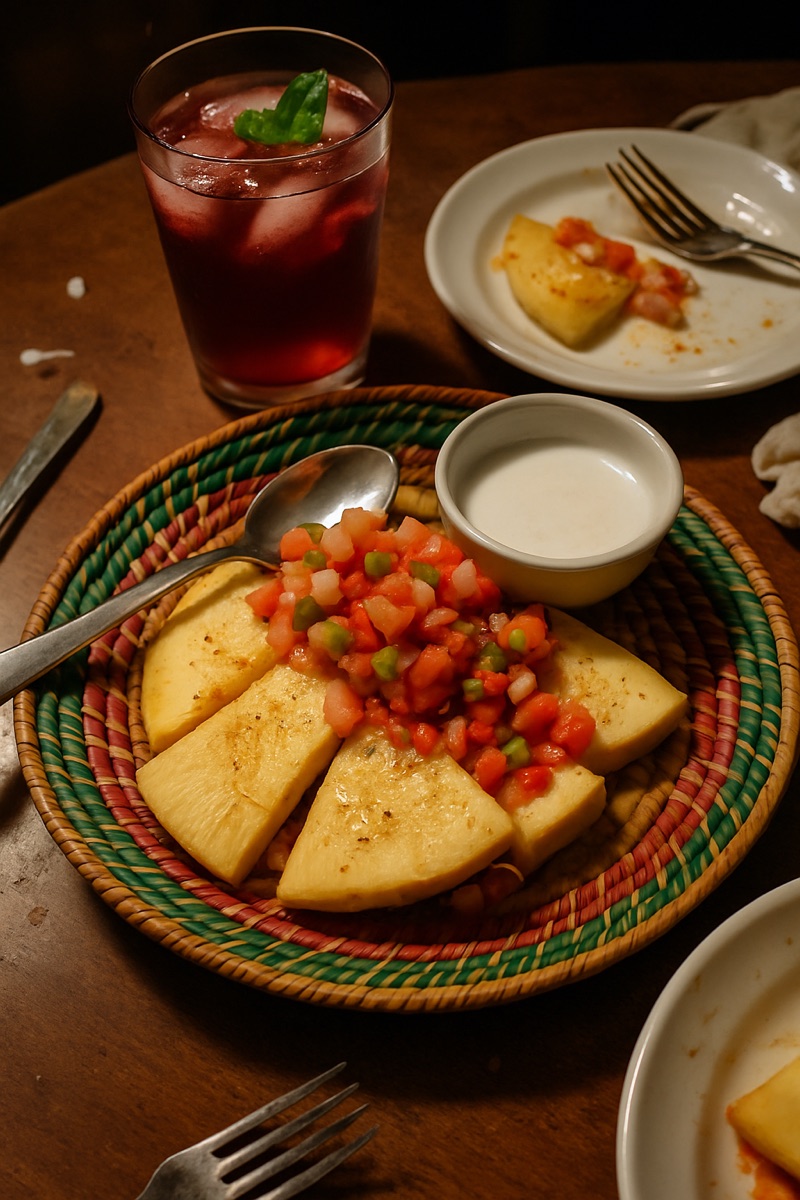
Tapioca is the other great starch. Billum is tapioca shaped by hand, wrapped in ti leaves and steamed, and delul diokang is grated tapioca cooked over a fire and served with a coconut dip. Cheled is the Palauan word for all the seafood gathered but not yet cooked, from clams and sea cucumber to trochus.
Fish is the main protein, grilled, smoked or fried; fish tempura, crumbed and deep-fried and served with mayonnaise, is a crowd-pleaser, and poke made with raw tuna, sesame oil and chilli is common. For breakfast, many Palauans eat tama, small fried dough balls like doughnut holes; the banana version is tama tuu, tuu being the Palauan word for banana.
To drink, delebdeb, made from coconut juice and tender coconut meat, is the traditional welcome, and ilaot, coconut tree sap simmered into a dark syrup, sweetens coffee and desserts.
You will find all three recipes on our page about the food of Palau, the wider picture in our guide to Pacific Island food, and Palau's neighbour in our article on the national dish of Micronesia.
The recipes
 Bai
Bai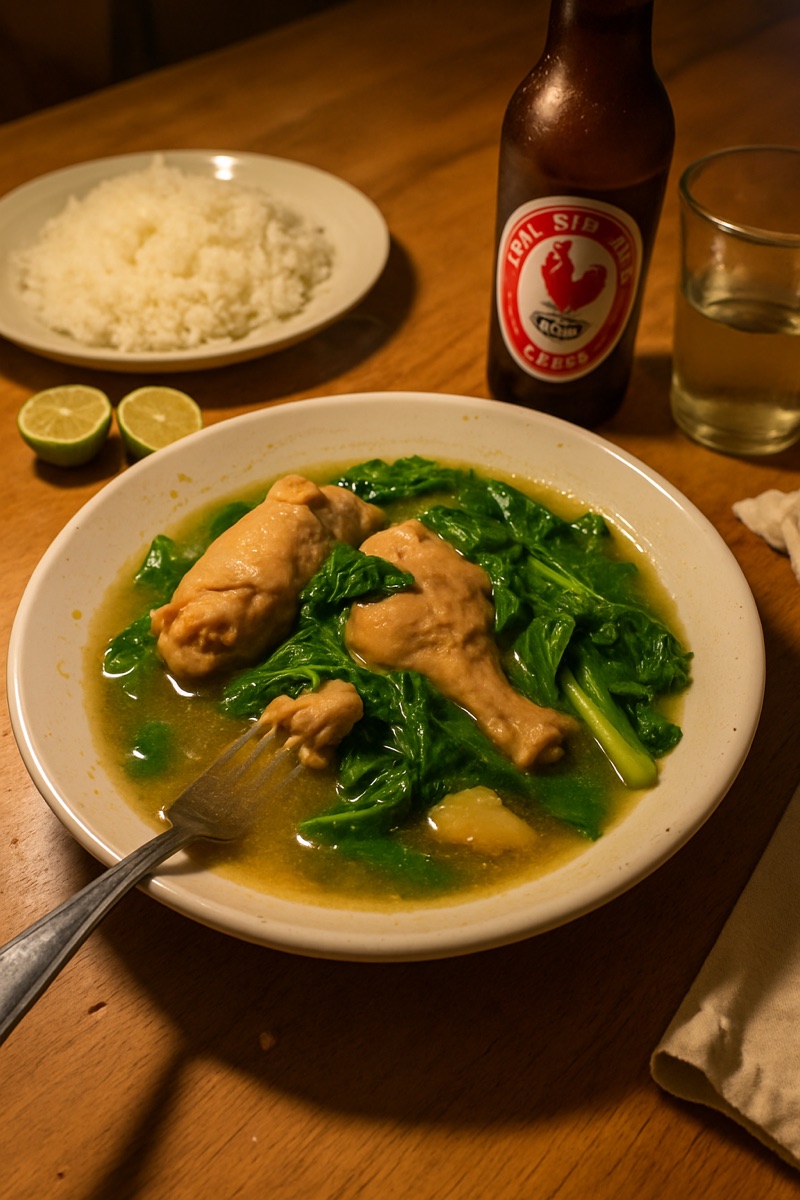 Tinola
Questions people ask
Does Palau have an official national dish?
No. Palau has no officially declared national dish, but the Palau Visitors Authority calls demok, a taro leaf and coconut milk soup, the national soup.
What is demok made of?
Young taro leaves, coconut milk and often land crab, with onion, ginger and chilli. The leaves' own starch thickens it.
Do people in Palau eat fruit bat soup?
Yes, but as a delicacy rather than an everyday dish. It is made with fruit bat meat, coconut milk, ginger, spices and root vegetables.
What is served with demok?
Boiled taro, cassava or rice.
What is ukaeb?
Ukaeb is a Palauan favourite of minced crab meat with coconut milk, served in individual crab shells.
Keep reading
- Traditional food of Palau: 14 dishes to know
- What is the national dish of Fiji?
- What is the national dish of Kiribati?
- What is the national dish of the Marshall Islands?
- What is the national dish of Micronesia?
- What is the national dish of Nauru?