 COPPER
Traditional food of Ireland: 12 dishes to know
Traditional Irish food is built on potatoes, butter and buttermilk, oats, pork, lamb and the fish of a long coastline, cooked slowly in one pot or on a griddle. Bread is leavened with baking soda rather than yeast. The dishes to know first are Irish stew, colcannon, boxty and soda bread, followed by the full Irish breakfast.
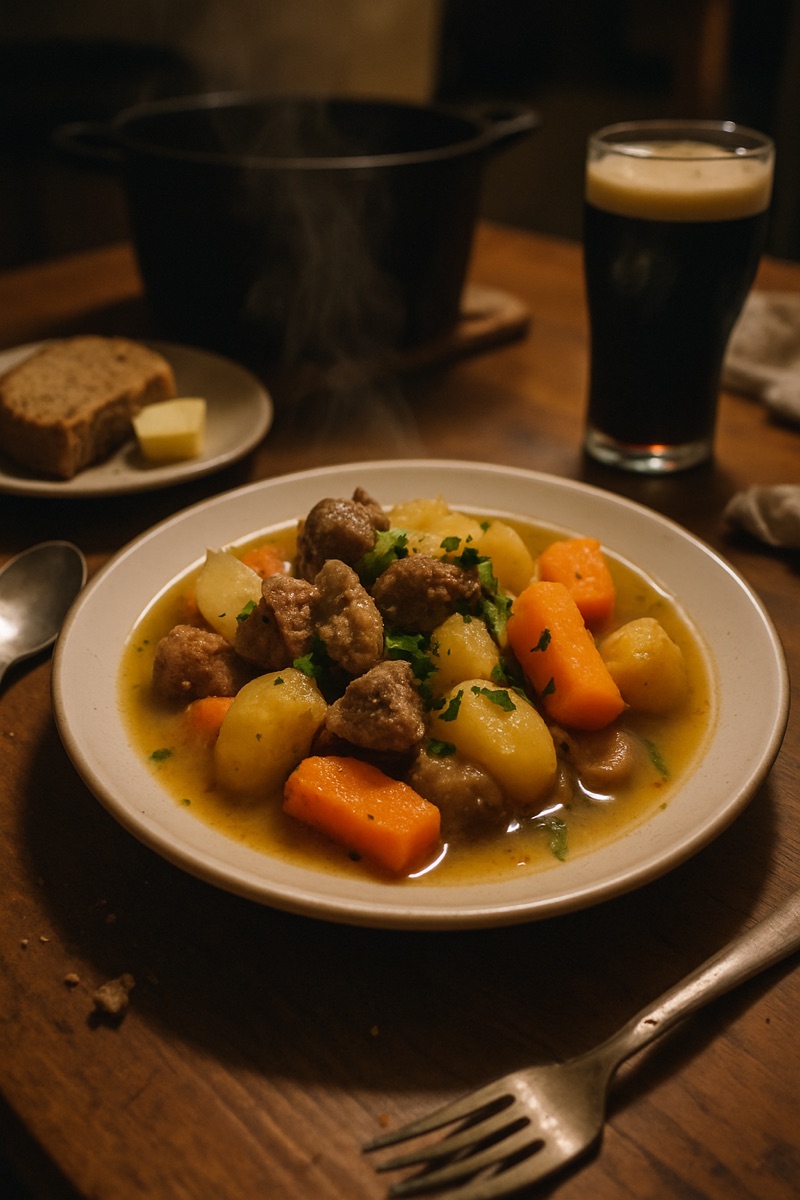
What Irish food is built on
Irish cooking grew out of a farming country with cool, wet weather: potatoes, oats and barley, cabbage, onions, dairy, pigs and sheep. Butter, buttermilk and cheese run through almost every dish, and pork is eaten as bacon, sausages and puddings. Around the coast, salmon, trout, mackerel, cod, mussels, oysters, lobster and crab are part of everyday food, and smoked salmon is one of the country's best-known products.
Two techniques shape most of the dishes: slow simmering in a single pot, and griddle cooking. Irish flour was traditionally too soft to rise well with yeast, so bread was leavened with baking soda and buttermilk and often baked flat on a griddle. Many recipes were also designed to stretch a little meat or use up leftovers.
Irish food has changed fast since the 1990s, with farmers' markets, artisan cheese and smokehouses reviving older products. The dishes below are the traditional base that most Irish families still cook, from the Dublin coddle to the potato cakes of the north midlands.
Stews and one-pot dinners
The Irish one-pot dinner is cheap, filling and patient. Meat, potatoes and onions go in together, water or the meat's own stock does the rest, and the pot sits on a low heat for hours.
- Irish stew — Bone-in mutton or lamb neck chops, potatoes and onions layered in a pot with water and simmered for about two hours, without browning or flour. Part of the potato breaks down and thickens the broth. It is the dish most often named as the national dish of Ireland.
- Coddle — A Dublin dish of pork sausages and rashers of bacon layered with thick potato slices and onion, then braised in the stock made by boiling the meat. It is cooked under a tight lid so the top layer steams. Dubliners treat it as a cold-weather meal and a way to use up leftovers.
- Bacon and cabbage — A piece of cured bacon, traditionally brined shoulder, boiled with cabbage and served sliced with potatoes and some of the cooking liquid. It is often finished with a white sauce flavoured with parsley, and it comes from households that raised a pig and grew their own vegetables.
Potato dishes
The potato became the staple of rural Ireland, and its cooks found many ways to turn it into a meal.
- Colcannon — Mashed potato mixed with cabbage or kale, butter and milk, sometimes with spring onion. Once a cheap year-round food, it is now tied to Halloween and to the feast of St Brigid.
- Champ — Mashed potato beaten with chopped scallions, milk and butter, a close cousin of colcannon. In folklore a spoonful was left for the fairies at the foot of a hawthorn tree.
- Boxty — A potato cake that combines finely grated raw potato with mashed cooked potato, flour and buttermilk, fried in butter on a griddle or pan. It belongs to the north midlands, north Connacht and south Ulster, notably Leitrim, Sligo, Fermanagh and Cavan, and now appears on restaurant menus across the country.
Breads and bakes
Bread in Ireland is less about the bakery than about the home kitchen and the griddle. Each region kept its own loaf, and many are still baked daily.
- Soda bread — A loaf made with flour, baking soda, salt and buttermilk, whose lactic acid reacts with the soda to raise it. In the south the wholemeal version is called brown bread; in Ulster it is wheaten bread, and the dough cut into quarters and cooked on a griddle is a farl.
- Blaa — A soft, floury white bread roll from Waterford, introduced by French Huguenots in the 17th century. It is eaten at breakfast, classically filled with dry-cured bacon.
- Barmbrack — A sweet yeast bread with sultanas and raisins soaked in cold tea or whiskey, served toasted with butter and a cup of tea. At Halloween a ring is baked inside, and whoever finds it is said to marry within the year.
Breakfast and the coast
The cooked breakfast is the meal most visitors associate with Ireland, and on the coast the day often ends with fish and shellfish landed nearby: mussels, oysters, crab and salmon.
- Full Irish breakfast — Sausages, rashers and eggs, often with white or black pudding, brown soda bread, fried potato farls or boxty, and tea. The Ulster fry in the north is defined by its soda farls and potato bread.
- Black and white pudding — Black pudding is made from blood, grain (usually barley) and seasoning; white pudding is a similar sausage of fat, oatmeal or barley and sometimes pork, but no blood. Both are sliced and fried, and remain a breakfast staple. Cork has its own variety, drisheen.
- Seafood chowder — A creamy soup of fish and shellfish, popular in pubs and restaurants all around the coast. It is served with brown soda bread and butter.
Cook Irish food at home
Three of these dishes have full recipes in Copper: Irish stew, colcannon and boxty. Start with the stew: it is three main ingredients and water, and it teaches you why Irish cooks leave a pot alone for two hours. Colcannon is the natural side for any ham or bacon dinner, and boxty rewards practice: the starch you squeeze out of the grated potato is what holds the cakes together. Every recipe, with quantities and step-by-step methods, is on our page about the food of Ireland.
Ireland's kitchen shares a lot with its neighbour: compare it with our guide to the traditional food of the United Kingdom, or explore the wider family of Western European food.
The recipes
- Irish stew🇮🇪 Ireland · 2 hours and 30 minutes
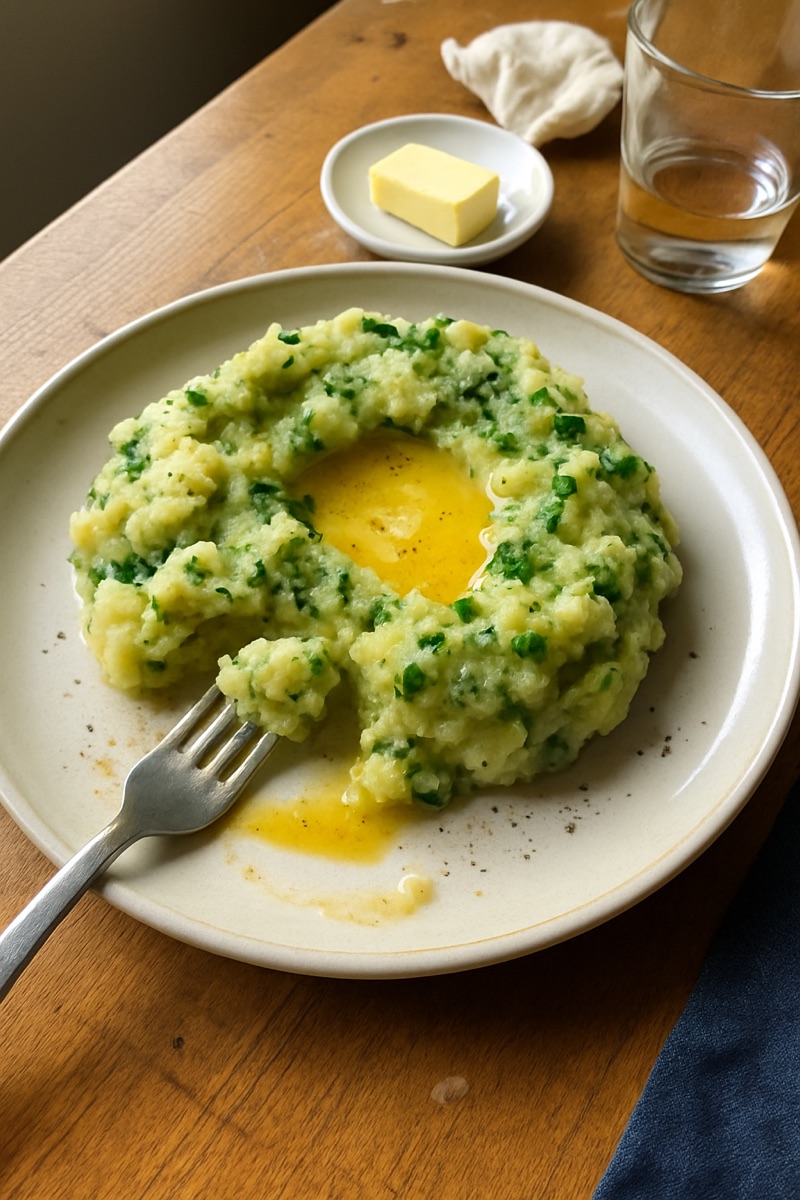 Colcannon🇮🇪 Ireland · 30 minutes
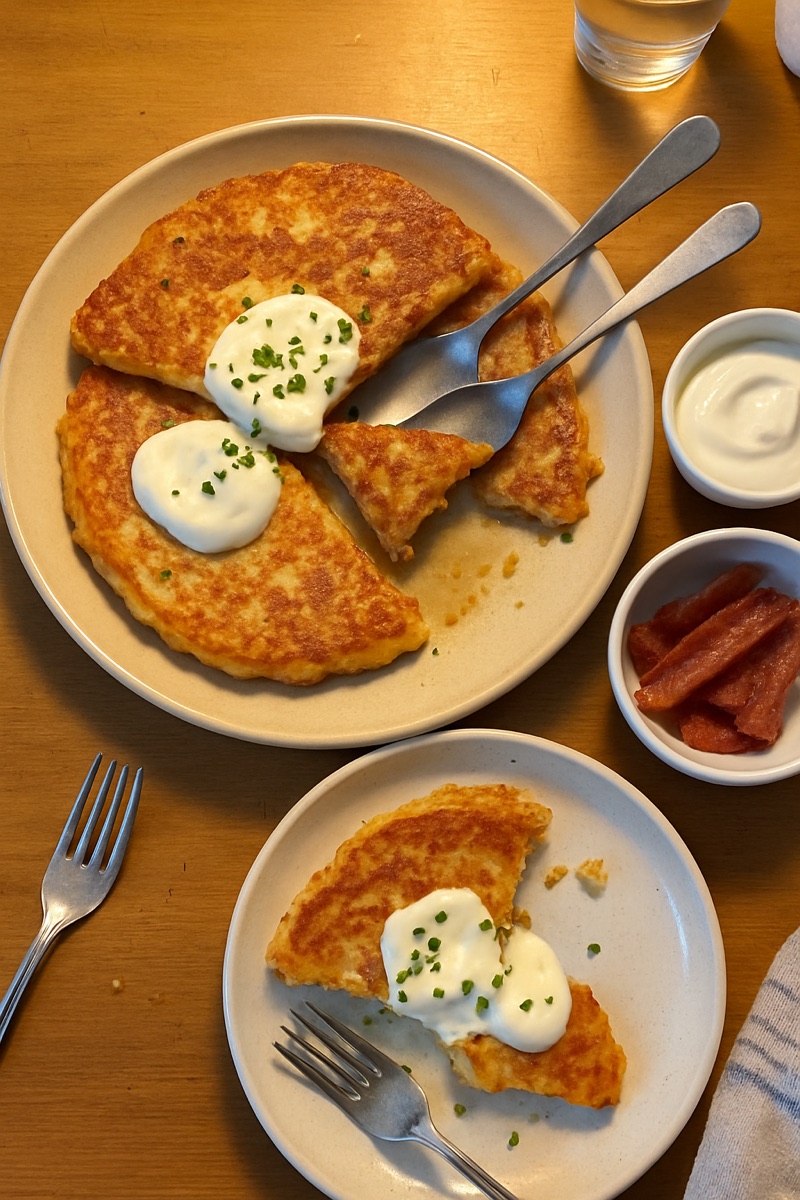 Boxty🇮🇪 Ireland · 45 minutes
Questions people ask
What is the most popular traditional food in Ireland?
Irish stew is the dish most often cited, alongside bacon and cabbage, coddle, colcannon and the full Irish breakfast. Soda bread is on almost every table.
What do people in Ireland eat for breakfast?
The traditional cooked breakfast is the full Irish: sausages, rashers and eggs, often with black or white pudding, soda bread or potato farls, and tea. In the north, the Ulster fry adds soda farls and potato bread.
Is Irish food spicy?
No. Irish food is seasoned mainly with salt, pepper, butter, onion and herbs such as parsley. The flavour comes from dairy, slow cooking and the quality of the meat and potatoes.
What is the difference between colcannon and champ?
Both are mashed potato with butter and milk. Colcannon is mixed with cabbage or kale; champ is mixed with chopped scallions.
Why is Irish soda bread made without yeast?
Irish flour was traditionally soft and rose poorly with yeast, so bakers used baking soda and buttermilk instead. The acid in the buttermilk reacts with the soda to lift the bread.
Keep reading
- What is the national dish of Ireland?
- Traditional food of Andorra: 13 dishes to know
- Traditional food of Austria: 13 dishes to know
- Traditional food of Belgium: 13 dishes to know
- Traditional food of Cyprus: 12 dishes to know
- Traditional food of France: 13 dishes to know