 COPPER
What is the national dish of Ireland?
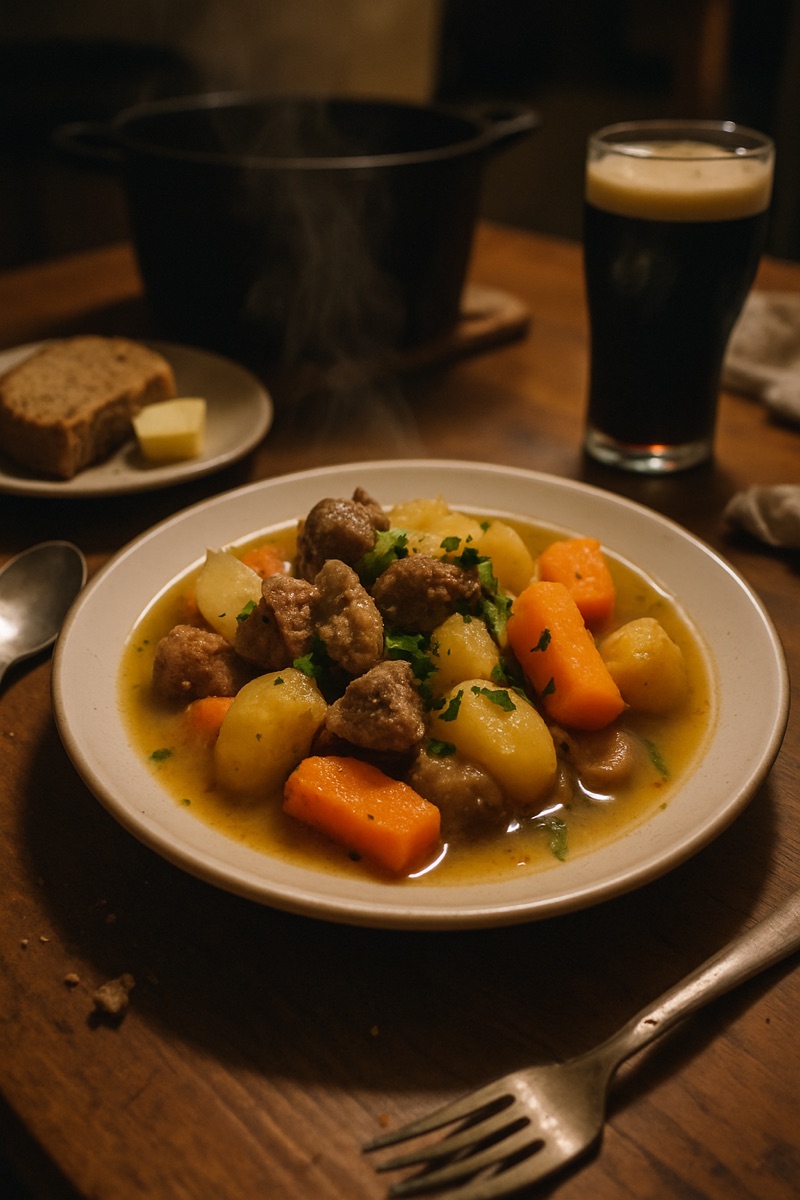
Ireland has no official national dish, but Irish stew is the one most often cited: bone-in mutton or lamb neck chops, potatoes and onions layered in a pot with water and simmered for about two hours. Part of the potato breaks down and thickens the broth. Purists allow nothing else; many cooks add carrots, and modern versions often use beef.
Does Ireland have an official national dish?
No. No law or government declaration names a national dish of Ireland. What exists is a broad consensus: Irish stew (stobhach Gaelach in Irish) is the dish most often described as Ireland's national dish, and Wikipedia's list of national dishes gives it for Ireland alongside soda bread and butter.
The other dishes regularly named as representative of Irish food are bacon and cabbage, boxty, brown or soda bread, coddle and colcannon. Irish stew is the one that comes up first. Across the Irish Sea the question is just as open, as our article on the national dish of the United Kingdom shows.
What is in Irish stew?
The traditional list is short, and the argument about it is long. Purists accept only neck mutton chops (or kid), potatoes, onions and water. Others add carrots, turnips or pearl barley, which purists say spoil the flavour. Parsley usually goes on at the end.
Why mutton rather than young lamb? Older meat was cheaper and more common in poorer times, and its fat and bones give the broth body over a long, slow cook. Tender lamb works, but it brings less flavour to the water.
- Mutton or hogget neck chops, on the bone: mutton comes from sheep over a year old, is fattier and stronger in flavour, and the bones make the broth.
- Floury potatoes: some cut small to dissolve, some left in large pieces.
- Onions, sliced thickly.
- Water, not stock. The meat is not browned first.
- Salt, black pepper and fresh parsley.
How Irish stew is made
The method is layering, not frying. In our Irish stew recipe, 1.2 kg of neck chops, 1 kg of potatoes and 3 sliced onions go into the pot in layers with salt and pepper, then 800 ml of cold water, just up to the top layer.
The pot is brought barely to a boil, skimmed of grey foam, covered and left on the lowest heat for 2 hours. Half the potatoes are cut into chunks and half left in large pieces: the chunks fall apart and thicken the broth, the large pieces stay whole. There is no flour and no roux. The fat is skimmed off, the stew rests 10 minutes off the heat, and it goes to the table in deep bowls with chopped parsley and brown soda bread.
Two details make the difference. First, do not brown the meat: Irish stew is a boiled dish, not a brown braise. Second, keep the heat low enough that the surface barely trembles, so the meat turns tender without the potatoes collapsing completely.
Where Irish stew comes from
Stewing in a cauldron was the main way of cooking meat in early Ireland, where ovens were practically unknown. Many food historians believe goat was the original meat, later replaced by beef and mutton. The potato only reached Ireland around the 16th century.
Mutton dominated because sheep were kept for wool and milk, so only old animals went into the pot, and they needed hours of slow cooking. An early written recipe, attributed to the Countess of Thomond (1684–1734), already describes the method: season the bones of a neck of mutton, layer with onions, cover with water, and take the potatoes out first, "as they burst". Irish stew was recognised under that name by about 1800.
The dish changed as it travelled. A 19th-century American version recorded by Helen Stuart Campbell used boneless beef or mutton cut into small cubes, added carrots with the beef, and thickened the broth with flour before serving, exactly what Irish purists avoid. In Canada, a commercially produced stew labelled Irish stew must contain at least 20% mutton, lamb or beef and 30% vegetables.
Other dishes to know from Ireland
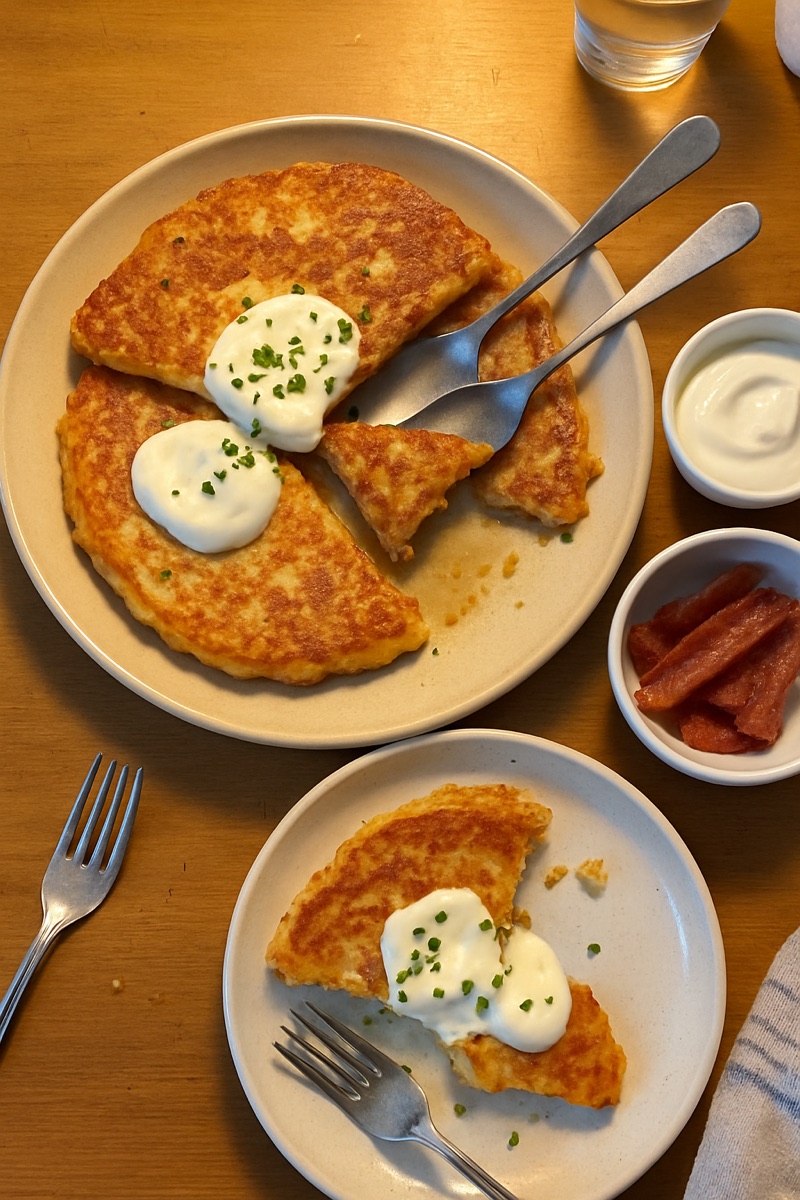
Potatoes run through the rest of the Irish table too. Boxty is a potato cake made from half raw grated potato and half mashed, bound with the starch wrung out of the gratings and fried in butter 4 to 5 minutes a side. It belongs to the north midlands and counties such as Leitrim, Mayo, Sligo, Fermanagh, Longford and Cavan, hence the old rhyme "Boxty on the griddle, boxty on the pan".
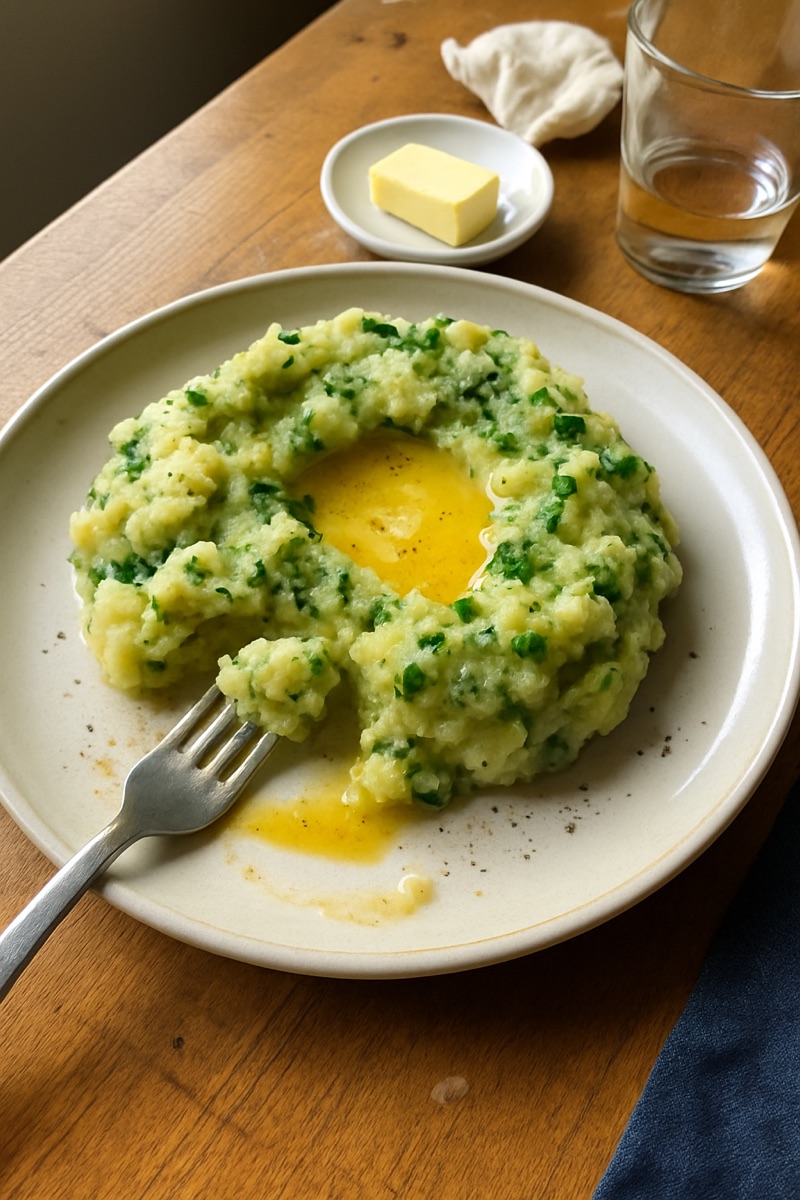
Colcannon is mashed potato beaten with butter and milk, with cabbage folded through. The name comes from the Irish cál ceannann, "white-headed cabbage", and it is eaten on Saint Patrick's Day and on the feast of St Brigid. Its close cousin champ swaps the cabbage for scallions.
You will find all three dishes, with ingredients and step-by-step methods, on our page about the food of Ireland.
For the neighbouring kitchens, see our guide to Western European food.
The recipes
- Irish stew🇮🇪 Ireland · 2 hours and 30 minutes
 Boxty🇮🇪 Ireland · 45 minutes
 Colcannon🇮🇪 Ireland · 30 minutes
Questions people ask
Is Irish stew made with lamb or beef?
Traditionally with mutton or lamb, usually bone-in neck chops; goat was used earlier. Beef is common in modern versions, but purists consider mutton the authentic choice.
Do you put carrots in Irish stew?
Purists say no: only mutton, potatoes, onions and water. Many households add carrots, turnips or pearl barley anyway, and both versions are called Irish stew.
What is served with Irish stew?
It is served in deep bowls with chopped parsley on top and brown soda bread on the side.
How long does Irish stew take to cook?
About 2 hours at a bare simmer, once the pot has come to the boil and been skimmed.
What is Irish stew called in Irish?
Stobhach Gaelach, or simply stobhach.
Keep reading
- Traditional food of Ireland: 12 dishes to know
- What is the national dish of Andorra?
- What is the national dish of Austria?
- What is the national dish of Belgium?
- What is the national dish of Cyprus?
- What is the national dish of France?