 COPPER
Traditional food of Finland: 12 dishes to know
Finnish food is built on dark rye, lake and sea fish, potatoes, cultured dairy, game and wild berries, cooked simply and often slowly in the oven, with few spices beyond salt, dill and allspice. The most emblematic dishes are ruisleipä, sour rye bread, karjalanpiirakka, the Karelian rice pasty, lohikeitto, creamy salmon soup, and karjalanpaisti, Karelian stew.
What Finnish food is built on
Finland's harsh climate shaped its cooking. For centuries fresh fruit and vegetables were missing for most of the year, so people relied on turnips, later potatoes, dark rye bread and fermented dairy, with preserved fish and meat. Few spices other than salt were available, fresh dill and chives were limited to summer, and many traditional dishes were stewed for a long time in the oven. Forests and lakes were always a major source of food: berries such as bilberries, lingonberries and cloudberries, mushrooms, fish and game.
Finnish cooking is close to Swedish cooking, and dishes such as gravlax and Jansson's temptation are common in both countries. The main difference is that Finns prefer unsweetened food: Finnish rye bread contains no syrup and can taste almost bitter. Milk and soured milk are drunk with meals even by adults, and coffee is drunk several times a day. Finns themselves separate perinneruoka, traditional dishes kept for holidays, from kotiruoka, everyday home food such as meatballs, pea soup and rye bread.
Rye breads and pastries
Rye is the grain that defines Finland. Visit Finland calls it the national carbohydrate: Finns eat more than 13 kilos of it a year.
- Ruisleipä — Dark, dense sourdough bread made from wholegrain rye, unsweetened and sour. It won Finland's 2017 public vote for a national food with 25.7% of the votes, and it comes in regional shapes, from large round loaves in the east to reikäleipä, flat rings with a hole once hung on poles to dry.
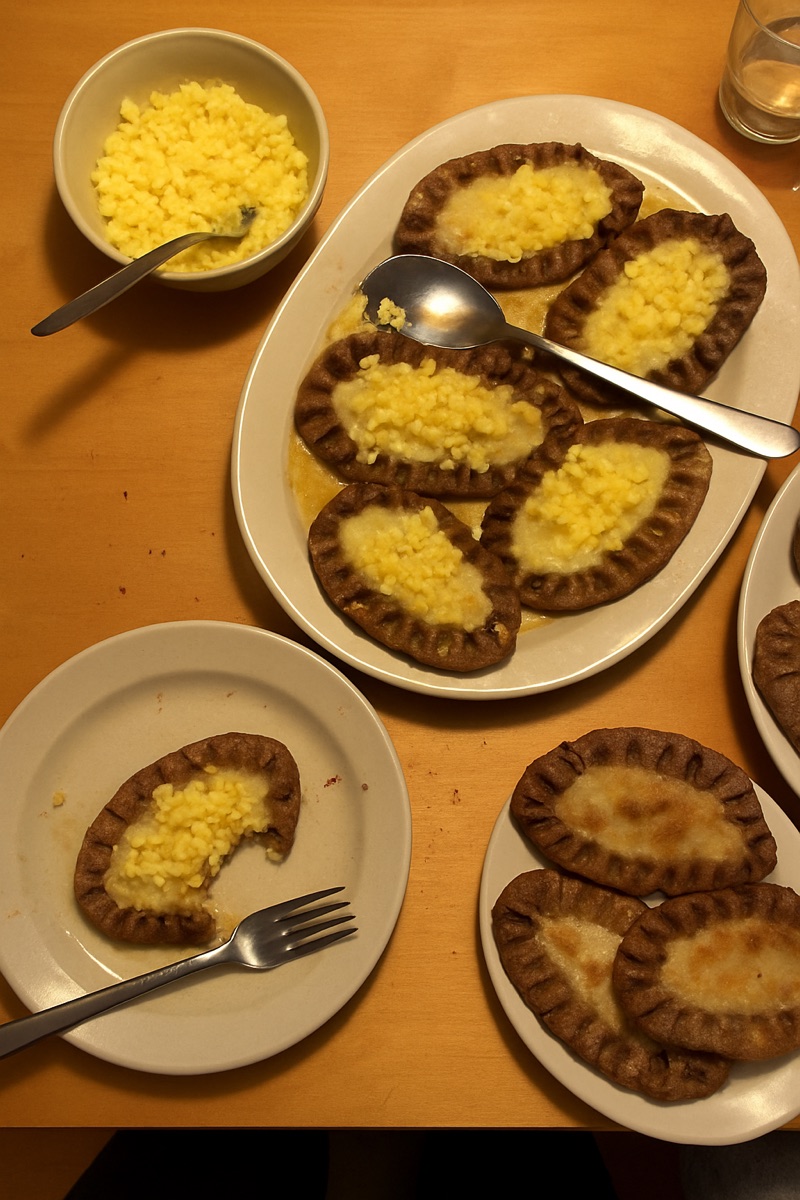
- Karjalanpiirakka — The Karelian pasty: an open oval of very thin rye crust, pinched into pleats around a filling of rice porridge, served warm with munavoi, egg butter. It has held EU Traditional Speciality Guaranteed status since 2003; it and its close relative riisipiirakka are sold in bakeries, cafés and supermarkets across the country.
- Kalakukko — A loaf of rye dough baked for several hours around a filling of fish, pork and bacon, so that the fish bones soften inside. It comes from Savonia in eastern Finland, especially Kuopio, and is made with vendace or European perch. It is eaten by cutting off the top and eating the crust with butter and the filling.
Fish and soups
Lakes, rivers and the Baltic Sea have always fed Finland, and fish is fried, smoked, salted, cured or cooked in soup. Soups are not a starter here: they are a full lunch or dinner.
- Lohikeitto — Salmon soup with potatoes, carrots, leek and a little cream, finished with plenty of fresh dill. It is one of the most popular salmon dishes in Finland, served at lunch cafés, traditional restaurants and at home, especially when the weather turns cold.
- Paistetut muikut — Fried vendace: small freshwater fish from Finnish lakes, lightly floured, pan-fried until crisp and eaten whole, bones and all. It is a summer dish sold at markets and festivals, usually with mashed potatoes, and in eastern Finland often with garlic sauce.
- Hernekeitto — A thick soup of green peas cooked with pork, served with mustard and chopped onion and followed by thin pancakes with jam. Thursday has been pea soup day for centuries, in homes, schools and army kitchens, and the soup is also eaten on Laskiainen, Shrove Tuesday.
Meat, game and Lapland
Pork is the most eaten meat, and sausage accounts for a large share of it. Hunting is a long tradition, and in the north reindeer is everyday food.
- Karjalanpaisti — Karelian stew: pieces of pork and beef, sometimes lamb, slowly braised in the oven with salt, black peppercorns, bay leaves and allspice. It came a very close second in the 2017 national food vote, with 24.7%, and it is eaten on Independence Day and at Christmas.
- Poronkäristys — Sautéed reindeer, Lapland's signature dish: reindeer meat shaved thin, cooked in butter until tender and served on mashed potato with lingonberries and pickled cucumber. It reflects the reindeer herding of Sámi and Arctic Finnish culture.
- Mustamakkara — Black sausage of pork, pig's blood and grain, the specialty of Tampere, eaten hot with lingonberry jam. It is best bought fresh at market stalls such as those on Tammelantori square, where customers traditionally ask for a sum of money's worth rather than a weight.
Sweet things and festive food
Coffee is almost always served with something baked, from cardamom pulla buns to berry pies, and several sweets belong to a precise date in the calendar:
- Leipäjuusto — Bread cheese: a mild fresh cheese, traditionally made from cow's colostrum, set into a flat disc and baked until it is spotted brown. It comes from Southern Ostrobothnia, northern Finland and Kainuu, squeaks against the teeth, and is served with cloudberry jam or dropped into a cup of hot coffee.
- Mämmi — The Easter dessert: rye flour and malted rye mixed with water, left to sweeten naturally, then baked until dark and set and chilled for several days. It is eaten cold with cream or milk and sugar, and it was already mentioned in the 16th century.
- Runeberg torte — A small cylindrical cake of about 100 grams flavoured with almonds and rum or arrack, topped with raspberry jam inside a ring of icing. It is named after the national poet Johan Ludvig Runeberg and sold from early January to Runeberg Day on 5 February.
Food from Finland's regions
Many Finnish dishes are regional. Karelia, in the east, gave the country its pasties and its stew, carried west by evacuees after the Second World War; Karelian pasties are now eaten everywhere. Savonia has kalakukko and lörtsy, a thin half-moon pastry filled with meat or apple. Kainuu is known for rönttönen, a small open rye pie of potato and lingonberry with EU protected geographical indication, and South Karelia for Lemin särä, lamb and potatoes slow-roasted for hours in a wooden trough. Lapland cooks reindeer and salmon, Tampere has its black sausage, and on the Swedish-speaking coast and in Åland the bread is a dark, sweet rye loaf made with syrup.
Cook Finnish food at home
Rye bread won the vote for the national dish of Finland, with Karelian stew one point behind. Finnish cooking belongs to Nordic cuisine: compare it with the traditional food of Sweden, which shares many dishes, and the traditional food of Estonia, across the Gulf of Finland.
Karjalanpiirakka, lohikeitto and poronkäristys each have a full recipe, with quantities and step-by-step methods, in the Copper app. You will find them on our page dedicated to Finnish recipes.
The recipes
- Karjalanpiirakka🇫🇮 Finland · 3 hours and 10 minutes
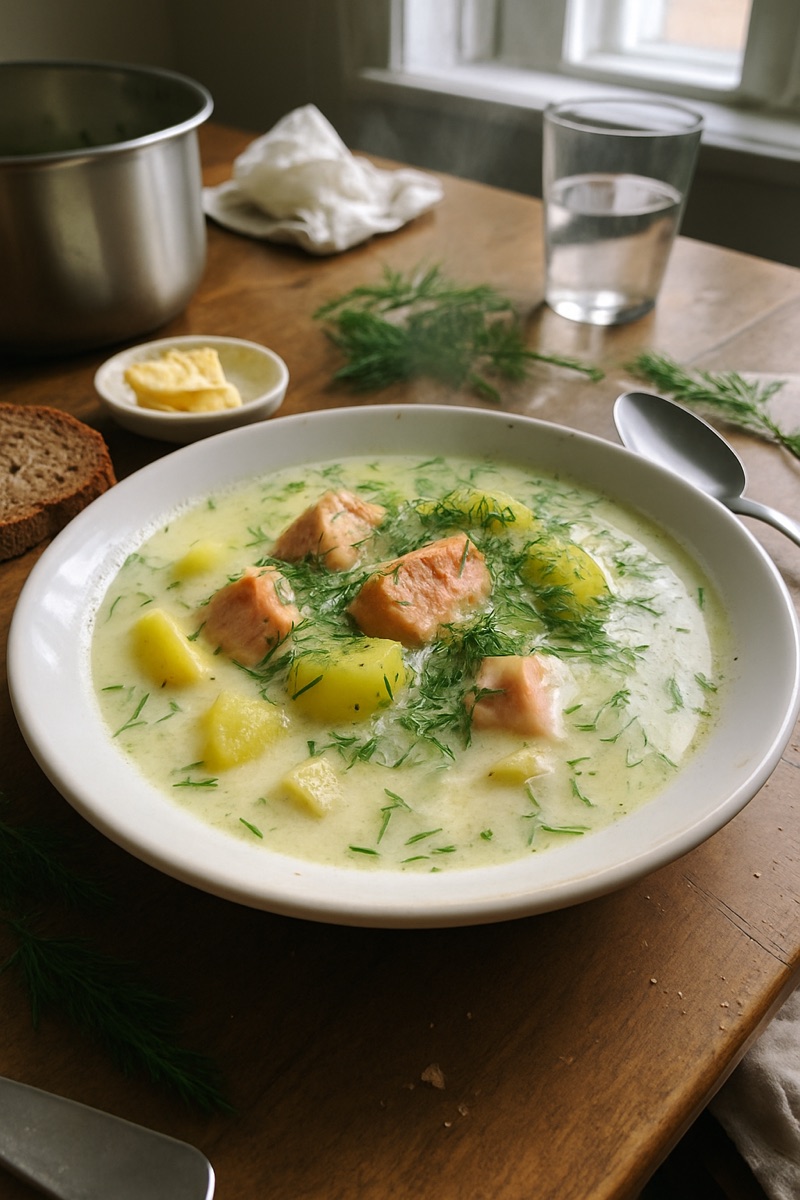 Lohikeitto🇫🇮 Finland · 1 hour and 10 minutes
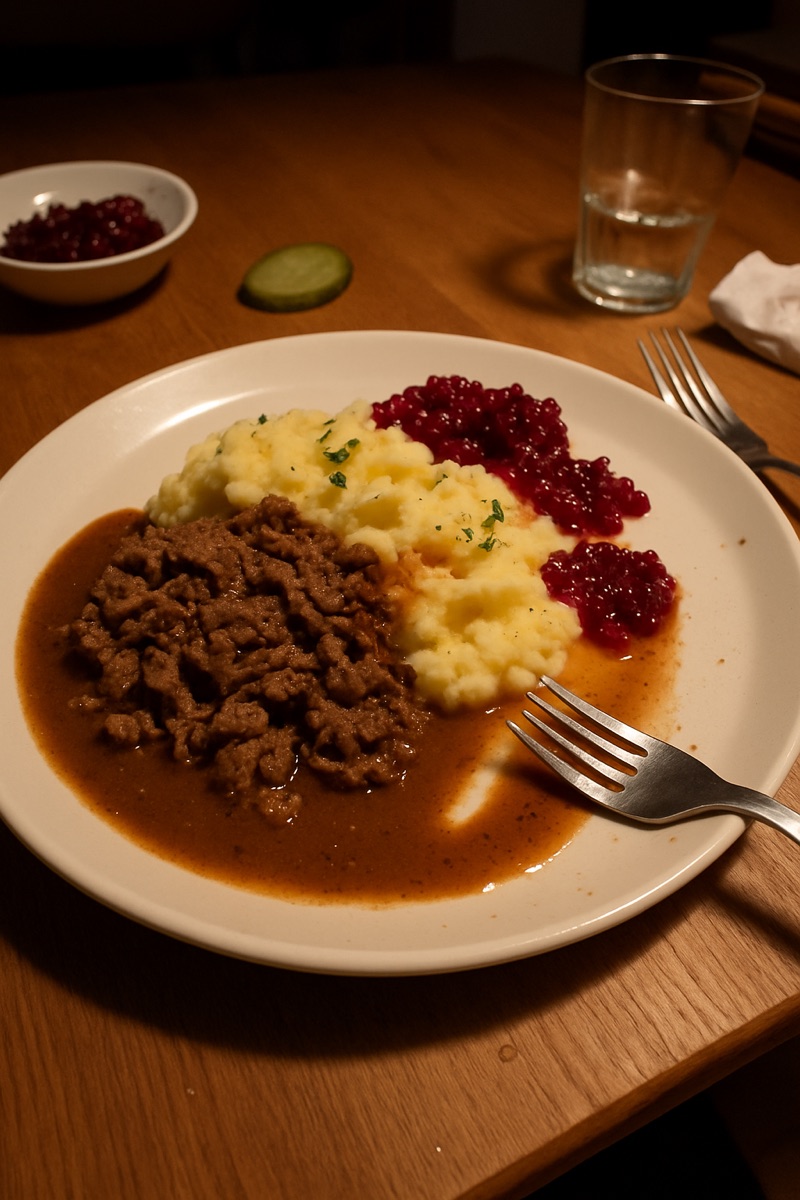 Poronkäristys🇫🇮 Finland · 1 hour and 25 minutes
Questions people ask
What is the most popular food in Finland?
Rye bread, Karelian pasties, salmon soup and Karelian stew are the foods most associated with Finland. Rye bread won the 2017 national food vote, just ahead of Karelian stew.
What do Finns eat for breakfast?
Usually buttered open sandwiches with cheese or cold cuts, yoghurt or viili, a soured milk, with cereal, or porridge, often oat porridge with a knob of butter or jam. Coffee, milk, juice or tea are the drinks.
Is Finnish food spicy?
No. Traditional Finnish food uses few spices beyond salt, black pepper, allspice and fresh dill, and relies on the taste of rye, fish, dairy and berries.
What do Finns eat at Christmas?
The Christmas table includes Karelian stew, lipeäkala, a lye-cured fish, rice porridge with cinnamon and sugar, often with prune kissel, and glögi, mulled wine, often served without alcohol.
What is Lapland food?
Lapland is known for reindeer, above all poronkäristys, sautéed reindeer with mashed potato and lingonberries and salmon soup.
Keep reading
- What is the national dish of Finland?
- Traditional food of Denmark: 13 dishes to know
- Traditional food of Greenland: 10 dishes to know
- Traditional food of Iceland: 12 dishes to know
- Traditional food of Norway: 13 dishes to know
- Traditional food of Sweden: 13 dishes to know