 COPPER
Traditional food of Iceland: 12 dishes to know
Icelandic food is built on lamb, North Atlantic fish and dairy, and its old flavours come from preservation: drying, smoking and pickling in fermented whey. The most emblematic dishes are kjötsúpa, lamb soup with rutabaga, skyr, a thick cultured dairy, hangikjöt, smoked lamb at Christmas, and hákarl, fermented shark eaten at the midwinter feast Þorrablót.
What Icelandic food is built on
Iceland was settled in the 9th century by people from Scandinavia, and its cooking grew out of Norse farming in a harsh climate. When the Little Ice Age made barley impossible to grow from the 14th century, sheep became the main livestock and grain had to be imported, mostly rye from Denmark. The food of three summer months had to last through nine months of winter, so everything was preserved. Salt was scarce, so Icelanders stored meat in fermented whey, the sour by-product of skyr, and dried, smoked and fermented their fish.
Lamb, fish and dairy remain the core. Lamb is by far the favourite meat, from sheep that graze freely in the highlands all summer, and Icelanders eat far more fish than most developed countries. Danish influence arrived through trade and settlers in the 18th and 19th centuries, above all in baking, and in the 20th century commercial fishing turned fresh fish into everyday food. Today greenhouses heated with geothermal water grow vegetables all year.
Lamb dishes
For centuries lamb and meat meant the same thing in Iceland, and when a sheep was slaughtered almost every part of it was eaten:
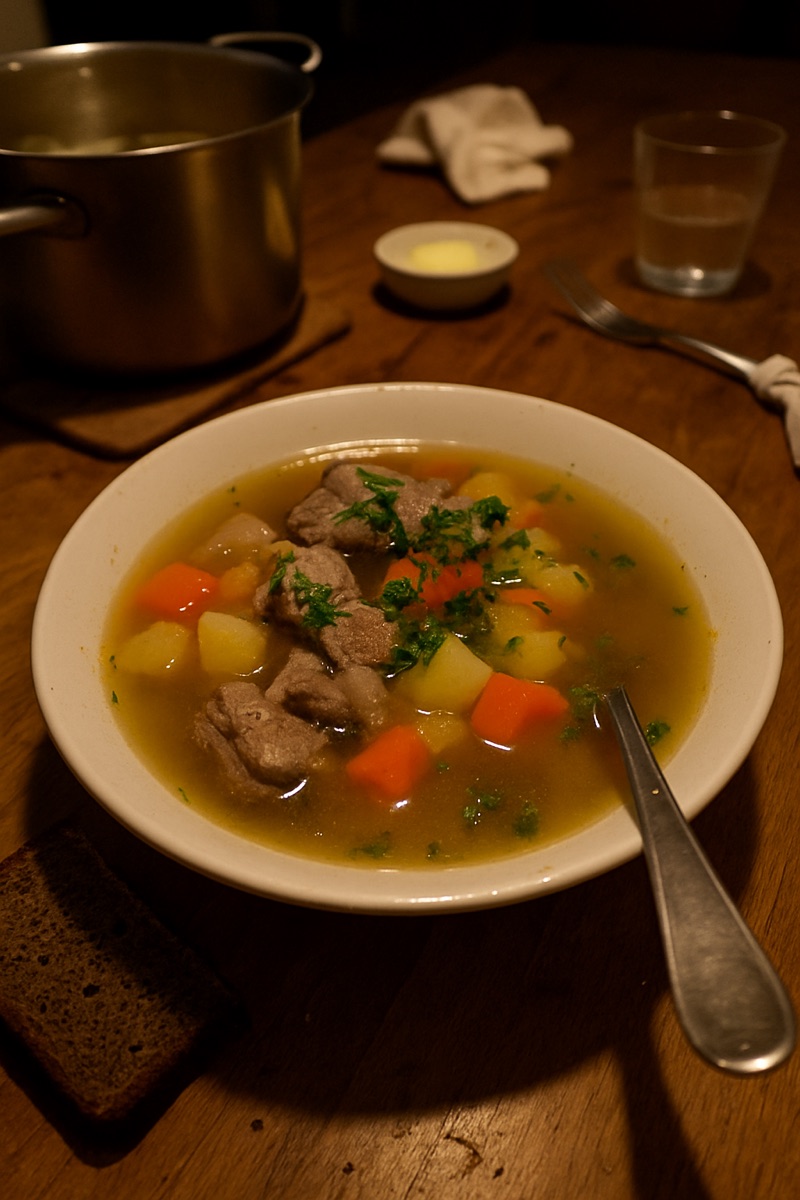
- Kjötsúpa — Lamb soup: bone-in lamb simmered in plain water with rutabaga, potatoes, carrots and onion, seasoned with only salt, pepper and dried soup herbs. It is an autumn and winter dish, once a Sunday meal, and the most common answer to the question of Iceland's national dish.
- Hangikjöt — Hung meat: lamb or mutton smoked, sometimes over sheep dung, named after the old practice of hanging meat in a smoking shed. It is the traditional Christmas dish, boiled and served hot or cold with potatoes in béchamel sauce and green peas, or sliced thin on flatbread.
- Svið — A sheep's head, cut in half, singed to remove the wool and boiled. It comes from a time when no part of the animal could be wasted, is pressed into a jellied loaf called sviðasulta, and many Icelanders consider the eye the best part.
Fish, fresh and preserved
Haddock, plaice, halibut, herring and shrimp are the fish Icelanders eat most, fresh all year, but the preserved forms are part of the identity:
- Plokkfiskur — Fish stew of poached haddock and potatoes folded into a béchamel with onion and pepper, eaten on buttered dark rye bread. It was made to use up the previous day's fish, traditionally on Mondays.
- Harðfiskur — Wind-dried fish, usually cod, haddock or wolffish fillets, with salt as the only other ingredient. Dried fish with butter once came with every meal of the day, playing the role bread played elsewhere in Europe, and it is still a common snack, eaten with plenty of butter.
- Kæst skata — Fermented skate with a very strong smell, eaten on 23 December, the feast of St Thorlak, with melted tallow and boiled potatoes. The custom began in the Westfjords and is now most popular with older generations.
Dairy, bread and baking
Icelanders consume a great deal of dairy, and the first professional bakers in the country were Danes, which still shows in its pastries:
- Skyr — A cultured dairy product with the texture of strained yoghurt and a milder taste, technically a fresh sour-milk cheese. It is mentioned in medieval sagas, it came from Norway but survived only in Iceland, and the traditional way to eat it is with wild bilberries and cream.
- Rúgbrauð — Dense, dark, moist and slightly sweet rye bread, traditionally baked in pots or buried in the ground near a hot spring, when it is called hverabrauð. It is eaten with butter, smoked lamb, pickled herring or plokkfiskur.
- Laufabrauð — Leaf bread: very thin rounds of dough 15 to 20 cm across, cut into leaf-like patterns and fried crisp. It comes from northern Iceland, is eaten almost only at Christmas, and is made by several generations together.
- Kleinur — Small fried dough knots: the dough is flattened and cut into small trapezoids with a special wheel, slit in the middle, one end pulled through the slit, then deep-fried. They are one of the country's oldest traditional pastries.
Þorrablót and the street
Two foods sit at the opposite ends of Icelandic eating, one a midwinter ritual and one an everyday stop:
- Hákarl — Greenland shark cured by fermentation, buried for six to twelve weeks and then hung to dry for months. It is the best-known item of þorramatur, the buffet of traditional foods served at the Þorrablót midwinter feasts, eaten with a shot of brennivín, an Icelandic aquavit.
- Pylsur — The Icelandic hot dog, made from lamb, beef and pork and poached, never grilled. Ordered with everything, it comes with crisp fried onion, raw onion, sweet brown mustard, ketchup and remoulade. Bæjarins Beztu Pylsur in Reykjavík has sold them since 1937.
Feasts and seasons
Much of traditional Icelandic food is eaten at fixed points in the year. Þorramatur, served between January and March, was first advertised by the Reykjavík restaurant Naustið in 1958, as a platter of country foods in wooden troughs, and it includes hangikjöt, svið, hákarl and sour whey-cured foods such as rams' testicles. Christmas Eve brings hangikjöt, salted pork rib or ptarmigan, and rice pudding, often with a whole almond hidden in the pot for a game. On Sundays, a roast leg of lamb with glazed potatoes, red cabbage and rhubarb jam is the classic family meal.
Cook Icelandic food at home
Lamb soup and fermented shark are the two answers usually given for the national dish of Iceland. Icelandic cooking belongs to Nordic cuisine: compare its lamb and dried fish with the traditional food of Norway, where its settlers came from, and its pastries with the traditional food of Denmark.
Kjötsúpa, plokkfiskur and pylsur each have a full recipe, with quantities and step-by-step methods, in the Copper app. You will find them on our page dedicated to Icelandic recipes.
The recipes
- Lamb soup🇮🇸 Iceland · 1 hour and 35 minutes
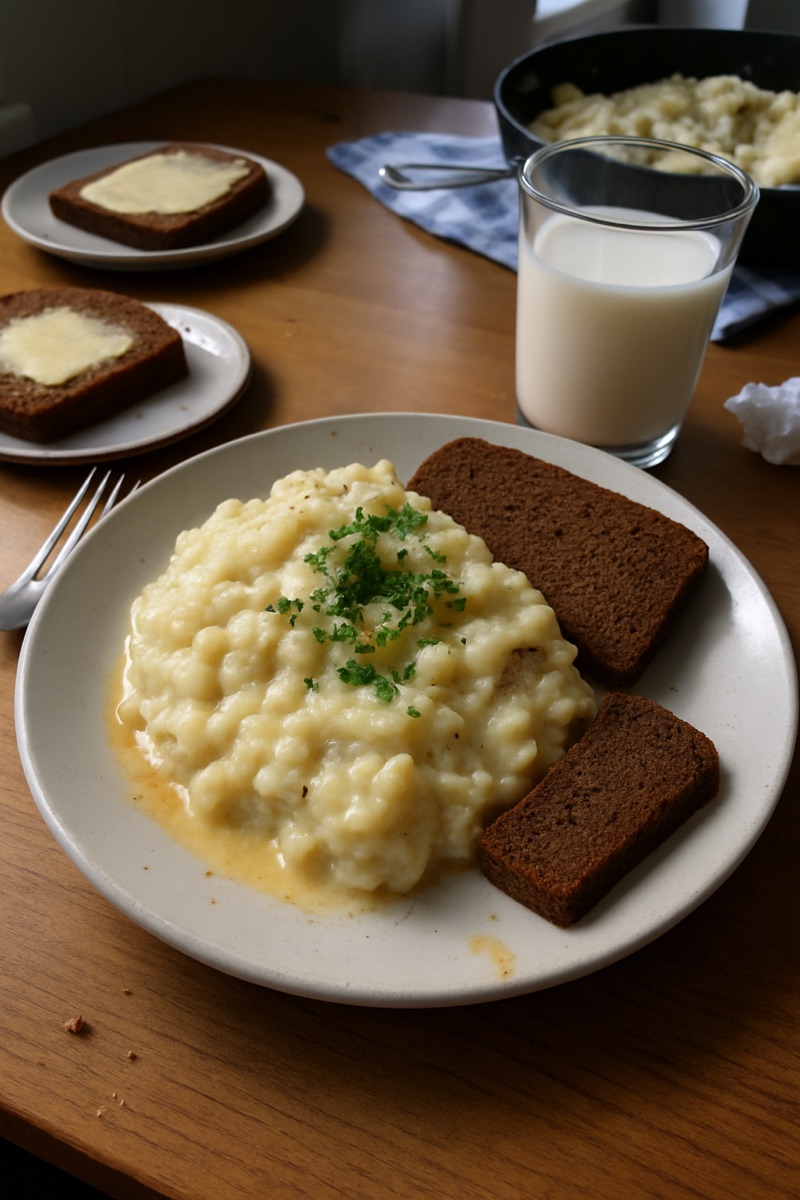 Plokkfiskur🇮🇸 Iceland · 40 minutes
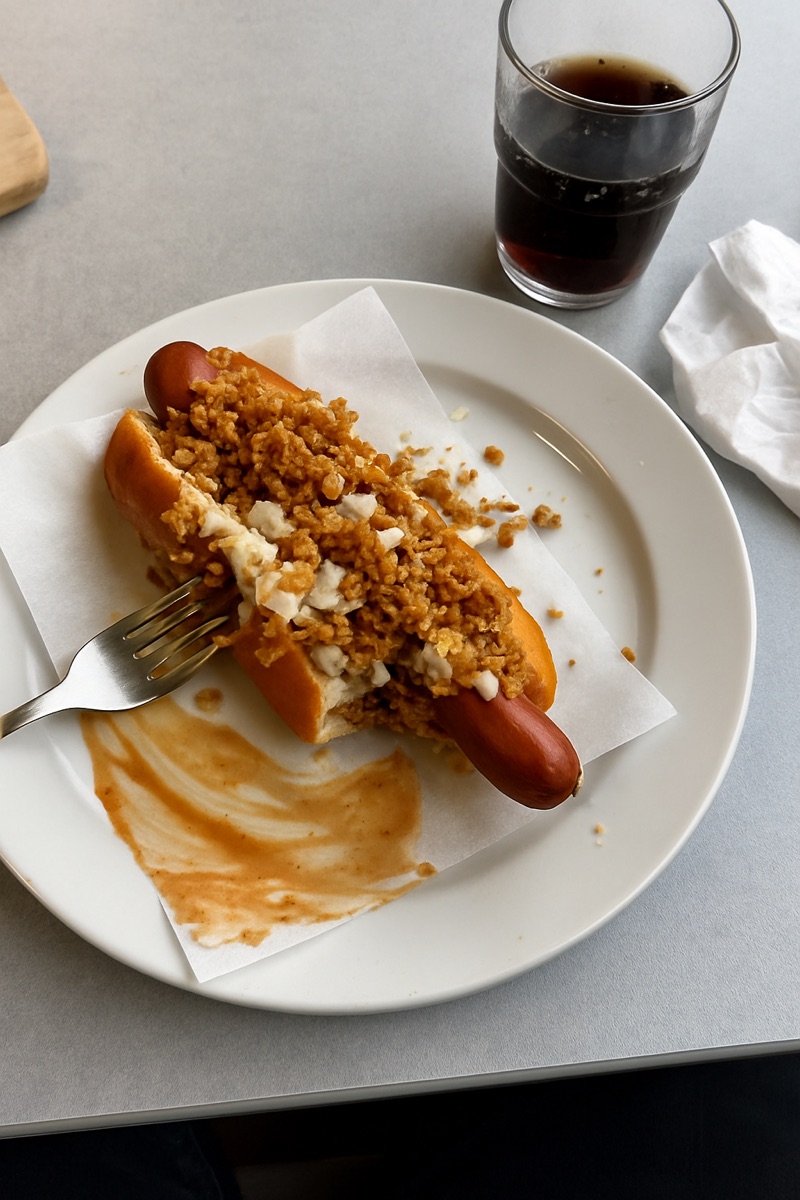 Pylsur🇮🇸 Iceland · 10 minutes
Questions people ask
What is the most popular food in Iceland?
Lamb soup, fresh fish, skyr and the Icelandic hot dog are the foods most associated with Iceland today. Lamb is by far the favourite meat.
Do Icelanders really eat fermented shark?
Yes, but mostly in small amounts at Þorrablót, the midwinter feasts, with a shot of brennivín. It is also sold year-round in shops and some restaurants.
Is Icelandic food spicy?
No. Traditional Icelandic food is simply seasoned, and lamb soup uses only salt, pepper and dried herbs. Its strong flavours come from preservation: smoking, drying and fermentation.
What do Icelanders eat at Christmas?
Smoked lamb, hangikjöt, with béchamel potatoes and peas, salted pork rib or ptarmigan on Christmas Eve, laufabrauð, rice pudding and fermented skate on 23 December.
What is þorramatur?
A buffet of traditional Icelandic foods, mostly cured meat and fish, served with rye bread, butter and brennivín between January and March, especially at Þorrablót feasts.
Keep reading
- What is the national dish of Iceland?
- Traditional food of Denmark: 13 dishes to know
- Traditional food of Finland: 12 dishes to know
- Traditional food of Greenland: 10 dishes to know
- Traditional food of Norway: 13 dishes to know
- Traditional food of Sweden: 13 dishes to know