 COPPER
Traditional food of Sweden: 13 dishes to know
Swedish food is built on fish, potatoes, pork, rye and crispbread, cultured dairy and berries, with simple, contrasting flavours such as cream sauce and tart lingonberry. Salting, curing and pickling run through the cuisine. The most emblematic dishes are köttbullar, meatballs, gravlax, cured salmon, pickled herring with new potatoes, and the kanelbulle, the cinnamon bun of every fika.
What Swedish food is built on
Traditional Swedish cooking, called husmanskost, uses local ingredients: pork in every form, fish, cereals, milk, potatoes, root vegetables, cabbage, onions, apples and berries, with beef and lamb used more sparingly. Spices are used with a light hand, slow cooking is common, and potatoes, usually boiled, come with most meals. Breads range from soft sweetened loaves to knäckebröd, a hard rye crispbread.
Fish shaped the country's history, and salting and curing were how it was kept. Lingonberry jam is the classic way to add freshness to heavy dishes. Internationally the best-known tradition is the smörgåsbord, a buffet of hot and cold dishes, which becomes the julbord at Christmas. Drinks are simple: Swedes are among the heaviest coffee and milk drinkers in the world, and a glass of milk is the standard drink with weekday family meals. In the north, game and reindeer, some dishes rooted in Sami culture, play a larger part; in the south, fresh vegetables do.
Fish and seafood
Herring, salmon and shellfish are at the heart of the Swedish table, and several have their own season:
- Gravlax — Raw salmon cured for about two days under weight in sugar, salt and dill, then sliced thin and served with hovmästarsås, a mustard and dill sauce. Its name means buried salmon, from the medieval practice of burying salted fish in the sand.
- Inlagd sill — Pickled herring, first salted, then kept in a sweet vinegar brine with onion and spices, in versions flavoured with mustard, onion, garlic or sherry. It is eaten at Christmas, Easter and above all at midsummer, with new potatoes, chives and sour cream.
- Surströmming — Baltic herring lightly salted and fermented for at least six months, known for one of the strongest smells in food. It has been part of Swedish cooking since at least the 16th century, and retailers still hold the premiere of each year's production on the third Thursday in August.
- Kräftor — Crayfish boiled in salted water with crown dill, then served cold and eaten with the fingers. They are the centre of the kräftskiva, the crayfish party held in August with snaps and drinking songs.
- Toast skagen — Hand-peeled shrimp folded into dill mayonnaise on butter-fried bread, topped with a spoonful of roe. Tore Wretman, the Stockholm restaurateur who championed traditional Swedish cooking, created it in the 1950s.
Husmanskost: everyday classics
These are the home-cooking dishes Swedes grow up with, many of them still on weekday lunch menus:
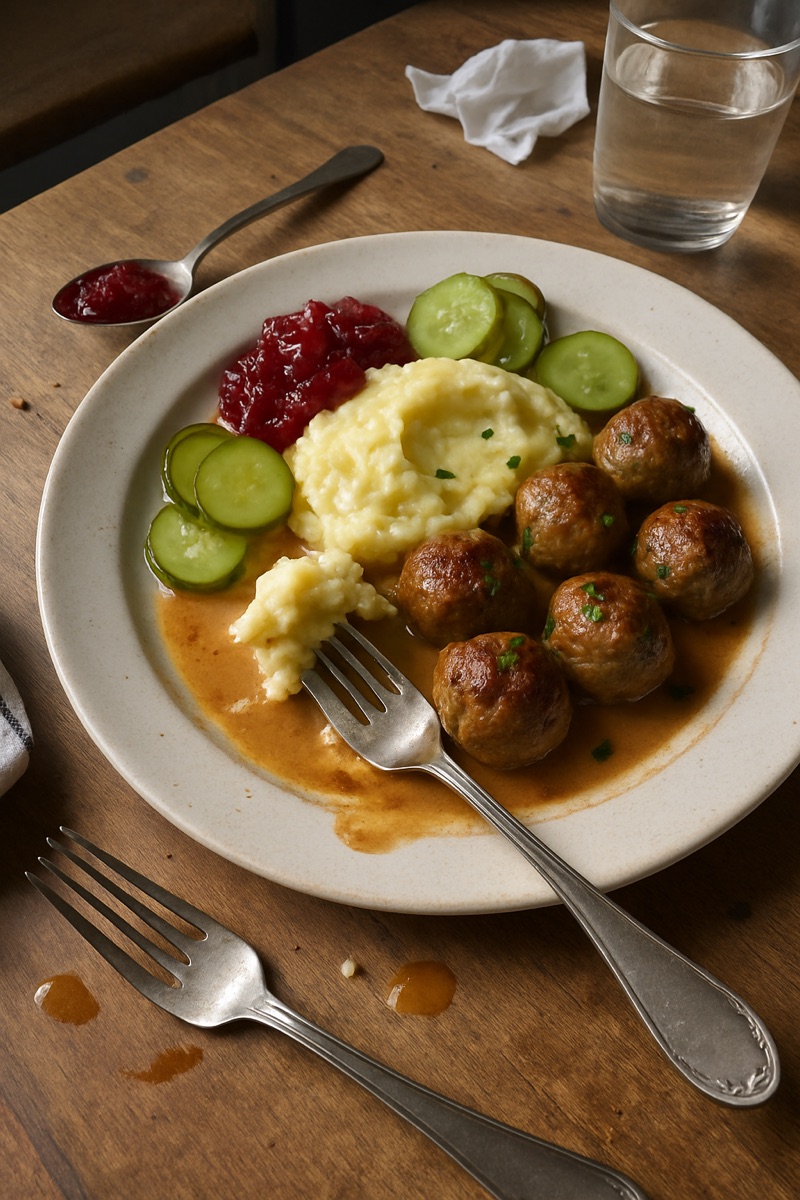
- Köttbullar — Small meatballs of beef and pork bound with breadcrumbs soaked in cream, browned in butter and served with cream sauce, boiled potatoes and lingonberry jam. They are the dish most often named as Sweden's national dish, and they appear on the Christmas julbord too.
- Ärtsoppa — A thick soup of yellow peas, onion and pieces of pork, served with mustard. Thursday has been pea soup day in Sweden for centuries, and it is followed by thin pancakes with jam; the armed forces still serve it every Thursday.
- Janssons frestelse — Jansson's temptation, a gratin of potatoes, onions, pickled sprats and cream. It began as a late-night party dish and is now a fixture of the Christmas julbord and the Easter buffet.
- Kroppkakor — Boiled potato dumplings, most often filled with onion and pork, served with melted butter, lingonberry jam or cream. They come from south-eastern Sweden, and Öland, Småland, Gotland and Blekinge each mix raw and boiled potato differently.
- Pytt i panna — Diced potatoes, onion and leftover meat or sausage fried together in a pan, served with a fried egg, pickled beetroot and gherkins. The name means small pieces in a pan, and it was made to use up leftovers.
Fika and sweet baking
Most Swedes stop for fika, a coffee break with something baked, and the pastry tradition behind it is large: tortes, yeast buns, cookies and cakes, many of them very sweet. Three follow the calendar or the café counter:
- Kanelbulle — A wheat-dough bun rolled with butter, sugar and cinnamon and usually topped with pearl sugar. You will find it in any Swedish bakery or café, it is closely tied to fika, and Sweden has marked Cinnamon Bun Day, Kanelbullens dag, on 4 October since 1999.
- Semla — A soft wheat bun filled with almond paste and whipped cream, eaten before Lent, especially on Fat Tuesday. Served in a bowl of hot milk, it becomes hetvägg.
- Prinsesstårta — Princess cake: layers of sponge, vanilla custard and a dome of whipped cream, covered in green marzipan and usually topped with a pink marzipan rose. The original recipe contained no jam.
North and south
Sweden is long, and its food changes from end to end. The far north has a tradition of reindeer and game, and potato dumplings there are palt, made from raw potato only, rather than the kroppkakor of the south-east. The west coast on the Skagerrak is known for shrimp and lobster, and in Bohuslän herring has been processed since the late 1500s on Klädesholmen, a fishing community on two small islands that still has a herring cannery. Midsummer brings the first new potatoes with herring, and the first strawberries for dessert, across the whole country.
Cook Swedish food at home
Köttbullar is the usual answer to the question of the national dish of Sweden, although the country has never made it official. Swedish cooking shares much with the rest of Nordic cuisine: compare gravlax and fish dishes with the traditional food of Norway and the traditional food of Finland.
Köttbullar, gravlax and toast skagen each have a full recipe, with quantities and step-by-step methods, in the Copper app. You will find them on our page dedicated to Swedish recipes.
The recipes
- Köttbullar🇸🇪 Sweden · 55 minutes
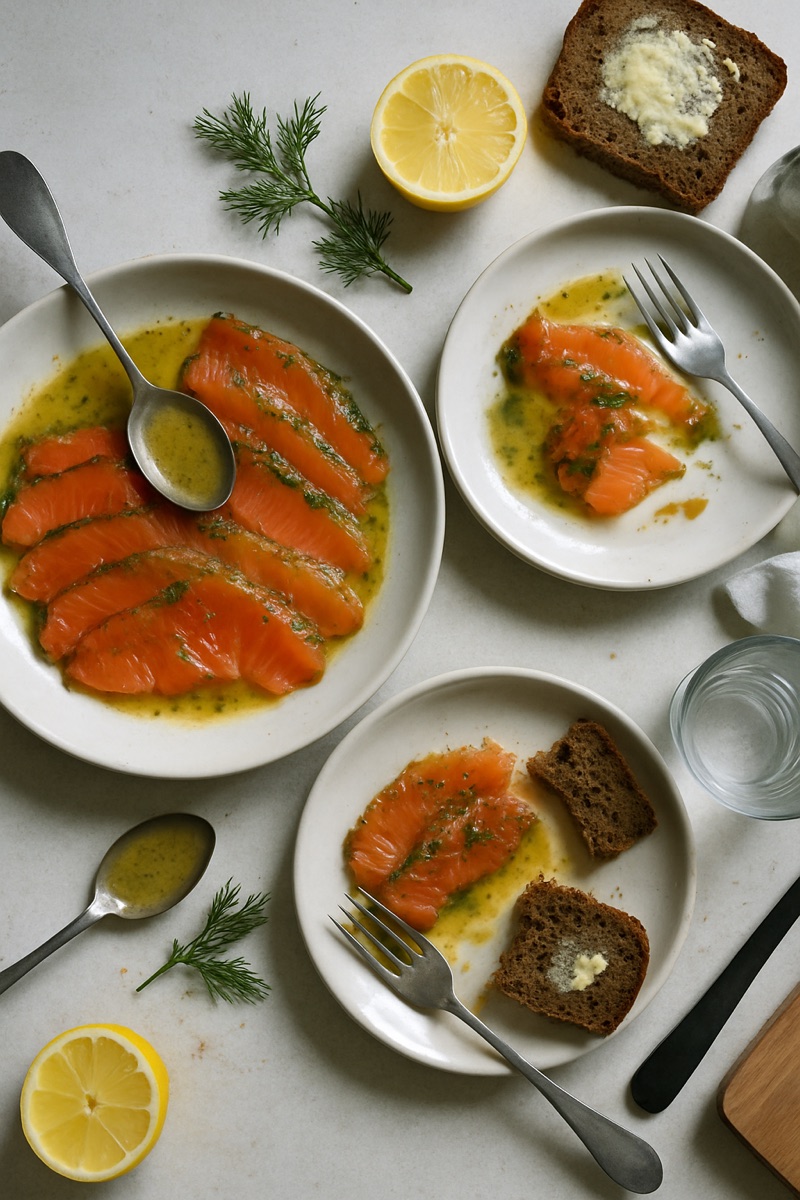 Gravlax🇸🇪 Sweden · 2 days and 1 hour
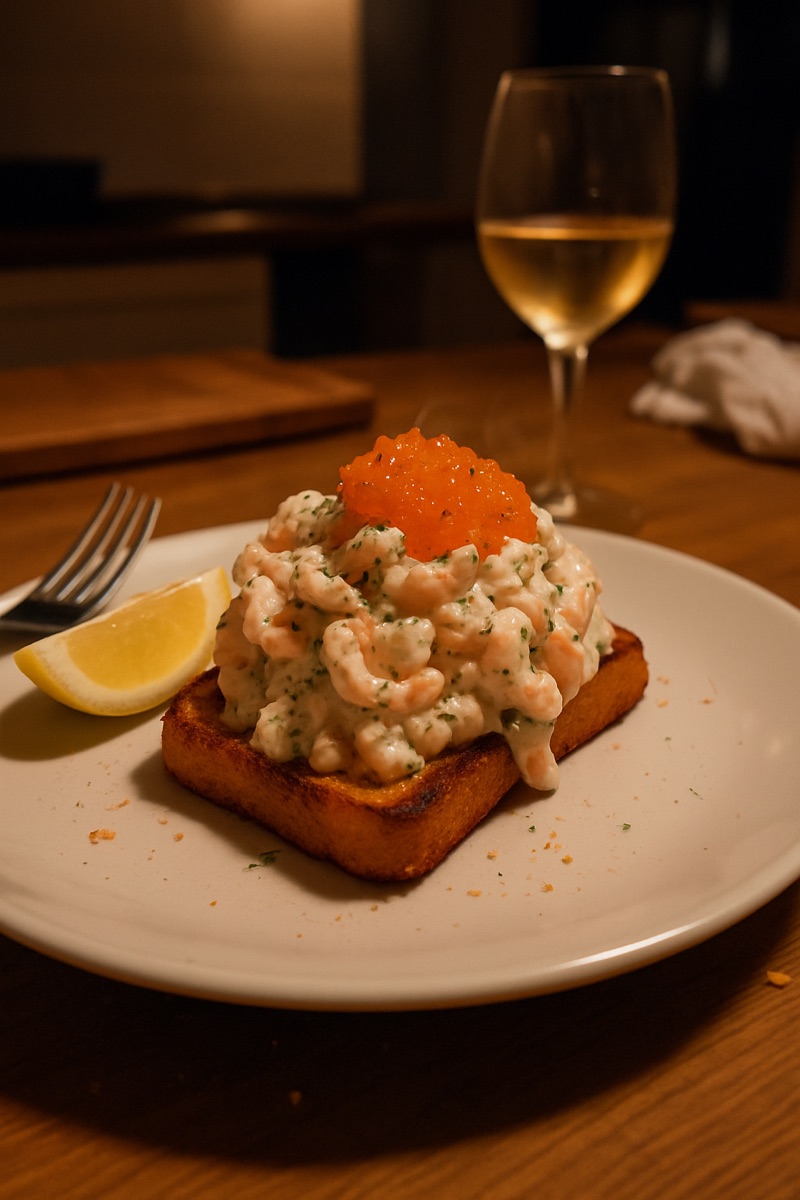 Toast skagen🇸🇪 Sweden · 30 minutes
Questions people ask
What is the most popular food in Sweden?
Köttbullar with cream sauce and lingonberry jam, gravlax, pickled herring and the kanelbulle are the foods most associated with Sweden. Köttbullar is the dish most often called the national dish.
What do Swedes eat for breakfast?
Usually open sandwiches, often on crispbread, topped with cheese, ham, caviar spread or cucumber, with filmjölk, a fermented milk, or yoghurt and cereal. Oat porridge with milk and jam is also common, with coffee, tea or milk to drink.
Is Swedish food spicy?
No. Traditional Swedish home cooking uses spices sparingly. Its character comes from contrasts such as sweet and sour pickles, cream with tart lingonberry, and dill.
What is fika?
Fika is the Swedish coffee break, usually taken in the afternoon with a pastry such as a kanelbulle, a slice of cake or cookies.
What do Swedes eat at midsummer?
Pickled herring with new potatoes, chives and sour cream, followed by the first strawberries of the year.
Keep reading
- What is the national dish of Sweden?
- Traditional food of Denmark: 13 dishes to know
- Traditional food of Finland: 12 dishes to know
- Traditional food of Greenland: 10 dishes to know
- Traditional food of Iceland: 12 dishes to know
- Traditional food of Norway: 13 dishes to know