 COPPER
Traditional food of Norway: 13 dishes to know
Norwegian food is built on fish, lamb and mutton, potatoes, bread and dairy, with a long tradition of drying, salting, smoking and fermenting to get through the winter. Cod and salmon dominate the coast. The most emblematic dishes are fårikål, mutton and cabbage stew, gravlaks, cured salmon, pinnekjøtt, Christmas lamb ribs, and brunost, the sweet brown cheese.
What Norwegian food is built on
Traditional Norwegian cooking is based on what the country itself provides, with a stronger focus on fish and game than continental cuisine. Many classic dishes come from preserved foods, because the winters are long: cod is dried on racks into stockfish, meat and fish are salted, the west coast smokes them, and trout is fermented. Along the coast, fresh fish is usually poached and seasoned lightly with herbs, pepper and salt.
Bread is a staple: about 80% of Norwegians regularly eat it, as open sandwiches with butter for breakfast and lunch, and wholegrain loaves are the favourite. Dinner, eaten from around 4 to 7 pm, is the main meal of the day and usually pairs potatoes with meat or fish. Lingonberry jam, sour cream and flatbread come back again and again on the table, and for festive meals cooks turn to game: moose, reindeer, hare and ptarmigan.
Meat dishes
Lamb and mutton peak in autumn, and the festive season brings dishes that are made only once a year:
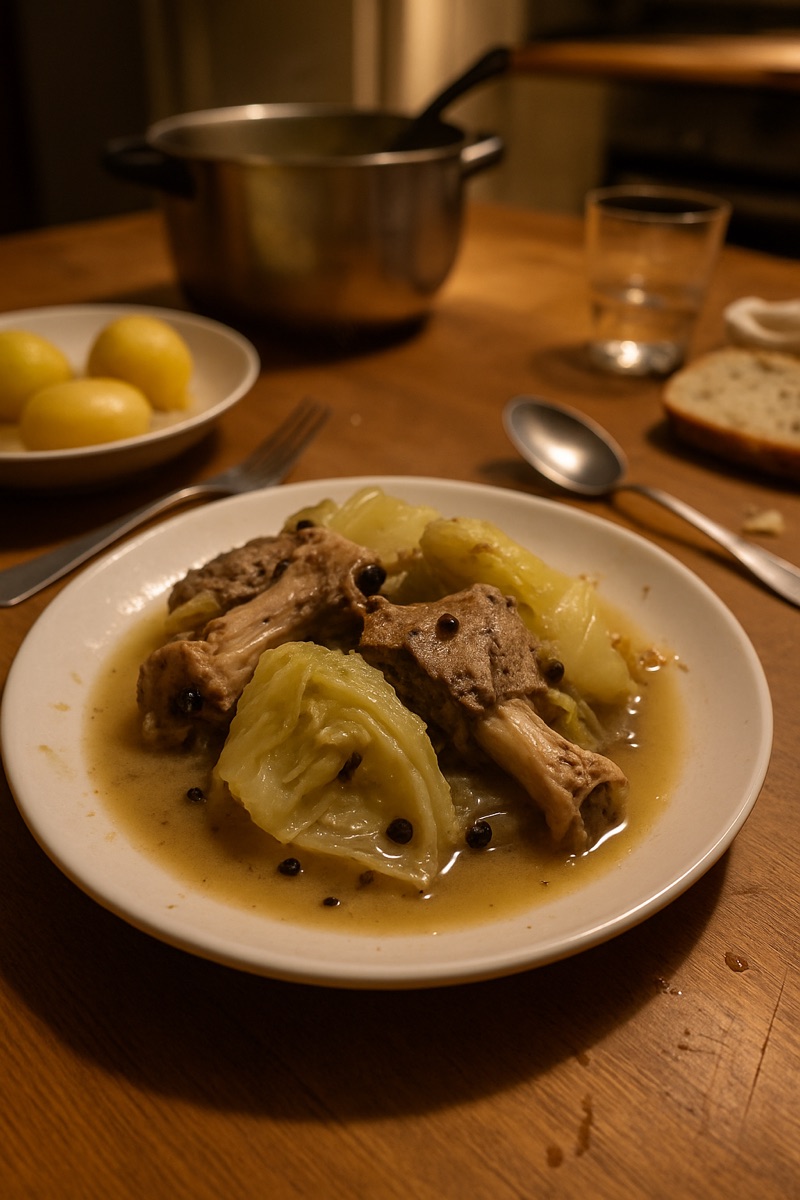
- Fårikål — Bone-in mutton layered with white cabbage, whole black peppercorns and salt, then simmered for hours and served with potatoes boiled in their skins. Norwegians voted it the national dish in 1972 and again in 2014, and it is eaten above all in September and October.
- Lapskaus — The everyday stew of diced beef, potatoes, rutabaga, carrots and onion, cooked until some of the potatoes break down and thicken the pot. It is served with flatbread.
- Kjøttkaker — Patties of minced meat, about the size of a child's fist, fried and simmered in brown sauce. They come with boiled potatoes, stewed peas or cabbage, and lingonberry jam.
- Pinnekjøtt — Lamb or mutton ribs salted and dried, sometimes smoked, then steamed over a rack of birch sticks, which gives the dish its name, stick meat. It is the Christmas dinner of western and northern Norway and is often served with mashed rutabaga, potatoes, beer and akevitt.
- Raspeball — Dumplings of grated raw potato and flour, boiled and served with salted meat, bacon, sausages and mashed rutabaga. They go by many local names, such as komle, kompe and klubb, and in western Norway they are traditionally eaten on Thursdays.
Fish dishes
Norway's fish exports go back centuries, and at home fish appears fresh, cured, dried and fermented:
- Gravlaks — Raw salmon cured for two to three days under salt, sugar and dill, then sliced thin and served with a sweet mustard sauce and dark bread. The name means buried salmon, after the old practice of burying the fish to cure it.
- Kokt torsk — Cod poached and served simply with boiled potatoes and melted butter, sometimes with carrots, fried bacon, and the fish's roe and liver. Skrei, the migrating Atlantic cod fished each year around the Lofoten islands, is the prize catch.
- Lutefisk — Stockfish or salted dried cod soaked in water, then in lye, which turns it gelatinous. It is a Christmas tradition, especially on the coast, served like fresh cod with potatoes, and with beer and akevitt alongside.
- Rakfisk — Trout or char salted and left to ferment for two to three months, sometimes up to a year, then eaten without cooking. It has a strong smell and a pungent, salty taste, and the fish is ready in the weeks before Christmas.
Bread, cheese and sweets
Dairy and baking complete the Norwegian table. Cardamom flavours many cakes, and kransekake, a tower of almond rings, is made for Constitution Day, Christmas, weddings and baptisms. Four more are everyday or seasonal staples:
- Brunost — Brown cheese made by boiling whey, often with milk or cream, until the milk sugars caramelise, giving it a sweet taste. Gudbrandsdalsost is the most popular variety, and it is eaten sliced thin on bread.
- Lefse — A soft flatbread of riced potatoes, flour and butter with milk or cream, cooked on a large griddle. It is often eaten rolled up with sugar and cinnamon, or with cheese or sylte, a cold pressed meat, and lefse was already common in the Middle Ages.
- Rømmegrøt — A thick porridge of sour cream, whole milk and wheat flour, served with melted butter, sugar and cinnamon. It is a dish for special occasions, traditionally eaten with cured meat and flatbread.
- Krumkake — A thin, crisp cookie baked in a decorated two-sided iron and rolled into a cone while hot. It is made for Christmas and is often filled with whipped cream or multekrem, cream with cloudberries.
Regional traditions
Norway's regions keep their own dishes. The west coast prefers pinnekjøtt to fårikål, and around Voss smalahove, a sheep's head salted, sometimes smoked, dried and boiled, served with mashed rutabaga, is eaten before Christmas and celebrated at a festival each autumn. In Northern Norway, mølje, poached fish with its roe and liver, is called the region's national dish, and friends gather for a møljekalas each winter. Inland valleys such as Valdres and Gudbrandsdalen hold on to their dairy traditions, from rømmegrøt at weddings and christenings to brunost, while Trøndelag is known for karsk, a drink of coffee and spirits.
Cook Norwegian food at home
Fårikål is the answer to the question of the national dish of Norway, chosen by public vote in 1972 and again in 2014. Norwegian cooking belongs to the wider family of Nordic cuisine; compare its cured fish and Christmas dishes with the traditional food of Sweden and the traditional food of Denmark.
Fårikål, gravlaks and lapskaus each have a full recipe, with quantities and step-by-step methods, in the Copper app. You will find them on our page dedicated to Norwegian recipes.
The recipes
- Fårikål🇳🇴 Norway · 2 hours and 45 minutes
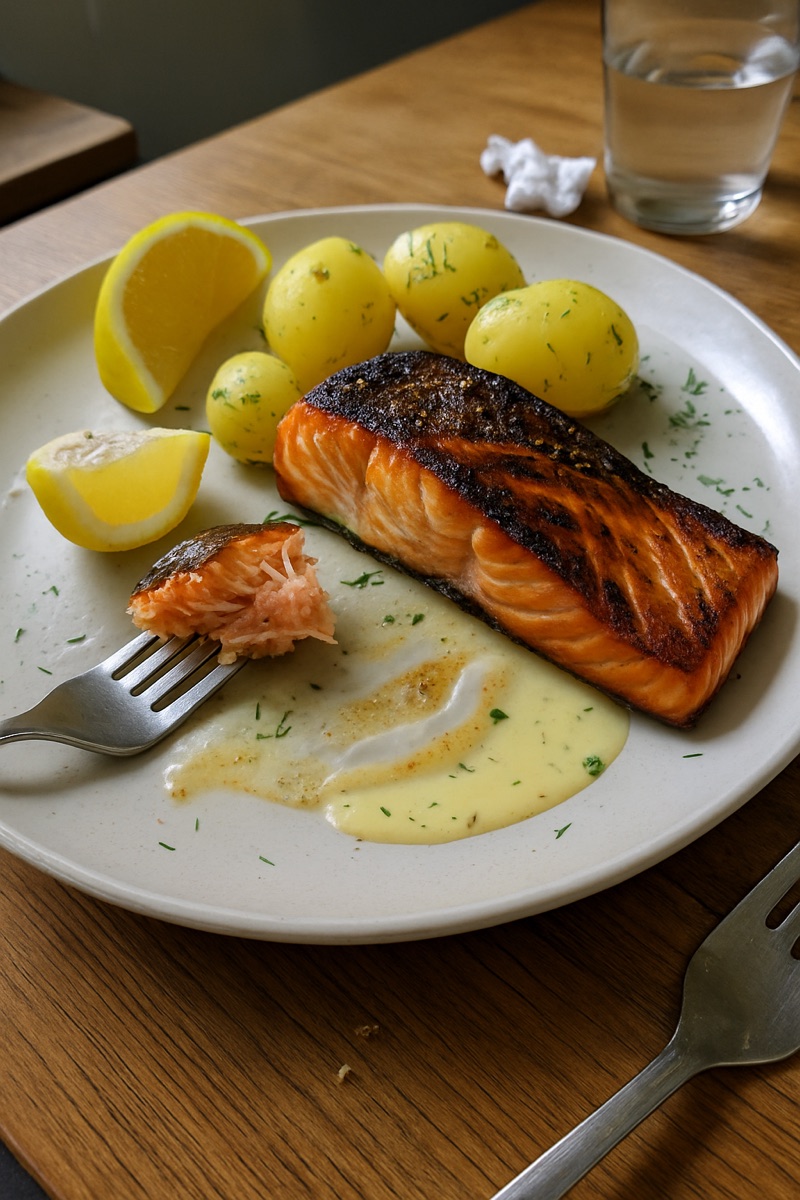 Gravlaks🇳🇴 Norway · 2 days and 12 hours
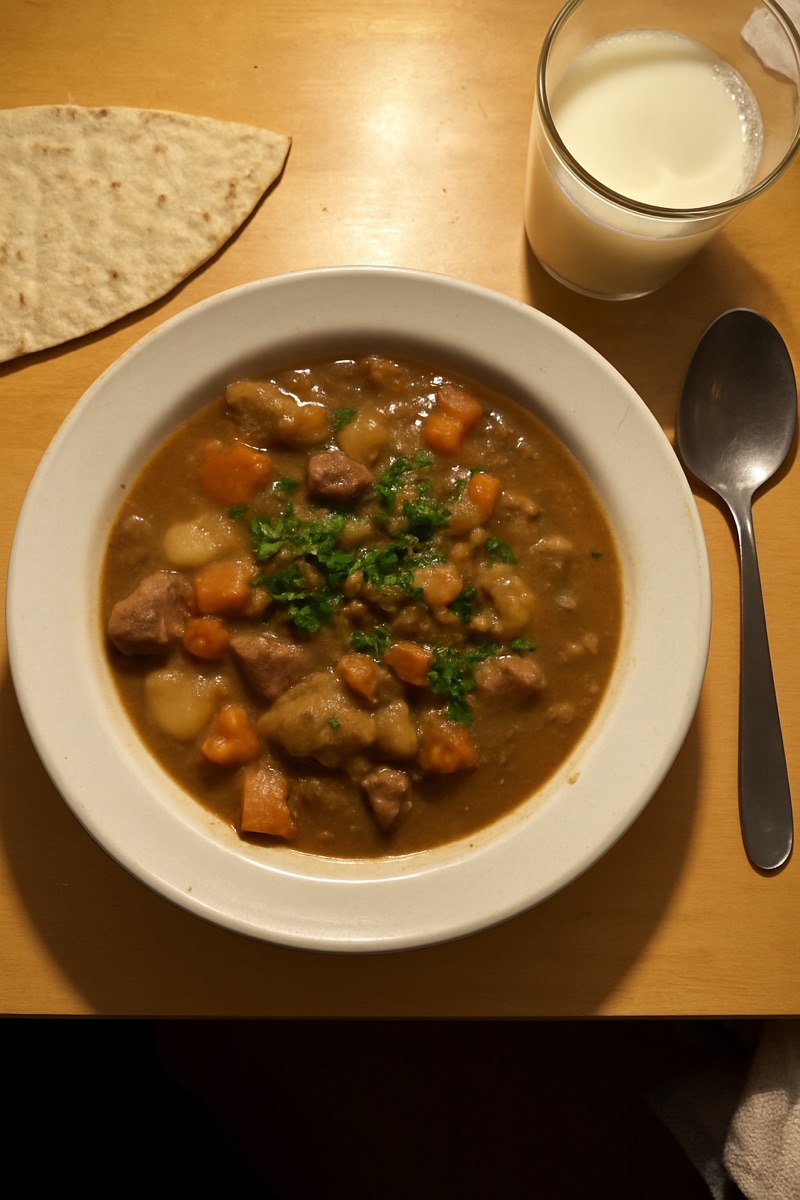 Lapskaus🇳🇴 Norway · 1 hour and 50 minutes
Questions people ask
What is the most popular food in Norway?
Fårikål, the national dish, along with kjøttkaker, lapskaus, cod, salmon and brunost on bread. At Christmas, pinnekjøtt and lutefisk are the best-known dishes.
What do Norwegians eat for breakfast?
Bread with cheese, often brunost, and other toppings, with berries and milk. Traditionally breakfast also included grøt, a porridge of flour or groats boiled with milk.
What do Norwegians eat at Christmas?
Pinnekjøtt, steamed salted lamb ribs, is the Christmas dinner of western and northern Norway; about 31% of Norwegians eat it for their family Christmas dinner. Lutefisk, rakfisk and krumkake are other Christmas traditions.
Is Norwegian food spicy?
No. Traditional Norwegian food is mildly seasoned, often with only salt and pepper. Its strongest flavours come from curing, smoking and fermenting, and from sweet and sour pickles.
What is brunost?
Brunost, brown cheese, is made from whey boiled until its milk sugars caramelise. It is sweet, close to caramel in taste, and is usually sliced thin on bread.
Keep reading
- What is the national dish of Norway?
- Traditional food of Denmark: 13 dishes to know
- Traditional food of Finland: 12 dishes to know
- Traditional food of Greenland: 10 dishes to know
- Traditional food of Iceland: 12 dishes to know
- Traditional food of Sweden: 13 dishes to know