 COPPER
What is the national dish of Norway?
The national dish of Norway is fårikål, literally "mutton in cabbage": pieces of bone-in mutton layered with white cabbage, whole black peppercorns, salt and a little flour, then simmered for hours and served with potatoes boiled in their skins. Norwegians voted it national dish in 1972, and a public vote run for the agriculture ministry confirmed it again in 2014, with 45% of the vote.
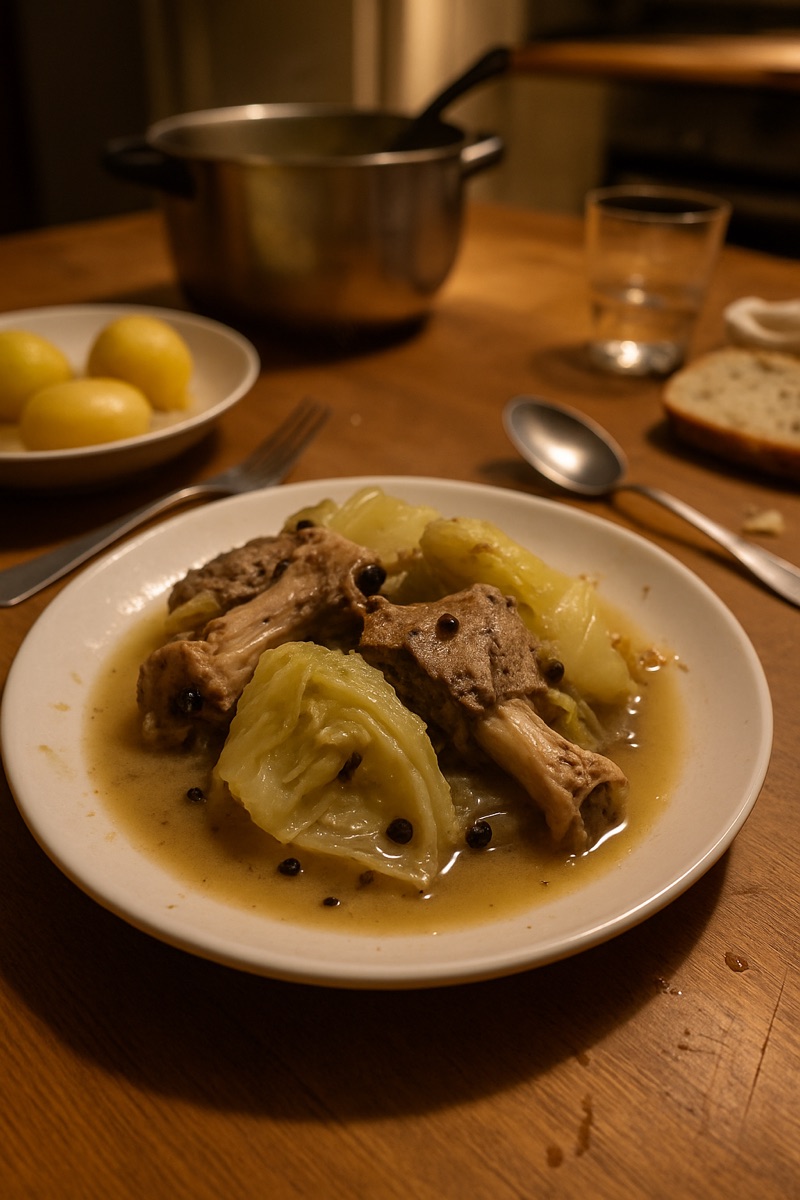
How fårikål became the national dish
Norway's national dish was chosen by vote, not by law. In 1972, listeners of the NRK radio programme Nitimen elected fårikål.
In 2014, to mark the bicentenary of the Norwegian constitution, food and agriculture minister Sylvi Listhaug launched a competition to pick a new one. The Ipsos survey commissioned by the ministry gave fårikål 45% of the vote, ahead of kjøttkaker (meat patties), raspeballer (potato dumplings) and pinnekjøtt (salted, dried lamb ribs). Fårikål won everywhere except along the west coast, where pinnekjøtt came first. Children voted differently: their top picks were tacos, pizza and kebab.
Pinnekjøtt is the Christmas dinner of western Norway: cured, sometimes smoked mutton ribs steamed on a bed of birch sticks, which is where the name, "stick meat", comes from. That regional loyalty explains the west-coast result.
The dish has its own day, Fårikålens festdag, on the last Thursday of September. According to a survey cited by the Norwegian fruit and vegetable information office, over 70% of Norwegians eat fårikål at least once during the season. On 29 September 2012, a 594.2 kg pot cooked at Spikersuppa in central Oslo for 10,000 guests was approved by Guinness World Records as the largest fårikål ever made.
What is in fårikål?
The list is short on purpose. Store norske leksikon defines it as fresh mutton or lamb, never salted or dried, cooked with white cabbage and whole black pepper. Our fårikål recipe uses:
The most common cuts, according to Store norske leksikon, are shoulder, back and neck, and many cooks prefer adult sheep to lamb because it gives more flavour. The bones must cook in the pot to make a good stock.
- 1.5 kg mutton with the bone in: neck, breast and shoulder. The bones make the broth; boneless meat gives a thin one.
- 1.5 kg white cabbage, cut in thick wedges with a bit of core left on so they hold together.
- 2 tbsp whole black peppercorns, scattered between layers or tied in a muslin bag.
- Salt and 2 tbsp wheat flour between the layers, to season and slightly thicken the juices.
- 500 ml water and no more: the cabbage releases a lot of liquid.
How fårikål is made
Meat goes in first, fat side down, then cabbage, then salt, flour and pepper, repeated until the pot is full. The water is poured down the side.
It then simmers very gently, covered, for 2 to 3 hours, until the meat slides off the bone. You shake the pot instead of stirring, so the layers stay intact. Potatoes boiled in their skins go alongside, and some people add lingonberry jam or flatbread.
Pepper is the only spice, and the peppercorns stay whole; tie them in a muslin bag if you would rather fish them out later. Freezing is fine: Store norske leksikon notes that the meat may have been frozen, as long as it was never salted or dried. Some cooks skip the flour altogether.
Why it is an autumn dish
Fårikål belongs to September and October. Norwegian lambs are born in spring, graze on open pasture all summer and are slaughtered in autumn, so that is when the meat is fresh and plentiful. Freezing now makes it possible all year, but the season has stuck.
The name, fårikål, was adapted from the Danish "gås i hvidkål", goose in white cabbage. Denmark has its own national dish; see the national dish of Denmark.
Other dishes to know from Norway
Lapskaus is the everyday stew: diced beef, rutabaga, carrots, leek and potatoes, half of them chopped small so they fall apart and bind the pot until a spoon stands up in it. It is served with flatbread.
Gravlaks is salmon cured under salt, sugar and dill for 48 to 72 hours, turned once a day, then sliced thin and served with a sweet mustard sauce. The name means "buried salmon": medieval fishermen salted it and buried it in the sand. It is shared across the Nordic countries, and Sweden calls it gravlax; compare the national dish of Sweden.
Some regions have their own answer to the national-dish question. In Northern Norway, mølje, poached fish served with its roe and liver, is often called the region's national dish, and friends gather for a møljekalas at least once each winter.
You will find all three recipes, with ingredients and step-by-step methods, on our page about the food of Norway.
The recipes
- Fårikål🇳🇴 Norway · 2 hours and 45 minutes
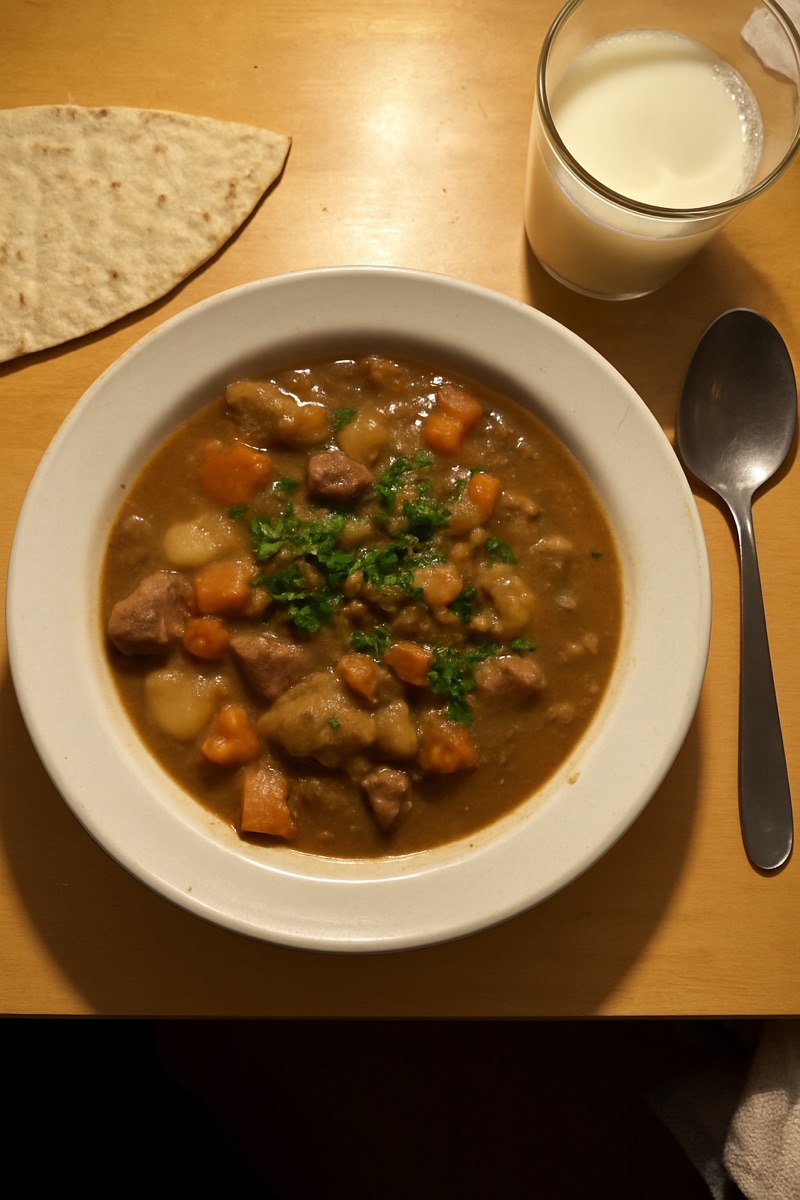 Lapskaus🇳🇴 Norway · 1 hour and 50 minutes
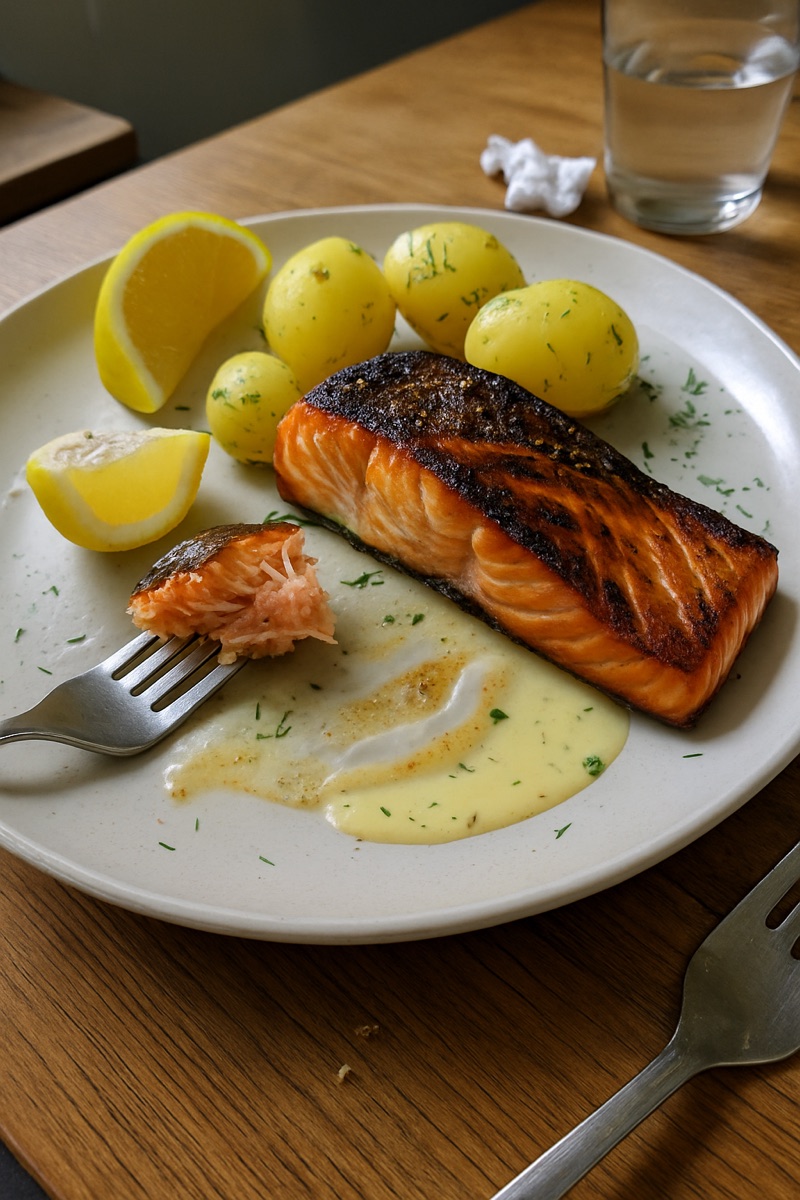 Gravlaks🇳🇴 Norway · 2 days and 12 hours
Questions people ask
Is fårikål officially Norway's national dish?
It was chosen by public vote rather than by law: first in 1972 through NRK's radio programme Nitimen, then again in 2014 in an Ipsos survey commissioned by the agriculture ministry, where it took 45% of the vote.
What does fårikål mean?
Fårikål means "mutton in cabbage". The name was adapted from the Danish "gås i hvidkål", goose in white cabbage.
When is Fårikål Day?
Fårikålens festdag is celebrated on the last Thursday of September, at the height of the lamb season.
What is served with fårikål?
Potatoes boiled in their skins. Some people also add lingonberry jam and flatbread.
How do you pronounce fårikål?
Roughly FOR-ee-kol. The å sounds like the "o" in "for".
Keep reading
- Traditional food of Norway: 13 dishes to know
- What is the national dish of Denmark?
- What is the national dish of Finland?
- What is the national dish of Greenland?
- What is the national dish of Iceland?
- What is the national dish of Sweden?